







OSENC manufactures custom plate magnets for chutes, hoppers, spouts and gravity-flow points. Send us the material, contaminant target and installation drawing. We match the magnetic circuit, working face, mounting and cleaning access to the real process.
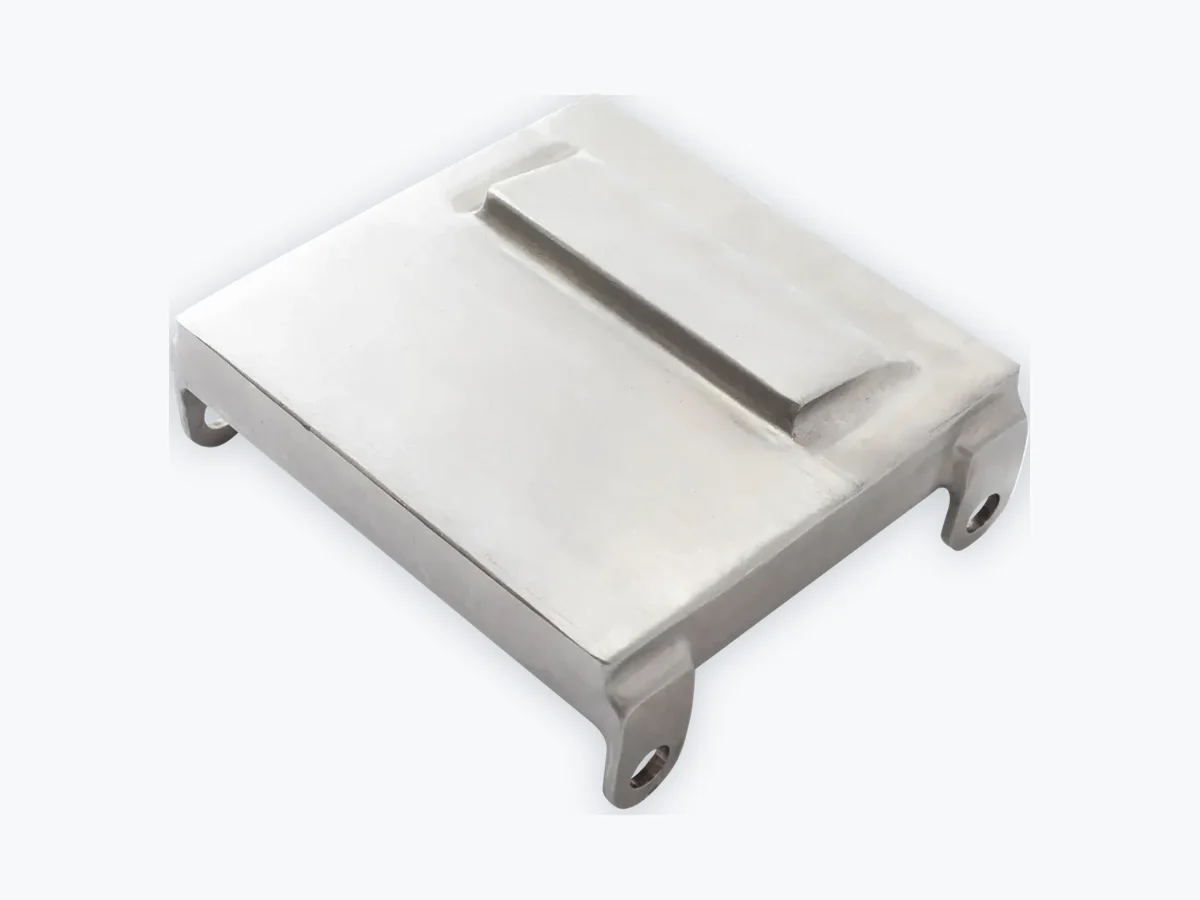
We choose ceramic/ferrite or rare-earth circuits from the contaminant size, working distance and process temperature.
We use flat or tapered-step working faces to keep the product moving and help hold captured tramp iron.
We size the plate and mounting interface around chute, hopper, spout and discharge-point drawings.
We make sure the plate can actually be cleaned in the space you have, instead of treating maintenance as an afterthought.
For applications where material can pass close to a simple magnetic working face without extra retention geometry.
The raised step creates a protected retention zone that helps reduce contaminant wash-off in moving bulk material.
Selected when larger tramp iron, magnetic reach and cost control are more important than maximum near-face field intensity.
Selected when fine ferrous contamination and stronger close-range magnetic capture are the priority.
Mounted on a chute wall or gravity-flow section so the product passes directly across or close to the magnetic working face.
For project-specific envelopes, mounting interfaces, wear conditions and cleaning-access requirements.
| Specifica | OSENC Configuration | What We Need From You |
|---|---|---|
| Circuito magnetico | Ceramic/ferrite or rare-earth permanent magnet circuit | Contaminant type and size, required reach, temperature |
| Working Face | Flat or tapered-step configuration | Flow direction, velocity, burden depth, abrasion |
| Plate Size | Custom to the installation drawing | Chute/hopper dimensions and available space |
| Mounting | Project-specific mounting interface | Hole locations, hinge/latch requirements, installation photos |
| Construction | Stainless construction selected for the application | Required grade, hygiene, corrosion and washdown conditions |
| Magnetic Acceptance | Defined Gauss measurement method when specified | Target value, test distance, probe orientation and acceptance method |
| di esercizio | Configured around the complete magnetic circuit and assembly | Maximum process and ambient temperature |
Have a chute or hopper drawing? Send the layout, material and contaminant target. We will turn it into a plate-magnet configuration for quotation.
Get a Plate Magnet Configuration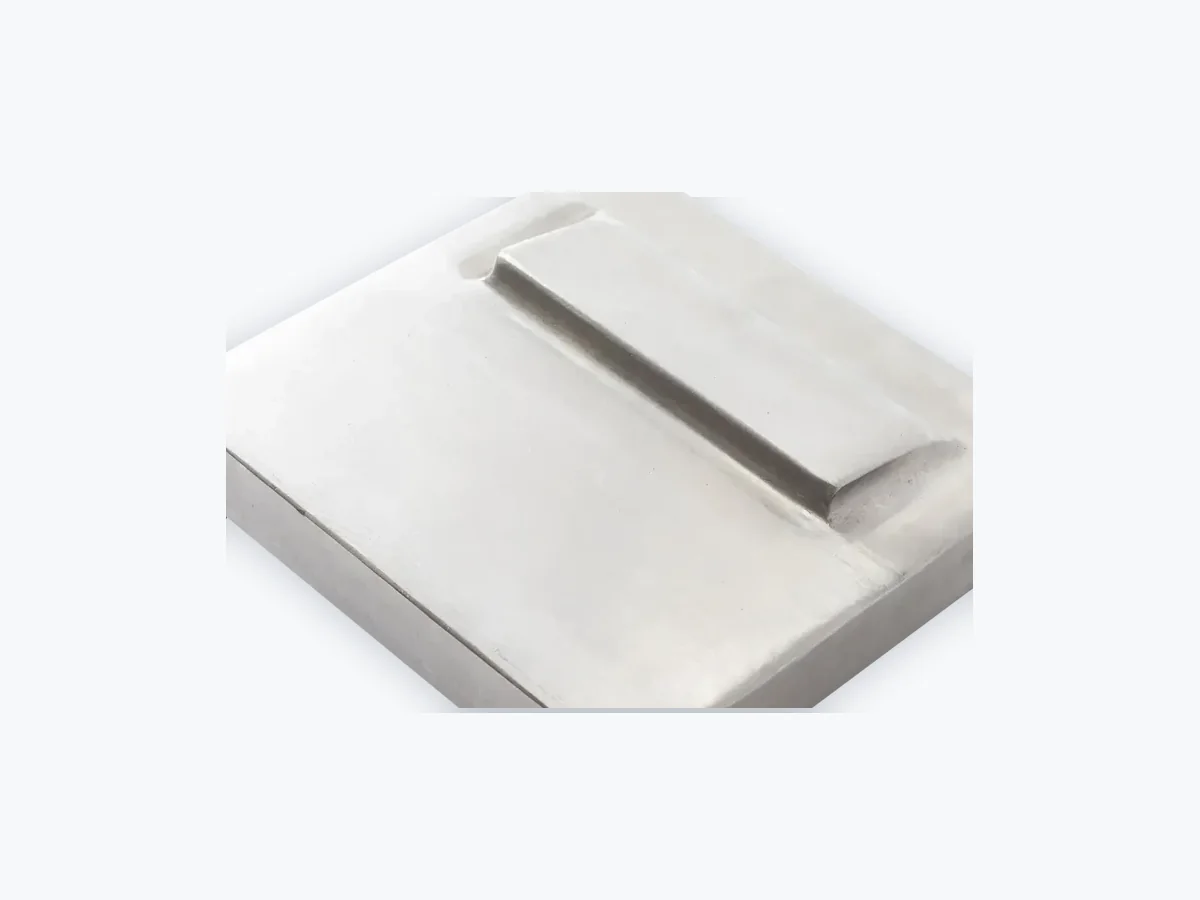
Bulk material passes across or close to the magnetic working face. Ferrous contamination is attracted to the plate and retained while the non-magnetic product continues through the process.
A tapered step adds a protected area behind its leading edge, helping captured metal remain out of the main product stream. A flat working face is used where the material can approach the magnetic surface closely without this extra retention feature.
We use ceramic/ferrite when the application prioritizes larger tramp iron, deeper magnetic reach, temperature margin and cost control. We check temperature against the complete plate design, not just the magnet material.
We use rare-earth circuits where fine ferrous contamination and strong close-range capture matter more. Working gap, stainless face, magnetic-circuit geometry and operating temperature are defined together before the design is locked.
For flour, grain, sugar, spices and other dry ingredients where ferrous contamination must be removed from gravity-flow points. Stainless grade, finish and hygiene requirements are specified by the project.
For pellets, resin and regrind before extrusion or molding equipment, helping capture tramp iron before it reaches downstream machinery.
For clay, powders, sand, limestone and mineral feed where a clear flow path and broad magnetic working face suit the installation.
For wood chips and bulk material where nails, screws and other ferrous pieces can enter the process stream.
For selected gravity or discharge points where ferrous pieces must be removed before the next processing stage.
For dry powders and granules when the product can pass close enough to the plate face for effective magnetic capture.
Not sure whether a plate magnet is the right separator? Send the material, particle size, flow path and contaminant target. We will match the separation point to the process.
Discuss Your Material & Contaminant
We position the magnetic face where the product can pass close enough for useful capture without creating an unnecessary flow restriction. For chute and hopper projects, the drawing should show flow direction, installation angle, available mounting space, burden depth and the nearest product path to the magnetic face.
Cleaning access is treated as part of the design. Contaminant loading, shutdown frequency, operator access and guarding determine whether the plate needs straightforward manual access or a more integrated housing arrangement. We lock the mounting and cleaning method on the approved drawing before production.
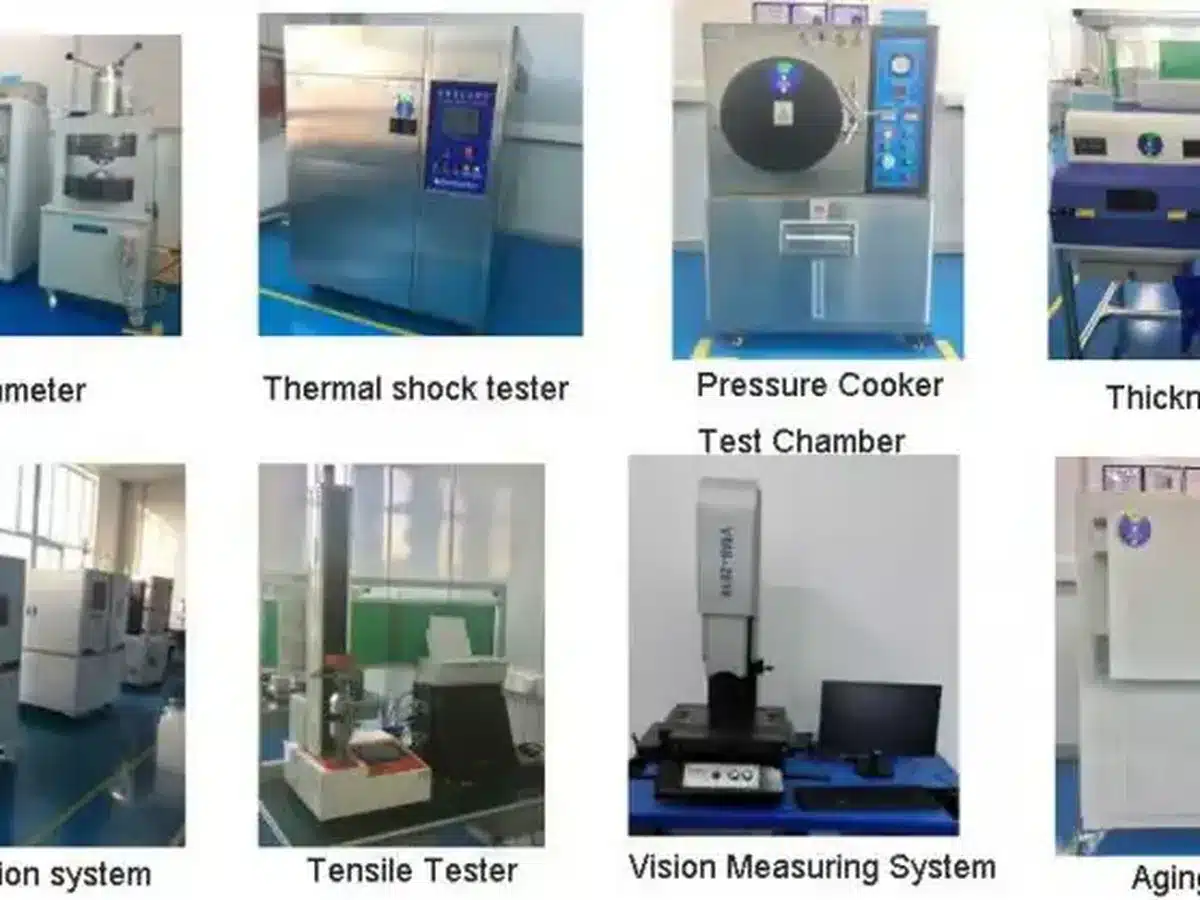
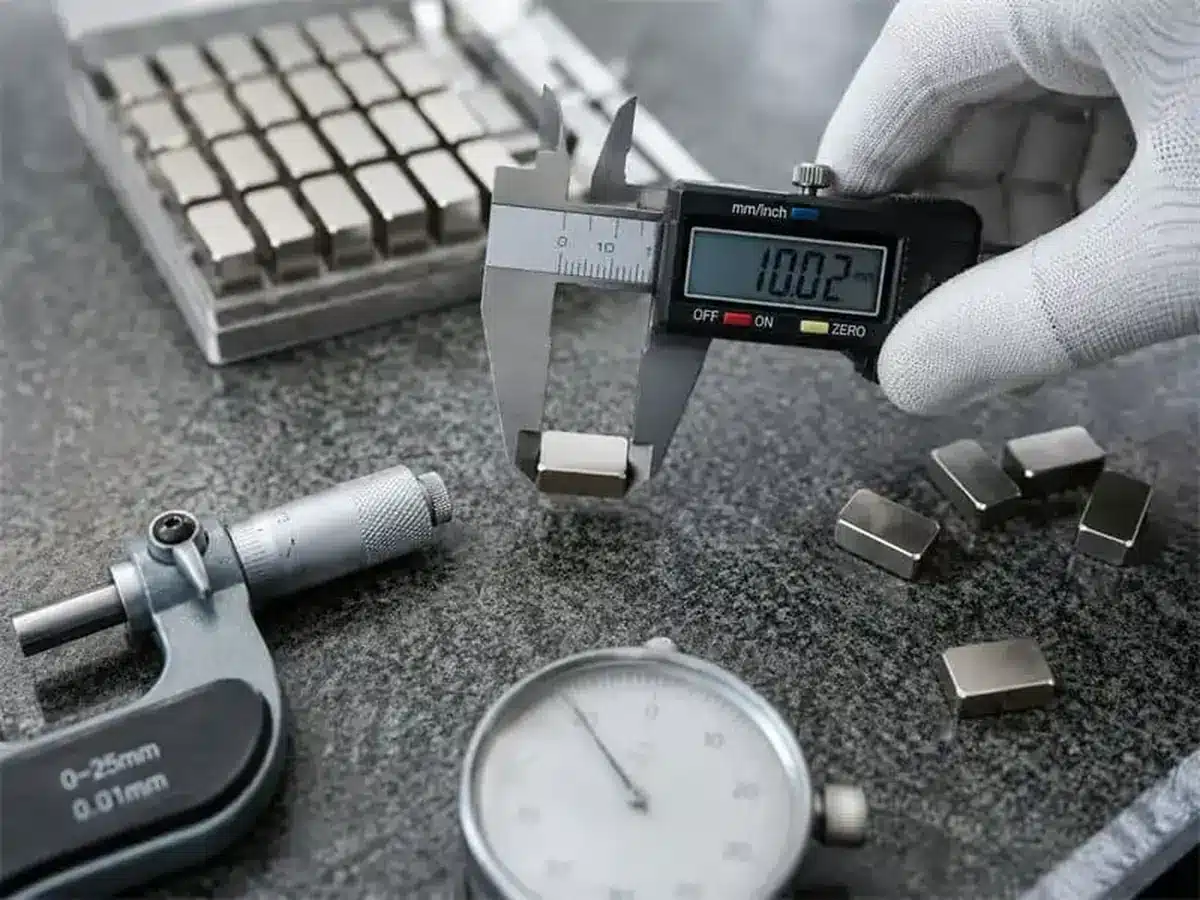
OSENC checks the plate dimensions, mounting details, working-face construction and the agreed magnetic test points against the approved drawing and inspection requirements. The goal is simple: the part must fit the installation, and the magnetic result must be measured the same way every time.
A single peak Gauss number does not tell the whole story. Probe direction, pole position, stainless working face, wear layer and measurement distance can all change the reading.
| Test Item | What OSENC Defines Before Inspection |
|---|---|
| Strumento | Use the agreed gaussmeter and probe setup for the project. |
| Probe Orientation | Keep the probe direction fixed relative to the working face. |
| Measurement Location | Use defined points on the drawing or inspection plan instead of searching for the highest random reading. |
| Working Distance | Measure at the working face or at the agreed operating gap, depending on what matters in the application. |
| Barrier Condition | State whether stainless steel, a wear layer or the chute wall sits between the magnet and probe. |
| Accettazione | Agree the value and test setup before the result is used for order acceptance. |
| Process Need | Plate Magnet | Grate / Tube Magnet | Tamburo magnetico |
|---|---|---|---|
| Gravity chute or hopper wall | Strong fit | Possible where product can flow through tubes | Usually a different process layout |
| Coarse or clumpy material | Useful clear-flow-path option | Bridging must be checked | Application dependent |
| Fine free-flowing powder | Useful when working distance is controlled | Multiple close-contact zones can be advantageous | Application dependent |
| Manual cleaning is acceptable | Strong fit | Strong fit | Usually unnecessary unless the process needs continuous separation |
| Continuous ferrous discharge | Not the first choice | Not the first choice | Strong fit when automatic discharge is required |
Un separatore magnetico a piastra è un dispositivo piatto posizionato lateralmente, al di sotto o al di sopra del flusso di materiale sfuso, per attrarre e trattenere i contaminanti ferrosi. I punti di installazione più comuni comprendono scivoli, tramogge, bocchette e zone di scarico.
Send the chute width, flow direction, available plate envelope, mounting details, burden depth and product path. OSENC uses those dimensions together with the contaminant and magnetic requirement to configure the plate and mounting interface.
Ceramic/ferrite is the practical choice when larger tramp iron, magnetic reach, temperature margin and cost control are important. Rare-earth is preferred when stronger close-range capture of fine ferrous contamination is the priority.
As close as the process safely allows while maintaining reliable flow. Magnetic field strength falls with distance, so the real product path and burden depth are more useful design inputs than a surface Gauss number alone.
Specify the value together with pole location, probe orientation, measurement distance, temperature and barrier condition. That gives both sides one test method that can be repeated during inspection.
Cleaning frequency depends on contaminant loading, flow rate and the amount of retained iron allowed by your process. Set the first cleaning interval during commissioning, then shorten or extend it from the amount of iron you actually collect.
No. A permanent plate magnet is designed for ferrous or magnetically responsive contamination. Aluminum and copper are not captured in the same way and require another separation method.
Send the material, contaminant target, flow rate, burden depth, temperature, chute or hopper drawing, working distance, cleaning requirement and any magnetic acceptance standard used by your plant.
Send the material, contaminant target, chute dimensions, working distance, temperature and cleaning needs. OSENC will turn that into the magnetic circuit, working face and mounting details needed for a quote.
Request a Plate Magnet Quote