






OSENC makes custom neodymium cone and truncated-cone magnets to your drawing. We control the base diameter, tip diameter, height, pole orientation, magnetic grade, coating and critical finished dimensions as one production specification. Send us your 2D/3D drawing or Base Ø × Tip Ø × H, and we review the working gap and inspection requirements before quotation.
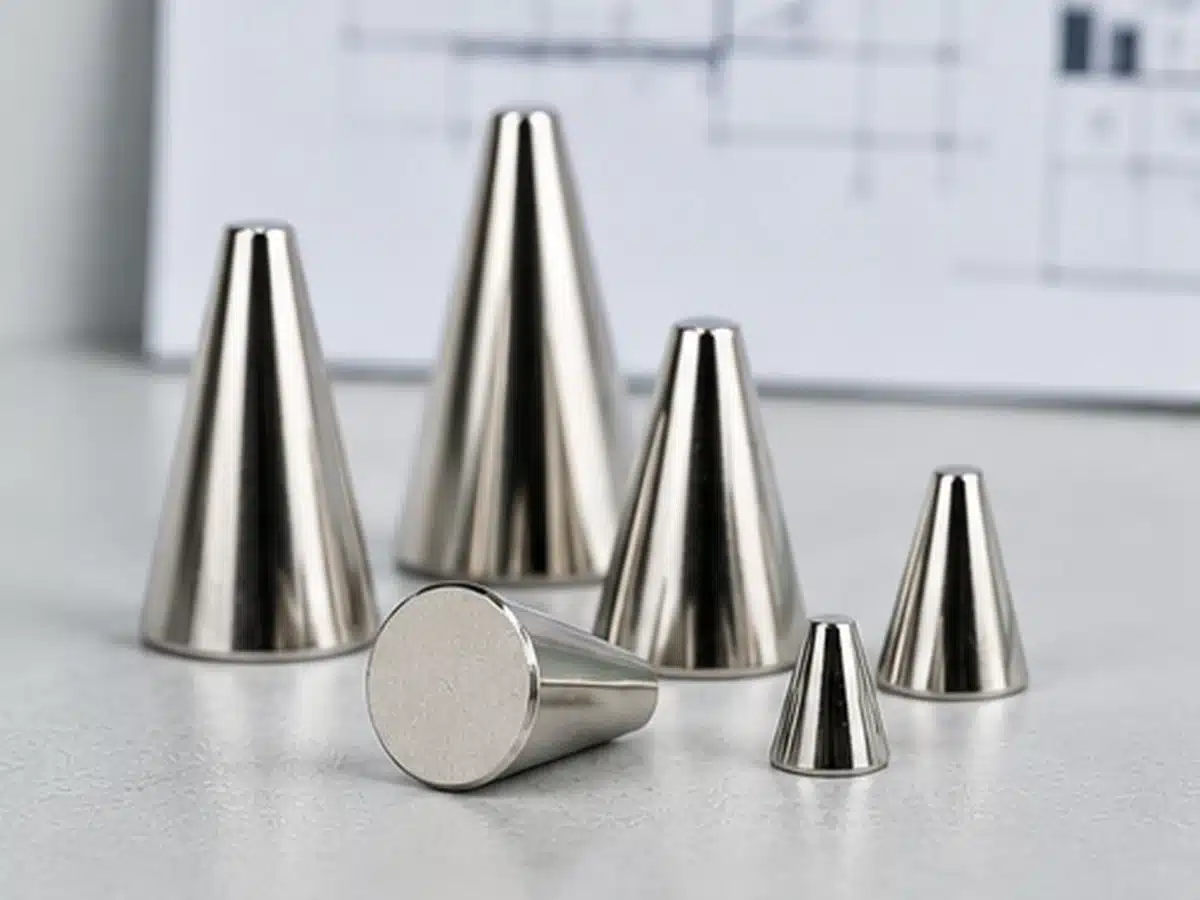
Risposta rapida: A neodymium cone magnet has a wide base and a smaller working tip. That shape changes how the magnetic field is distributed near the tip. For a custom part, OSENC defines the base diameter, tip diameter, height, magnetic direction and working condition together instead of choosing a grade first and hoping the geometry works.
We use the cone shape when the application needs a smaller working pole face, a tapered body or a more focused magnetic area near the tip. OSENC starts from the drawing: base diameter, tip diameter, height, edge details and magnetic direction. We then match the grade and coating to the real working condition.
Most projects use a truncated cone with a flat tip. If you need a very small tip, radius, chamfer or a true pointed shape, show it on the drawing. We treat that as a separate geometry because the machining and edge condition are different.
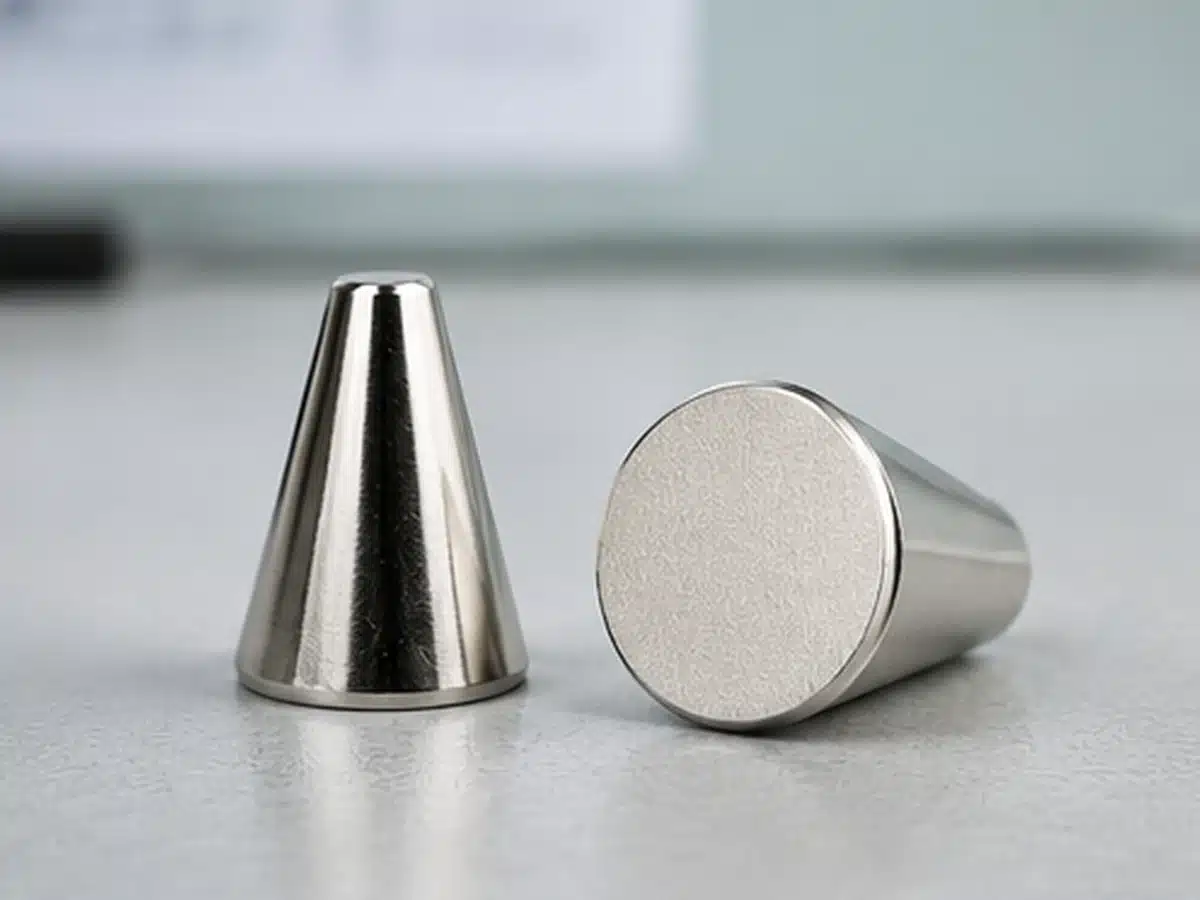
Two cone magnets can use the same NdFeB grade and still behave very differently. Change the base diameter, tip diameter, height or working gap and the magnetic result changes with it. So grade alone is not enough for a proper quote.
| Dati per la richiesta di offerta | Come lo utilizza OSENC |
|---|---|
| Base diameter × tip diameter × height | Defines the finished cone or truncated-cone geometry. |
| Cone angle, radius or chamfer if critical | Controls the transition, tip geometry and assembly interface. |
| Magnetization and required pole orientation | Locks the magnetic axis and the required north/south direction in the assembly. |
| Working gap and mating material | Defines the actual magnetic working condition instead of relying on an isolated surface number. |
| Operating temperature and environment | Drives grade and coating selection. |
| Critical tolerances | Defines which finished dimensions must be controlled for fit, alignment and repeatability. |
OSENC keeps magnetic field measurements and pull-force tests separate. A cone tip can create a strong local field, but a high gauss reading does not automatically mean high pull force. We use the test that matches the real job.
| Metric | What It Tells You | What Must Be Defined |
|---|---|---|
| Surface Gauss | Local magnetic flux density near the magnet surface. | Probe location, probe orientation and measurement distance. |
| Field at Working Gap | The magnetic field available at the sensor, target or mating component. | Gap, cone geometry, magnetic orientation and nearby ferromagnetic material. |
| Forza di distacco | Mechanical separation force under a defined contact setup. | Steel thickness, surface condition, contact area and pull direction. |
Related guide: How to Measure Magnet Strength
The base is the larger face and the tip is the smaller face. Magnetization direction and the required tip/base polarity are defined from the application drawing.
For axial designs, OSENC controls the required north/south orientation between the base and tip faces. If polarity affects sensor response, attraction direction or assembly orientation, we lock that direction into the drawing and inspection requirement before production.
| Applicazione | Why Cone Geometry Helps | Key RFQ Input |
|---|---|---|
| Sensor positioning & detection | The smaller pole face can present a localized field to a sensor or mating target. | Sensor distance, orientation, switching threshold and target position. |
| Magnetic fixtures & locating interfaces | The tapered body can combine magnetic function with a compact locating or grip-friendly geometry. | Mounting geometry, working gap, mating steel and required retention behavior. |
| Research equipment & prototypes | Useful when engineers need controlled geometry for field experiments, positioning or concept validation. | Target field condition, working distance, temperature and inspection method. |
| Precision holding applications | A cone can concentrate the working area around a smaller pole face while retaining more magnetic volume at the base. | Load, contact condition, mating material and required safety margin. |
| OEM magnetic assemblies | The cone geometry can be built into a larger bracket, housing or mechanism when a small working pole face or tapered profile is needed. | Assembly drawing, mating parts, working gap, polarity and critical tolerances. |
OSENC builds the cone magnet specification around the drawing and operating condition. Geometry, magnetic output, temperature, coating and inspection are treated as one engineered part specification.
| Voce | OSENC Engineering Route |
|---|---|
| Materiale | Sintered NdFeB selected according to magnetic output, temperature and cone geometry. |
| Grado | OSENC selects the NdFeB grade from the required magnetic target, cone geometry, working gap and operating temperature. The grade is part of the production specification, not a stand-alone selling point. |
| Rivestimento | OSENC defines the coating from the operating environment, corrosion exposure, handling condition and finished-part requirement. We specify the coating together with the finished dimensions before quotation. |
| Magnetizzazione | Magnetization direction and the required tip/base pole orientation are defined from the application drawing. For axial designs, the north/south direction is controlled between the base and tip faces. |
| Dimensions & tolerance | Critical dimensions are controlled against the approved finished-part drawing, including coating where specified. |
| Temperatura di esercizio | OSENC selects the material grade from the actual operating temperature and magnetic circuit instead of applying one universal temperature rating to every cone magnet. |
Related capability: Magneti al neodimio su misura · Neodymium Magnet Coatings · Magneti al neodimio
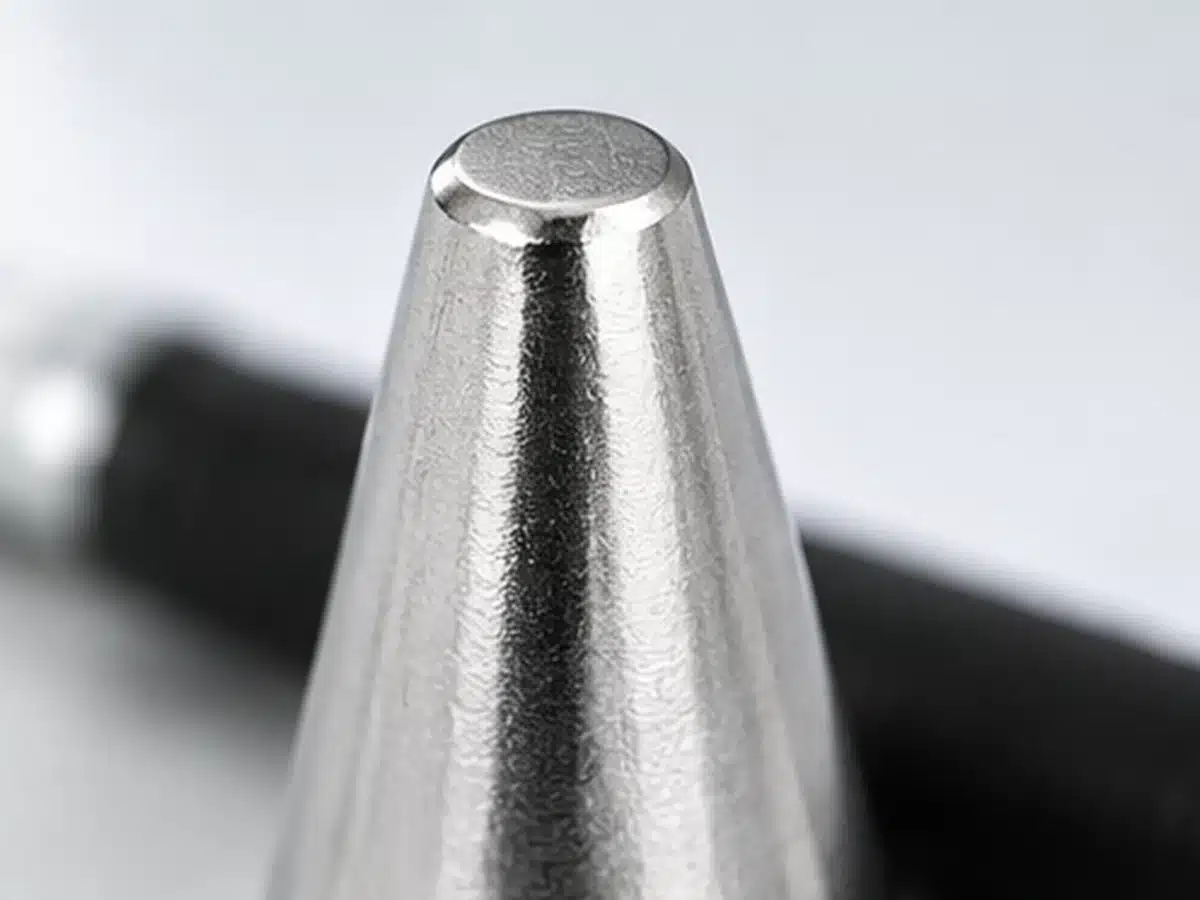
Send the base diameter, tip diameter, height, working gap, operating temperature and what the magnet needs to do. OSENC will turn those inputs into a clear magnetic and inspection specification for quotation.
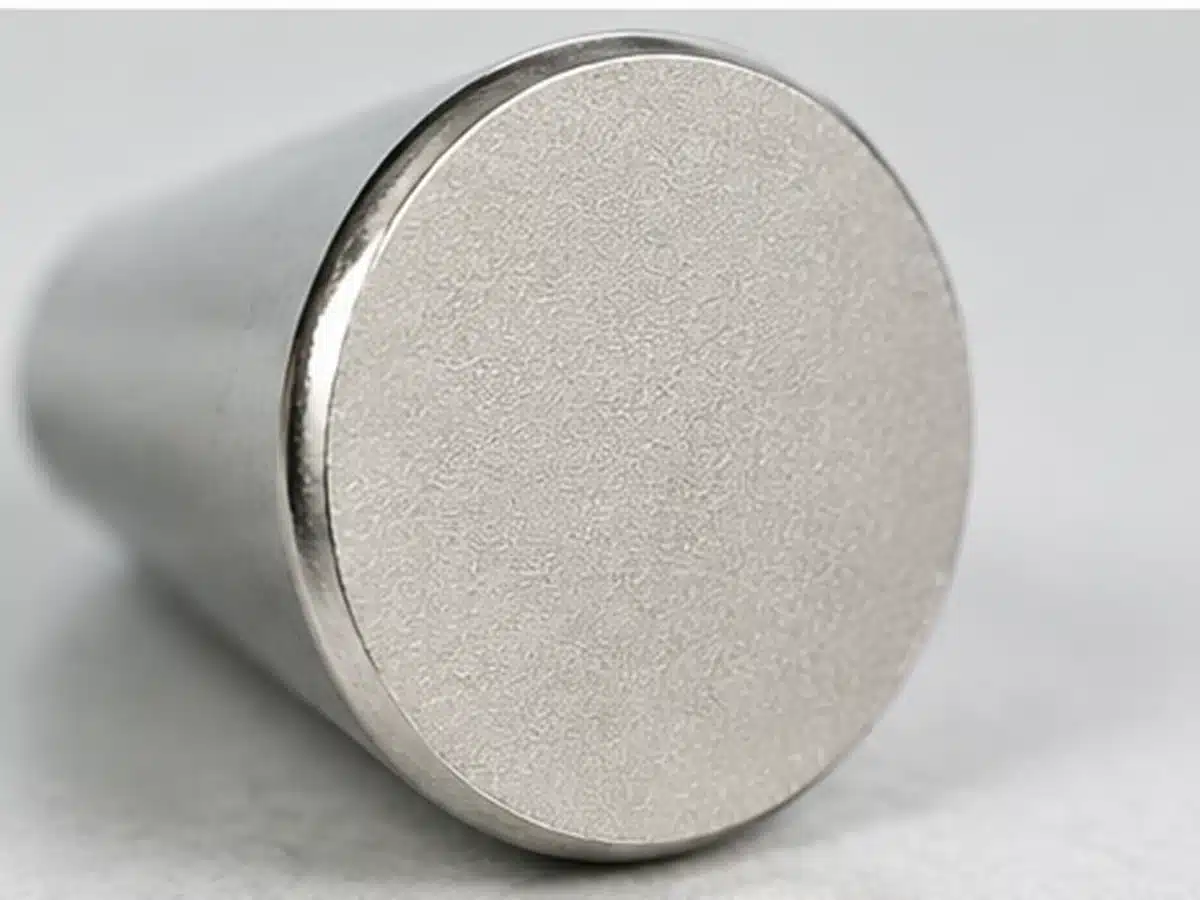
OSENC checks the finished cone magnet against the approved drawing. We focus on the dimensions that affect fit, the required pole direction, the surface condition and the agreed magnetic test method.
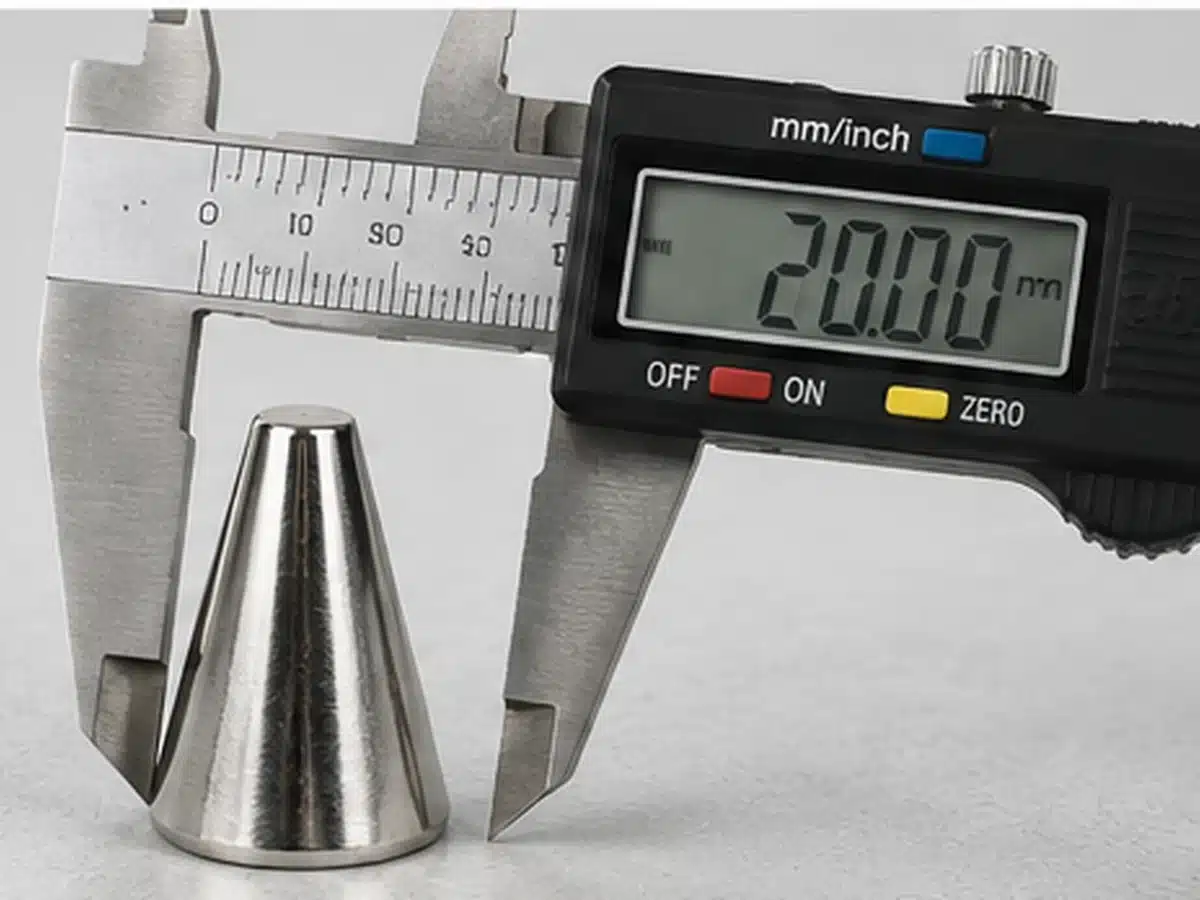
Illustrative image only. Acceptance dimensions are defined by the approved OSENC drawing and inspection record.
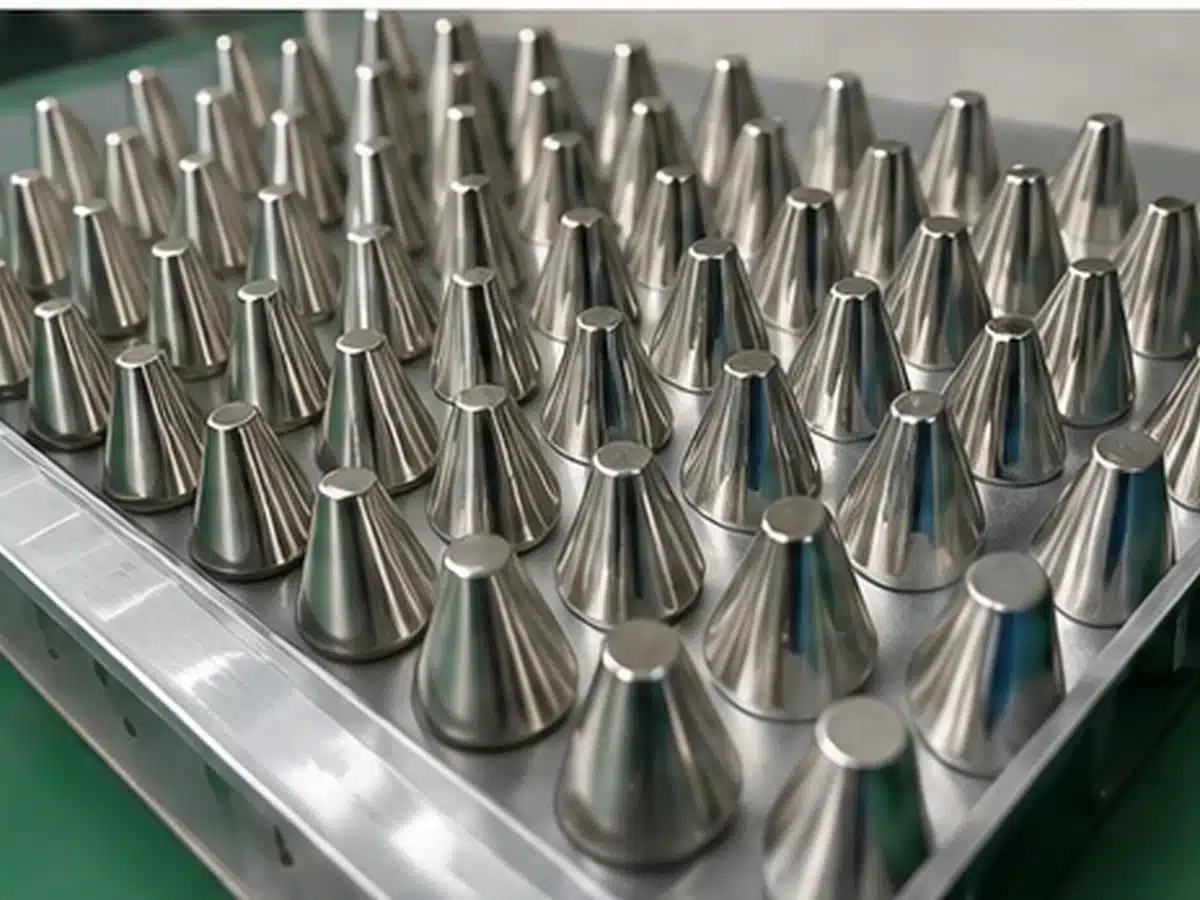
Illustrative image only. It is not presented as an OSENC production, QC or customer-case photograph.
If both shapes fit the assembly, choose by the working face and the way the magnet sits in the product. A cone is not automatically “stronger” than a disc. The geometry simply changes how the magnetic field and mechanical interface are used.
| Choose a Cone Magnet When | Choose a Disc Magnet When |
|---|---|
| You need a smaller working pole face or tapered body. | You want a broad, flat working face. |
| The part needs a drawing-defined cone, tip or locating profile. | Simple cylindrical geometry fits the assembly. |
| The magnetic field needs to be checked around a defined tip and working gap. | The application mainly needs a standard flat-face magnetic interface. |
| The tapered shape helps handling, positioning or integration into a custom assembly. | Manufacturing simplicity and standardization matter more than a tapered profile. |
Specificare innanzitutto il diametro di base, il diametro della punta e l’altezza complessiva. Aggiungere l’angolo del cono, il raggio, lo smusso o altri dettagli di raccordo quando sono funzionalmente critici. OSENC combina quindi tali dimensioni con i requisiti relativi a grado magnetico, rivestimento, magnetizzazione, temperatura di esercizio e controllo.
Un cono è indicato quando il progetto richiede un corpo rastremato, una faccia polare di lavoro più piccola oppure una presa e un posizionamento più agevoli. Un disco è generalmente più semplice quando sono più importanti un'ampia superficie di contatto piana o una geometria standardizzata.
Specificare la grandezza che rispecchia l’applicazione reale. Utilizzare i gauss quando è rilevante l’induzione magnetica locale in un punto definito, il campo magnetico al traferro di lavoro quando un sensore o un elemento target opera a distanza e la forza di distacco quando il requisito è una forza di separazione meccanica definita. OSENC definisce il metodo di accettazione in base alla configurazione di prova concordata.
No universal value should be assumed. The local field depends on cone geometry, material grade, magnetization and measurement position. Compare values only at the same defined probe location and gap.
Yes. Send the drawing or Base Ø × Tip Ø × H. OSENC will build the production specification around the dimensions, working gap, magnetic direction, coating, temperature and inspection requirement.
Yes, when the board has ferromagnetic steel behind the glass. The result depends on glass thickness, backing construction, cone geometry and the load. Send those details and OSENC will define the test condition before volume production.
You do not need to guess the final grade first. Send the geometry and real working condition. OSENC will turn them into one clear production specification for quotation.