






Nel mio lavoro, che comprende sia la diagnostica sul campo sia i gruppi magnetici, ho conosciuto numerosi strumenti pratici, facili da usare e in grado di fornire un valido supporto.
In particolare, quando si tratta di strumenti per rilevare campi magnetici impercettibili, uno dei più utili e importanti è la pellicola visualizzatrice magnetica, nota anche come pellicola per la visualizzazione del campo magnetico.
Pur essendo economica e semplice da usare, questa pellicola ha contribuito al buon esito di innumerevoli progetti, consentendo di risparmiare tempo, definire meglio l'ambito di lavoro, evitare errori e agevolare il controllo qualità.
Aule didattiche, laboratori di R&S, stabilimenti industriali e ambienti dedicati al controllo qualità hanno tutti un elemento in comune: l'impiego della pellicola per la visualizzazione del campo magnetico.
In questo articolo spiegherò che cos'è la pellicola visualizzatrice magnetica, come funziona, quale valore offre nelle applicazioni reali e come individuare la pellicola più adatta alle proprie esigenze e all'uso previsto.
Cominciamo.
1. Che cos'è la pellicola visualizzatrice magnetica?
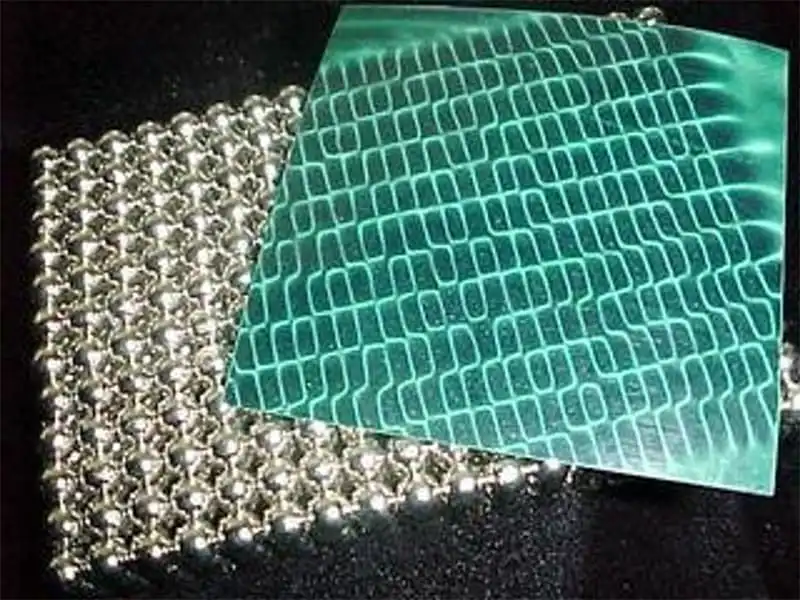
La pellicola visualizzatrice magnetica, detta anche pellicola per la visualizzazione del campo magnetico, è un sottile foglio di plastica flessibile rivestito di microcapsule contenenti particelle magnetiche sospese in olio.
Queste particelle, che generano un campo magnetico locale, si allineano rendendo visibile la configurazione formata dal campo.
Dal punto di vista professionale, uno strumento diagnostico di questo tipo è estremamente pratico: basta posizionare la pellicola su un magnete e la configurazione del campo appare immediatamente, senza preparazione, procedure complesse o dispositivi elettronici che ne complichino l'uso.
Spesso spiego a chi si avvicina per la prima volta a questo strumento che si tratta dell'equivalente magnetico di una termocamera, ma molto più semplice e immediato da usare.
2. Applicazioni della pellicola visualizzatrice magnetica
Utilizzando abitualmente la pellicola visualizzatrice magnetica in diverse fasi e tipologie di produzione, posso illustrare la varietà delle sue applicazioni e dei suoi impieghi.
Di seguito sono riportati gli impieghi nei quali si è dimostrata utile.
i. Risoluzione dei problemi del sistema di sensori
La posizione e l'intensità del campo magnetico determinano il funzionamento dei sensori a effetto Hall, degli encoder magnetici o dei gruppi con interruttori reed.
Nella maggior parte dei casi, utilizzo la pellicola magnetoscopica per rilevare zone morte, inversioni delle suddivisioni o campi deboli che potrebbero compromettere le prestazioni.
ii. Dimostrazioni didattiche e formazione dei team
La pellicola magnetoscopica svolge un ruolo importante nelle lezioni di fisica nelle scuole e nelle università. Aiuta gli studenti a comprendere concetti complessi visualizzando in tempo reale i poli magnetici e la distribuzione del campo.
Anche per i nuovi tirocinanti in ambito ingegneristico, la visualizzazione dei campi magnetici è uno strumento molto utile. Offre una comprensione visiva particolarmente chiara e immediata dei fenomeni. È molto semplice da usare, anche per chi non ha alcuna preparazione nel campo dell'elettromagnetismo.
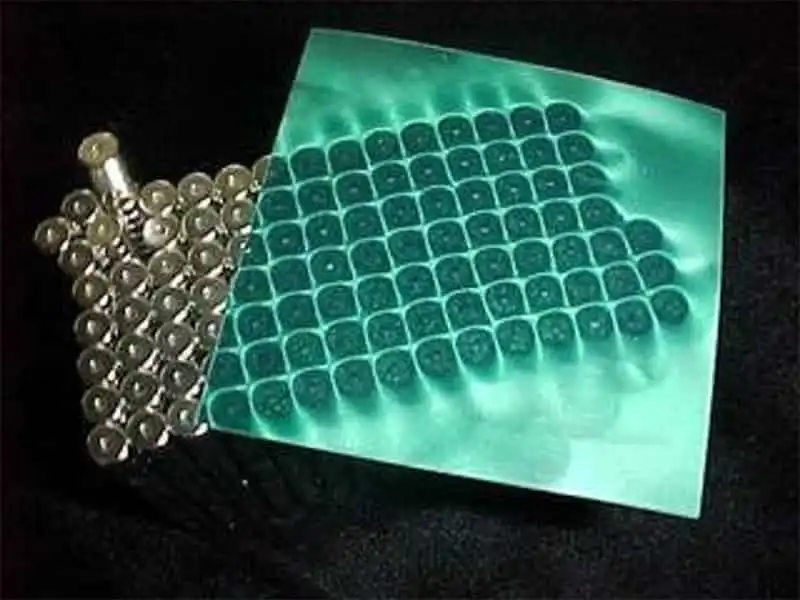
iii. Controllo qualità nei gruppi magnetici
Che si realizzino motori CC brushless, generatori magnetici stabili o accoppiamenti magnetici, è indispensabile verificare il corretto posizionamento e la corretta suddivisione dei magneti.
Un rapido passaggio della pellicola magnetoscopica consente di convalidare visivamente magnete al neodimio gli insiemi, verificare con precisione la spaziatura dei poli e individuare eventuali disallineamenti.
iv. Verifica dello schema magnetico
Pertanto, alcune delle nostre applicazioni prevedono configurazioni di magnetizzazione personalizzate, ad es. anelli multipolari, array di Halbach, ecc.
Magnetic viewing film offers the first streak of check before we transfer to Gauss meters or 3D scanning.
v. Field inspections and service
Speaking about maintenance setups, particularly in isolated sites, I’ve experienced magnetic viewing film as unbelievably useful.
It folds smoothly like a toolkit and can be used on any site to examine motor housings and magnetic seals or even help spot buried magnets in assemblies.
4. Using Magnetic Film as a Magnetic Field Visualizer
Mostly, we do have Gauss meters and flux probes for exact dimensions in the labs available.
But when we are talking about swift visualization, particularly in pre-production or meeting forms, magnetic viewing film is always my go-to.
Here’s its actual performance chart, which will help you to use it:
- i. Single bar magnets: They have vibrant, bright/dark shading at their ends, with a medium display of slight field strength.
- ii. Magnetized sheets or strips: Alternative hoops or dot designs subjected to their encoded poles.
- iii. Rotors and stators: Pole amount, equilibrium, and stability can be confirmed with just a glance.
- iv. Halbach arrays: Non-uniform fields and reversing behavior become visually present.
- v. Magnet leakage: Ranges of stray fields around enclosures, often lost by sensors, are really easy to locate.
The magnetic view film doesn’t give you pitch strength in gauss or tesla, but in many other practical states, it provides you with what you require the most, like form, direction, and delivery of the field.
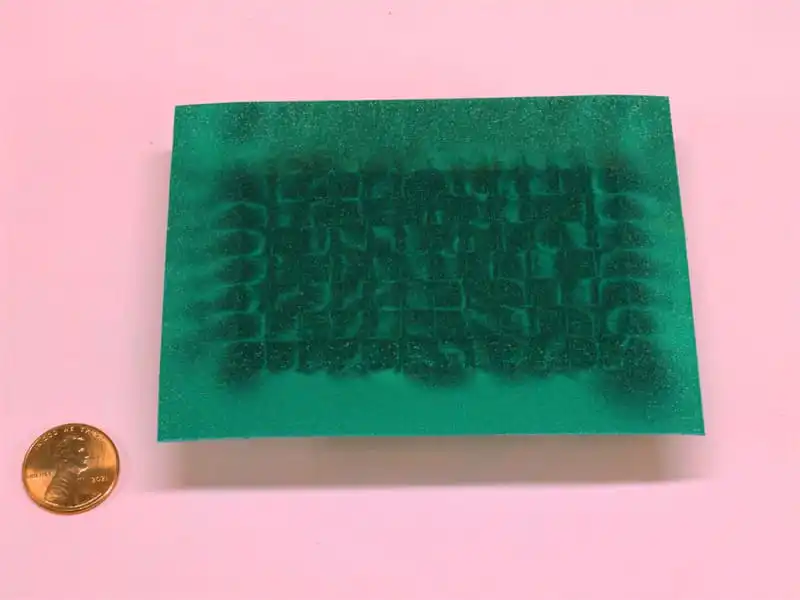
4.1 How Do You View a Magnetic Field?
To view or analyze a magnetic field, here are a few tools with their advantages and limitations as under;
| Tool or Method | Case | Vantaggi | Limitations |
| Magnetic Viewing Film | Assembly verification, polarity checks, and troubleshooting | Instant, visual, reusable, portable | No numeric data, 2D surface view |
| Gauss meters | Field strength measurement | Accurate, quantitative | Slower, requires positioning |
| Iron Filings | Educational or low-cost demos | Cheap, visual | Messy, static, single-use |
| FEA Simulation Software | Design and testing | Predictive, 3D, adjustable | Requires experience and modeling skills |
In our lab, we mostly use viewing film as our first-level problem-solving method, later following up with the others if we need comprehensive outlining or compliance checks.
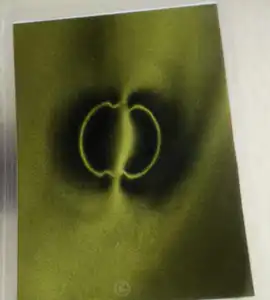
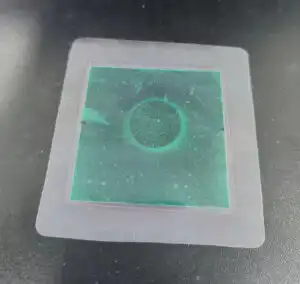
5. Green magnetic field view film
Mostly, we use the green magnetic field in industry because it is the best choice. It not only enhances the aesthetics but also helps improve the lighting conditions and visibility.
5.1 Key factors to use the green Magnetic field
· Thickness: It has a thickness of typically 100–300 microns, which is thin enough to bend and at the same time thick enough to increase its durability.
· Colour: It has a luminous or semi-opaque green colour.
· Temperatura range: It is really sensitive to fields as low as 15–20 gauss, which is a good contrast up to 5000 gauss.
· Reuse: It is recyclable except when physically damaged. It is important to use it very carefully and store it in a flat and clean spot. Debris or fingers with oil and grease can reduce its visibility over time.
I always manage to store my green magnetic film in a sealed envelope when I am not using it.
6. High-resolution magnetic viewing film
For advanced reliability, particularly in R&D, we always practice high-resolution magnetic viewing film. This form uses minor microcapsules and higher magnetic particles, which subsequently results in sharper details and improved contrast.
6.1 Why choose high-resolution magnetic view film?
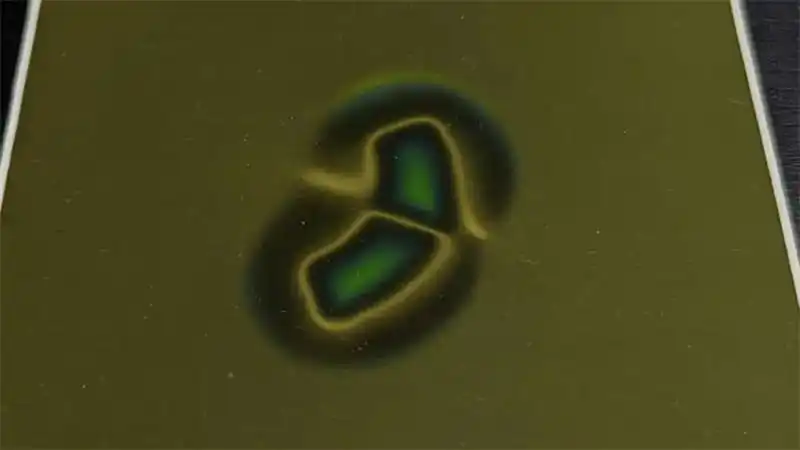
- · Its edge poles are spaced closer than 1 mm, which is clearly distinguished.
- · It has good encoder tracks on its magnetic tapes or wheels, which can be verified.
- · If the magnets are low strength, it becomes visible where standard film might not respond.
7. Where Can I Buy Magnetic View Film?
I’ve purchased magnetic viewing films from a few reliable dealers over the years, suitable for my needs and budget.
- · Adams Magnetic Products: If you need industrial-grade options, especially for OEMs, this is your option.
- · Amazon / eBay: It is very convenient to order at your doorstep, though quality varies, so always read reviews before you place an order.
- · Scientific Supply Distributors: This dealer is ideal for educational kits or wholesale classroom orders.
- · Direct from Manufacturers: If you’re purchasing in bulk, producers like Dexter Magnetic Technologies or SDM Magnetics offer custom sizes or formulations.
Keep in mind before ordering the size, capacity, durability, and the most importantly, the resolution requirements.
Subsequently, over a period in this field working as a professional with permanent magnets, motors, sensors, and magnetic systems, I always bring a piece of magnetic viewing film in my toolkit everywhere I go for work.
It helps me analyze the situation and makes it really easy for me to identify the problem and its solution.
Magnetic View Film For Sale
1. Yellow
2. Green
3. Colourful
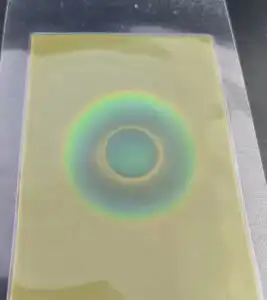
4. Liquid
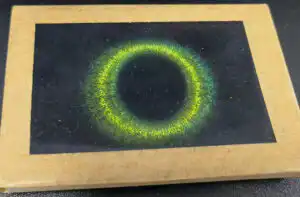
Domande frequenti
How to make magnetic viewing film?
A magnetic field viewer could be made by squishing a mix of mineral oil and ferrofluid between two sheets of glass, meticulously pressing out the air bubbles, sealing the edges, and then illuminating it with an LED strip.
Can Magnetic View Film measure magnetic strength?
Yes, Magnetic Viewing Film can provide a qualitative assessment of magnetic strength by changing color in a field; brighter or more intense areas indicate stronger magnetic fields, while darker areas indicate poles.
Is Magnetic View Film reusable?
Yes, current Magnetic View Film is a reusable product with automated recovery; when removed from the magnet, the magnetic field patterns fade as the particles realign, preparing the film for further observation.
Riferimento: Magnetic field viewing film wiki