






Qui troverete le risposte alle domande più comuni sui magneti e sul magnetismo, sulla storia del magnetismo, sui materiali e sulle proprietà magnetiche, sull’orientamento magnetico, sui poli magnetici e su altri argomenti. Per ulteriori dettagli tecnici su questi aspetti, consultate la nostra Guida Magnetics 101 alla progettazione.
Richiedi un preventivo o chiamaci oggi stesso per scoprire come possiamo soddisfare le tue esigenze specifiche. MagnetShop.com dispone inoltre di grandi quantità di magneti al neodimio, al samario-cobalto, in alnico, ceramici e flessibili, acquistabili online.
1. Storia

Gli antichi Greci e Cinesi scoprirono che alcune pietre rare erano magnetizzate naturalmente; queste pietre erano note come calamite naturali. Avevano la straordinaria capacità di attrarre piccoli frammenti di ferro e, se lasciate libere di ruotare, sospese a un filo o galleggianti sull’acqua, puntavano sempre nella stessa direzione. Vennero quindi utilizzate come bussole rudimentali: già i primi navigatori si affidavano a questi magneti per orientarsi durante la navigazione.
Il termine magnete deriva da Magnesia, una regione della Tessaglia, in Grecia, dove si ritiene che sia stata estratta la prima calamita naturale.
Nel corso degli anni, i magneti si sono evoluti fino a raggiungere le elevate prestazioni odierne. Si scoprì che, creando leghe di materiali diversi, era possibile ottenere effetti simili a quelli delle rocce magnetiche naturali e aumentare il grado di magnetismo.
I primi magneti artificiali furono tuttavia inventati nel XVIII secolo. I progressi nello sviluppo di leghe magnetiche più potenti furono estremamente lenti fino agli anni Venti del Novecento, quando vennero sviluppate le leghe magnetiche in alnico, composte da nichel, alluminio e cobalto. I magneti in ferrite e quelli alle terre rare furono inventati rispettivamente negli anni Cinquanta e Settanta. Da allora, lo studio del magnetismo si è sviluppato esponenzialmente in ambito scientifico e i materiali magnetici ad alte prestazioni hanno reso possibili dispositivi potenti e miniaturizzati.
2. Fondamenti dei magneti e del magnetismo
Che cos’è esattamente un magnete?
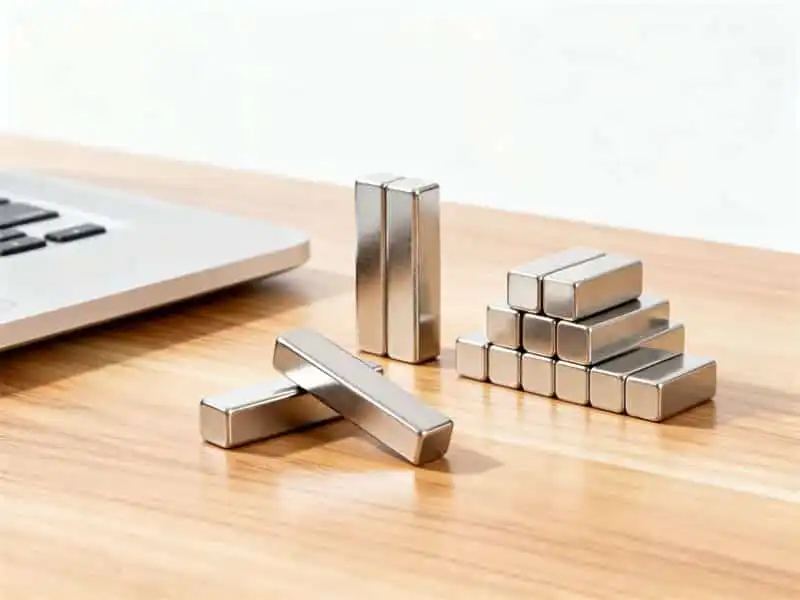
I magneti vengono prodotti sottoponendo una sostanza magnetica, generalmente ferro o acciaio, a un potente campo magnetico. In questo modo è possibile realizzare magneti permanenti, magneti temporanei ed elettromagneti.
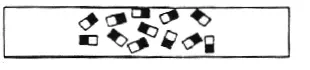
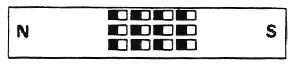
Nei materiali facilmente magnetizzabili, come ferro, acciaio, nichel e cobalto, gli atomi sono organizzati in piccole regioni dette domini. Sebbene siano molto più piccoli di quanto sia osservabile al microscopio, ciascun dominio contiene milioni di miliardi di atomi e si comporta come un minuscolo magnete. Quando un materiale magnetico viene sottoposto a un forte campo magnetico, i singoli domini, normalmente orientati in tutte le direzioni, ruotano gradualmente fino ad allinearsi al campo. Questi domini inglobano anche quelli adiacenti. Quando la maggior parte dei domini è orientata secondo il campo, il materiale diventa un magnete.
Domini magnetici prima della magnetizzazione
Domini magnetici dopo la magnetizzazione
Che cosa fa effettivamente un magnete?
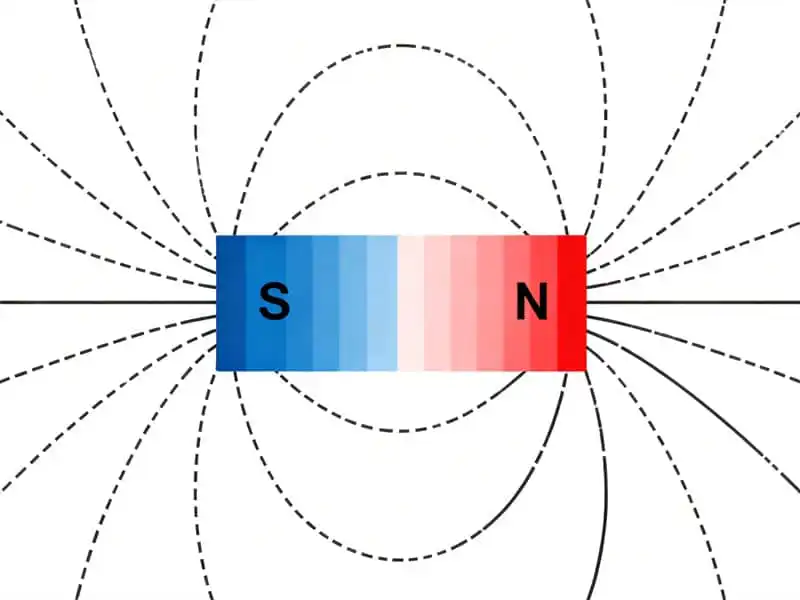
I magneti producono i seguenti effetti:
- Attraggono alcune sostanze, tra cui ferro, nichel, cobalto, alcuni acciai e altre leghe.
- Esercitano una forza attrattiva o repulsiva su altri magneti (i poli omonimi si respingono, quelli opposti si attraggono).
- Influenzano i conduttori elettrici quando il magnete e il conduttore sono in movimento.
- Influenzano la traiettoria delle particelle elettricamente cariche nello spazio libero.
In virtù di questi effetti, i magneti trasformano l'energia acquisita da una forma all'altra senza perdere la propria energia. Le funzioni dei magneti comprendono:
- Da energia meccanica a energia meccanica, ad esempio attrazione e repulsione.
- Da energia meccanica a energia elettrica, ad esempio generatori e microfoni.
- Da energia elettrica a energia meccanica, ad esempio motori, altoparlanti e deflessione di particelle cariche.
- Da energia meccanica a calore, ad esempio dispositivi di coppia a correnti parassite e a isteresi.
- Risonanza magnetica, dispositivi a effetto Hall e magnetoresistenza.
Come vengono prodotti i magneti?
I moderni materiali magnetici vengono prodotti mediante fusione, pressatura e sinterizzazione, stampaggio a compressione con legante, stampaggio a iniezione, estrusione o calandratura. Dopo la produzione, i magneti richiedono generalmente lavorazioni aggiuntive, come la rettifica o altre lavorazioni meccaniche, e il successivo assemblaggio in un assieme di livello superiore. Visita la nostra pagina dedicata alla produzione e all'assemblaggio per scoprire le nostre lavorazioni meccaniche e i nostri assemblaggi personalizzati.
Quali tipi di magneti esistono?
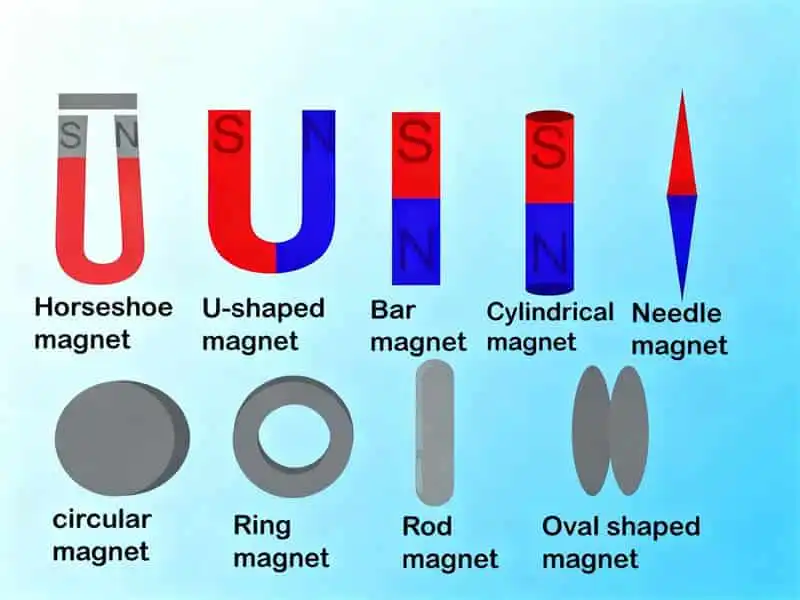
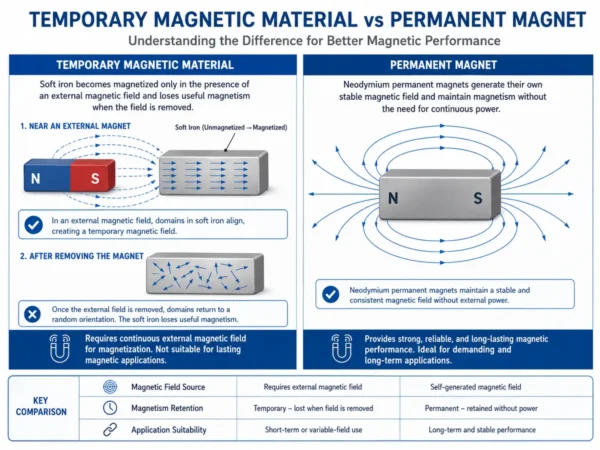
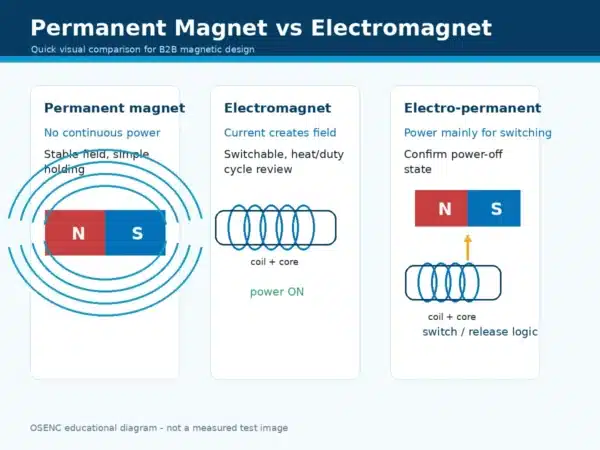
Esistono tre categorie di magneti: magneti permanenti, magneti temporanei ed elettromagneti.
I magneti permanenti non richiedono alcuna fonte esterna di magnetismo né energia elettrica per generare il campo magnetico.
Magneti temporanei si comportano da magneti quando sono collegati a una sorgente di campo magnetico o si trovano nelle sue vicinanze, ma perdono questa proprietà quando la sorgente del campo magnetico viene rimossa.
Elettromagneti richiedono energia elettrica per comportarsi da magneti.
I materiali impiegati per realizzare magneti permanenti sono di numerosi tipi, ciascuno con caratteristiche specifiche. Ogni materiale comprende una serie di gradi che, pur avendo la stessa composizione, presentano proprietà leggermente diverse.
Di che cosa sono fatti i magneti permanenti?
I moderni magneti permanenti sono realizzati con leghe speciali, sviluppate attraverso la ricerca per ottenere magneti migliori. Attualmente, i tipi di materiali magnetici permanenti più diffusi sono alluminio-nichel-cobalto (alnicos), stronzio-ferro (ferriti o ceramici), neodimio-ferro-boro (noti anche come magneti al neodimio o supermagneti) e materiali magnetici al samario-cobalto. La combinazione delle famiglie samario-cobalto e neodimio-ferro-boro viene definita delle terre rare. Per saperne di più su Come vengono prodotti i magneti al neodimio?
Che cosa sono i magneti alle terre rare?
I magneti alle terre rare sono costituiti da elementi del gruppo delle terre rare. I tipi più comuni di magneti alle terre rare comprendono quelli al neodimio-ferro-boro (magneti al neodimio) e quelli al samario-cobalto (magneti SmCo).
Che cosa si intende per magnete temporaneo?
Un campo debole è sufficiente per magnetizzare facilmente il ferro dolce e alcune leghe di ferro, come il permalloy (una lega di ferro e nichel). Tuttavia, il magnetismo scompare non appena il campo viene rimosso. Questi materiali sono adatti per realizzare magneti temporanei, come quelli impiegati nei telefoni e nei motori elettrici.
Che cos'è un elettromagnete?
Gli elettromagneti vengono impiegati quando sono necessari magneti estremamente potenti. Si realizzano inserendo un metallo, sotto forma di nucleo, in una bobina di filo attraversata da corrente elettrica. La corrente che attraversa la bobina genera un campo magnetico. L'intensità dell'elettromagnete è determinata dall'intensità della corrente elettrica e dall'avvolgimento del filo. La polarità dipende dal verso della corrente. Finché la corrente circola, il nucleo può comportarsi da magnete; quando la corrente viene interrotta, invece, le proprietà magnetiche scompaiono immediatamente. Gli elettromagneti sono utilizzati nei motori elettrici, nei televisori, nei treni a levitazione magnetica, nei telefoni, nei computer e nella maggior parte degli altri dispositivi moderni.
Che cosa sono le correnti parassite nel magnetismo?
Si tratta di correnti elettriche indotte dal movimento di un campo magnetico rispetto a un conduttore elettrico esposto al campo stesso. Queste correnti parassite generano a loro volta un campo magnetico che si oppone al movimento relativo tra il campo magnetico originario e il conduttore elettrico.
Quanto costano generalmente i magneti?
I materiali magnetici possono differire notevolmente tra loro. Di seguito è riportata una stima indicativa dei prezzi dei magneti.
Nota: i costi indicati in questa colonna sono relativi e si riferiscono a grandi quantità di materiali magnetici privi di lavorazioni speciali o altre caratteristiche particolari.
Rispetto alle leghe di rame, i magneti al neodimio possono essere estremamente costosi in termini di costo per libbra. Tuttavia, non sono altrettanto costosi se valutati in base al costo per unità di BHmax. Grazie a un campo magnetico più intenso, è possibile ridurre notevolmente le dimensioni complessive del dispositivo in cui viene integrato il magnete. Ne deriva un risparmio economico a favore dei materiali magnetici più potenti.
Esistono norme di settore per i magneti?
Sì. La Magnetic Materials Producers Association (MMPA) e la Magnet Distributors and Fabrications Association (MDFA) hanno definito apposite norme. Attualmente le due associazioni sono note come International Magnetics Association. Di seguito sono riportate, per praticità, alcune delle pubblicazioni e delle norme elaborate da queste organizzazioni.
Tipo di applicazione: Indicare se il magnete è destinato a trattenere, sollevare, separare, movimentare, rilevare o svolgere qualsiasi altra funzione.
Forma preferita del magnete: Ad esempio, disco, anello, blocco, cilindro, sfera o geometria personalizzata.
Dimensioni richieste del magnete: specificare le dimensioni esatte, come diametro, lunghezza, larghezza, altezza e spessore.
Requisiti di tolleranza: Indicare la variazione dimensionale accettabile per l'applicazione.
Ambiente operativo: Considera condizioni quali temperature elevate, esposizione all’umidità, utilizzo all’esterno o al chiuso oppure contatto con materiali corrosivi.
Forza magnetica richiesta: Definisci la forza di distacco, il livello in Gauss o il grado magnetico (ad es. N35, N42, N52) necessario per l’applicazione. (Scopri di più su Gradi dei magneti)(Magneti N42, N45 e N52 a confronto, Magnete N35 vs N52)
Limiti di budget: Se il magnete non deve superare un determinato prezzo, questo aiuterà a stabilire quali materiali o gradi siano adatti.
Quantità necessaria: Indica se ti servono campioni singoli, piccoli lotti o grandi quantità per la produzione.
Per comprendere i principi fondamentali del magnetismo sono necessari materiali dal comportamento prevedibile. Osnec produce magneti con prestazioni costanti in termini di polarità, distribuzione del campo e risposta del materiale, rendendoli adatti alla spiegazione dei concetti fondamentali. Studenti e ingegneri possono osservare un comportamento uniforme del campo, facilitando la dimostrazione e l’analisi dei principi di attrazione, repulsione e orientamento.
3. Comprendere la forza magnetica
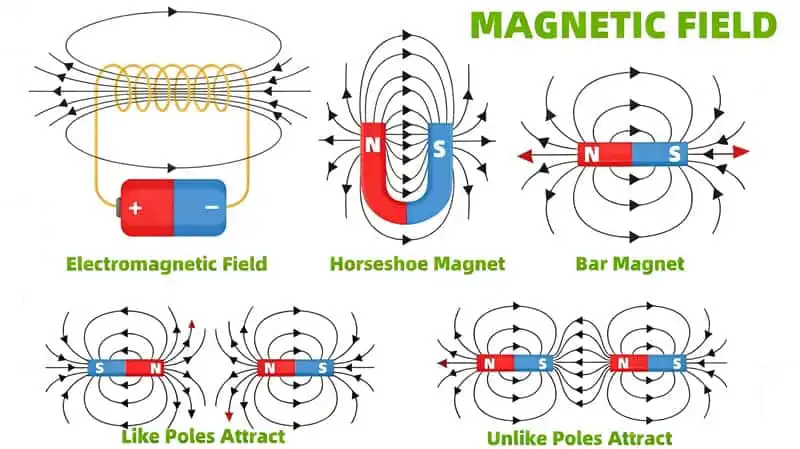
Per quanto tempo un magnete mantiene la propria forza?
Tenendo lontano un oggetto contenente un magnete dagli elementi che possono influire negativamente su di esso, come linee elettriche, altri magneti, temperature elevate e così via, il magnete manterrà il proprio magnetismo più a lungo.
Quali fattori possono influire sulla forza di un magnete?
I fattori che possono influire sulla forza di un magnete sono:
- Calore
- Radiazioni
- Forti correnti elettriche in prossimità del magnete.
- Altri magneti nelle vicinanze.
- Se non sono rivestiti, i magneti al neodimio si corrodono in ambienti molto umidi.
- I moderni materiali magnetici non risentono di urti e vibrazioni, a meno che questi non siano di intensità tale da causare danni meccanici al materiale.
I magneti perdono forza nel tempo?
I materiali magnetici moderni perdono nel tempo solo una porzione molto limitata del loro magnetismo. Per esempio, nel caso dei magneti in samario-cobalto, è stato dimostrato che tale perdita è inferiore all'1% nell'arco di dieci anni.
Quali sono i tipi di magneti più potenti?
I tipi di magneti più potenti oggi disponibili sul mercato sono quelli alle terre rare. Tra questi, i più potenti sono i magneti al neodimio. Tuttavia, a temperature elevate (circa 150 °C o superiori), i magneti in samario-cobalto possono risultare più potenti di quelli al neodimio, a seconda del circuito magnetico.
Che cosa sono i magneti superconduttori?
Sono i magneti più potenti in assoluto. Non richiedono nemmeno un nucleo metallico: sono costituiti da bobine di filo realizzate con speciali leghe metalliche che diventano superconduttrici quando sono esposte a temperature estremamente basse.
È possibile rendere più potente un magnete esistente?
Quando un magnete è stato magnetizzato completamente, si dice che è saturo e non può essere ulteriormente potenziato. In questo caso, i magneti sono come secchi d'acqua: una volta pieni, non possono essere riempiti ulteriormente.
È possibile rimagnetizzare un magnete che ha perso le proprie proprietà magnetiche?
La maggior parte dei magneti può essere rimagnetizzata fino a recuperare la forza originaria, purché il materiale non sia troppo caldo.
Come si definisce la forza o la potenza di un magnete?
The strength of a magnet is most commonly measured by the use of Gauss meters, magnetometers, or pull-testers. Gauss meters are measured in Gauss; Magnetometers in Gauss or any arbitrary unit (it is easy to compare one magnet to another); and pull-testers in pounds and kilograms, or other units of force. A sophisticated measurement of magnets is also made using Helmholtz Coils, search coils, and permeameters.
Special Gauss meters may cost up to a few thousand dollars. Integrated Magnetics stocks a few kinds of Gauss meters between 400 and 1500 apiece. Contact us if you wish to know more about them or place an order.
Suppose I have an NdFeB magnet having a Br of 12,300 Gauss. Will I be able to measure 12,300 Gauss on its surface?
No. The measurement of the Br value is done under closed-circuit conditions. A closed-circuit magnet is, however, of little use. Practically, you will find a field under 12,300 Gauss in the near vicinity of the magnetic surface. Whether the magnet contains any steel or not, the distance between the measurement point and the surface, and the size of the magnet will determine the real measure (assuming that the measurement is being done at room temperature).
In a few examples, a 1″ diameter Grade 35 neodymium magnet that is ¼” long will measure approximately 2,500 Gauss when 1/16″ away from the surface, and 2,200 Gauss when 1/8″ away from the surface.
4. Magnetic Fields and Their Behaviour
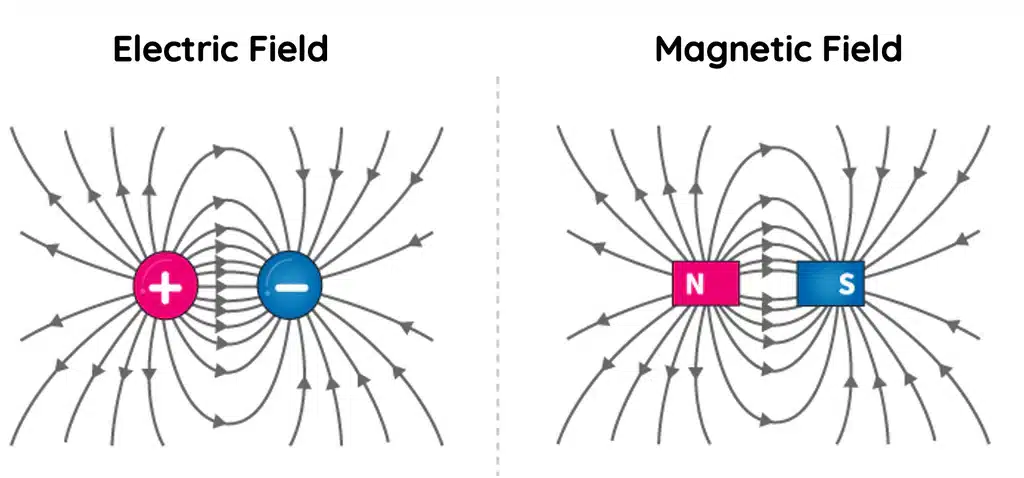
What is the strength of the magnetic field of the Earth?
The earth has a surface field strength of approximately 0.5 gauss, which can range up to 10 per cent depending on the strength of the crustal field. Between 0.85 and 0.45 is the range that is available in the world. The changes can be between 1% to 5% long lasting between a few hours and a full day, as a result of the geomagnetic storms.
What is the formula that describes the dependence of a magnetic field on distance?
The intensity of a magnetic field is decreasing more or less exponentially with distance.
The following is one illustration of the drop-off with distance of the field (in Gauss) of a samarium cobalt Grade 18-disc magnet 1/2″ long and 1″ in diameter:
What is the field strength equation with respect to distance?
In the case of a circular magnet with radius R and length L, the field Bx in the centerline of the magnet at a distance X from the surface is given by the following expression, where Br is the remaining induction of the substance:
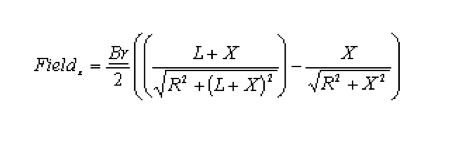
Field strength equation
It is also possible to use other formulae to compute the field of different other rectangular magnets and other rectangular magnets. Calculate self-field levels using our online calculators.
What can I use to block a magnetic field?
The only materials that can block a magnetic field are those attracted to a magnet. The magnetic field will be partially or even blocked in its entirety, depending on the thickness of the blocking piece.
For field mapping, Osnec magnets produce clean and well-defined magnetic fields that work well with Hall-effect sensors and visualization tools. This stable pattern makes them suitable for practical demonstrations and precision testing.
5. Magnetic Poles and Their Definitions
What are magnetic poles?
The surfaces, where the invisible lines of magnetic flux radiate out of, and the invisible lines of magnetic flux reenter the magnet, are known as magnetic poles.
What are the conventional definitions of the North and South poles?
A north pole is a pole of a magnet in which when it is left to move freely it tends to go towards the north pole of the earth. Stated differently, the north pole of a magnet will be in pursuit of the north pole of the Earth. Likewise, the south pole of the magnet follows the south pole of the Earth.
Can a specific pole be identified?
Yes, it can be marked top or the bottom of a magnet, depending upon what is specified.
How in the world do you know it is the North Pole when there is no sign of it?
You can’t tell by looking. You know by bringing a compass near the magnet. The tip of the needle, which usually moved towards the north pole of the Earth, would be directed towards the south pole of the magnet.
6. Magnetic Flux and How It Behaves
How do lines of magnetic flux behave in space?
The forces are three-dimensional as lines and surround a bar magnet on each side.
Opposites repel, and the unlike opposites attract. Two magnets with opposite poles increase the force lines, which become united on coming into contact, and the two magnets attract.
As the similar poles of a magnet are close another line of force is pushed away, and the magnet repels another.
Controlling flux density is a major challenge in rare-earth magnets. Brands like Osnec perform thermal-cycle testing and flux stability analysis to ensure their magnets maintain consistent flux even under mechanical or temperature stress.
7. Magnetic Orientation and Easy Axes
What does “direction of orientation” mean in magnets?
The majority of modern magnet materials are grained; they can be most easily maximally magnetized only in one direction. This is the easy axis, or the orientation direction, or the axis.
Un-oriented magnets (also called “Isotropic magnets”) are far weaker compared to oriented magnets, and may be made to be magnetized in any direction. Oriented magnets (or as they are sometimes called, Anisotropic magnets) are not directed everywhere – they are preferentially oriented in a direction they are supposed to be magnetized.
Whether axial, diametrical, or radial orientation is required, Osnec manufactures magnets with tightly controlled orientation tolerances. This consistency improves the overall performance of assemblies and rotational systems.
8. Key Magnetic Characteristics
Three major properties of magnets include:
Residual Induction: Assuming the symbol is Br, and in units of Gauss, this is an indication of the strength of the magnet that it could be.
Coercive Force: Since Hc is a symbol and is determined in Oersteds, this is a measure of the toughness of the task of de-magnetizing the magnet.
Maximum Energy Product: Using the various designations, BHmax, abbreviated as bhmax, the measurement unit being Gauss-Oersteds, is an indicator of the amount of magnet material needed to project a specified amount of magnetic flux.
9. Magnetic Properties of Common Materials
What are the characteristics of the common magnet materials?
The following are the three significant characteristics of magnets of some of the most frequently used types of magnets today:
How can this information be used in practice?
Given the size of the magnet, you can get an approximation of the amount of the magnetic flux various materials will project at a particular distance. This information may also be used to compare a material with another.
Example: What is the difference in flux that a neodymium grade 35 magnet will project as compared to a ceramic grade 5 of the same size at a given distance? Simply divide the Br of the neo 35 by the Br of ceramic 5 (12300/3950) to get 3.1. This means that the neo grade 35 will project 3.1 times the flux a same-size ceramic grade 5 would at a given distance.
Since the flux needed at a certain distance from the magnet is known, you can use this to determine and estimate the size of the volume of a magnet material you will need for varying magnets.
Problem: What would be the volume at which 5 magnets of ceramic would produce the same flux as a grade -35 of neodymium magnet at that distance? All that you have to do is divide BHmax of neo-35 by BHmax of ceramic-5 (35/3.6) to obtain 9.7. This implies that the amount of the ceramic-5 magnets would be 9.7 times more than that of the neo-35 magnet to produce the same flux.
10. Operating Temperatures of Magnet Materials
What are the maximum recommended operating temperatures for different magnet materials?
The highest temperature that a magnet can work with is heavily dependent on the permeance coefficient, or Pc, of the material. Pc is dependent upon the magnetic circuit on which the magnet is functioning. The greater the Pc (the more closed is the circuit), the greater the temperature within which the magnet may be used without severe demagnetism. The following table presents a range of the maximum operating temperatures of the various classes of magnet material. Special care may be required at temperatures near those given below to make sure that the magnet will not become demagnetized.
What is the highest temperature at which a magnet can still function effectively?
The magnets serve at various efficiency levels depending on the various circuits that they are involved with. The more closed the circuit is in which the magnet is operating in the more stable it will be, and the less the temperature will have an impact on the magnet.
11. Machining and Processing Magnets
Is it possible to machine magnets?
Yes, magnets can be machined. Nonetheless, the hard magnet materials are so hard to machine as opposed to the flexible or rubber-like magnet materials. There should be as much as possible, machining in the unmagnetized form, by the use of diamond tools and/or soft grinding wheels. Generally, machine-hardened magnet materials are not worth attempting to machine unless you are conversant with these special machining practices.
What factors affect the cost of machining magnets?
The factors that require the determination of the cost of the machine of the magnets include:
Quantità: The greater the quantity, the less the cost, as set-ups have to spread the set-up cost over the quantity, and special tooling is possible to machine a greater quantity.
Material: It is more expensive to machine SmCo materials; they are very brittle, and it is cheaper to machine the flexible materials due to their physical behaviors.
Shape: The shapes that are complex cost more than those that are simple.
Tolerances: The tighter the tolerances required, the further the magnets will be from the machine.
Machining magnets requires careful control to avoid cracking and chipping. Osnec produces sintered materials with cleaner edges and improved structural integrity, making post-machining processes safer and more predictable.
12. Magnetic Assemblies and Their Design
What is meant by a magnetic assembly?
Magnetic Assemblies are made up of one or more magnets, their other constituents, typically components like steel that tend to influence the functionality of the magnet.
How should magnets be mounted or assembled in my device?
In case the magnet should be attached to a machine, you can fix the magnet using some mechanical means, or you may do it using some adhesives.
Magnets are usually held by adhesives. When applying magnets on uneven surfaces then one needs an adhesive that has a large amount of body to enable conformability to the uneven surface. Hot glues are also discovered to be effective in attaching magnets to ceramics, wood, cloth, and other. In the case of magnets to be bonded to metal, superglue may be applied with high success.
Integrated Magnetics may provide flexible magnets that have adhesives already attached, so all one has to do is peel off the liner and stick the magnet onto your product. Call us, or request us to make a quote on a specialty order, or look at a large stock inventory listed online at www.magnetshop.com, where you can buy online.
It is also noted that just like any other adhesive application, the very most important thing would be to make sure all surfaces involved in bonding are clean and dry before bonding.
In assemblies, factors like adhesive choice, housing precision, and orientation balance matter. Osnec designs assemblies with these considerations in mind, ensuring stable magnetic performance and higher operational efficiency.
13. Safe Handling and Storage of Magnets
Guidelines for using and storing magnets
Magnets are to be handled with special care always! The magnets may shatter and cut people or hurt them.
Store magnets out of the magnetic pieces like floppy disks, credit cards, and computer screens.
Keep the store magnets in close packaging containers so that they do not pick up metal debris.
In case you have multiple magnets being stored, they should be in attractive places.
Due to the ease of demagnetization, alnico magnets must be kept with their keepers, which are iron or steel plates that tend to magnetize together, forming the attaching plates of the first one.
Safe handling and storage prevent magnet damage, corrosion, and accidental injury. Osnec uses packaging systems designed to limit over-attraction, moisture exposure, and impact-related stress during transport. These protective measures demonstrate the importance of proper storage practices and help users understand how environmental factors can impact long-term magnet performance.
14. Further Reading and Reference Resources
What are some recommended reference books on magnetism?
- Permanent Magnet Design Handbook, by Lester Moskowitz, a 385-page book aimed at the technical layperson.
- Permanent Magnets and their Applications, by Dr. Peter Campbell, a 203-page book aimed at the technical person.
- The Driving Force, by James Livingston, a 310- page book aimed at the non-technical reader. A very well written and interesting book on the history of magnets and some of their more exotic applications.
Request a Quote or Contact Us today and tell us how we can serve you with your specialty needs of custom magnets. Magnets are also available for purchase online at MagnetShop.com, with a large inventory.
FAQ
Di quali materiali sono realizzati i magneti?
I magneti sono generalmente realizzati con metalli ferromagnetici e leghe appositamente progettate, principalmente neodimio-ferro-boro (NdFeB), samario-cobalto (SmCo), ferrite (ossido di ferro ceramico), alnico (alluminio-nichel-cobalto) e magneti flessibili in gomma con polvere di ferrite o NdFeB. Osenc si concentra su magneti al neodimio alle terre rare ad alte prestazioni (NdFeB), progettati per offrire una maggiore energia magnetica, una magnetizzazione precisa e rivestimenti e forme specifici per l’applicazione, destinati all’uso industriale.
Come si formano i magneti in natura?
I magneti presenti in natura si formano quando minerali ricchi di ferro, come la magnetite, si allineano permanentemente al campo magnetico terrestre in seguito a eventi geologici o a fulminazioni. Queste “pietre calamita” naturali sono relativamente rare e presentano una forza magnetica modesta; nell’industria moderna, Osenc progetta invece magneti al neodimio ad alte prestazioni (NdFeB) mediante processi controllati di sinterizzazione, lavorazione meccanica e magnetizzazione, per ottenere proprietà magnetiche definite con precisione e prestazioni stabili.
Cosa succede se rompo un magnete a metà?
Se si spezza un magnete a metà, non si ottengono poli nord e sud isolati: ogni pezzo diventa un magnete più piccolo, con il proprio polo nord e polo sud. Tuttavia, gli urti meccanici e le superfici di frattura irregolari possono smagnetizzare parzialmente il materiale, ridurre il flusso magnetico utilizzabile e influire sulle prestazioni.
Qual è il tipo di magnete più potente?
I magneti permanenti più potenti disponibili in commercio sono i magneti sinterizzati alle terre rare in neodimio-ferro-boro (NdFeB), in particolare quelli di grado elevato come N52. Rispetto ai magneti in ferrite, alnico o SmCo, questi magneti offrono il prodotto energetico massimo (BHmax) più elevato e una rimanenza estremamente alta, risultando ideali per progetti compatti, a coppia elevata o a forza elevata. In qualità di produttore specializzato di magneti al neodimio, Osenc sviluppa gradi NdFeB, rivestimenti e direzioni di magnetizzazione per massimizzare le prestazioni magnetiche, bilanciando al contempo la resistenza alla temperatura e la protezione dalla corrosione in funzione delle diverse applicazioni industriali. (Scopri di più su Quanto è potente un magnete al neodimio)