






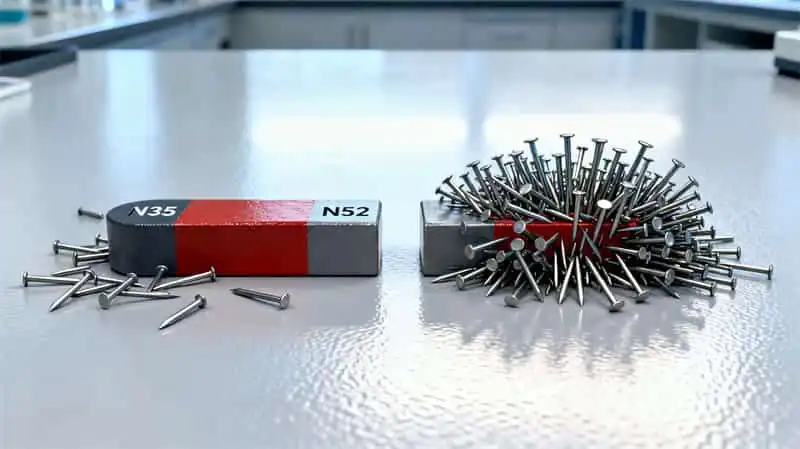
Confronto tra forza, costo e applicazioni
Magnete N35 vs N52: scopri le principali differenze tra N35 e N52 i magneti.
| Caratteristiche | Magnete N35 | Magnete N52 |
|---|---|---|
| Intensità del campo magnetico | Circa 11 700 gauss | Fino a 14 500 gauss |
| Forza di distacco | 1-2 kg per dimensioni simili | 1,5-3 kg per dimensioni simili |
| Costo | Inferiore rispetto a N52 | Superiore rispetto a N35 |
| Durabilità | Adatto agli usi quotidiani | Sensibile al calore e alle sollecitazioni |
| Applicazioni tipiche | Giocattoli, hobbistica, sensori | Motori, dispositivi medici, robotica |
| Prodotto energetico massimo | 33-35 MGOe | 50-52 MGOe |
| Temperatura di esercizio | Fino a 80 °C | Fino a 60 °C (80 °C per N52H) |
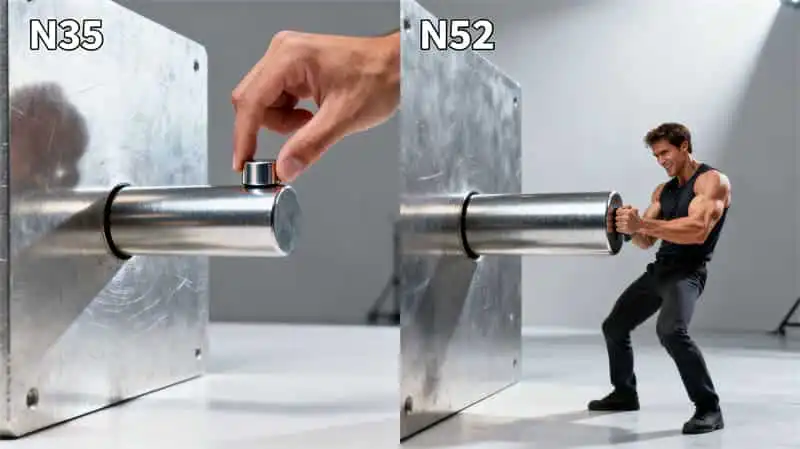
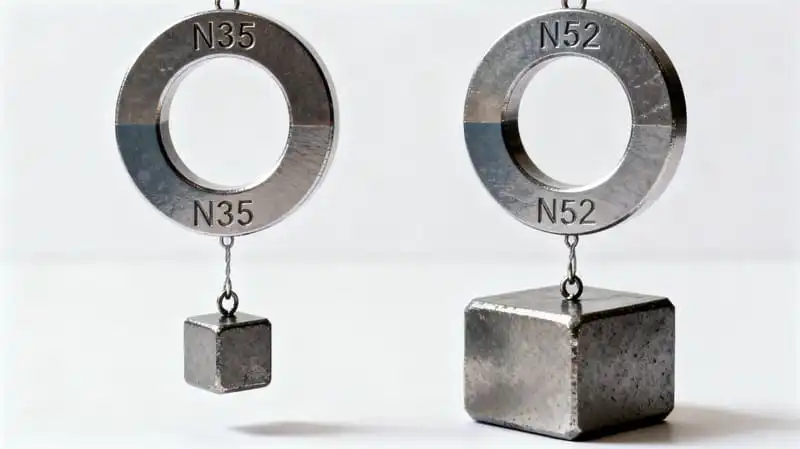
I magneti N52 sono molto più potenti dei magneti N35, ma ciascun tipo risponde a esigenze diverse. Prima di scegliere, occorre confrontare i magneti N35 e N52. Considerando l’intensità del campo magnetico, i magneti N35 raggiungono circa 11 700 Gauss, mentre i magneti N52 possono arrivare fino a 14 500 Gauss. Ciò significa che, a parità di dimensioni, i magneti N52 esercitano una forza di distacco maggiore. Di seguito una tabella riepilogativa:
| Tipo di magnete | Intensità del campo magnetico (Gauss) | Forza di distacco (a parità di dimensioni) |
|---|---|---|
| N35 | Circa 11 700 | 1-2 kg |
| N52 | Fino a 14 500 | 1,5-3 kg |
Conoscendo questi dati, sarà più facile scegliere il magnete adatto.
Che cos'è un magnete N35?
I magneti N35 sono un tipo comune di magnete al neodimio. Sono noti per l'elevata forza magnetica, il costo contenuto e la versatilità d'impiego. I magneti N35 vengono utilizzati quando è richiesta una buona forza magnetica, ma non il magnete più potente. (Correlato: che cos'è un magnete al neodimio)
Ecco le principali caratteristiche dei magneti N35:
| Proprietà | Valore/Descrizione |
|---|---|
| Induzione residua (Br) | 11,7-12,1 KGs |
| Forza coercitiva (Hc) | >11,0 KOe |
| Coercitività intrinseca (Hci) | >12 KOe |
| Prodotto energetico massimo (BH)max | 33-35 MGOe |
| Intensità del campo magnetico | Circa 11 700 gauss |
| Forza di distacco (a parità di dimensioni) | 1-2 kg |
| Durabilità | Adatto alla maggior parte degli usi comuni |
| Costo | Inferiore rispetto a gradi superiori come N52 |
| Applicazioni tipiche | Vedere la tabella seguente |
I magneti N35 sono utilizzati in numerosi prodotti e applicazioni. Ecco alcuni ambiti in cui vengono impiegati:
| Applicazione/settore | Descrizione |
|---|---|
| Trasporti | Utilizzati nei motori e nei generatori di auto elettriche e ibride |
| Tecnologia di separazione magnetica | Aiuta a separare i materiali magnetici da quelli non magnetici nei settori del riciclaggio e minerario |
| Tecnologia di magnetizzazione | Utilizzata negli stabilimenti per magnetizzare altri oggetti |
| Magnetoterapia | Inseriti in braccialetti e fasce per contribuire ad alleviare il dolore |
| Attrezzature per il fitness | Fornisce una resistenza regolabile nelle macchine per l’allenamento |
💡 Suggerimento: Confrontando i magneti n35 e n52, si nota che i magneti N35 costano meno. Sono adatti ai progetti che non richiedono la massima potenza.
Se si desidera un magnete potente ma non troppo costoso, N35 è una buona scelta per molti impieghi quotidiani. 🧲
Che cos’è un magnete N52?
I magneti N52 sono potenti magneti al neodimio adatti alla maggior parte degli impieghi. I magneti N54 sono i magneti al neodimio più potenti. Sono molto più potenti rispetto agli altri gradi di magneti al neodimio. I magneti N52 forniscono maggiore potenza anche quando sono di piccole dimensioni. Per questo sono tra i preferiti per progetti impegnativi e ad alta tecnologia. (Correlato: che cos’è un magnete n52)
La tabella seguente riporta le principali proprietà dei magneti N52:
| Proprietà | Magneti N52 |
|---|---|
| Prodotto energetico massimo | 52 MGOe |
| Induzione residua (Br) | 14 800 gauss |
| Forza coercitiva (Hc) | 11 500 oersted |
| Temperatura di esercizio | Fino a 60 °C (80 °C N52H) |
| Densità | 7,5 g/cm³ |
I magneti N52 si distinguono per la loro forza molto elevata. Sono indicati quando occorre molta forza in uno spazio ridotto. Le loro prestazioni derivano dall'elevato prodotto energetico massimo e dall'elevata induzione residua. Ciò consente loro di trattenere o spostare oggetti pesanti anche con magneti di piccole dimensioni.
I magneti N52 sono utilizzati in numerosi prodotti e settori. Ecco alcuni esempi di impiego:
- Robotica e automazione: motori per robot e sistemi di controllo del movimento 🤖
- Settore automobilistico: motori elettrici e sensori 🚗
- Apparecchiature medicali: morsetti magnetici e piccoli dispositivi 🏥
- Elettronica di consumo: cuffie e altoparlanti 🎧
- Macchinari industriali: sistemi di serraggio magnetico e separatori magnetici 🏭
🧲 Suggerimento: Confrontando i magneti n35 e n52, si nota che i magneti N52 sono molto più forti. Se occorrono le massime prestazioni magnetiche, N52 è la scelta migliore. I magneti N52 sono particolarmente indicati quando servono sia una forza elevata sia dimensioni ridotte.
Confrontando n35 e n52, si nota che i magneti N52 costano di più. Tuttavia, offrono prestazioni magnetiche superiori a parità di dimensioni. Per questo molti ingegneri e progettisti scelgono N52 per gli impieghi più impegnativi.
I magneti N52 sono molto più forti e più costosi dei magneti N35, ma ciascun tipo è più adatto a esigenze diverse. Prima di scegliere, è necessario valutarne la forza, il costo, la durabilità e gli impieghi.
La seguente tabella consente un rapido confronto:
| Categoria | Magneti N35 | Magneti N52 |
|---|---|---|
| Intensità | Prodotto energetico massimo: 33-35 MGOe Flusso magnetico: 11 700-12 100 Gauss | Prodotto energetico massimo: 50-52 MGOe Flusso magnetico: 14 200-14 500 Gauss |
| Costo | Prezzo inferiore, più conveniente 💸 | Prezzo quasi doppio rispetto a N35 a parità di peso 💰 |
| Durabilità | Minore rischio di rottura; più adatto alle temperature più elevate 🔥 | Può richiedere rivestimenti; più sensibile al calore e alle sollecitazioni 🛡️ |
| Applicazioni tipiche | Giocattoli, lavori artigianali, sensori, fai da te, elettronica di consumo 🧸 | Motori, altoparlanti, dispositivi medicali, robotica, progetti compatti 🤖 |
Come si può osservare, i magneti N52 sono circa 55% più potenti dei magneti N35 delle stesse dimensioni. Ciò consente di ottenere una maggiore forza di tenuta in uno spazio più ridotto. Se occorre un magnete per uno spazio ristretto o per un'applicazione che richiede una forza elevata, N52 è la scelta più indicata. I magneti N35 sono adatti ai progetti di uso quotidiano, soprattutto quando non è necessaria la massima potenza.
- Scegli N35 se occorre un magnete adatto a lavori artigianali, giocattoli o semplici dispositivi elettronici. Consente di risparmiare offrendo prestazioni affidabili.
- Scegli N52 quando è necessaria la massima potenza, ad esempio per motori, altoparlanti o strumenti medicali. Il prezzo è superiore, ma anche la potenza è massima.
📝 Suggerimento: I magneti N35 sopportano meglio il calore e resistono maggiormente alla rottura. I magneti N52 esercitano una forza maggiore, ma richiedono una manipolazione attenta.
È sempre opportuno scegliere il magnete in base alle esigenze del progetto. Occorre considerare forza, dimensioni, costo e ambiente di utilizzo. In questo modo si può fare ogni volta la scelta migliore! 😊
Gradi dei magneti al neodimio
Che cosa sono i gradi dei magneti al neodimio?
I gradi dei magneti al neodimio indicano la forza magnetica e la resistenza al calore di un magnete. Il numero del grado fornisce molte informazioni sul magnete. Più alto è il numero, maggiore è la forza del magnete. Ogni grado prevede inoltre una temperatura massima che il magnete può sopportare prima di indebolirsi. Le aziende utilizzano il grado per aiutare a scegliere il magnete più adatto al progetto. Maggiori informazioni sul grado dei magneti.
I gradi dei magneti al neodimio dipendono da tre fattori:
- Forza magnetica (espressa come prodotto energetico massimo, o BHmax)
- Temperatura massima di esercizio del magnete
- Resistenza del rivestimento
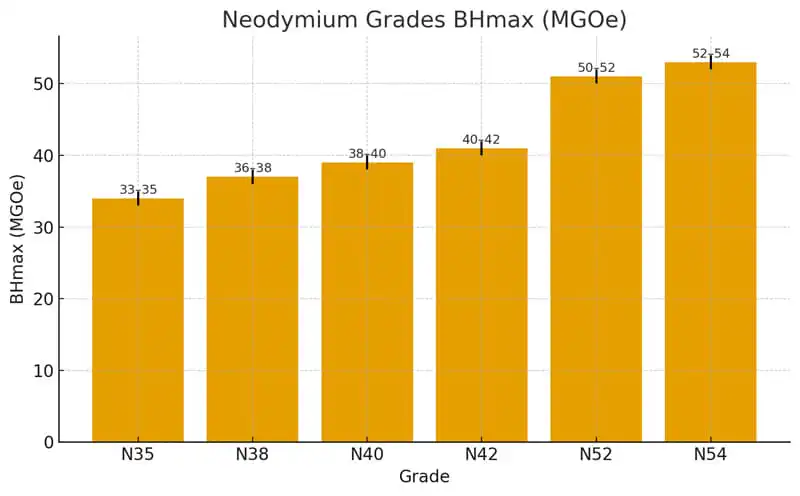
Questa tabella mostra le differenze tra i vari gradi:
| Grado | Temperatura massima di esercizio (°C) | Forza magnetica (BHmax) | Applicazioni tipiche |
|---|---|---|---|
| N35 | 80 | 33–35 MGOe | Giochi magnetici, chiusure, espositori |
| N38 | 80 | 36–38 MGOe | Sensori magnetici, piccoli motori |
| N40 | 80 | 38–40 MGOe | Separatori magnetici, attuatori |
| N42 | 80 | 40–42 MGOe | Unità disco rigido, chiusure magnetiche |
| N52 | 80 | 50–52 MGOe | Motori ad alta coppia, giunti magnetici, morsetti/dispositivi di fissaggio ad alta forza, rotori di generatori, sistemi di tenuta ad alta induzione magnetica |
| N54 | 80 | 52–54 MGOe | Microazionamenti/attuatori, rilevamento ed esperimenti di precisione (ad es. dimostrazioni di levitazione magnetica), separazione magnetica e fissaggio di alta gamma |
🧲 Suggerimento: Prima di acquistare un magnete al neodimio, verificare sempre il grado magnetico. In questo modo è possibile scegliere un magnete che non sia né troppo debole né troppo potente per il progetto.
Magneti N35 e N52: spiegazione delle differenze
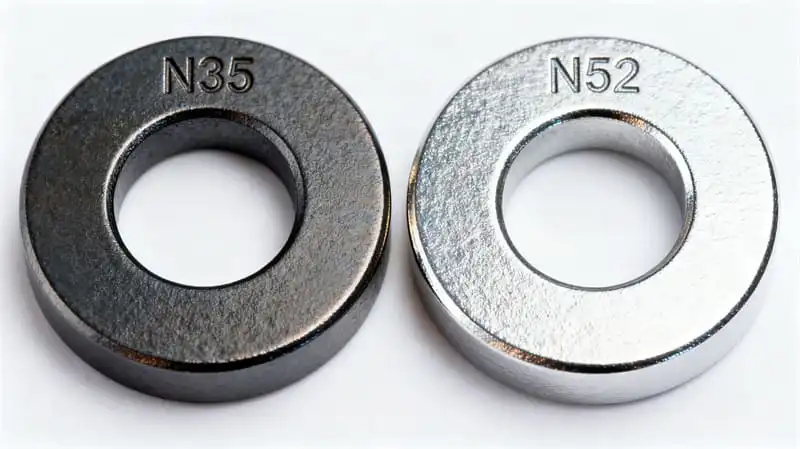
N35 e N52 sono due tra i gradi più importanti dei magneti al neodimio. N35 è il grado più diffuso ed economico. N52 è il grado ad alta forza magnetica generalmente disponibile. Ecco un modo semplice per confrontarli:
| Grado | Descrizione | Confronto delle prestazioni magnetiche |
|---|---|---|
| N35 | Grado più comune e meno potente | Forza magnetica di riferimento |
| N52 | Grado più potente, 49% più forte di N35 | Prestazioni superiori |
I magneti N35 vengono utilizzati per giocattoli, lavori creativi e semplici dispositivi. I magneti N52 sono più indicati quando occorre molta forza magnetica in uno spazio ridotto, ad esempio nei motori o in dispositivi particolari. Dal confronto risulta che N52 è molto più potente, mentre N35 è meno costoso.
💡 Nota: Il numero del grado indica la forza del magnete. A numeri più elevati corrisponde una maggiore forza, ma in alcuni casi una minore capacità di resistere al calore.
Ora è chiaro in che modo i gradi dei magneti al neodimio aiutano a scegliere il magnete adatto al progetto. Verificare sempre il grado prima della scelta!
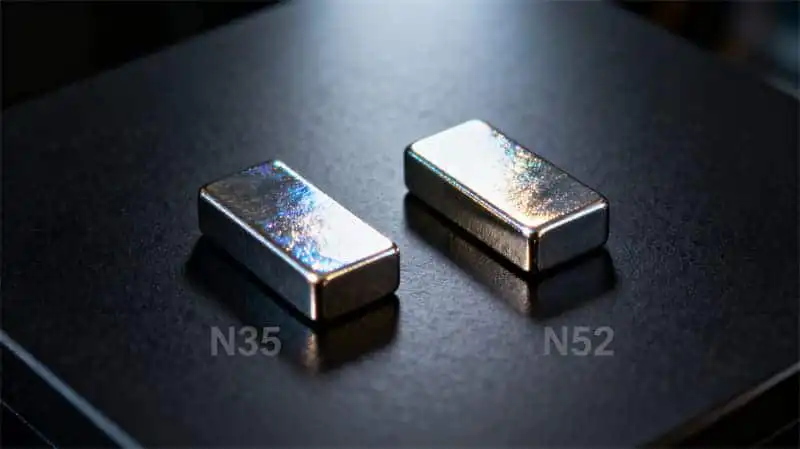
Confronto della forza dei magneti N35 e N52
Forza magnetica e forza di tenuta
A parità di dimensioni, i magneti N52 sono molto più potenti dei magneti N35. La differenza è immediatamente percepibile quando si cerca di staccarli da una superficie metallica. I magneti N52 possono sostenere oggetti più pesanti e aderiscono più saldamente. Per questo sono la scelta migliore quando occorre la massima forza di presa.
La tabella seguente mostra la forza di tenuta di ciascun magnete:
| Tipo di magnete | Forza di distacco (kgf) (piastra da 10 × 10 mm) | Induzione residua (Tesla) |
|---|---|---|
| N35 | ~5 kg | 1.2 |
| N52 | ~7 kg | 1.4 |
Come si può osservare, i magneti N52 offrono una forza di tenuta superiore di circa 40% rispetto ai magneti N35 delle stesse dimensioni. Ciò consente di utilizzare un magnete N52 più piccolo per svolgere la stessa funzione di un magnete N35 più grande. Se il progetto richiede un'elevata forza magnetica, N52 è la scelta migliore.
💡 Suggerimento: La forza del magnete deve sempre essere adeguata alle esigenze applicative. Una forza eccessiva può rendere difficile maneggiare o separare i magneti.
Efficienza e prestazioni
I magneti N52 sono più efficienti dei magneti N35 perché immagazzinano ed erogano una maggiore quantità di energia magnetica. Ciò consente di ottenere maggiore potenza da un magnete più piccolo. Questo aspetto è espresso dal prodotto energetico massimo, che misura la quantità di energia magnetica che un magnete può immagazzinare.
La tabella seguente confronta l'energia erogata e le caratteristiche:
| Grado | Prodotto energetico massimo (MGOe) | Caratteristiche |
|---|---|---|
| N35 | 35 | Costo contenuto, forza magnetica inferiore, adatto per applicazioni a temperatura normale |
| N52 | 52 | Forza magnetica più elevata, ideale per progetti compatti e ad alte prestazioni |
I magneti N52 forniscono la massima energia magnetica in rapporto alle loro dimensioni. Possono essere utilizzati quando lo spazio è limitato ma è comunque richiesta un'elevata potenza. I magneti N35 sono adatti per applicazioni semplici che non richiedono la massima forza.
🧲 Nota: I magneti N52 sono la scelta migliore per i progetti ad alte prestazioni. I magneti N35 sono più indicati per gli impieghi comuni e quando si desidera contenere i costi.
When you compare n35 vs n52 magnet, you see that N52 magnets are the top performers in the world of neodymium magnet grades. You should always think about your project’s needs before you choose. If you need more holding power and efficiency, N52 is the way to go. If you want a good balance of cost and strength, N35 magnets are a smart choice.
N35 Vs N52 Magnet Applications
Typical Uses for N35 Magnets
You will find N35 magnets in many everyday items because they offer good strength at a lower price. These magnets work well when you do not need the highest power. Here are some common uses:
- Refrigerator magnets 🧲
- DIY crafts and school projects ✂️
- Magnetic toys and puzzles 🧸
- Cabinet latches and closures 🚪
- Small sensors and switches 🔌
N35 magnets fit best in places where you want a balance between cost and strength. You can use them for simple tasks at home or in the classroom.
Typical Uses for N52 Magnets
N52 magnets give you much more power in a smaller size, so you see them in advanced technology and tight spaces. These magnets help when you need strong holding force. Here are some typical uses:
- Electric motors and generators ⚡
- Robotics and automation 🤖
- Medical devices and scientific tools 🏥
- High-end speakers and headphones 🎧
- Magnetic separators in factories 🏭
N52 magnets work best for jobs that need maximum strength. You often find them in professional or industrial settings.
When you compare n35 vs n52 magnet, remember that neodymium magnet grades help you pick the right tool for the job. Choose wisely to get the best results!
Cost and Value of N35 Vs N52 Magnet
N35 Vs N52 Magnet Price Differences
N52 magnets cost more than N35 magnets for the same size and shape. You pay extra for the higher strength and performance. If you look at prices online, you see that N52 magnets can be almost twice as expensive as N35 magnets. This happens because N52 magnets use more advanced materials and need stricter manufacturing.
N35 Vs N52 Magnet Cost-Effectiveness for Different Needs
You should pick the magnet that gives you the best value for your project. If you need strong holding power in a small space, N52 magnets work better even though they cost more. If you want magnets for crafts, toys, or simple jobs, N35 magnets give you good performance at a lower price.
Here are some ways to decide which magnet is more cost-effective:
- Use N35 magnets for school projects, crafts, and everyday items. You get enough strength and save money. 🧸
- Choose N52 magnets for motors, speakers, or scientific tools. You pay more, but you get top performance. ⚡
- Think about how many magnets you need. For large orders, N35 magnets help you keep costs down.
- Look at the space you have. If you need a small magnet with big power, N52 is the better choice.
📝 Nota: When you compare neodymium magnet grades, you see that higher grades like N52 give you more strength but cost more. Always match your magnet choice to your budget and project needs.
N35 Vs N52 Magnet Durability and Safety
N52 magnets are stronger, but both N35 and N52 magnets need careful handling and have limits for heat and long-term use. You should know how these magnets compare in durability and safety before you choose one.
Handling and Brittleness
You must handle neodymium magnets with care. Both N35 and N52 magnets can break or chip if you drop them or let them slam together. N52 magnets are stronger, so they can snap together with more force. This makes them more likely to crack if you are not careful.
- Always separate magnets slowly.
- Keep magnets away from metal objects when you move them.
- Wear gloves to protect your fingers from pinching.
⚠️ Suggerimento: Never let two strong magnets jump together. They can break or pinch your skin.
N35 Vs N52 Magnet Temperature and Longevity
Neodymium magnets lose strength if you use them in high temperatures for a long time. N35 and N52 magnets have different limits for heat. You should check the maximum working temperature before you use them in hot places.
Here is a table that shows how N35 magnets perform:
| Grado magnetico | Maximum Working Temperature | Recommended Long-term Operating Temperature |
|---|---|---|
| N35 | 80 °C (176 °F) | 60-70°C |
N52 magnets have similar limits, but you should always check the label for each magnet. If you use magnets above their recommended temperature, they can lose power and may not work as well over time.
🌡️ Nota: If you need a magnet for a hot place, look for special neodymium magnet grades made for high temperatures.
Safety Tips
You must follow safety rules when you use strong magnets. Both N35 and N52 magnets can pinch your skin or damage electronics.
- Keep magnets away from children and pets.
- Do not put magnets near credit cards or computers.
- Store magnets in a safe box when you are not using them.
- Use eye protection if you work with large magnets.
🧲 Reminder: Strong magnets can be dangerous if you do not use them safely. Always read the safety guide before you start your project.
You can choose the right magnet if you know how to handle them and understand their limits. This helps you stay safe and get the best results from your project.
Which Magnet Should You Choose?
You should pick your magnet based on what your project needs and where you will use it. N35 and N52 magnets both have good points, so let’s see which one is right for you.
For Hobbyists
If you like crafts or making small gadgets, you want a magnet that is simple and safe. N35 magnets are great for most hobby projects. They cost less and work for daily jobs. You can use them for fridge magnets, models, or easy electronics. N52 magnets are stronger, but you must be careful because they stick together fast.
Quick tips for hobbyists:
- Use N35 for crafts, models, and light holding jobs 🧸
- Pick N52 if you need strong force in a tiny space 💪
- Always keep magnets away from little kids
🧲 Nota: N35 magnets are easier to pull apart and safer for people just starting.
For Industrial Use
You need to think about many things when picking magnets for machines or factories. N52 magnets are very strong, but you must check if they fit your work area.
Key factors to consider:
- Temperature: Make sure the magnet works in your heat range 🌡️
- Environment: Check for water, chemicals, or dust 🌧️
- Size: Measure the space for your magnet 📏
- How it fits: Decide if the magnet joins other parts or stands alone 🛠️
- Coating: Use coatings for extra safety if needed 🛡️
- Coercivity: Pick magnets that do not lose their power easily
- High-temperature strength: Choose magnets that stay strong in hot places
N52 magnets are best for small, powerful jobs. N35 magnets are good for bigger, easier tasks.
For Education
If you teach or learn with magnets, you want ones that are safe, cheap, and last long. N35 magnets are best for classroom kits and science projects. N52 magnets help with hard experiments, but you must use them with care.
| Fattore | Magneti N35 | Magneti N52 |
|---|---|---|
| Costo | Less expensive | More expensive |
| Durability & Temperature | Good for higher temperatures, less breakage | May need coatings for heat and durability |
| Applicazioni | DIY kits, basic electronics, classroom demos | Motors, medical devices, advanced experiments |
💡 Suggerimento: For most school projects, N35 magnets are safe and save money.
You can look at neodymium magnet grades to find the best mix of strength, safety, and price for your needs. Always match the magnet to your project to get the best results! 😊
How to Choose Between N35 and N52 Magnets
You should choose between N35 and N52 magnets by looking at your project’s needs for strength, size, budget, durability, and temperature. Each factor helps you pick the right magnet for the job.
Strength Requirement
If you need a strong magnet, N52 gives you more power for the same size. N35 works well for lighter tasks. Ask yourself how much force you need. Using a magnet that is too strong can make handling tricky.
- N52: Best for heavy holding, motors, or tight spaces 🏋️♂️
- N35: Good for crafts, toys, and simple holding jobs 🎨
Size and Space Constraints
Space matters when you pick a magnet. If you have a small area, N52 magnets fit better because they are stronger in a smaller size. N35 magnets need more space for the same strength.
| Tipo di magnete | Best For Small Spaces | Note |
|---|---|---|
| N35 | ❌ | Needs more room |
| N52 | ✅ | Strong in tight spots |
Tip: Always measure your space before you choose.
Budget
Your budget can guide your choice. N35 magnets cost less and work for most everyday uses. N52 magnets cost more because they are stronger and may need extra care.
- N35: Saves money for big projects 💸
- N52: Worth the price for high performance 💰
Durability Needs
Think about how tough your magnet needs to be. N35 magnets are more durable and stable, especially if you use them in rough places. N52 magnets are powerful but can chip or lose strength faster if not handled carefully.
| Tipo di magnete | Durabilità | Applicazione ideale |
|---|---|---|
| N35 | Alta | Harsh or changing conditions |
| N52 | Medio | Clean, controlled settings |
Temperature Conditions
Temperature affects magnet strength. N35 magnets handle heat better and keep their power longer. N52 magnets can lose strength faster if they get too hot.
- N35: Works up to 80°C, slow decay 🔥
- N52: Needs special care above 80°C, faster decay 🌡️
Note: Always check the temperature where you will use the magnet.
When you compare neodymium magnet grades, look at these five points. This helps you pick the best magnet for your project every time.
N52 magnets are much stronger than N35 magnets, but each fits different needs. You should pick N35 if you want a good balance of strength and price. Choose N52 when you need maximum power in a small space. Here’s a quick checklist to help you decide:
- 🧲 Need strong force in tight space? Pick N52.
- 💸 Want to save money for simple jobs? Choose N35.
- 🔥 Using in hot places? N35 works better.
Now you can choose the right magnet for your project with confidence!
Vedi: wiki
FAQ
Qual è la principale differenza tra i magneti N35 e N52?
I magneti N52 sono molto più potenti dei magneti N35.
A parità di dimensioni, i magneti N52 offrono una maggiore forza di tenuta. I magneti N35 costano meno e sono adatti alle applicazioni semplici. I magneti N52 sono più indicati quando serve una forza elevata in uno spazio ridotto. 🧲
Posso utilizzare magneti N35 e N52 per lo stesso progetto?
È possibile usare entrambi, ma i risultati saranno diversi.
N35 è adatto a impieghi leggeri, come il bricolage o i magneti da frigorifero. N52 è indicato per impieghi gravosi, come motori o robotica. Adeguare sempre la forza del magnete alle esigenze del progetto. ⚡
I magneti N52 sono sempre migliori degli N35?
N52 non è sempre la scelta migliore.
È opportuno scegliere il grado N52 per ottenere la massima forza magnetica. N35 è più indicato se si desidera risparmiare o se è sufficiente una forza inferiore. In alcuni casi, una forza eccessiva rende più difficili le operazioni di manipolazione. 💡
Quale magnete dura più a lungo, N35 o N52?
Entrambi i magneti durano a lungo se trattati con cura.
N35 tollera leggermente meglio il calore. N52 richiede una manipolazione accurata per evitare scheggiature. Conservare entrambi in modo sicuro ed evitare temperature elevate per ottenere i migliori risultati. 🔒
I magneti N35 e N52 sono sicuri per i bambini?
Entrambi i magneti possono essere pericolosi per i bambini.
Tenere tutti i magneti potenti fuori dalla portata dei bambini. Possono pizzicare la pelle o danneggiare i dispositivi elettronici. Usare sempre i magneti sotto la supervisione di un adulto. 🚫