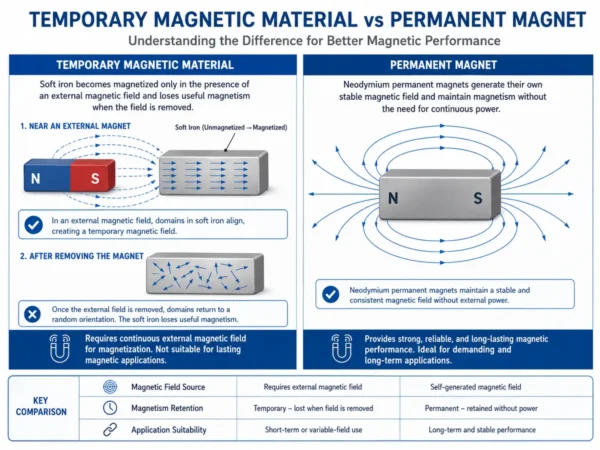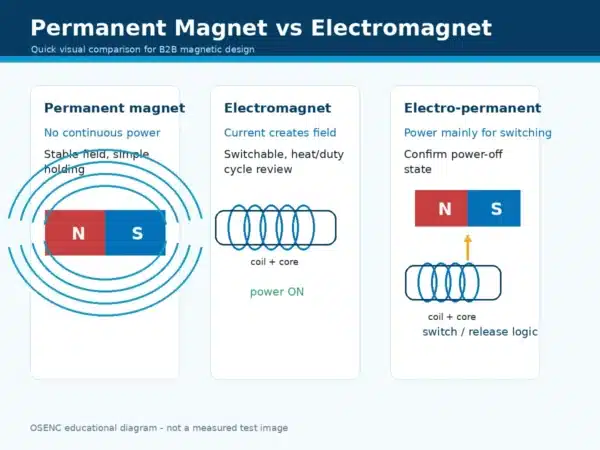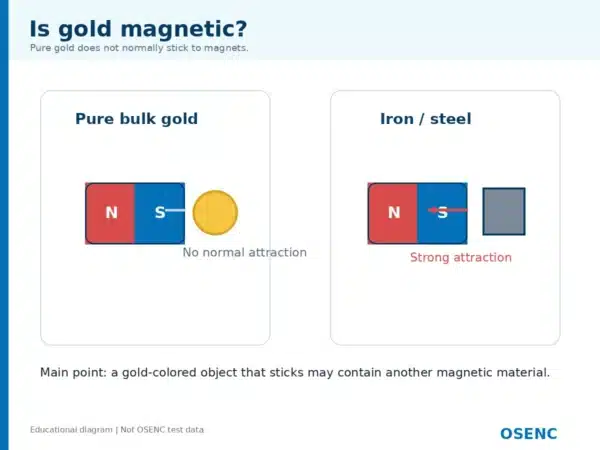








Molte persone mi chiedono: che cos'è un magnete a disco? Un magnete a disco è un magnete circolare e piatto, con campi magnetici intensi concentrati sulle superfici piane. Questi magneti sembrano semplici, ma si distinguono per la loro forma. Conoscere i principi di base del campo magnetico aiuta a capire perché i magneti a disco siano così efficaci nella vita quotidiana. Vedo magneti a disco ovunque:
- 🧲 Sostengono cartelli, chiudono imballaggi e mantengono in posizione elementi nei dispositivi elettronici.
- 💼 Filtrano il metallo negli stabilimenti e mantengono in posizione elementi nei macchinari.
I magneti a disco sfruttano il proprio campo magnetico per rendere le operazioni più semplici e affidabili.
Che cos'è un magnete a disco
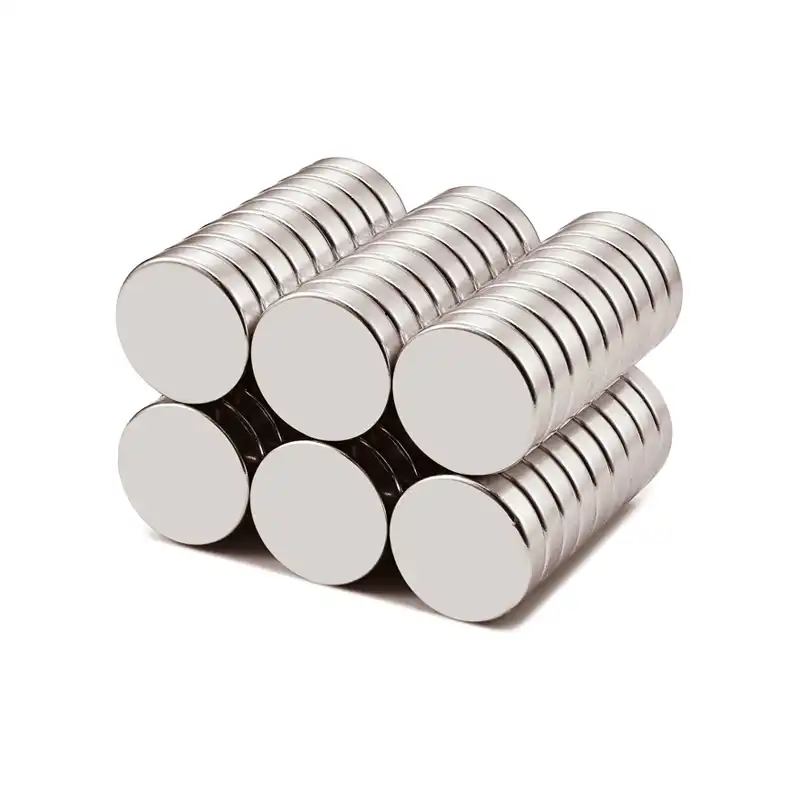
Un magnete a disco è un magnete piatto e circolare, con un diametro maggiore dello spessore. Spesso mi vengono poste domande sui magneti a disco. La risposta è semplice, ma i dettagli sono importanti. Quando ne tengo uno in mano, appare sottile e largo. Si distingue dagli altri magneti. Le superfici piane esercitano una forte attrazione su entrambe le facce.
Ecco le principali caratteristiche che noto in un magnete a disco:
- 🟢 È piatto e ha la forma di un disco, con un'ampia superficie circolare.
- 🟢 Il diametro è sempre maggiore dello spessore.
- 🟢 È realizzato con materiali come neodimio, ferrite, samario-cobalto o AlNiCo.
- 🟢 Genera campi magnetici intensi, concentrati sulle superfici piane.
- 🟢 Viene utilizzato in motori, sensori, altoparlanti e molte altre applicazioni.
- 🟢 È semplice da usare e dura a lungo.
- 🟢 Sono disponibili in numerose dimensioni e gradi magnetici per diverse applicazioni.
Quando penso a ciò che rende speciale un magnete a disco, noto che la sua forma contribuisce a creare un campo magnetico intenso e concentrato. Per questo i magneti a disco sono adatti per trattenere, fissare o rilevare oggetti.
Magneti a disco e magneti di altre forme a confronto
Mi piace confrontare i magneti a disco con altri tipi, per mostrare ciò che li rende unici. Ogni forma presenta caratteristiche e impieghi specifici. La tabella seguente illustra le differenze:
| Forma del magnete | Struttura | Campo magnetico | Impieghi comuni |
|---|---|---|---|
| Magnete a disco | Piatto, rotondo, con un'ampia area polare | Intenso, concentrato al centro | Tenuta, bricolage, elettronica |
| Magnete a barra | Lungo, rettangolare | Linee di campo distribuite | Rilevamento, separazione, attività didattiche |
| Magnete ad anello | Circolare con foro | Minore intensità, centro cavo | Motori, sensori, dispositivi rotanti |
| Magnete cilindrico | Rotondo, alto | Campo uniforme e affidabile | Sensori, attuatori, industria |
| Magnete a ferro di cavallo | A forma di U, poli ravvicinati | Forza molto elevata su un'area ridotta | Sollevamento, ingegneria, dimostrazioni scientifiche |
💡 Dico sempre ai miei amici che i magneti a disco sono particolari perché la loro forma piatta e circolare genera un'intensa forza di attrazione proprio dove serve. Altri magneti, come quelli a barra o ad anello, distribuiscono la forza in modo diverso oppure funzionano meglio in determinate configurazioni.
I magneti a disco sono la forma che vedo più spesso nei negozi e negli stabilimenti industriali. Le loro caratteristiche li rendono utili e non troppo costosi. Li uso per fissare oggetti o realizzare piccoli macchinari. Quando qualcuno mi chiede informazioni sui magneti a disco, mostro come la loro forma e le loro caratteristiche li rendano così utili.
Campi magnetici dei magneti a disco

Struttura del campo
I magneti a disco generano un campo magnetico che raggiunge la massima intensità sulle superfici piane e si propaga secondo una configurazione tridimensionale. Quando osservo un magnete a disco, noto che le linee del campo magnetico partono da una delle superfici piane. Curvano attorno al magnete fino a raggiungere l'altra superficie piana. In questo modo si crea un campo magnetico intenso al centro di ciascuna faccia.
Ecco cosa osservo nella struttura del campo magnetico dei magneti a disco:
- Le linee del campo magnetico sono fortemente concentrate al centro delle facce piane.
- Il campo è più intenso in prossimità della superficie e ancora di più lungo i bordi, dove viene rafforzato dagli effetti di bordo.
- Le linee del campo magnetico si richiudono da un lato all’altro, creando un percorso ben definito per attrarre o respingere altri magneti.
- Il campo non è solo planare: si estende sopra, sotto e attorno al magnete, assumendo una configurazione tridimensionale.
- Le linee di flusso magnetico mostrano come il campo attraversa e circonda il magnete a disco.
🧲 Suggerimento: Disponendo della limatura di ferro su un magnete a disco, è possibile osservare le linee del campo magnetico. Queste formano configurazioni interessanti, soprattutto lungo i bordi.
Intensità del campo
L’intensità del campo dei magneti a disco dipende dal materiale, dallo spessore e dalle dimensioni; i magneti a disco al neodimio presentano le proprietà magnetiche più intense. Quando mi serve un magnete potente, controllo sempre il grado magnetico e lo spessore. I magneti a disco più spessi generano un campo superficiale più intenso, mentre quelli più sottili producono un campo più debole.
📏 Nota: I sensori moderni consentono di verificare facilmente l’intensità del campo. Anche i metodi tradizionali, come l’uso di una bussola o di un pendolo magnetico, possono indicare l’intensità del campo di un magnete.
Distribuzione del campo magnetico
I magneti a disco presentano un campo magnetico concentrato in corrispondenza delle facce, ma il campo si disperde e si indebolisce con la distanza, soprattutto rispetto ai magneti a barra. Il campo non è uniforme attorno al magnete. La forza di attrazione è massima al centro e lungo i bordi delle facce piane.
La tabella seguente consente di confrontare la distribuzione del campo magnetico dei magneti a disco con quella di altre forme:
| Forma del magnete | Configurazione delle linee del campo magnetico | Distribuzione del campo magnetico | Comportamento in attrazione e repulsione |
|---|---|---|---|
| Magnete a disco | Le linee si richiudono da una faccia all’altra | Concentrate sulle facce e sui bordi | Forte attrazione e repulsione |
| Magnete a barra | Le linee si estendono da un’estremità all’altra | Più diffuse e meno concentrate | Efficaci in attrazione, meno in repulsione |
| Magnete ad anello | Le linee si richiudono attraverso il foro centrale | Uniforme attorno all’anello, meno intenso al centro | Attrazione e repulsione bilanciate |
🌀 Curiosità: Le linee del campo magnetico dei magneti a disco possono assumere configurazioni diverse a seconda della direzione di magnetizzazione. Ciò modifica l’andamento del campo e l’interazione del magnete con altri magneti.
Influenza di forma e dimensioni
Spessore
A parità di diametro, i magneti a disco più spessi generano campi magnetici più intensi e di maggiore portata rispetto a quelli più sottili. When I use a thick disc magnet, I notice its strong pull right away. The extra thickness means there is more magnetic material inside. This makes the magnetic field stronger. As the magnet gets thicker, it can hold heavier things. But after a certain thickness, making it even thicker does not help much. For example, I tried a 1/2″ diameter disc magnet with different thicknesses. The thicker magnets could hold more weight. But adding even more thickness did not make a big difference. The surface the magnet sticks to also matters. If the steel is too thin, the magnet cannot work as well.
🧲 Suggerimento: If you want to hold heavy things, pick a thicker disc magnet. But super thick magnets may not always be much stronger.
Diameter
A larger diameter increases the holding force of disc magnets by giving them a bigger surface area and more magnetic flux. I always check both thickness and diameter for strong magnetic properties. A bigger diameter lets the magnet touch more metal. This helps the magnetic field spread out and grab better.
When I use disc magnets with a bigger diameter, I see a big jump in holding power. The magnetic field covers more area. This means stronger magnetic properties and better results for holding, attaching, or sensing.
Comparison to Other Magnets
Disc magnets stand out because their wide, flat shape creates strong, focused magnetic fields, making them versatile and powerful for many uses. I like to compare disc magnets to cube and cylinder magnets. This helps people pick the right one.
Here’s a table that shows the differences:
| Forma del magnete | Key Characteristics | Performance Influence |
|---|---|---|
| Magneti a disco | Wide, flat surface; low profile | Strong and effective due to broad contact area; versatile; sometimes tricky to handle |
| Cube Magnets | Equal sides; easy to grip | Good for simple uses; poles are harder to spot |
| Cylinder Magnets | Tall, round; easy to grasp | Strong pull along the center; great for focused magnetic fields |
I see that disc magnets and cylinder magnets both have strong magnetic fields along their axis. Disc magnets are best when I need a flat, wide area to stick to something. Cylinder magnets are better for a strong pull in one direction. Cube magnets are easy to hold but do not always have the same strong magnetic properties as disc magnets.
💡 Nota: I choose disc magnets when I need a strong, flat magnet for holding or sensing. Their features make them a great choice for many projects.
Difference between Ring Magnet and Disc Magnet
Center Hole
The biggest difference between a ring magnet and a disc magnet is the center hole.
A ring magnet has a hole in the middle. A disc magnet does not have a hole. The ring magnet’s hole makes it useful in special ways. The disc magnet is solid, so it works differently.
🕳️ Suggerimento: I use ring magnets when I need to put a magnet over a rod or screw. I use disc magnets when I want a strong, flat magnet to hold things.
Magnetic Field Orientation
Ring magnets and disc magnets have different magnetic field patterns because of their shapes.
The ring magnet’s hole changes how the magnetic field moves. The field goes around the hole and spreads out from the edge. The disc magnet’s field goes straight through the flat sides. This makes the pull strong and even on the faces.
🧲 When I use ring magnets, they can attract or push other magnets from farther away, mostly near the edge. Disc magnets pull hard right on the flat side, which is good for holding or sensing.
Common Applications
Ring magnets and disc magnets work best in different jobs because of their shapes and magnetic fields.
I use ring magnets when I need to slide them onto rods or use them in motors. The hole lets me do things disc magnets cannot. Here are some places where I use each type:
- Ring Magnet Applications:
- Speakers and sensors 🎤
- Motors and car parts 🚗
- Magnetic bearings for less friction ⚙️
- Science experiments with magnets 🧪
- Disc Magnet Applications:
- Holding things on metal at home 🏠
- DIY crafts and projects ✂️
- Electronics and fixing furniture 💡
- Any job needing a strong, flat magnet for pulling or pushing
Materiali
Neodimio
Neodymium magnets are the strongest type of disc magnets you can find. I use these when I need a small magnet with big strength. They are made from neodymium, iron, and boron mixed together. Most neodymium disc magnets have a nickel, zinc, or epoxy coating. This stops them from rusting. I see neodymium disc magnets in electronics, motors, jewelry, and school science projects.
Here’s why I like neodymium magnets:
- 🏋️♂️ They are super strong, even when very small.
- 🛡️ They need a coating to keep away rust.
- 🔥 They work best below 80°C, but some can go up to 200°C.
- 💡 They are great when space is tight but strength is needed.
Suggerimento: I am always careful with neodymium magnets. They can snap together fast and might break if I am not careful.
Ferrite
Ferrite disc magnets are tough, affordable, and work well in many everyday uses. I pick ferrite magnets when I need one that can handle water or heat. They are made from iron oxide and barium or strontium carbonate. Ferrite magnets do not rust, so I use them outside or in wet places.
Material Effects
The material you pick for disc magnets changes how strong they are and how much heat they can handle. I always think about where I will use the magnet before picking the material. Neodymium gives the most power, but ferrite is better for wet or hot places.
🧲 Nota: I always match the magnet material to the job. For example, I use neodymium for strong holding in gadgets, and ferrite for outdoor or high-temperature uses.
uses of disc magnet
Disc magnets have a variety of applications because of their strong, focused magnetic fields and compact shape. I see disc magnets in many places. They are in small gadgets and big machines. I use them often in my daily life and work.
Impieghi industriali
Disc magnets are essential in many industrial applications. I see them used for lifting, holding, and moving metal parts. In factories, disc magnets help separate iron and steel from other things. This makes products safer and cleaner.
Here’s a quick list of how I use disc magnets in industry:
- 🏭 Lifting and holding metal parts during assembly
- 🤖 Automation and robotics systems for precise movement
- 🧲 Magnetic separation in food processing, recycling, and mining
- ⚙️ Motors, actuators, and magnetic couplings in machines
- 🔩 Fixturing and workholding to keep pieces steady
I also use disc magnets in robot tools. These magnets grab and let go of parts fast. This makes production lines quicker and safer. Their strong fields and small size help make machines smaller and work better.
💡 Tip: If you want to organize your space, try disc magnets. They can help in many ways!
In summary, the variety of applications for disc magnets covers electronics, industry, and home life. Their strong pull, small size, and easy handling make them a top choice for many jobs.
Medical Uses
Disc magnets play a big role in modern medicine. Hospitals and clinics use these magnets in many ways. Their strong, focused magnetic fields help doctors and engineers make better treatments.
Here are some common ways disc magnets are used in medicine:
- 🧲 MRI Machines: These machines use strong magnets to take clear pictures inside your body. Disc magnets help make the magnetic field needed for these images.
- 💊 Magnetic Drug Targeting: Doctors use magnets to move tiny medicine particles to the right spot. This helps treat sickness with fewer side effects.
- 👂 Cochlear Implants: Disc magnets hold hearing device parts together. This makes it easy to put on and take off hearing aids.
- 🦷 Dental Implants: Some dental tools use magnets to keep dentures or crowns in place. This helps them fit well and makes eating easier.
- 🦴 Orthopedic Devices: Magnets can help bones heal by sending signals for bone growth. I have seen them in special braces and bone healing tools.
- 🩺 Magnetic Navigation in Surgery: Surgeons use magnets to guide tools inside the body. This helps with heart surgery and other careful operations.
- ⌚ Wearable Health Devices: Many health trackers use magnetic sensors to check your heart rate or movement.
Nota: There are many uses for disc magnets in medicine, but safety is always most important. Doctors and engineers work together to make sure these magnets are safe for patients.
Perché scegliere OSENC
Expertise
I choose Osenc because they are true experts in neodymium magnets and magnetic assemblies. I have watched their team work on many projects. They always show skill and care. Here are some things I notice:
- Osenc has neodymium magnets in lots of sizes and thicknesses. I can always find the one I need.
- They offer coatings like zinc, nickel, silver, gold, and epoxy. These coatings help protect the magnet in any place.
- I can ask for custom disc magnets. They make regular shapes in 7 days and custom ones in 20 days.
- Their engineers help me with special designs and different magnetization directions. They also make magnets with adhesive backs or countersunk holes.
- Osenc has finished over 300 custom neodymium magnet projects. They work with car, airplane, medical, and electronics companies.
🧲 I trust Osenc because they care about quality and new ideas. They also ship fast, which helps my projects.
Qualità
Osenc takes quality seriously at every step. I feel safe using their magnets because they check everything. Here is what they do:
- Quality engineers check the materials, how they are made, and the finished magnets.
- They use special tools to test strength, size, and coating. Some tools are gauss meters, permeameters, and salt spray chambers.
- Every shipment follows IATA safety rules. I never worry about getting my order.
- Osenc has ISO 9001 certification. This means they follow strict quality rules.
- They only buy from certified suppliers and use the best neodymium magnets.
- Their team always tries to get better and never skips steps.
✅ I know Osenc will give me strong, high-quality magnets every time.
Choosing the Right Disc Magnet
Dimensioni
I always start by picking the right size for my project. The size of a disc magnet can make a big difference in how well it works. Here’s what I look at when choosing:
- 🧲 Application Needs: I think about what I want the magnet to do. Does it need to fit in a small space? Will it be used for attracting metal parts or holding something in place?
- 📏 Space and Weight: I check if there’s enough room for the magnet. If I need a lightweight option, I go for a thinner or smaller disc.
- 🛠️ Assembly: I make sure the magnet is easy to put in place. If it’s too big, it might not fit. If it’s too small, it might not be strong enough.
- 🌡️ Environment: I consider if the magnet will face heat, moisture, or rough handling. Some magnets need special coatings to last longer.
- 💡 Testing: I like to test the magnet in real conditions. This helps me see if it really works before I use it for good.
Suggerimento: I sometimes use magnetic field simulation tools to check if the size and shape will work before I buy a bunch of magnets.
Intensità
I always match the magnet’s strength to the job. If I need a magnet for attracting heavy objects, I pick one with higher pull force. Here’s how I figure out the right strength:
- 💪 Material: Neodymium magnets are much stronger than ceramic ones. I use neodymium when I need a lot of power in a small size.
- 📐 Size and Shape: A bigger disc usually means more strength. The disc shape helps focus the magnetic field, which is great for attracting things right on the flat face.
- 🔥 Temperature: I check if the magnet will get hot. High temperatures can make some magnets weaker.
- 🏷️ Grade: I look at the magnet’s grade, like N42 or N52. Higher numbers mean more strength, but sometimes I pick a lower grade if I need better heat resistance.
- 🧪 Testing: I measure pull force or use a gaussmeter to check the field strength. This helps me know if the magnet will do the job.
Safety
I never skip safety when working with disc magnets. They can be powerful and sometimes dangerous if not handled right.
Attenzione: Never try to cut, grind, or heat a magnet. It can shatter or even explode!
By following these steps, I make sure my magnets stay safe, strong, and ready for any attracting job I need.
Disc magnets stand out for their strong, focused magnetic fields and simple shape. I use them in electronics, industry, and even at home. Here’s what I always remember:
- 🧲 Disc magnets work best when I need a strong, flat pull.
- 💡 Their size and material change how they perform.
- 🚀 Osenc gives me quality, variety, and expert help every time.
When I pick a disc magnet, I always think about my project’s needs. That way, I get the best results!
FAQ
What is the strongest type of disc magnet?
Neodymium disc magnets are the strongest.
I always pick neodymium when I need maximum holding power. These magnets pack a lot of strength into a small size. They work great for tough jobs in electronics, crafts, and industry. 🏋️♂️
Can disc magnets lose their magnetism?
Yes, disc magnets can lose magnetism.
If I heat them too much, drop them hard, or store them near strong magnetic fields, they can get weaker. I always handle my magnets with care to keep them strong. 🔥❌
How do I safely store disc magnets?
I store disc magnets in a non-magnetic box with spacers.
I keep them away from electronics, credit cards, and kids. I also separate strong magnets with cardboard or foam to prevent them from snapping together. 📦🧲
Are disc magnets safe for kids?
No, disc magnets are not safe for kids.
Swallowing magnets can cause serious injury. I always keep magnets out of reach of children and pets. Safety comes first! 🚸