







OSENC produce magneti al neodimio a segmento su misura per motori, generatori, giunti magnetici, rotori e gruppi Halbach segmentati. Progettiamo la geometria dell’arco, il grado magnetico, la magnetizzazione, il rivestimento e le dimensioni finali in funzione del circuito magnetico effettivo.
Invia il diametro esterno/interno o i raggi, la lunghezza assiale, l’angolo dell’arco, il numero di segmenti, il traferro di lavoro, la temperatura di esercizio e l’obiettivo magnetico. Definiamo in via definitiva i requisiti di producibilità, magnetizzazione e controllo prima che il campione passi all’approvazione per la produzione.
OSENC will return the manufacturability basis, required magnetic inputs and quotation specification from your drawing.
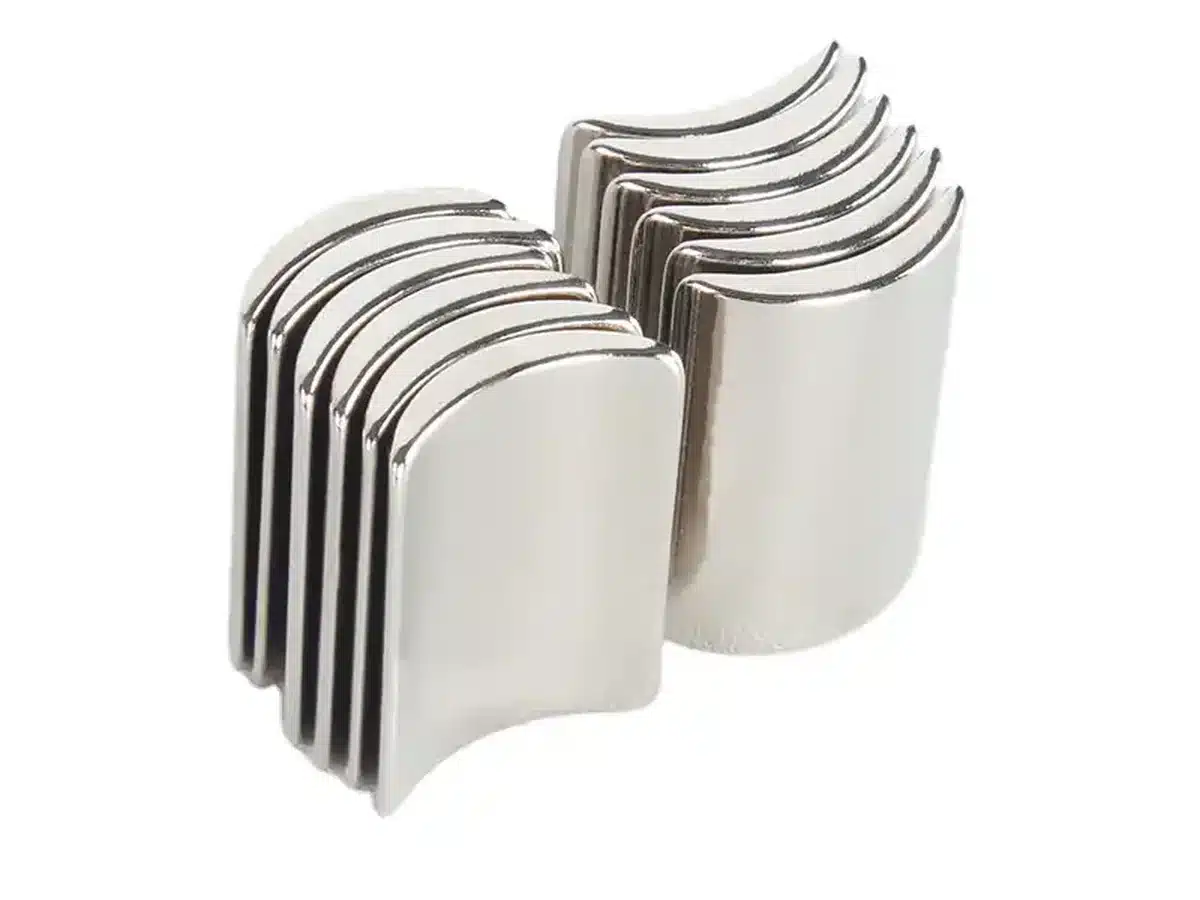
OSENC utilizza magneti ad arco segmentati quando la segmentazione migliora la producibilità del rotore, la flessibilità della configurazione magnetica o il costo complessivo dell’assieme. Il numero di segmenti, l’angolo dell’arco, la magnetizzazione, il traferro e il metodo di assemblaggio vengono definiti in funzione del sistema magnetico completo.
I vantaggi in termini di campo magnetico e costi vengono verificati sul progetto effettivo, anziché essere presunti in base al solo numero di segmenti. In questo modo, la specifica del magnete resta correlata al rotore, al giunto o all’assieme Halbach destinato a operare in produzione.
| Dati del disegno tecnico | Perché OSENC ne ha bisogno |
|---|---|
| Raggio esterno / diametro esterno | Controls the outside rotor or stator interface and arc curvature. |
| Inner radius / ID | Defines radial thickness and the inner working surface. |
| Axial length | Controls active magnetic length and assembly fit. |
| Arc angle / segment count | Defines pole coverage, gap between segments and assembly indexing. |
| Tolerances | Critical on radius, radial thickness, axial length, arc angle and mating surfaces. Linear tolerances are reviewed separately from angular tolerance. |
| Direzione di magnetizzazione | Must match the magnetic circuit; it cannot be inferred safely from the arc shape alone. |
We control OD, ID, radial thickness, axial length, arc angle, segment count and working gap as one rotor geometry before the sample is released.
We select grade and intrinsic coercivity against the real thermal condition, air gap and demagnetization working point instead of choosing by grade number alone.
We lock approximated radial, parallel or angle-defined orientation to the drawing and handle true radial designs as dedicated engineering programs.
We inspect radius, radial thickness, axial length, arc angle and critical mating dimensions against the approved finished-part drawing.
OSENC manufactures to the approved rotor interface, not to an isolated arc dimension. Radius, radial thickness, axial length, arc angle, gap and segment count are locked as one assembly geometry.
Pole direction and segment indexing are locked against the rotor or Halbach assembly drawing before sample release.
Grade family and HcJ requirement are defined against operating temperature, reverse field and the real magnetic circuit rather than by grade number alone.
Approved geometry, material, coating, polarity and inspection requirements become the controlled repeat-production specification.
Arc magnets create more dimensional interactions than a simple block. Radius, radial thickness, axial length and arc angle all affect rotor fit, adhesive gap and pole spacing. OSENC inspects the finished coated part against the approved drawing.
OSENC defines achievable linear and angular tolerances from the arc geometry, finished dimensions, coating and the approved inspection method. Radius, radial thickness, axial length and arc angle are controlled as separate drawing characteristics because linear grinding and angle control are different manufacturing requirements.
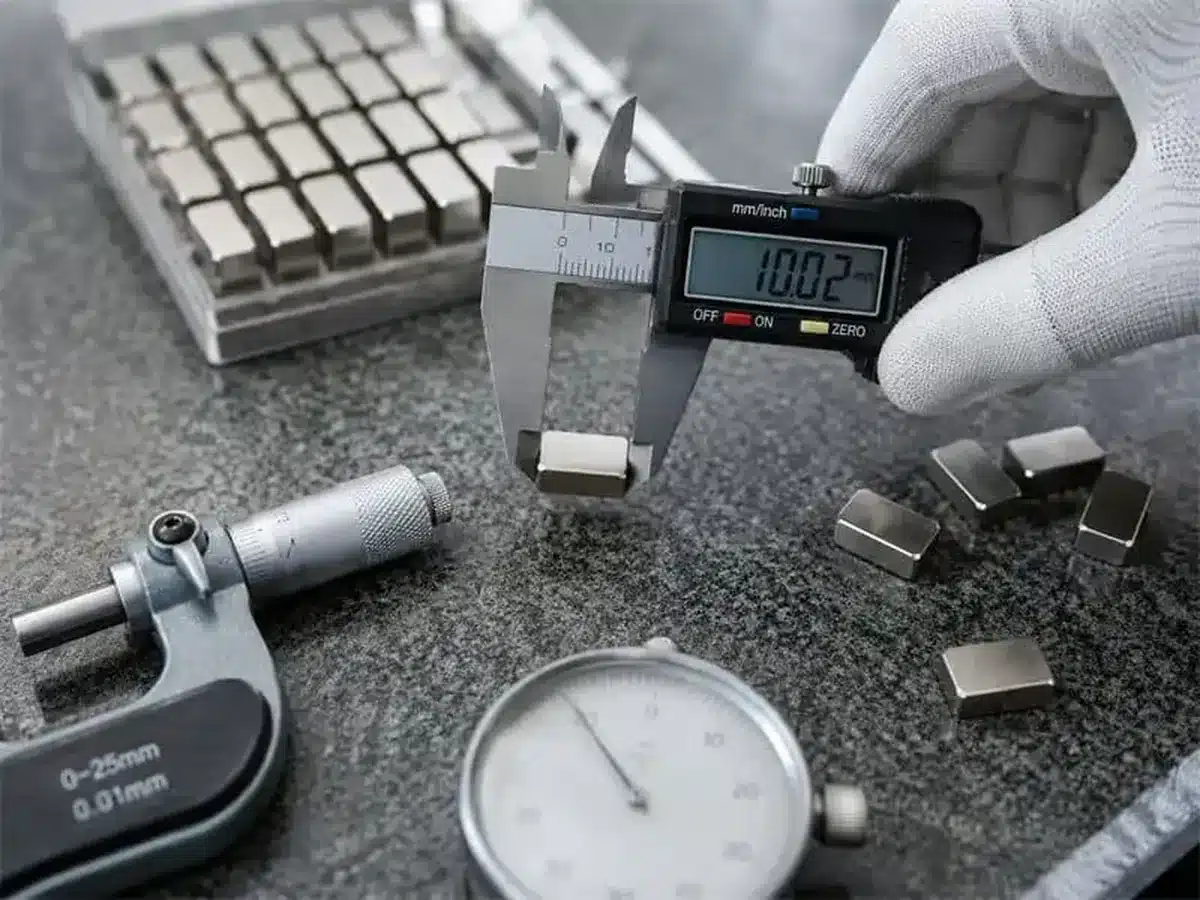
OSENC uses Radially IN / Radially OUT approximated radial orientation, parallel orientation and drawing-defined linear magnetization for standard arc projects. The North/South polarity on the inner or outer radius is locked on the drawing before sampling.
A linear orientation is used to approximate radial field direction across the arc. The radial component reduces toward the leading and trailing edges, so the rotor design must account for the real field distribution.
True radial anisotropic NdFeB segments require a dedicated orientation, tooling and magnetization evaluation. OSENC confirms geometry, pole direction, volume and process feasibility before committing to the production route.
OSENC uses parallel or angle-defined linear orientation to create controlled segment-to-segment field patterns. Circumferential field behavior is engineered through orientation pattern and assembly rather than treated as a generic one-step magnetization callout.
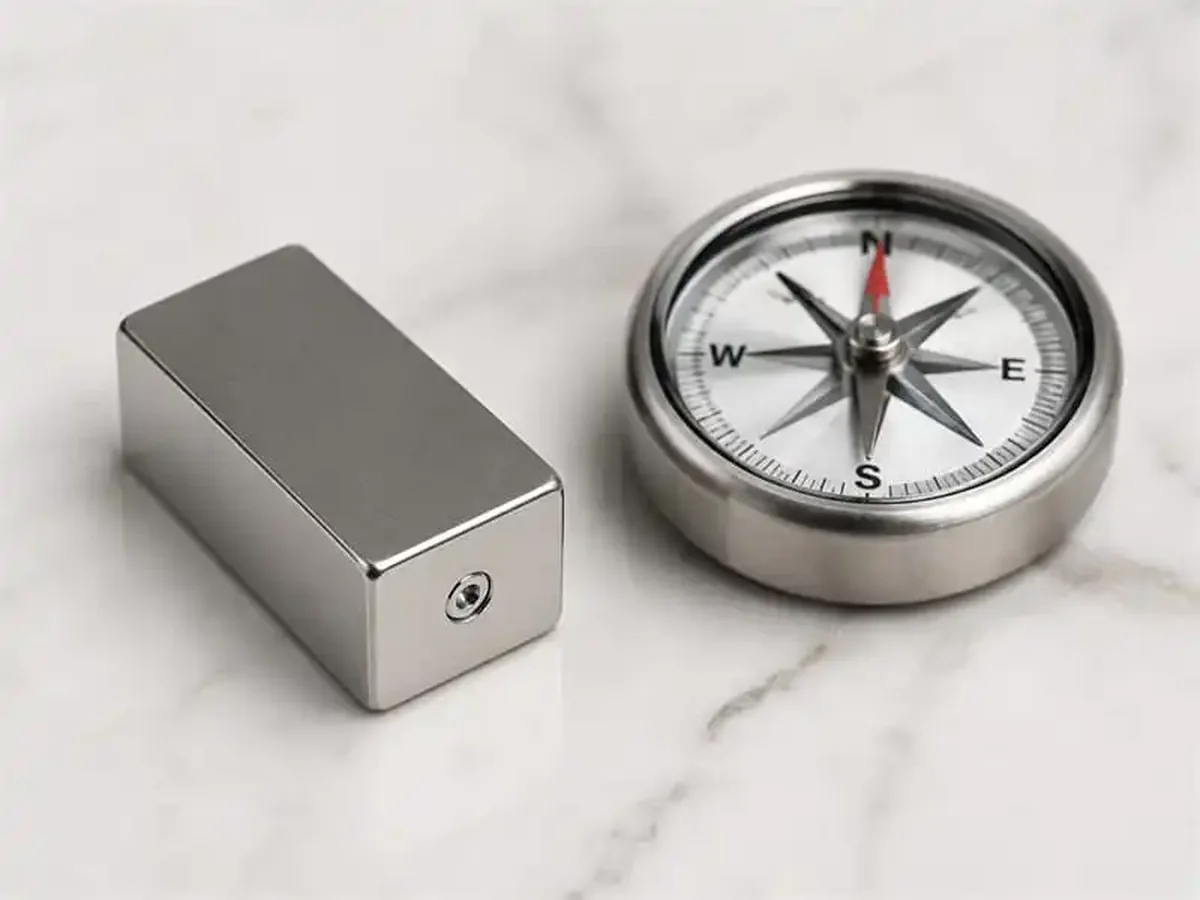
Arc segments are widely used in surface permanent-magnet motors and generators, but the grade suffix is not a universal temperature guarantee. OSENC defines required flux, intrinsic coercivity (HcJ), continuous and peak temperature, magnet geometry, air gap and the demagnetization working point together.
| Grade Family | Engineering Direction | OSENC Selection Basis |
|---|---|---|
| Standard N Grades | High magnetic output where thermal and reverse-field margin are compatible with the application. | Flux target, magnet volume, working gap and magnetic circuit. |
| H | Higher intrinsic coercivity for applications requiring more demagnetization margin. | Operating temperature, reverse field, geometry and working point. |
| SH | Higher-HcJ family for motor and generator projects with increased thermal demand. | Continuous/peak temperature and magnetic-circuit condition. |
| UH / EH | High-coercivity families used when thermal and reverse-field risk dominate material selection. | Controlled material specification, geometry, Pc, air gap and fault-condition requirement. |
Final grade values are controlled by the approved OSENC material specification or certificate used for the order. Grade suffixes are not unconditional operating-temperature guarantees; demagnetization margin depends on geometry, permeance coefficient (Pc), air gap, magnetic circuit and external reverse field.
Segmented Halbach rotors use multiple magnets with controlled orientation to shape the field around the rotor. More segmentation can move the field closer to an ideal distribution, but it also adds assembly, indexing and magnetization complexity.
OSENC therefore defines segment count, arc angle, magnetization direction, air gap and assembly method together. We do not promise a universal torque or flux increase simply because a design uses a Halbach arrangement.

For neodymium arc magnet projects, OSENC specifies nickel, zinc or epoxy coating according to corrosion exposure, adhesive bonding, dimensional clearance, abrasion and appearance requirements. The approved coating system is locked with the drawing before production.
Sintered NdFeB is brittle and corrosion-sensitive. We therefore control edge condition, coating integrity and adhesive compatibility as part of rotor-assembly readiness rather than treating coating as a decorative finish.
30°, 45°, 60°, 90° and 120° are practical RFQ starting angles. We confirm the final angle, gap and segment count from the rotor drawing rather than forcing every design into a generic angle range.
Used only when the motor design calls for a controlled skew or non-standard arc. The effect on cogging or torque ripple must come from the motor design, not from a generic shape claim.
Large designs are controlled from the drawing because material orientation, machining route, fragility, coating and magnetization can become the limiting factors before simple OD does.
OSENC controls raw-material grade, finished dimensions, coating condition, magnetization direction and project-defined magnetic performance. For motor projects, acceptance should focus on the measurements that matter to the rotor rather than one isolated Gauss number.
Radius, radial thickness, axial length, arc angle and critical mating dimensions against the approved drawing.
Visual condition, edge integrity and coating acceptance before magnets enter bonding or mechanical retention.
Pole orientation and magnetization direction are verified so segment indexing matches the rotor or Halbach assembly plan.
Production starts against one approved drawing and one controlled acceptance plan. The critical items below are locked before the sample is released into production approval.
| Control Item | OSENC Production Lock |
|---|---|
| Geometry | OD / ID or radii, radial thickness, axial length, arc angle and critical mating dimensions. |
| Materiale | Grade family plus HcJ requirement where demagnetization margin matters. |
| Magnetizzazione | Orientation direction, pole direction, polarity and segment indexing. |
| di esercizio | Continuous, peak and fault-condition temperature where applicable. |
| Rivestimento | Finish, corrosion requirement, bonding condition and dimensional impact. |
| Assemblaggio | Segment count, spacing, indexing and rotor / Halbach arrangement. |
| Ispezione | Critical dimensions plus project-defined magnetic acceptance requirements. |
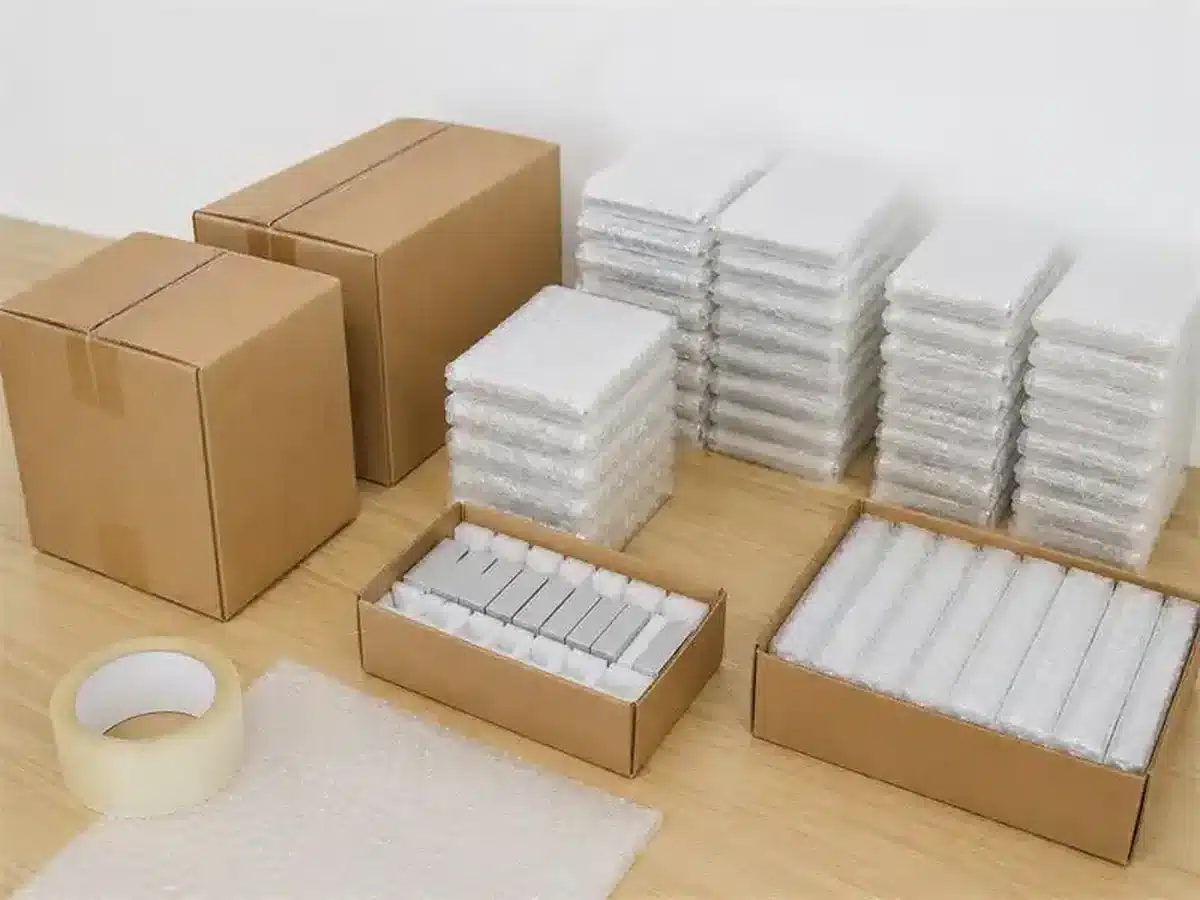
Segment magnets are brittle and can attract each other abruptly during handling. OSENC controls the finished arc condition before packing, then uses protective shipment methods to reduce impact, coating damage and uncontrolled magnet-to-magnet contact.
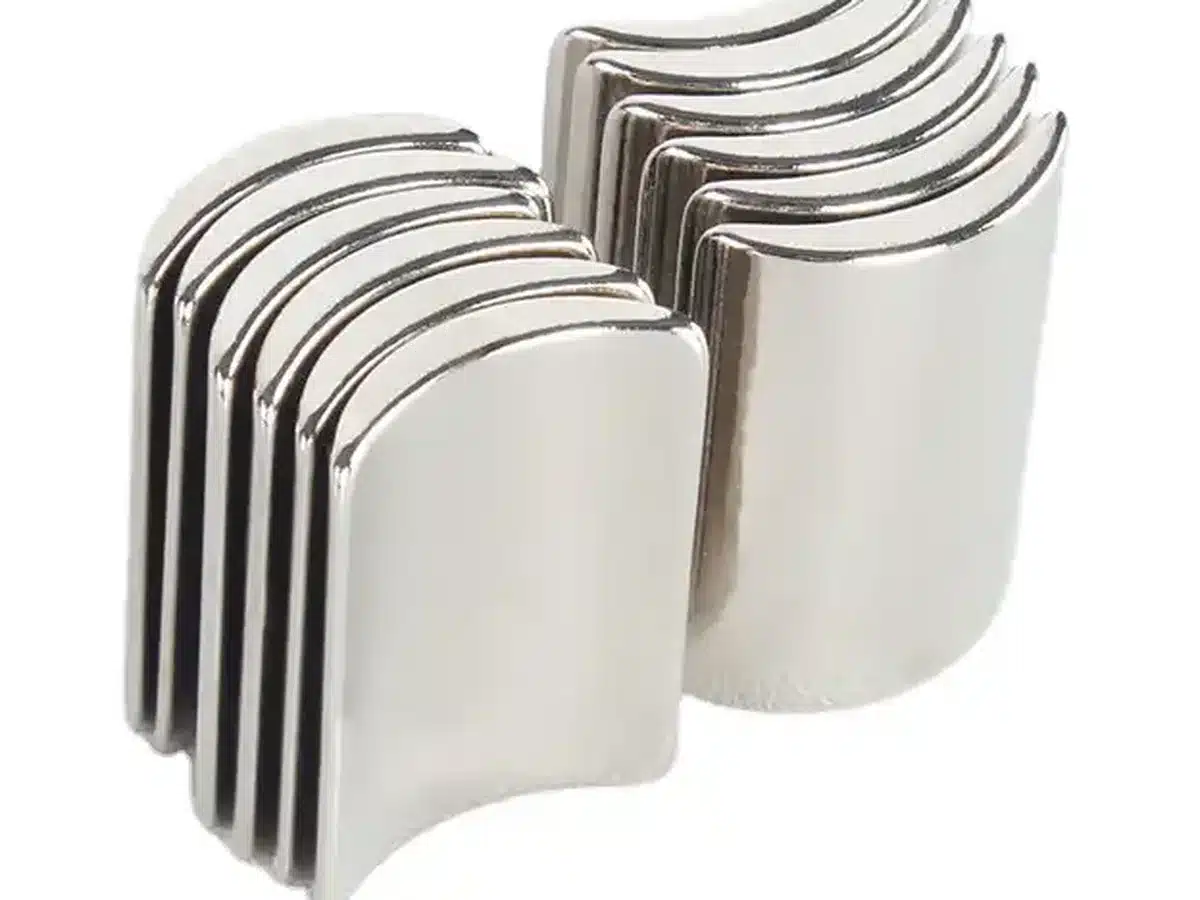
Un magnete a segmento in neodimio è un magnete curvo in NdFeB sinterizzato, progettato come elemento di un sistema magnetico circolare o ad arco. OSENC produce segmenti ad arco su disegno per motori, generatori, giunti, rotori e altri gruppi in cui geometria, magnetizzazione e traferro di lavoro devono essere controllati congiuntamente.
No. La segmentazione di un anello o di un rotore di grandi dimensioni può migliorare la producibilità e l'utilizzo del materiale, ma il costo totale dipende anche dal numero di segmenti, dalle lavorazioni meccaniche, dalla magnetizzazione, dalle tolleranze, dal metodo di assemblaggio e dai controlli. OSENC valuta i requisiti del gruppo finito anziché presumere che la segmentazione sia sempre più economica.
Define outer radius or OD, inner radius or ID, radial thickness, axial length, arc angle, chord or reference dimensions, tolerances, coating and magnetization direction. A 2D drawing is strongly preferred because one diameter and one height do not fully define an arc segment.
Standard Arc projects use Radially IN / Radially OUT approximated radial orientation, parallel orientation or drawing-defined linear magnetization. True radial anisotropic NdFeB requires dedicated orientation, tooling and magnetization evaluation before OSENC confirms the production route; true circumferential orientation is not presented as a standard NdFeB arc capability.
OSENC works with N35, N38, N40, N42, N45, N48, N50 and N52 energy grades for Arc projects, plus M, H, SH, UH and EH high-HcJ grade families. We select the final grade from required flux, HcJ, operating temperature, air gap and demagnetization margin.
OSENC specifies nickel, zinc or epoxy according to humidity, corrosion exposure, assembly clearance, bonding method, abrasion and appearance. The approved coating system is locked with the finished-part drawing before production.
Send the 2D or 3D drawing, OD/ID or radii, axial length, arc angle, segment count per pole or ring, grade or magnetic target, magnetization direction, working gap, operating temperature, coating, tolerances, sample quantity and production volume.
OSENC will define and lock the geometry, grade, HcJ requirement, temperature basis, coating, magnetization, segment layout, working gap and inspection requirements for quotation and sample release.
Request a Custom Arc Magnet Quote