Made-to-Drawing NdFeB Magnets

Magneti al neodimio esagonali personalizzati

OSENC manufactures made-to-drawing hexagonal NdFeB magnets with controlled geometry, finished dimensions, coating and magnetization for OEM assemblies.

D DefinitionAcross opposite corners
Across-Corners D1.5–300 mm
Altezza H0.3–120 mm
Grade FamiliesN35–N52; M / H / SH / UH / EH / AH/VH options

Regular & irregular hexagons · Holes · Countersinks · Chamfers · Drawing-defined magnetization

Upload Your Drawing

Send dimensions, grade or working conditions, coating, pole direction and quantity. OSENC turns them into a production-ready magnet specification and quotation.

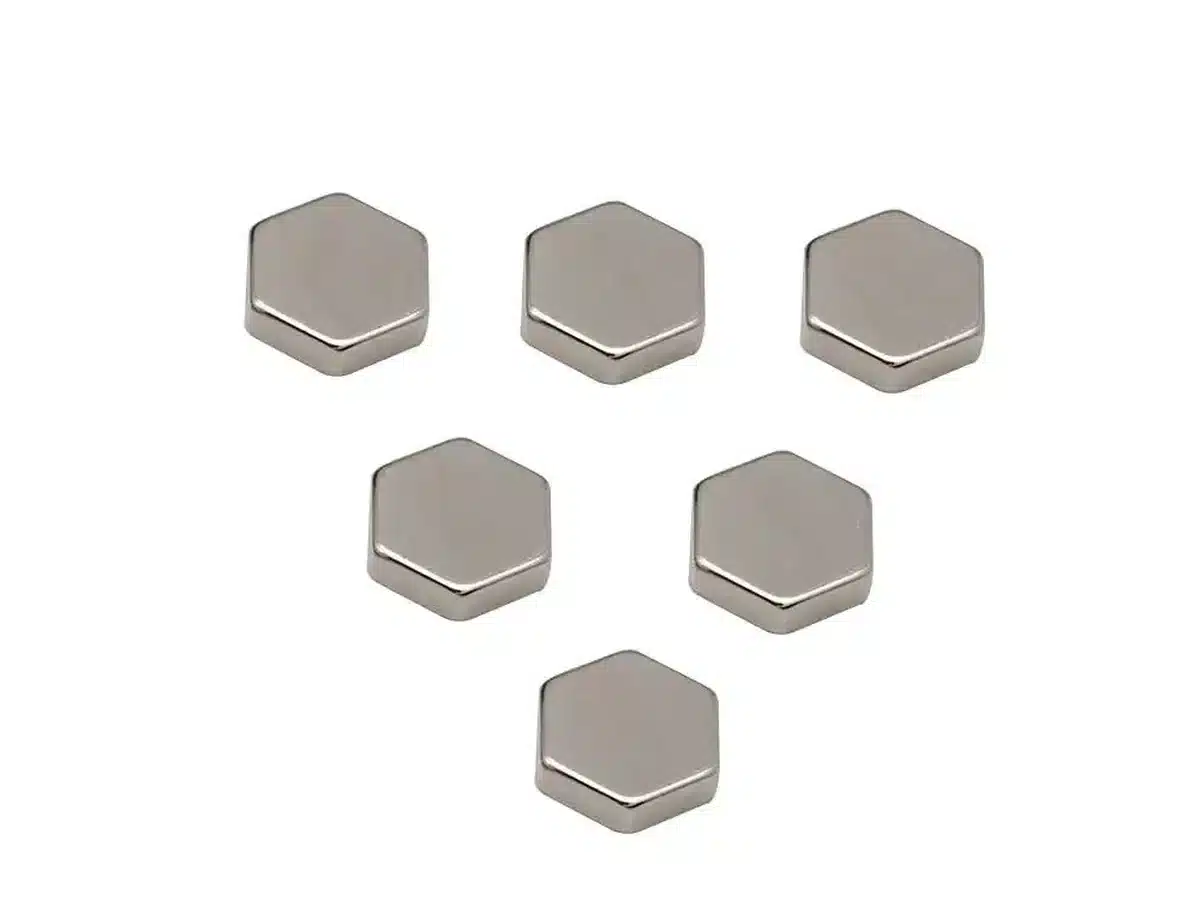
OSENC hexagon neodymium magnets with metallic coating

Where Hexagon Geometry Solves the Assembly Problem

OSENC uses hexagon geometry when the assembly needs anti-rotation positioning, polygonal fit, repeatable edge references or a defined in-plane orientation. When those functions are not required, we move the design to a simpler disc or block geometry.

Anti-Rotation Positioning

Flat sides create repeatable mechanical orientation in a matching pocket or fixture.

Polygonal Housings

A hexagonal profile can match six-sided cavities where a disc or block leaves unnecessary space or changes the assembly geometry.

Edge-to-Edge Layouts

Equal sides support repeatable packing and modular layouts when the magnetic circuit is designed around the polygon.

Defined In-Plane Orientation

Across-flats and across-corners axes give engineering drawings clear mechanical references for side-direction field requirements.

Hexagon Size Range and D Definition

OSENC defines D as Across Corners: the straight-line distance between two opposite vertices of a regular hexagon. Height or thickness is defined as H.

For a regular hexagon, side length equals one-half of D, while Across Flats is approximately 0.866 × D. Keeping one dimension basis throughout the drawing prevents quotation and inspection errors.

Example: D10 × H3 mm means 10 mm across opposite corners and 3 mm in height. If your drawing controls Across Flats or side length, we use that dimension as the drawing authority.
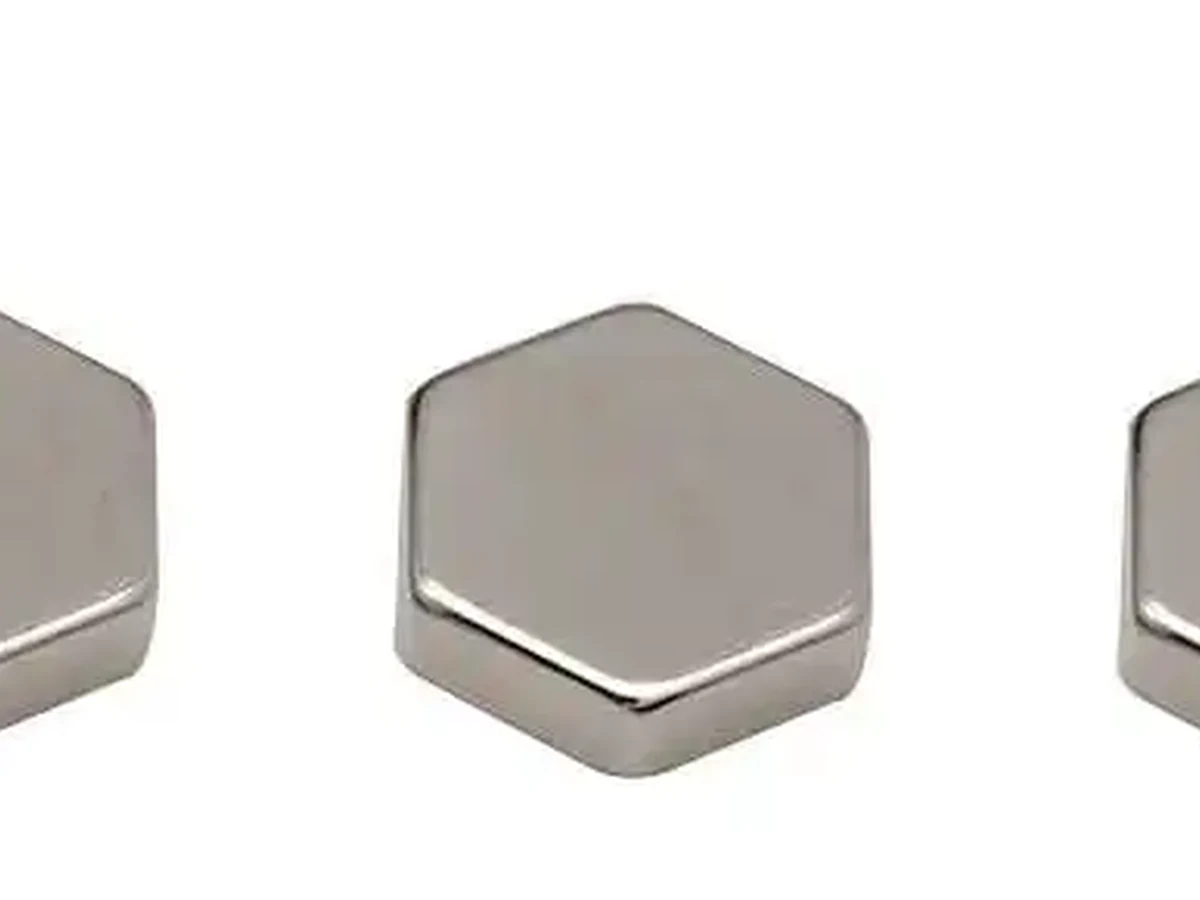
Close-up of OSENC hexagon neodymium magnets

Regular Hexagon Dimension Envelope

DimensionOSENC Manufacturing EnvelopeEngineering Definition
Distanza tra vertici D1.5–300 mmPrimary outer-size manufacturing reference used for regular hexagons on this page.
Side Length0.5 × DGeometric relationship for a regular hexagon, not a separate manufacturing limit.
Across Flats0.8660 × DGeometric relationship for a regular hexagon, not a separate manufacturing limit.
Altezza H0.3–120 mmIndependent height envelope. We confirm the final D × H combination from the complete drawing.
Internal Angle120° for regular hexagonsIrregular six-sided parts follow the angles and side dimensions on the drawing.
Combined-size control: D and H are independent capability envelopes. OSENC confirms extreme D × H combinations from the full geometry before production rather than treating the two maximum values as one guaranteed part size.

Have a size near either end of the range? Send the drawing and OSENC will confirm manufacturability from the complete geometry.

Confirm My Hexagon Dimensions
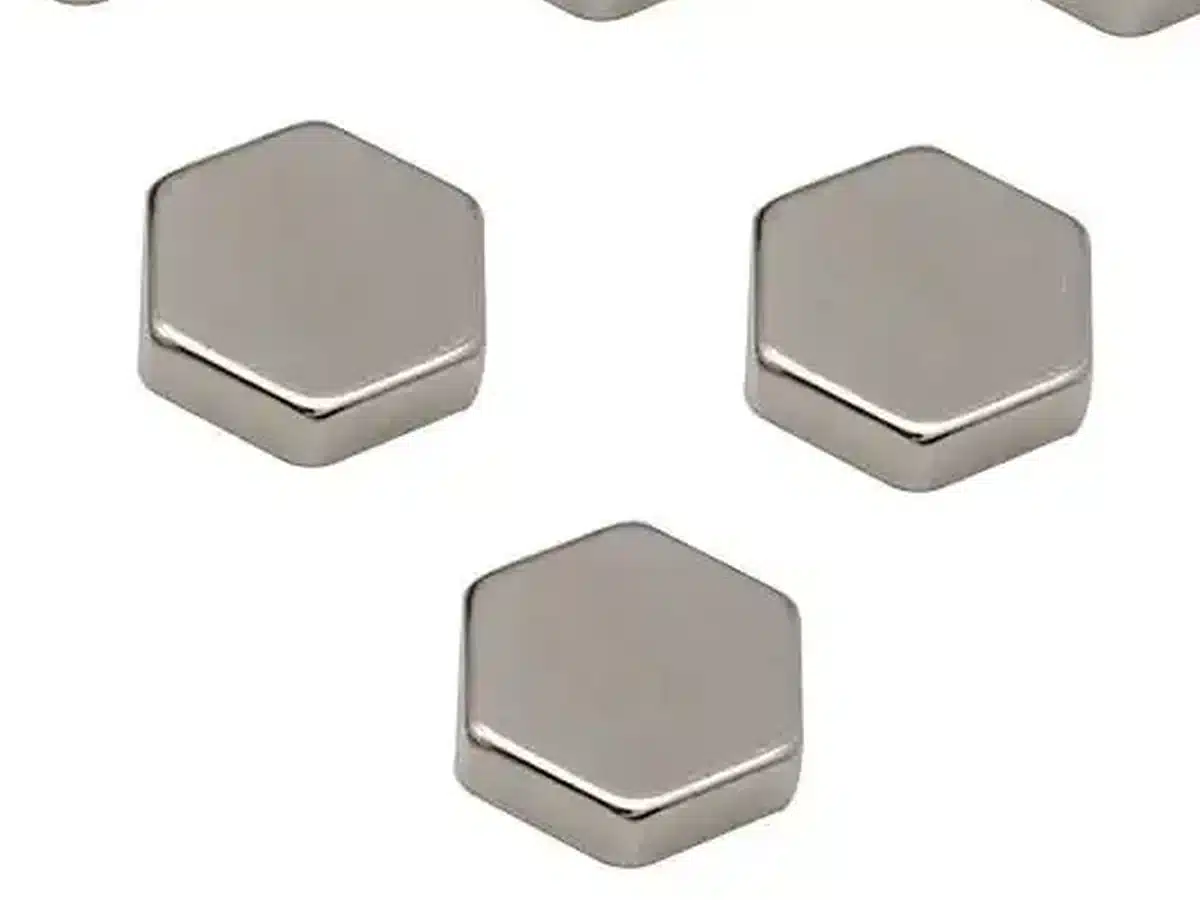
Grouped OSENC hexagon neodymium magnets

Regular, Irregular and Machined Hexagon Designs

OSENC manufactures regular hexagons with six equal sides and 120° internal angles, and we manufacture drawing-defined irregular six-sided profiles where the application needs unequal sides or unequal angles.

Custom geometry can include through holes, countersunk holes, steps, slots, grooves, chamfers and radiused edges when the remaining wall thickness and complete geometry are manufacturable.

Sintered NdFeB is hard and brittle, so edge design matters. Where the assembly allows it, we use chamfer or radius requirements to reduce unnecessary chipping risk during processing, assembly and magnet-to-magnet contact.

Hexagon vs Disc vs Block Magnets

The correct magnet shape starts with the mechanical interface and magnetic circuit. OSENC uses the geometry that solves the assembly requirement instead of forcing a special shape where a simpler magnet already works.

FormaBest Choice WhenMain Mechanical Advantage
EsagonaleOrientation, polygonal fit or repeatable edge references matter.Six flats and six corners provide defined mechanical indexing.
DiscoRotational symmetry and simple round mounting are preferred.Simple geometry and no required in-plane orientation.
BloccoRectangular mounting surfaces and straightforward dimensional control are preferred.Simple length × width × thickness interface.

When a Hexagon Magnet Is Not the Best Choice

OSENC keeps the hexagon shape only when it solves a real mechanical or magnetic requirement. If the polygon adds machining without adding function, we simplify the part before production.

Assembly RequirementOSENC Direction
No anti-rotation requirementUse a disc when rotational symmetry gives the simpler assembly.
Rectangular mounting pocketUse a block when the interface is naturally defined by length × width × thickness.
Hexagon adds machining without functional valueSimplify the geometry and remove unnecessary processing.
Defined polygonal orientation is requiredKeep the hexagon and control Across Corners, Across Flats and the required in-plane reference on the drawing.

NdFeB Grades for Hexagon Magnets

OSENC selects the material around the required magnetic output, geometry, working temperature and magnetic circuit rather than choosing grade by maximum energy product alone.

Core Grades

N35, N38, N40, N42, N45, N48, N50 and N52 cover the core grade families used for this page.

High-Coercivity Families

M, H, SH, UH, EH and AH/VH families are available for applications that require a different coercivity and temperature margin.

Engineering Selection

We select grade together with magnet geometry, working gap, operating temperature and the magnetic circuit so the material choice matches the finished assembly.

For temperature-sensitive designs, send the continuous working temperature and the expected peak or storage temperature. Thin geometry and unfavorable load lines can change demagnetization margin, so OSENC confirms the grade against the actual application rather than relying on a catalog temperature label alone.

Magnetization Directions for Hexagon Magnets

Through-height / axial magnetization is the standard definition when the two large hexagonal faces are the pole faces.

For an in-plane field, OSENC defines the direction directly on the drawing, such as across flats, across corners or another specified in-plane axis. This keeps the pole direction unambiguous during quotation, magnetization and inspection.

We also support drawing-defined custom magnetization. For multipole designs, we match the pole layout to the magnet geometry and magnetizing fixture before production.

Drawing rule: mark the N/S pole faces or required field direction whenever magnetization controls the function of the assembly.
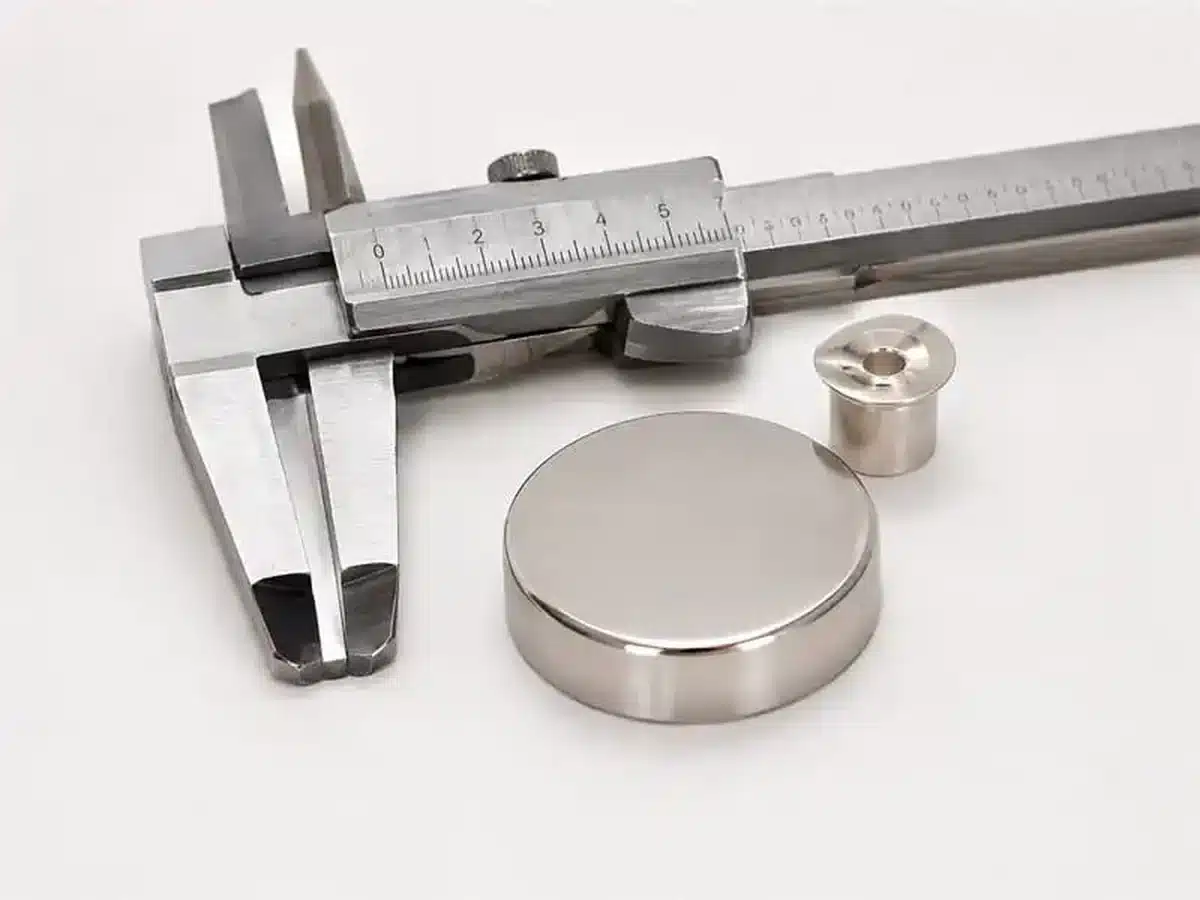
OSENC dimensional inspection for custom neodymium magnet projects

Coatings and Finished Dimensions

OSENC manufactures hexagon NdFeB magnets with coating systems including Ni-Cu-Ni, zinc, epoxy and Parylene for different environmental and assembly requirements.

When coating build affects assembly clearance, we control the project around the finished coated dimensions. Put critical fit dimensions on the purchasing drawing so inspection follows the finished part that actually enters your assembly.

Ni-Cu-Ni

A common metallic protection system for general industrial and controlled-environment applications.

Zinco

A thin metallic coating option for projects where the environment and finished-dimension requirement suit this finish.

Epoxy / Parylene

Alternative protection systems for projects where corrosion exposure, insulation, surface behavior or coating geometry requires a different solution.

Lock grade, coating and pole direction as one production specification.

Confirm My Magnet Specification
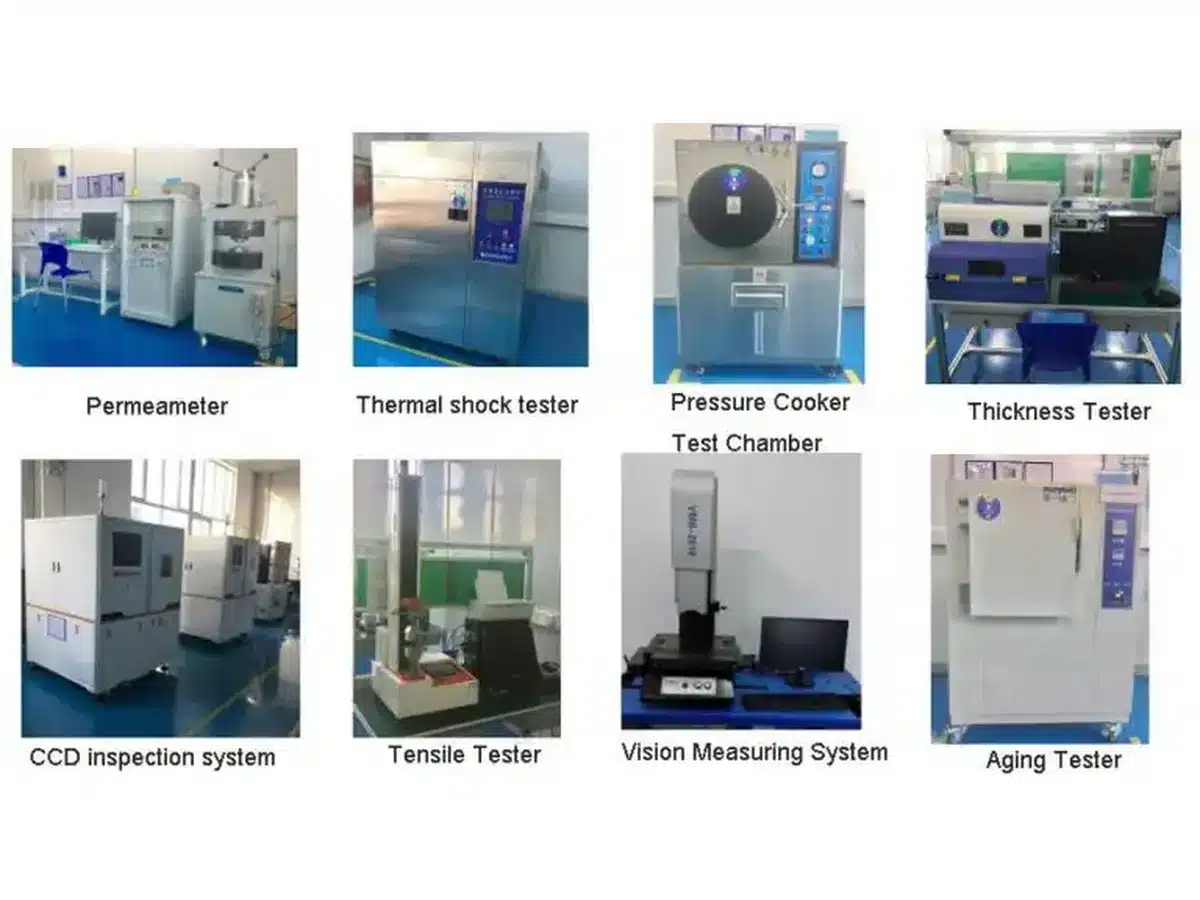
OSENC magnet inspection and testing equipment

What OSENC Inspects Before Shipment

OSENC inspects the finished magnet against the approved drawing and the dimensional, coating and magnetic acceptance requirements that control the customer assembly.

  • Critical dimensions: Across Corners, Across Flats, H and other drawing-controlled geometry.
  • Surface and coating: finished appearance and coating condition against the agreed requirement.
  • Direzione di magnetizzazione: pole faces or drawing-defined field direction.
  • Magnetic checks: project-specific magnetic inspection where the specification defines a measurable acceptance condition.
  • Packaging: separation and protection appropriate to the magnet size and shipment requirement.

Instead of forcing one tolerance onto every hexagon size, we confirm the critical tolerances from the drawing and align the inspection plan with those dimensions.

What OSENC Confirms Before Production

A short RFQ is enough to start the conversation. Before production, OSENC converts it into a controlled finished-part specification.

Your RFQ InputOSENC Confirms
“D20 hexagon”Whether D means Across Corners, Across Flats or another controlled dimension, plus H and critical geometry.
“N52”Grade suitability together with working temperature, geometry, magnetic circuit and validation target.
Side-direction fieldThe exact pole faces or in-plane direction, such as Across Flats or Across Corners.
“Nickel coating”The coating system, finished dimensions and the environmental or assembly requirements that affect the finish.
Tight toleranceWhich dimensions are function-critical and the manufacturable tolerance for the requested geometry.
Large or extreme geometryThe combined D × H manufacturability from the complete drawing.

From Drawing to Approved Production Specification

  1. Define the geometry. We lock D, H, Across Flats, side length, holes, chamfers and irregular-profile dimensions from the drawing.
  2. Confirm the magnetic specification. We match grade, working temperature and magnetization direction to the application.
  3. Confirm the finished surface. We lock coating and finished dimensions before production.
  4. Define inspection items. We identify the dimensional, coating, pole-direction and magnetic checks required for acceptance.
  5. Release repeat production. After sample approval, OSENC releases the controlled specification for repeat production.
OSENC custom magnet production facility exterior

What to Send for a Hexagon Magnet Quote

Geometry

2D/3D drawing, Across Corners D, H, side or Across Flats controls, irregular profile, holes, chamfers and critical tolerances.

Magnetic Requirement

Grade if already fixed, working temperature, pole faces, in-plane direction, multipole layout or target magnetic condition.

Commercial & QC Inputs

Sample quantity, production quantity, coating, environment, inspection method, packaging and labeling requirements.

Send Your Hexagon Magnet Drawing to OSENC

We will turn the drawing into a controlled specification covering geometry, grade, coating, magnetization, critical tolerances and inspection requirements.

Richiedi un preventivo personalizzato

Hexagon Neodymium Magnets FAQ

Che cosa indica D in un magnete esagonale regolare OSENC?

On this page, D means Across Corners: the straight-line distance between two opposite vertices. If your drawing uses Across Flats or side length, OSENC follows the dimension defined on the drawing.

OSENC può realizzare magneti esagonali con diametro di 300 mm e altezza di 120 mm?

D 1.5–300 mm and H 0.3–120 mm are independent envelopes. OSENC confirms extreme D × H combinations from the complete geometry before production.

Which NdFeB grades are available for hexagon magnets?

The core grade families are N35, N38, N40, N42, N45, N48, N50 and N52. M, H, SH, UH, EH and AH/VH high-coercivity families are available for applications that need a different temperature or demagnetization margin.

How should I specify magnetization for a hexagon magnet?

Use through-height axial magnetization when the large hexagonal faces are the poles. For an in-plane field, mark Across Flats, Across Corners or the required pole faces directly on the drawing.

Can OSENC manufacture irregular hexagons, holes and chamfers?

Yes. OSENC supports drawing-defined irregular six-sided profiles and can manufacture features such as holes, countersinks, steps, slots, grooves, chamfers and radiused edges when the complete geometry is manufacturable.

How does OSENC handle hexagon magnet tolerances?

We confirm the critical tolerances from the drawing and align inspection with the dimensions that control fit and function. The achievable tolerance depends on the requested geometry and dimension rather than one blanket value for every size.

Richiedi i prezzi e le specifiche più recenti di questo mese

Richiedi un preventivo rapido (prezzo + tempi di fornitura)

Riceva prezzi, specifiche, MOQ e opzioni di spedizione aggiornati: niente spam, solo le informazioni necessarie. Risposta entro 3-6 ore.