







OSENC realizza magneti al neodimio rivestiti in plastica su misura, con incapsulamento parziale o completo, alloggiamenti sovrastampati, inserti di montaggio e magnetizzazione specifica per l’applicazione. Progettiamo insieme la parete polimerica, il traferro di lavoro e il circuito magnetico, affinché il componente finito soddisfi sia i requisiti di protezione sia quelli di prestazione magnetica.
Invia il disegno del componente finito. OSENC esaminerà il nucleo in NdFeB, la struttura polimerica, la magnetizzazione, la distanza di lavoro, la geometria di montaggio e l’ambiente di esercizio come un unico gruppo progettato.
Invia il disegno per un preventivo tecnico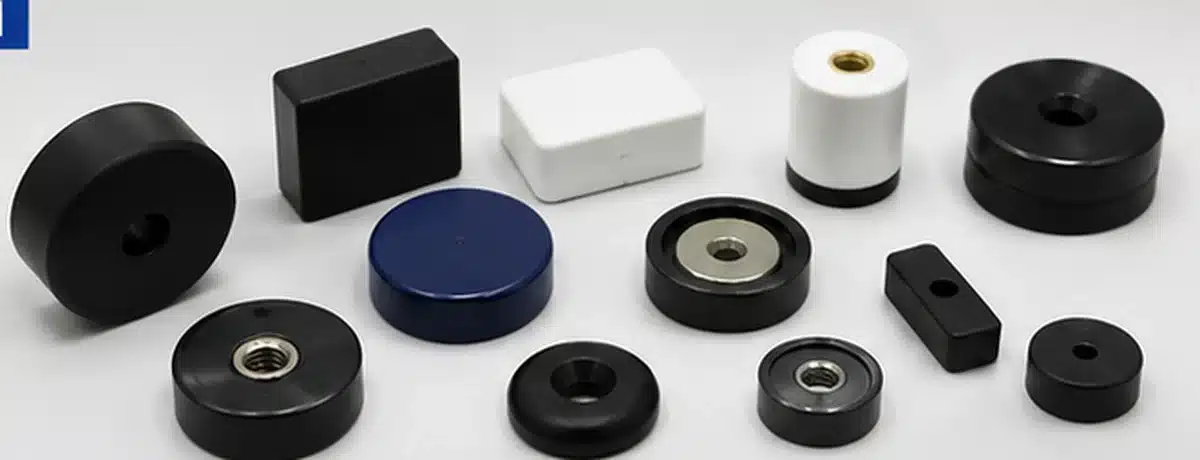
OSENC fornisce il nucleo magnetico e la struttura polimerica come componente magnetico finito. Il disegno rilasciato definisce le dimensioni finali, la superficie magnetica attiva, le interfacce di montaggio e i requisiti di controllo.
| Nucleo magnetico | NdFeB sinterizzato |
| Forme | Dischi, blocchi, anelli e gruppi magnetici personalizzati |
| Incapsulamento | Incapsulamento parziale, incapsulamento completo e alloggiamenti in plastica funzionali |
| Processi di produzione | Stampaggio a inserto, sovrastampaggio, alloggiamento in plastica lavorato CNC, stampi prototipali, stampi di produzione a cavità singola e multicavità |
| Opzioni dei polimeri | ABS, PP, TPE, TPU, PU, PTFE, acrilico e nylon |
| Caratteristiche di montaggio | Foro passante, svasatura, lamatura, inserto in ottone, inserto in acciaio e inserto filettato |
| Magnetizzazione | Magnetizzazione assiale, diametrale, lungo lo spessore, la lunghezza e la larghezza, e multipolare |
| Quantità di prototipi | MOQ 1 per progetti di magneti personalizzati |
| Ispezione | Dimensioni finite, condizioni dell’incapsulamento, interfacce critiche e magnetizzazione; validazione magnetica o meccanica specifica del progetto, se prevista |
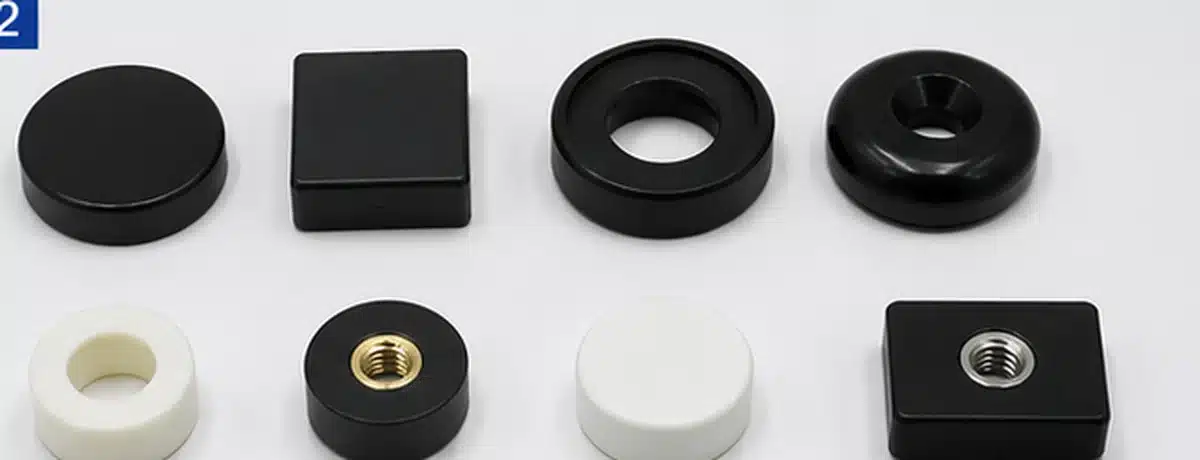
I magneti al neodimio rivestiti in plastica combinano un nucleo pieno in NdFeB sinterizzato con un guscio polimerico separato, un sovrastampaggio o un alloggiamento funzionale. A differenza dei magneti a matrice plastica, il nucleo magnetico rimane un magnete permanente denso, anziché essere costituito da polvere magnetica miscelata con resina.
OSENC progetta questi componenti a partire dal finished-part drawing because the polymer geometry directly controls final OD, length, hole position, active-face wall thickness, mounting features and magnetic working gap.
OSENC treats the polymer wall on the active magnetic face as part of the magnetic design. Plastic is non-magnetic, so increasing the wall thickness increases the working distance between the NdFeB core and the target. That added gap can reduce usable field or pull force at the real operating position.
We define the core geometry, magnetic grade requirement and magnetization direction against the finished assembly.
We control active-face wall thickness separately from structural reinforcement, ribs, mounting bosses and other non-magnetic zones.
We lock the target material, steel thickness, working gap and test condition when Gauss or pull-force acceptance is part of the drawing.
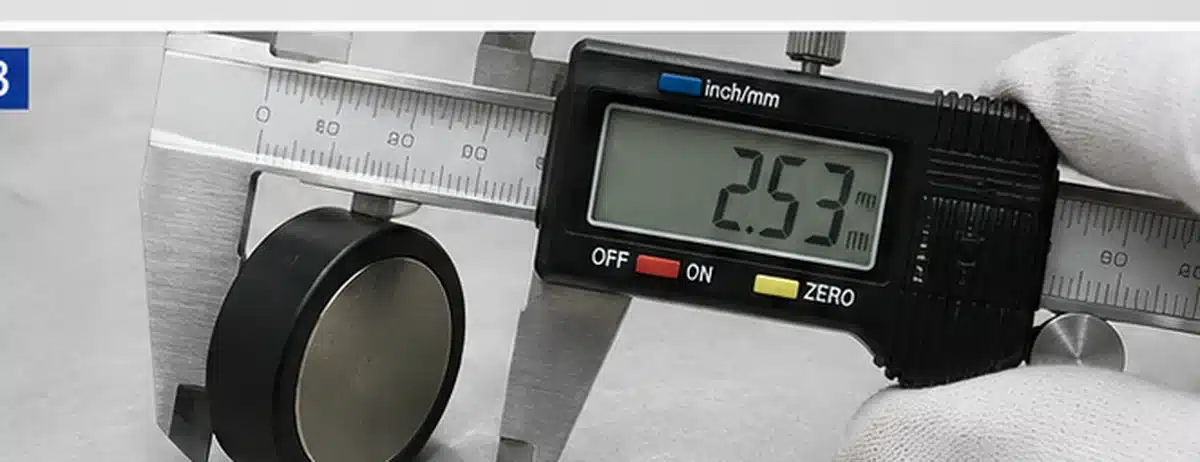
Already have a drawing? Send it to OSENC for magnet grade, polymer structure and working-gap review before tooling or prototype release.
Send DrawingPlastic wall thickness changes the non-magnetic distance between the NdFeB core and the target. For projects where field strength, holding force or slide resistance is critical, OSENC can validate the finished plastic-coated magnet at five defined working gaps: 0.0 mm, 0.5 mm, 1.0 mm, 1.5 mm and 2.0 mm.
| Working Gap | Magnetic Measurements | Mechanical Measurements |
|---|---|---|
| 0.0 mm | Surface Gauss Working-gap Gauss | Normal Pull Force Shear / Slide Force |
| 0.5 mm | Surface Gauss Working-gap Gauss | Normal Pull Force Shear / Slide Force |
| 1.0 mm | Surface Gauss Working-gap Gauss | Normal Pull Force Shear / Slide Force |
| 1.5 mm | Surface Gauss Working-gap Gauss | Normal Pull Force Shear / Slide Force |
| 2.0 mm | Surface Gauss Working-gap Gauss | Normal Pull Force Shear / Slide Force |
OSENC records Surface Gauss e la Working-gap Gauss at the agreed measurement position and orientation. This separates the field measured at the finished magnet surface from the field available at the real operating distance.
OSENC records Normal Pull Force e la Shear / Slide Force when these values are part of the project acceptance criteria. The test interface is fixed before validation so the results are repeatable and comparable.
Need magnetic performance at a real assembly gap? Send the finished plastic wall, target steel, working distance and required force or field. OSENC can build the 0–2.0 mm gap matrix into the prototype validation plan.
Request Working-Gap ReviewOSENC applies plastic only where the design requires protection, identification, spacing, gripping or a mechanical interface. The active magnetic face, mounting face or another functional area can remain exposed when the drawing requires direct magnetic contact or a defined interface.
Insert molding is a manufacturing route, not a coverage percentage. OSENC defines the coverage boundary from the finished component drawing.
OSENC encloses the NdFeB core more completely when the component requires stronger isolation from moisture, corrosion exposure, chipping or direct contact with surrounding equipment.
Before tooling release, we define the sealing boundary around seams, holes, inserts and other penetration points so the encapsulation structure matches the specified environmental and mechanical exposure.
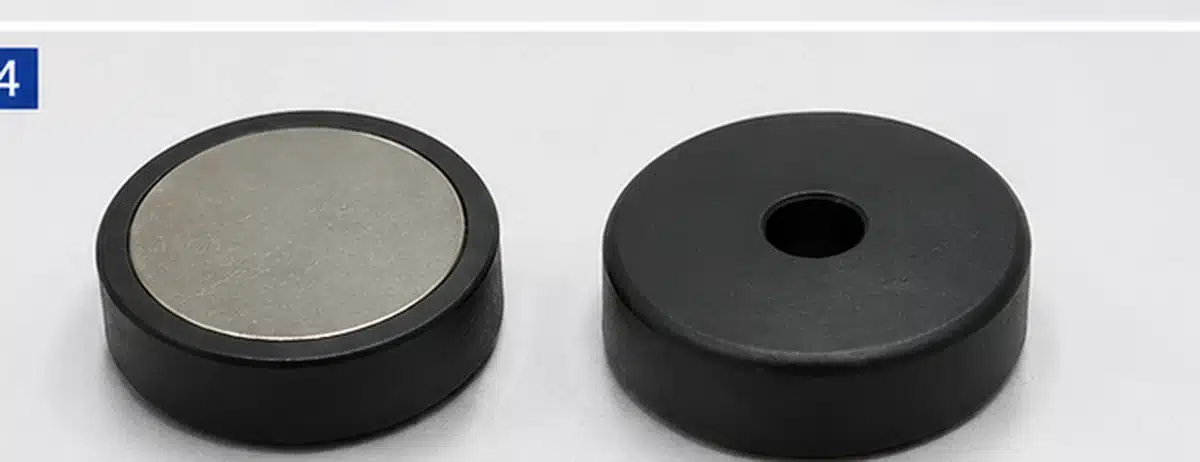
OSENC works with ABS, PP, TPE, TPU, PU, PTFE, acrilico e nylon for custom encapsulation projects. We do not treat these polymer families as interchangeable. The project BOM locks the actual material specification against the required environment, geometry and manufacturing route.
| Polymer Option | Engineering Role | OSENC Locks Before Production |
|---|---|---|
| ABS | Rigid housing, appearance, color and molded interfaces | Resin grade, temperature, UV exposure, chemicals and wall thickness |
| PP | Lightweight rigid parts and many wet or chemical-contact structures | Chemical, concentration, temperature, exposure duration and dimensions |
| TPE / TPU / PU | Soft contact, grip, cushioning and flexible overmolded surfaces | Hardness, abrasion, oil or chemical exposure, UV and temperature |
| PTFE | Low-friction and demanding chemical-contact requirements | Process route, wall thickness, working gap and full-assembly temperature |
| Acrylic | Rigid visual, colored or functional housing concepts | Impact, fastening, chemical exposure and geometry |
| Nylon | Tough structural features and wear-resistant molded parts | Moisture absorption, dimensional stability, temperature and chemicals |
Process boundary: the available polymer families do not imply that every material is suitable for every molding route. OSENC releases the resin grade and manufacturing process together for each project.
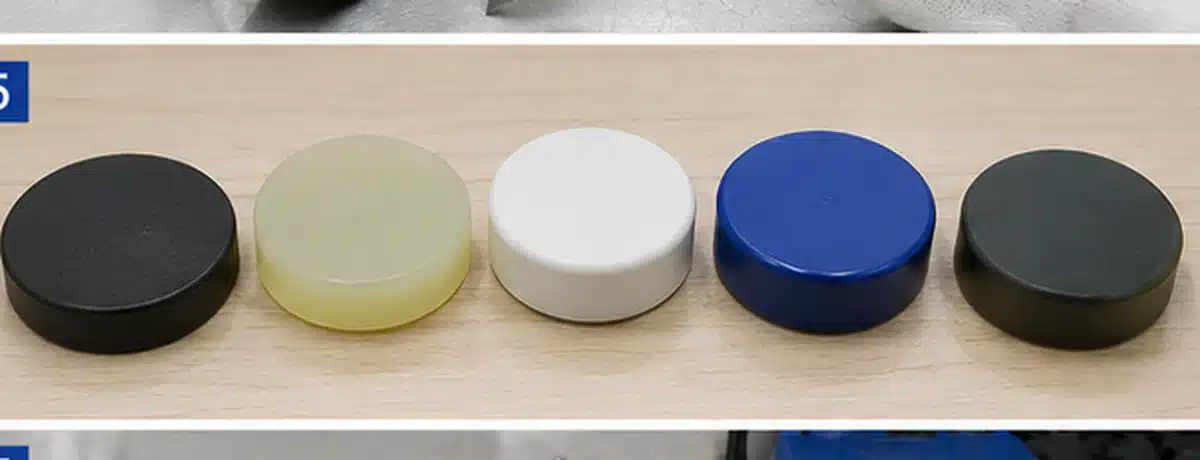
OSENC selects the protection route against the exact chemical, concentration, temperature, exposure time and finished-component geometry. PTFE can be specified when its material properties match the application, while other projects may be better served by a thinner coating or another polymer housing.
Confronta PTFE coated magnets, epoxy coated magnets, and the neodymium magnet coating guide.
OSENC selects the protection route from the working environment, magnetic gap, mechanical interface and expected surface contact. A molded plastic housing is the right solution when the project needs more than a thin protective coating.
| Protection Route | Best Fit | Main Design Trade-Off |
|---|---|---|
| Rigid plastic encapsulation | Environmental barrier plus molded mounting or locating features | Adds wall thickness and magnetic working gap |
| Soft elastomer / rubber coating | Surface protection, friction and impact cushioning | Soft layer can deform and also increases working gap |
| Epoxy coating | Thin corrosion-protection layer where a housing is unnecessary | Does not create the same mechanical enclosure as a molded shell |
| PTFE protection | Low-friction or application-specific chemical-contact requirements | Material and processing route must match the project geometry |
| Conventional plated NdFeB | Minimum magnetic gap in a controlled environment | Provides less physical isolation from moisture, impact or direct chemical contact |
If friction and anti-slip behavior are the primary requirements, use an OSENC rubber coated magnet rather than forcing a rigid plastic housing into the wrong application.
OSENC integrates the magnet into the finished component rather than treating the polymer as decoration added after the magnetic design.
OSENC supports axial, diametrical, through-thickness, length, width and multipole magnetization. The pole layout is released against the magnetic circuit and finished assembly geometry.
For strong NdFeB overmolded assemblies, OSENC can complete the magnetic core and polymer structure before final magnetization so magnetic attraction does not interfere with tooling, positioning or assembly. The released process plan controls the final sequence.
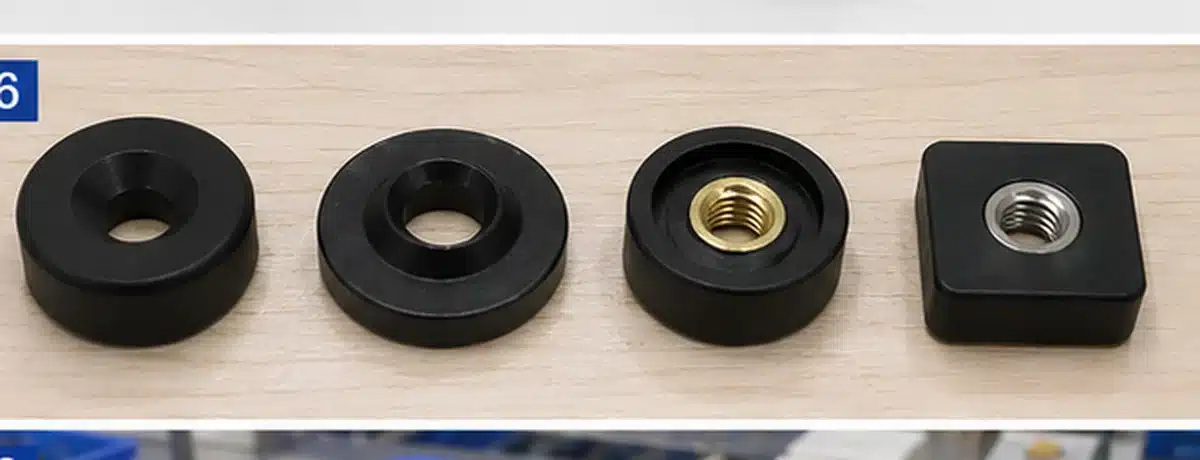
Every released plastic-coated magnet project is inspected against the finished-part drawing for the applicable dimensional, encapsulation and magnetic requirements.
When the drawing includes magnetic or mechanical acceptance requirements, OSENC adds the agreed validation method to the QC plan.
OSENC locks finished dimensions, magnetic acceptance criteria, operating-temperature requirements and environmental conditions in the project drawing and QC specification. Acceptance values remain product-specific rather than being copied across unrelated plastic-coated magnet designs.
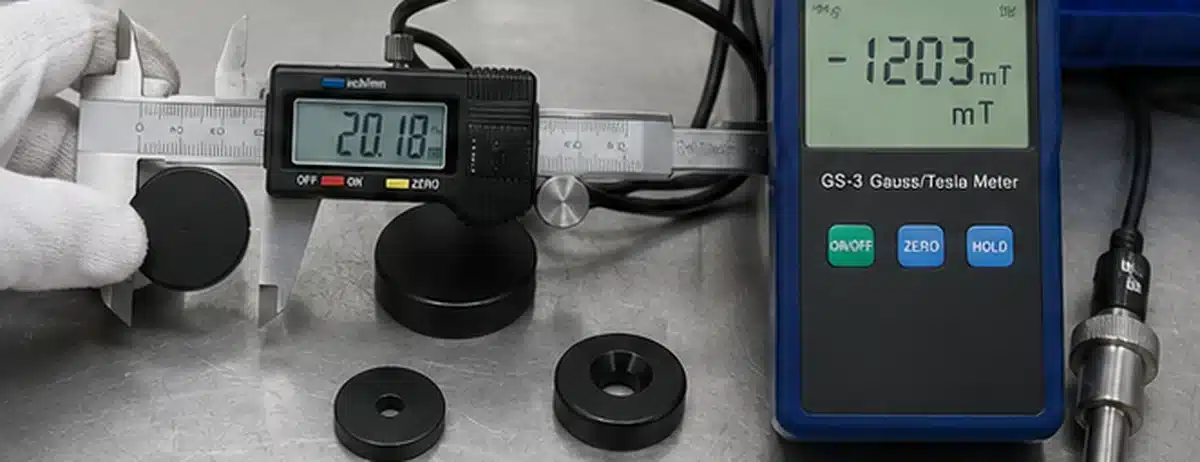
OSENC designs fully encapsulated NdFeB assemblies for wet, humid, wash-down and water-contact applications. We define the resin, sealing boundary, holes, inserts and exposure condition in the finished drawing so the protection requirement is tied to a specific component design.
For marine, aquarium or aquaculture projects, OSENC requires the salt concentration, water temperature, immersion duration, cleaning method and any metal insert that crosses the plastic barrier.
OSENC defines polymer compatibility using Chemical + Concentration + Temperature + Exposure Time + Plastic Material. The released resin grade is matched to the stated service condition instead of relying on a generic “acid resistant” or “alkali resistant” claim.
This approach keeps chemical resistance, wall thickness, temperature and assembly geometry inside the same engineering review.
OSENC supplies encapsulated magnetic components for high-humidity, splash and salt-water assemblies where the NdFeB core requires a physical barrier from the environment.
OSENC engineers polymer-protected magnetic assemblies for equipment exposed to defined acids, alkalis, solvents or cleaning media, with the polymer selected against the actual service condition.
OSENC builds magnetic components for sensors, closures, furniture fixing, material handling and installation systems that require protection from moisture, impact or direct surface contact.
OSENC uses a polymer interface where direct metal contact must be avoided. When friction and anti-slip behavior are more important than a rigid housing, we move the design to a softer elastomer or rubber-coated structure.
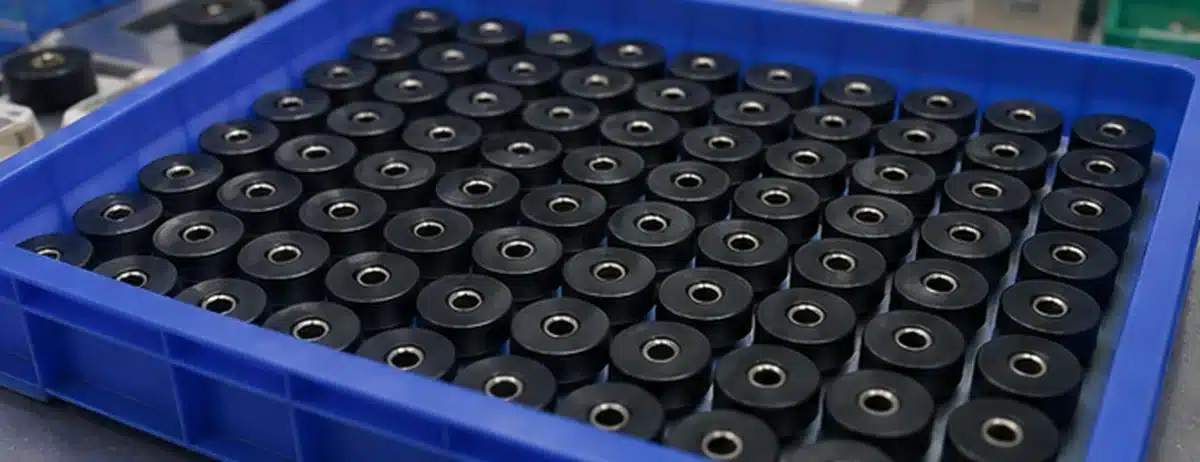
Send your drawing, working environment, magnetic requirement and quantity. OSENC will review the magnet core, polymer structure, mounting details and magnetic working gap before quotation and prototype release.
Invia il disegno per un preventivo tecnicoOSENC designs fully encapsulated NdFeB assemblies for water-contact and wet-environment applications. We define the resin, sealing boundary, holes, inserts and exposure condition in the finished drawing so waterproof requirements are tied to a specific product design rather than a generic coating claim.
Il grado del magnete NdFeB non si riduce semplicemente perché il magnete è rivestito, ma la plastica aggiunge una distanza non magnetica tra il nucleo del magnete e il bersaglio. Per questo, quando il campo o la forza di distacco sono fattori critici, OSENC progetta congiuntamente lo spessore della parete sul lato attivo e il traferro di lavoro.
No. I magneti rivestiti in plastica utilizzano un nucleo solido in NdFeB con uno strato protettivo polimerico o un involucro separato. Nei magneti plastolegati, invece, la polvere magnetica viene miscelata con un legante polimerico e il materiale magnetico così ottenuto viene stampato.
OSENC lavora con ABS, PP, TPE, TPU, PU, PTFE, acrilico e nylon per progetti personalizzati. Il grado di resina approvato viene selezionato in funzione di temperatura, sostanze chimiche, durezza, spessore di parete, requisiti dimensionali e processo produttivo.
Sì. OSENC integra fori passanti, svasature coniche, lamature cilindriche, inserti in ottone, inserti in acciaio e inserti filettati quando la geometria, l’elemento di fissaggio e i requisiti di ritenzione sono definiti nel disegno tecnico del pezzo finito.
Per i progetti con requisiti di accettazione magnetica, OSENC può collaudare il magnete finito con rivestimento plastico a traferri di lavoro di 0,0, 0,5, 1,0, 1,5 e 2,0 mm. Il verbale di validazione può includere l’induzione magnetica superficiale in gauss, l’induzione magnetica al traferro di lavoro in gauss, la forza di distacco normale e la forza di taglio / scorrimento. Il materiale di riscontro, lo spessore dell’acciaio, le condizioni della superficie, l’area di contatto, l’orientamento e la direzione di prova vengono definiti prima del rilascio dei risultati.
Inviare il disegno tecnico del pezzo finito, le condizioni ambientali, la direzione di magnetizzazione, il traferro di lavoro, i dettagli di montaggio, la quantità ed eventuali requisiti di forza di distacco o di campo magnetico, specificando le relative condizioni di prova.