







OSENC manufactures custom plastic coated neodymium magnets with partial or full encapsulation, overmolded housings, mounting inserts and application-specific magnetization. We engineer the polymer wall, working gap and magnetic circuit together so the finished component meets both protection and magnetic performance requirements.
Send the finished-part drawing. OSENC will review the NdFeB core, polymer structure, magnetization, working distance, mounting geometry and service environment as one engineered assembly.
Send Your Drawing for Engineering Quote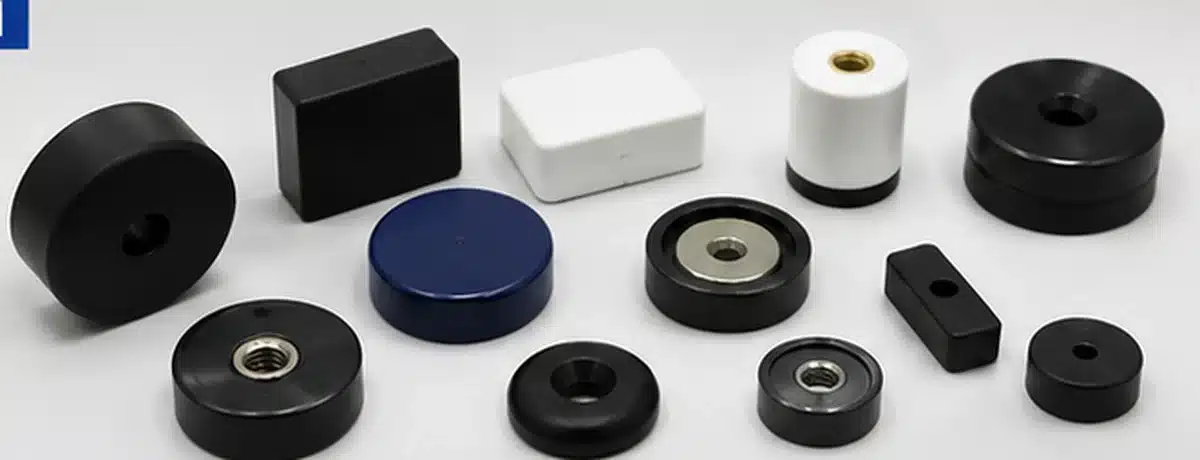
OSENC supplies the magnet core and the polymer structure as a finished magnetic component. The released drawing controls the final dimensions, active magnetic face, mounting interfaces and inspection requirements.
| 자석 코어 | 소결 NdFeB |
| 형상 | Disc, block, ring and custom magnetic assemblies |
| 캡슐화 | Partial encapsulation, full encapsulation and functional plastic housings |
| 제조 방식 | Insert molding, overmolding, CNC plastic housing, prototype tooling, single-cavity and multi-cavity production tooling |
| 폴리머 옵션 | ABS, PP, TPE, TPU, PU, PTFE, acrylic and nylon |
| Mounting Features | Through hole, countersunk, counterbore, brass insert, steel insert and threaded insert |
| 착자 | Axial, diametrical, through-thickness, length, width and multipole magnetization |
| 시제품 수량 | MOQ 1 for custom magnet projects |
| 검사 | Finished dimensions, encapsulation condition, critical interfaces and magnetization; project-specific magnetic or mechanical validation when specified |
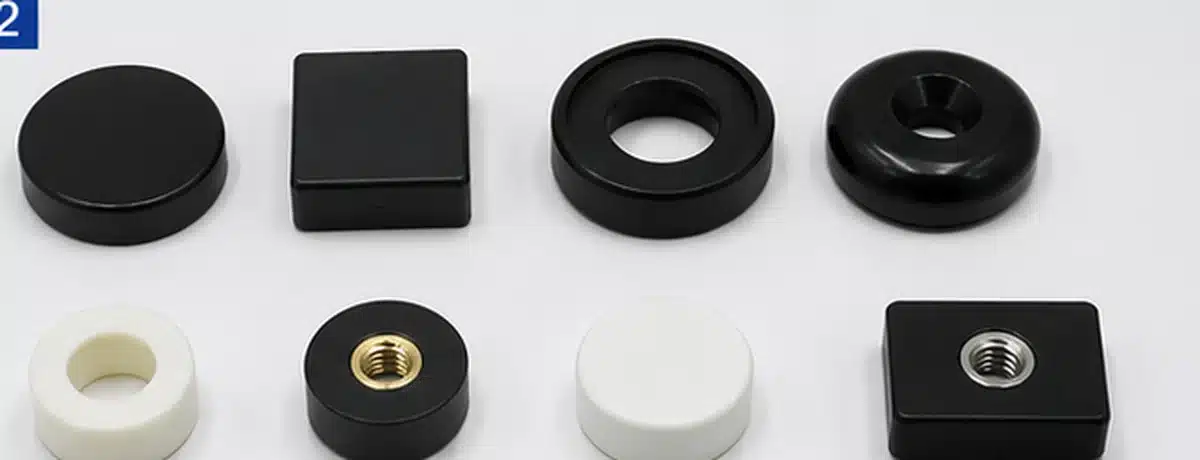
Plastic coated neodymium magnets combine a solid sintered NdFeB core with a separate polymer shell, overmold or functional housing. Unlike plastic-bonded magnets, the magnetic core remains a dense permanent magnet rather than magnetic powder mixed into resin.
OSENC engineers these parts from the finished-part drawing because the polymer geometry directly controls final OD, length, hole position, active-face wall thickness, mounting features and magnetic working gap.
OSENC treats the polymer wall on the active magnetic face as part of the magnetic design. Plastic is non-magnetic, so increasing the wall thickness increases the working distance between the NdFeB core and the target. That added gap can reduce usable field or pull force at the real operating position.
We define the core geometry, magnetic grade requirement and magnetization direction against the finished assembly.
We control active-face wall thickness separately from structural reinforcement, ribs, mounting bosses and other non-magnetic zones.
We lock the target material, steel thickness, working gap and test condition when Gauss or pull-force acceptance is part of the drawing.
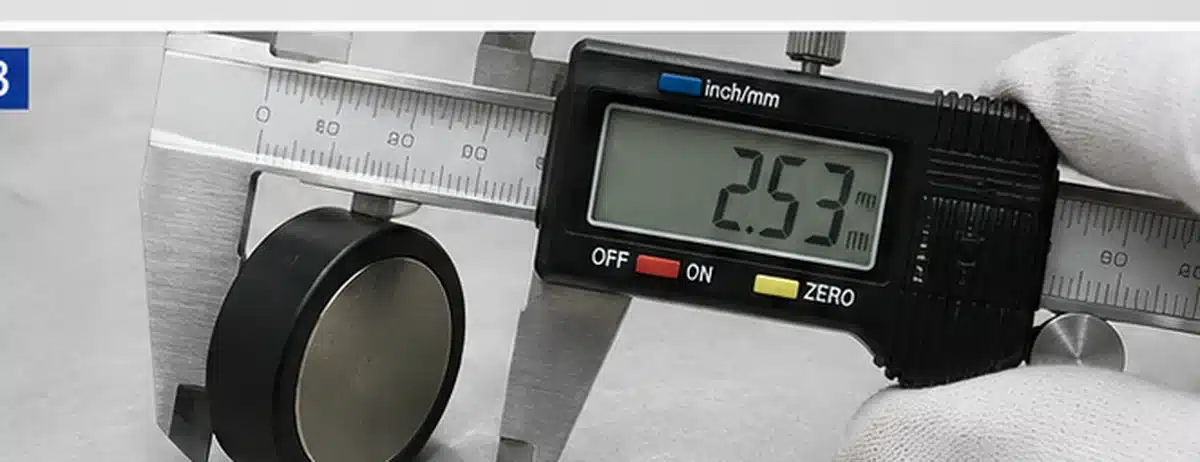
Already have a drawing? Send it to OSENC for magnet grade, polymer structure and working-gap review before tooling or prototype release.
Send DrawingPlastic wall thickness changes the non-magnetic distance between the NdFeB core and the target. For projects where field strength, holding force or slide resistance is critical, OSENC can validate the finished plastic-coated magnet at five defined working gaps: 0.0 mm, 0.5 mm, 1.0 mm, 1.5 mm and 2.0 mm.
| Working Gap | Magnetic Measurements | Mechanical Measurements |
|---|---|---|
| 0.0 mm | Surface Gauss Working-gap Gauss | Normal Pull Force Shear / Slide Force |
| 0.5 mm | Surface Gauss Working-gap Gauss | Normal Pull Force Shear / Slide Force |
| 1.0 mm | Surface Gauss Working-gap Gauss | Normal Pull Force Shear / Slide Force |
| 1.5 mm | Surface Gauss Working-gap Gauss | Normal Pull Force Shear / Slide Force |
| 2.0 mm | Surface Gauss Working-gap Gauss | Normal Pull Force Shear / Slide Force |
OSENC records Surface Gauss 및 Working-gap Gauss at the agreed measurement position and orientation. This separates the field measured at the finished magnet surface from the field available at the real operating distance.
OSENC records Normal Pull Force 및 Shear / Slide Force when these values are part of the project acceptance criteria. The test interface is fixed before validation so the results are repeatable and comparable.
Need magnetic performance at a real assembly gap? Send the finished plastic wall, target steel, working distance and required force or field. OSENC can build the 0–2.0 mm gap matrix into the prototype validation plan.
Request Working-Gap ReviewOSENC applies plastic only where the design requires protection, identification, spacing, gripping or a mechanical interface. The active magnetic face, mounting face or another functional area can remain exposed when the drawing requires direct magnetic contact or a defined interface.
Insert molding is a manufacturing route, not a coverage percentage. OSENC defines the coverage boundary from the finished component drawing.
OSENC encloses the NdFeB core more completely when the component requires stronger isolation from moisture, corrosion exposure, chipping or direct contact with surrounding equipment.
Before tooling release, we define the sealing boundary around seams, holes, inserts and other penetration points so the encapsulation structure matches the specified environmental and mechanical exposure.
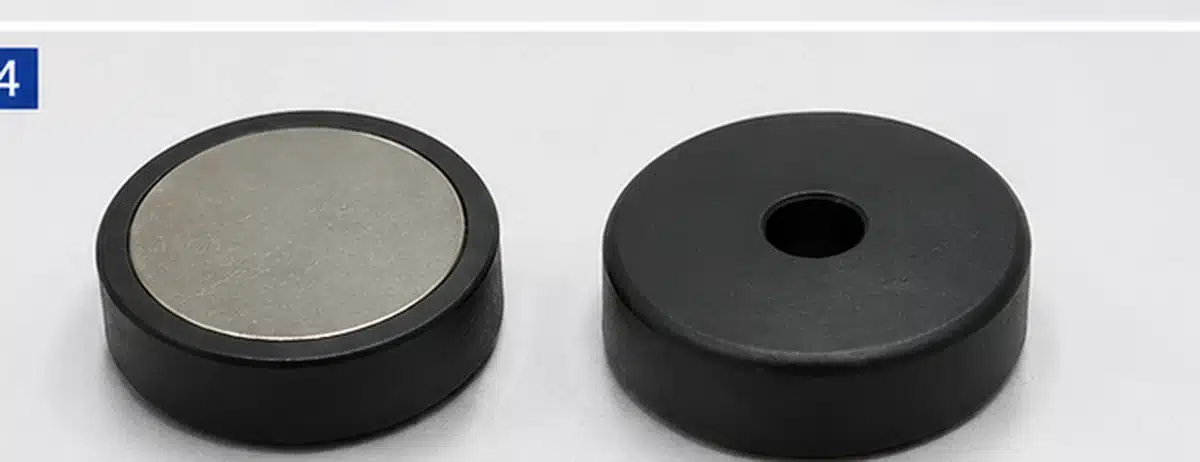
OSENC works with ABS, PP, TPE, TPU, PU, PTFE, acrylic and nylon for custom encapsulation projects. We do not treat these polymer families as interchangeable. The project BOM locks the actual material specification against the required environment, geometry and manufacturing route.
| Polymer Option | Engineering Role | OSENC Locks Before Production |
|---|---|---|
| ABS | Rigid housing, appearance, color and molded interfaces | Resin grade, temperature, UV exposure, chemicals and wall thickness |
| PP | Lightweight rigid parts and many wet or chemical-contact structures | Chemical, concentration, temperature, exposure duration and dimensions |
| TPE / TPU / PU | Soft contact, grip, cushioning and flexible overmolded surfaces | Hardness, abrasion, oil or chemical exposure, UV and temperature |
| PTFE | Low-friction and demanding chemical-contact requirements | Process route, wall thickness, working gap and full-assembly temperature |
| Acrylic | Rigid visual, colored or functional housing concepts | Impact, fastening, chemical exposure and geometry |
| Nylon | Tough structural features and wear-resistant molded parts | Moisture absorption, dimensional stability, temperature and chemicals |
Process boundary: the available polymer families do not imply that every material is suitable for every molding route. OSENC releases the resin grade and manufacturing process together for each project.
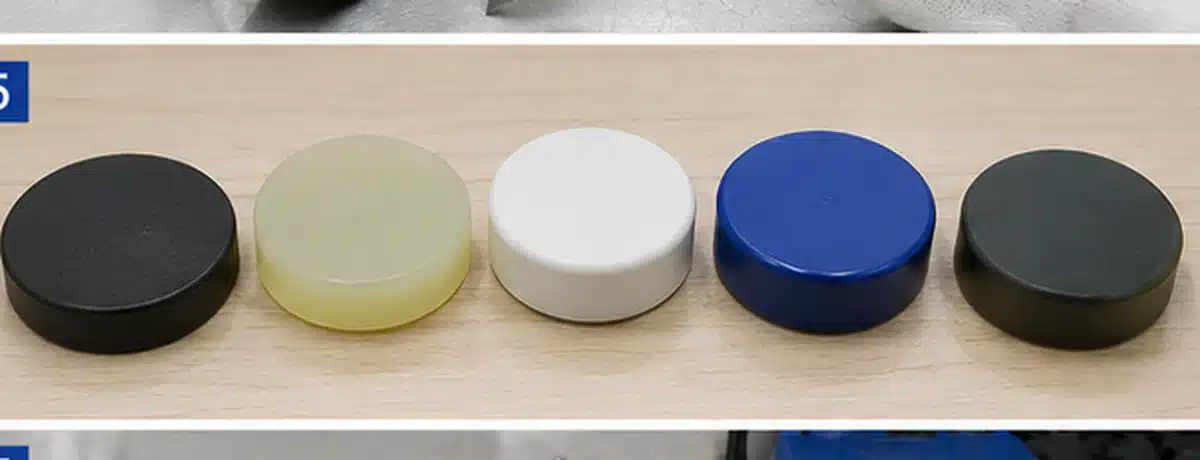
OSENC selects the protection route against the exact chemical, concentration, temperature, exposure time and finished-component geometry. PTFE can be specified when its material properties match the application, while other projects may be better served by a thinner coating or another polymer housing.
비교 PTFE coated magnets, epoxy coated magnets, and the neodymium magnet coating guide.
OSENC selects the protection route from the working environment, magnetic gap, mechanical interface and expected surface contact. A molded plastic housing is the right solution when the project needs more than a thin protective coating.
| Protection Route | Best Fit | Main Design Trade-Off |
|---|---|---|
| Rigid plastic encapsulation | Environmental barrier plus molded mounting or locating features | Adds wall thickness and magnetic working gap |
| Soft elastomer / rubber coating | Surface protection, friction and impact cushioning | Soft layer can deform and also increases working gap |
| Epoxy coating | Thin corrosion-protection layer where a housing is unnecessary | Does not create the same mechanical enclosure as a molded shell |
| PTFE protection | Low-friction or application-specific chemical-contact requirements | Material and processing route must match the project geometry |
| Conventional plated NdFeB | Minimum magnetic gap in a controlled environment | Provides less physical isolation from moisture, impact or direct chemical contact |
If friction and anti-slip behavior are the primary requirements, use an OSENC rubber coated magnet rather than forcing a rigid plastic housing into the wrong application.
OSENC integrates the magnet into the finished component rather than treating the polymer as decoration added after the magnetic design.
OSENC supports axial, diametrical, through-thickness, length, width and multipole magnetization. The pole layout is released against the magnetic circuit and finished assembly geometry.
For strong NdFeB overmolded assemblies, OSENC can complete the magnetic core and polymer structure before final magnetization so magnetic attraction does not interfere with tooling, positioning or assembly. The released process plan controls the final sequence.
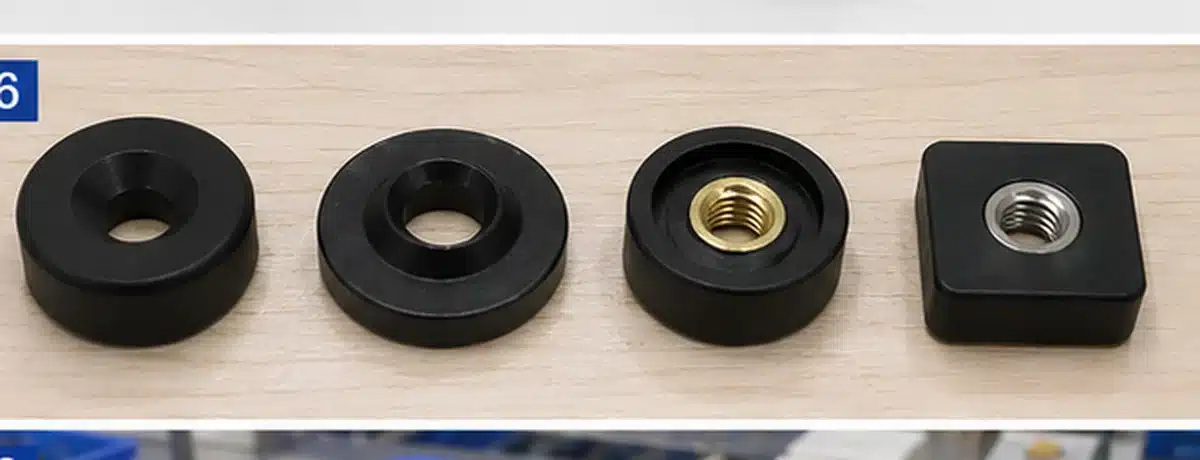
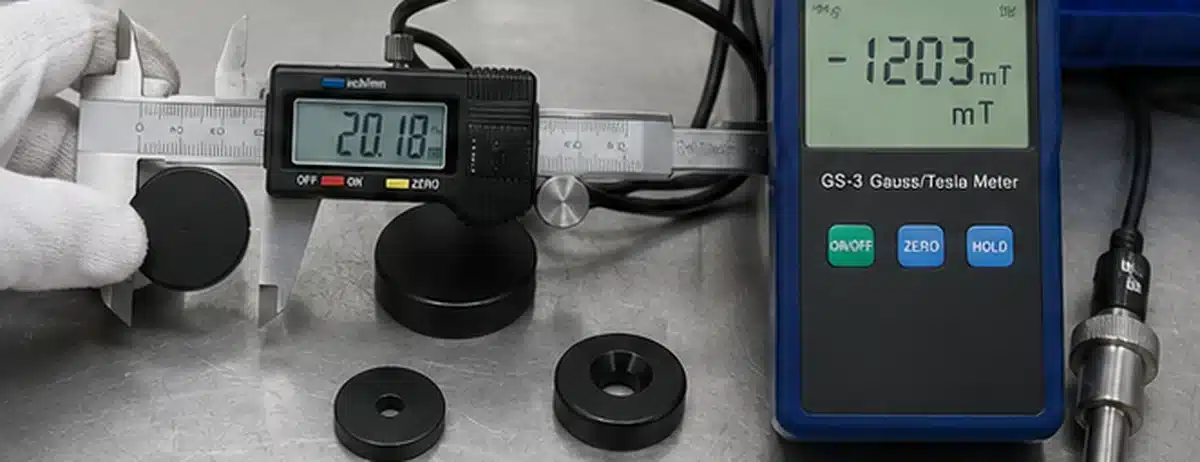
Every released plastic-coated magnet project is inspected against the finished-part drawing for the applicable dimensional, encapsulation and magnetic requirements.
When the drawing includes magnetic or mechanical acceptance requirements, OSENC adds the agreed validation method to the QC plan.
OSENC locks finished dimensions, magnetic acceptance criteria, operating-temperature requirements and environmental conditions in the project drawing and QC specification. Acceptance values remain product-specific rather than being copied across unrelated plastic-coated magnet designs.
OSENC designs fully encapsulated NdFeB assemblies for wet, humid, wash-down and water-contact applications. We define the resin, sealing boundary, holes, inserts and exposure condition in the finished drawing so the protection requirement is tied to a specific component design.
For marine, aquarium or aquaculture projects, OSENC requires the salt concentration, water temperature, immersion duration, cleaning method and any metal insert that crosses the plastic barrier.
OSENC defines polymer compatibility using Chemical + Concentration + Temperature + Exposure Time + Plastic Material. The released resin grade is matched to the stated service condition instead of relying on a generic “acid resistant” or “alkali resistant” claim.
This approach keeps chemical resistance, wall thickness, temperature and assembly geometry inside the same engineering review.
OSENC supplies encapsulated magnetic components for high-humidity, splash and salt-water assemblies where the NdFeB core requires a physical barrier from the environment.
OSENC engineers polymer-protected magnetic assemblies for equipment exposed to defined acids, alkalis, solvents or cleaning media, with the polymer selected against the actual service condition.
OSENC builds magnetic components for sensors, closures, furniture fixing, material handling and installation systems that require protection from moisture, impact or direct surface contact.
OSENC uses a polymer interface where direct metal contact must be avoided. When friction and anti-slip behavior are more important than a rigid housing, we move the design to a softer elastomer or rubber-coated structure.
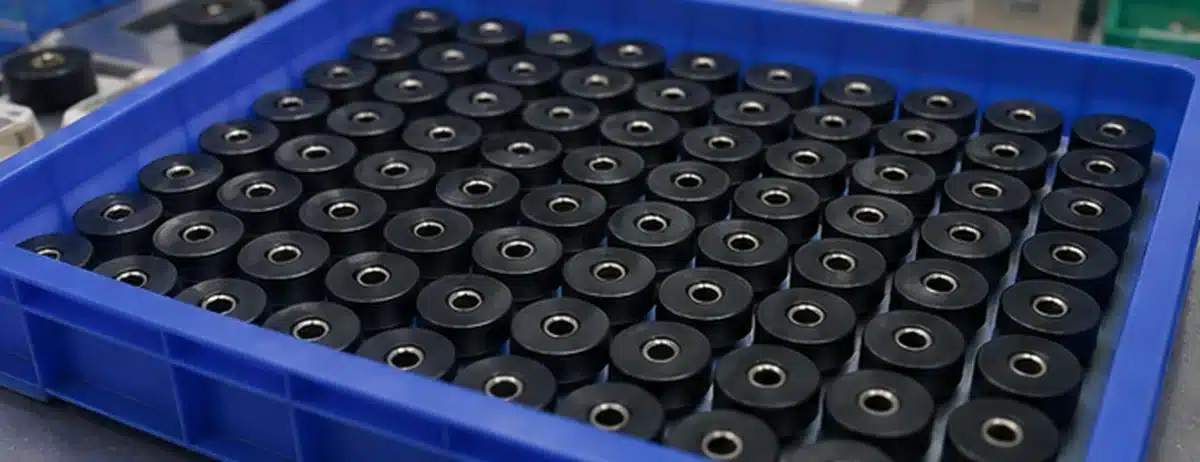
Send your drawing, working environment, magnetic requirement and quantity. OSENC will review the magnet core, polymer structure, mounting details and magnetic working gap before quotation and prototype release.
Send Your Drawing for Engineering QuoteOSENC designs fully encapsulated NdFeB assemblies for water-contact and wet-environment applications. We define the resin, sealing boundary, holes, inserts and exposure condition in the finished drawing so waterproof requirements are tied to a specific product design rather than a generic coating claim.
자석이 플라스틱으로 덮였다고 해서 NdFeB 등급 자체가 낮아지는 것은 아닙니다. 다만 플라스틱으로 인해 자석 코어와 대상물 사이의 비자성 거리가 늘어납니다. 따라서 자기장이나 인장력이 중요한 경우 OSENC는 작동면의 벽 두께와 작동 간극을 함께 고려하여 설계합니다.
아닙니다. 플라스틱 코팅 자석은 일체형 NdFeB 코어에 별도의 보호용 폴리머층 또는 하우징을 적용합니다. 반면 플라스틱 본드 자석은 자성 분말과 폴리머 바인더를 혼합한 후 자성 재료 자체를 성형합니다.
OSENC는 맞춤형 프로젝트를 위해 ABS, PP, TPE, TPU, PU, PTFE, 아크릴 및 나일론을 사용합니다. 적용 수지 등급은 온도, 화학물질, 경도, 벽 두께, 치수 요구사항 및 제조 방식에 따라 선정됩니다.
예. 완성품 도면에 형상, 체결부품 및 고정 요구사항이 정의되어 있으면 OSENC는 관통 홀, 카운터싱크, 카운터보어, 황동 인서트, 스틸 인서트 및 나사산 인서를 통합 적용할 수 있습니다.
For projects with magnetic acceptance requirements, OSENC can test the finished plastic-coated magnet at 0.0, 0.5, 1.0, 1.5 and 2.0 mm working gaps. The validation record can include Surface Gauss, Working-gap Gauss, Normal Pull Force and Shear / Slide Force. Target material, steel thickness, surface condition, contact area, orientation and test direction are fixed before results are released.
Send the finished-part drawing, environmental conditions, magnetization direction, working gap, mounting details, quantity and any pull-force or field requirement with a defined test condition.