







OSENC produce magneti al neodimio personalizzati placcati in oro con un sistema di rivestimento NdFeB + Ni-Cu-Ni + Au 24K per applicazioni OEM di precisione. Il grado del magnete, le dimensioni finali, le tolleranze, la magnetizzazione, le specifiche della placcatura in Au e i requisiti di ispezione vengono gestiti congiuntamente per ottenere un componente magnetico finito.
Disc, block, ring and drawing-based custom geometries are available for electronics, sensors, precision instruments, jewelry hardware, premium closures and other visible or electrically functional assemblies. These custom 24K gold plated NdFeB magnets are specified as finished components, not as bare magnets with an undefined decorative coating.
L'oro costituisce lo strato superficiale finale applicato sopra una barriera e una base di placcatura in Ni-Cu-Ni.
Dimensioni, tolleranze, direzione dei poli e placcatura vengono controllate sul componente finito.
È possibile iniziare con un singolo campione di validazione prima di passare alla produzione ripetitiva.
| Specifica | Capacità di fornitura di OSENC | Controllo della produzione |
|---|---|---|
| Materiale del magnete | NdFeB sinterizzato; N38 / N42 / N50 / N52 sono i gradi standard della pagina dedicata alla placcatura in oro | I gradi per temperature più elevate vengono selezionati in base all'effettivo punto di lavoro magnetico |
| Stratigrafia del rivestimento | NdFeB + Ni-Cu-Ni + Au 24K | L'oro costituisce lo strato esterno; il sistema barriera sottostante è formato da Ni-Cu-Ni |
| Spessore totale del rivestimento | Intervallo tecnico indicativo: 12–23 μm | La stratigrafia esatta è definita dal disegno tecnico e dalla specifica di galvanizzazione |
| Spessore Au | Definito per progetto | Quando è un parametro critico, viene specificato il valore target dello spessore Au o il requisito XRF |
| Forme | Disco, blocco, anello e geometrie personalizzate | Le dimensioni finite, lo stato dei bordi, i fori e le altre caratteristiche sono definiti dal disegno tecnico |
| Tolleranza sul pezzo finito | ±0,10 mm standard / ±0,05 mm di precisione | Il rilascio delle quote di precisione dipende dalla geometria effettiva e dalla stratigrafia del rivestimento |
| Magnetizzazione | Magnetizzazione assiale e lungo lo spessore definite; configurazioni polari speciali in base al progetto | La direzione dei poli è definita nel disegno tecnico approvato |
| Temperatura standard serie N | Fino a 80 °C | I gradi H / SH / UH / EH vengono selezionati per progetti con temperature più elevate |
| Fornitura di prototipi | MOQ 1 | L’approvazione del campione riguarda dimensioni, aspetto, magnetizzazione e idoneità all’applicazione |
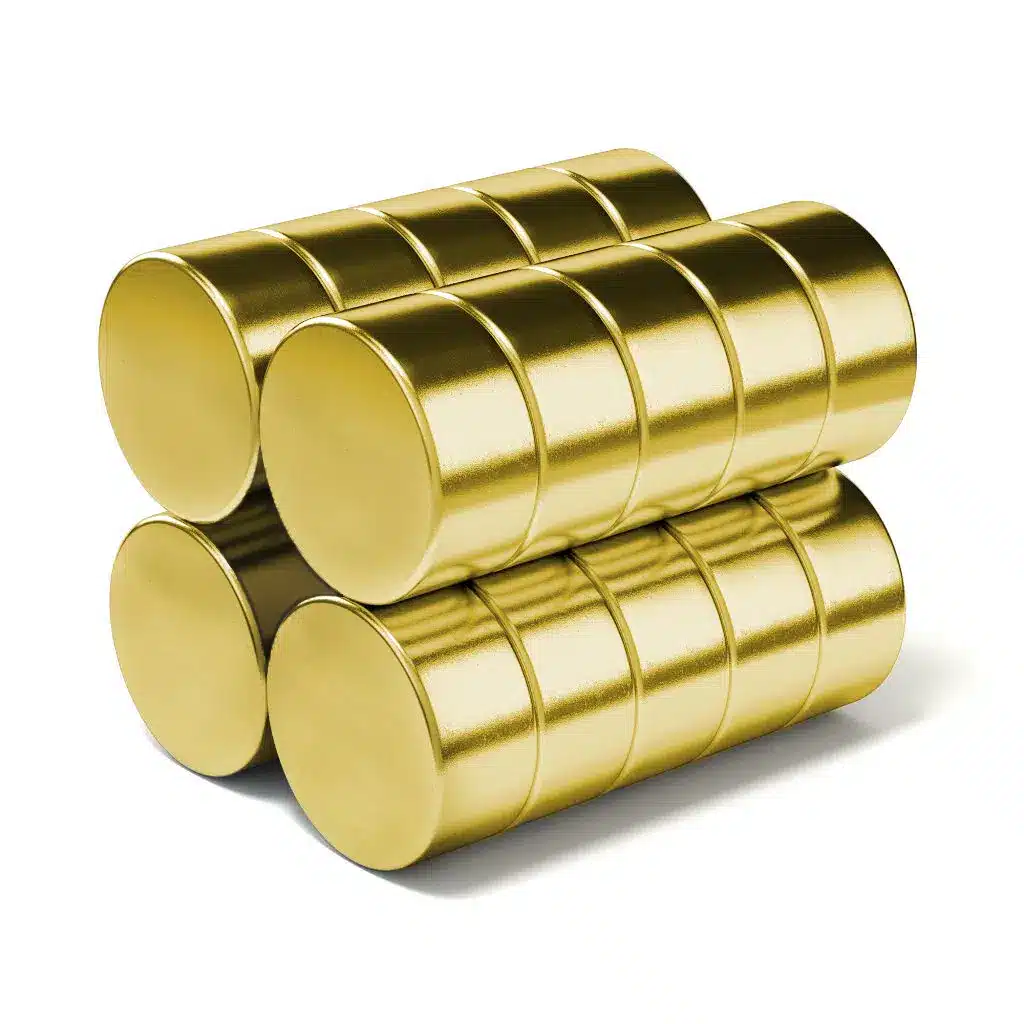
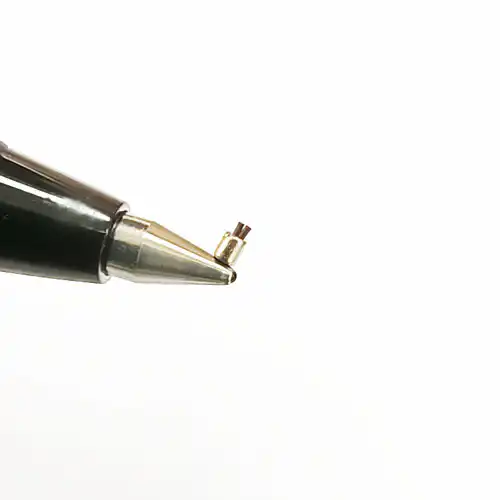
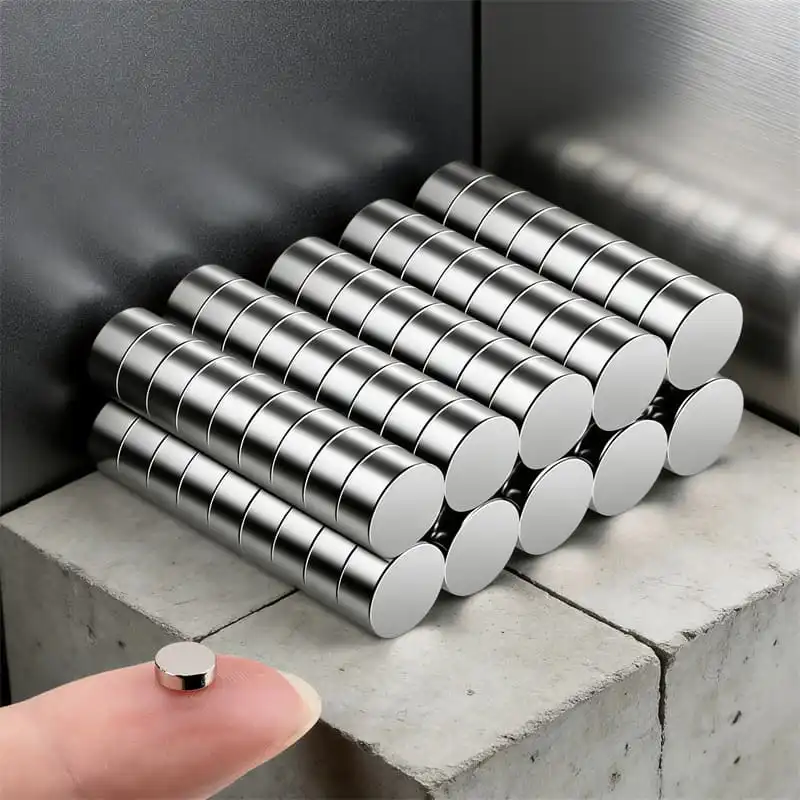
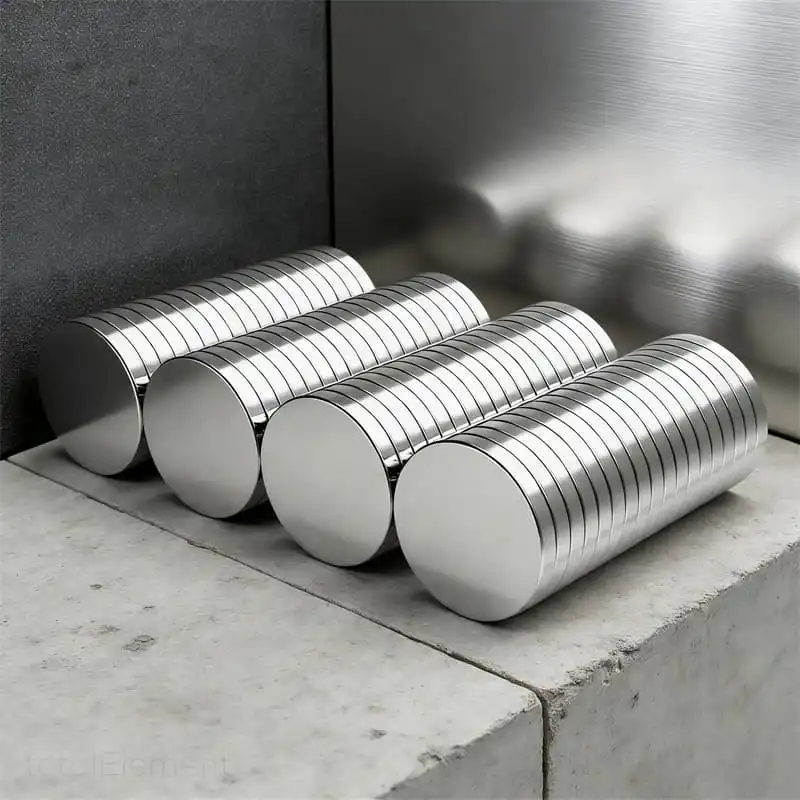
Per i prodotti placcati in oro, gli acquirenti dovrebbero vedere prima il prodotto effettivo e poi i relativi controlli di produzione. Per mostrare il rivestimento, OSENC utilizza l’immagine sottostante del prodotto placcato in oro confermato; le altre fotografie documentano il contesto reale delle attività di ispezione e produzione di NdFeB di OSENC e non sono presentate come immagini di prodotti placcati in oro.
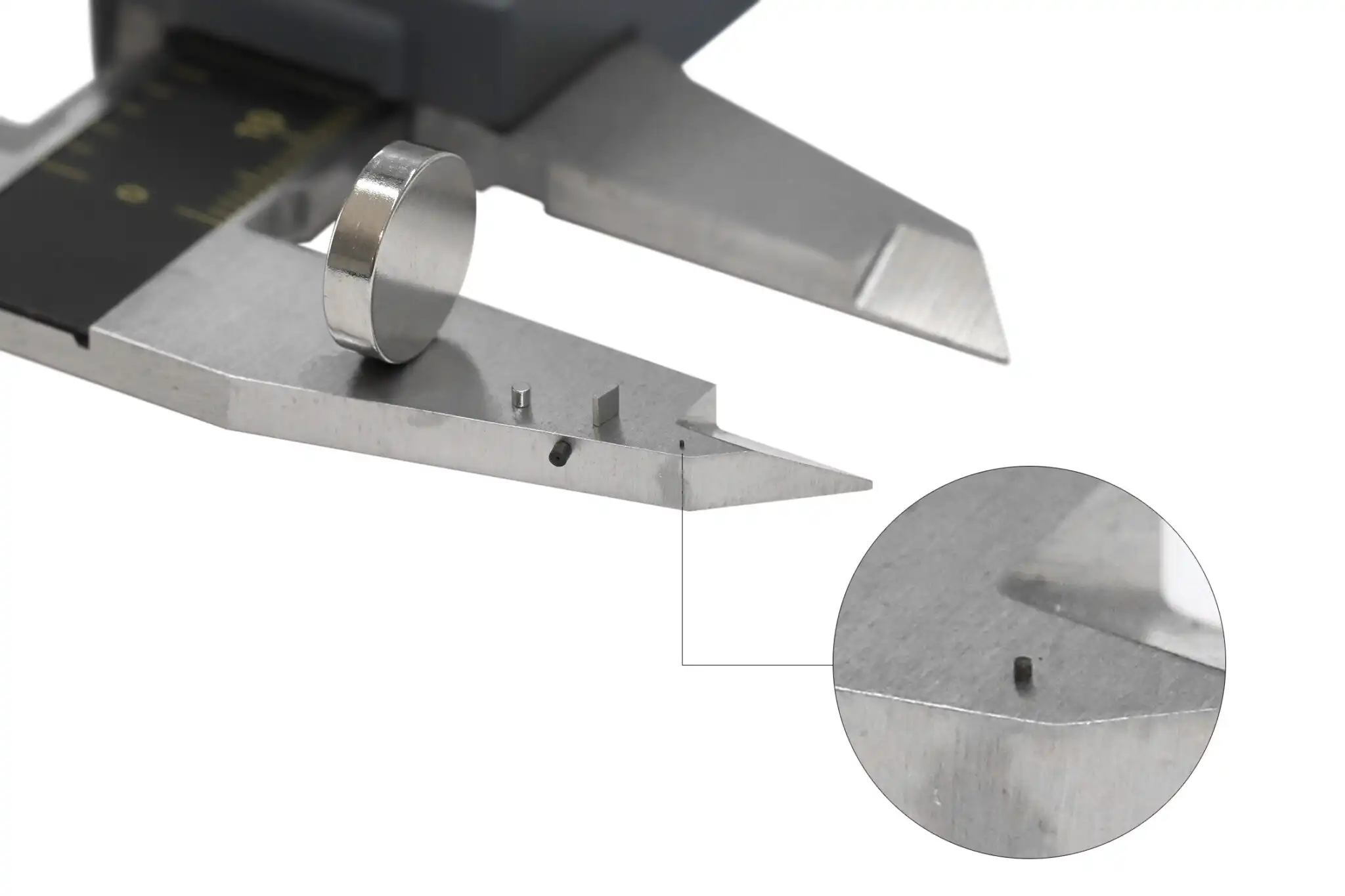
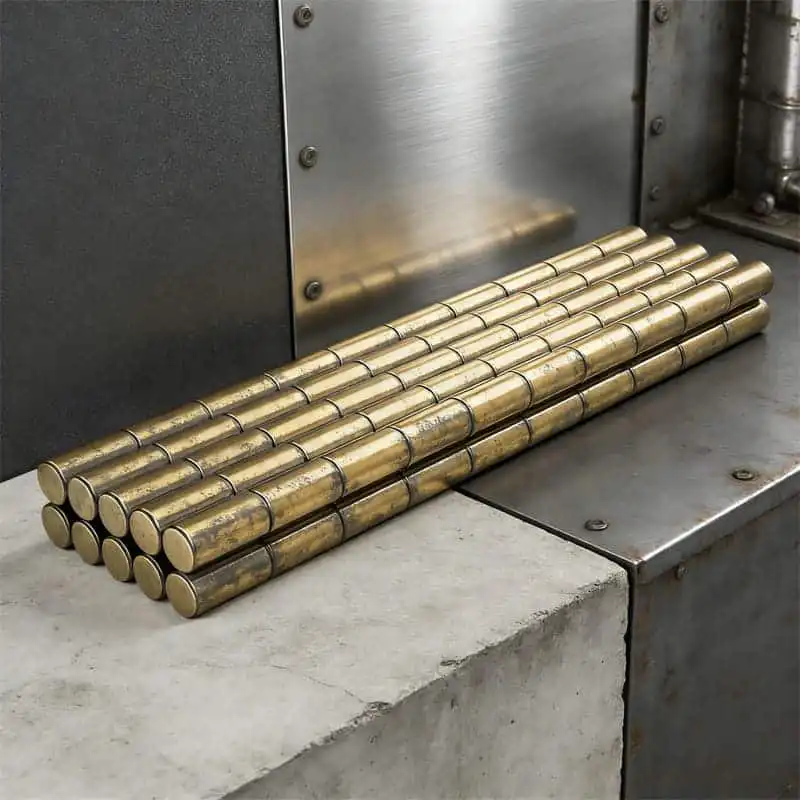
OSENC utilizza una NdFeB + Ni-Cu-Ni + Au 24K architecture for gold plated neodymium magnets. The Ni-Cu-Ni layers provide the underlying metallic barrier and plating base. 24K Au forms the final bright, conductive and oxidation-resistant surface. In RFQs, this construction may also be described as an Au plated NdFeB magnet oppure gold coated neodymium magnet; the production drawing should still define the actual plating stack.
La struttura completa del rivestimento è normalmente controllata entro un intervallo tecnico complessivo di circa 12–23 μm. Lo spessore dello strato superficiale in Au rimane controllato in base al progetto e viene definito separatamente quando il disegno tecnico o il piano di validazione richiede un valore obiettivo XRF.
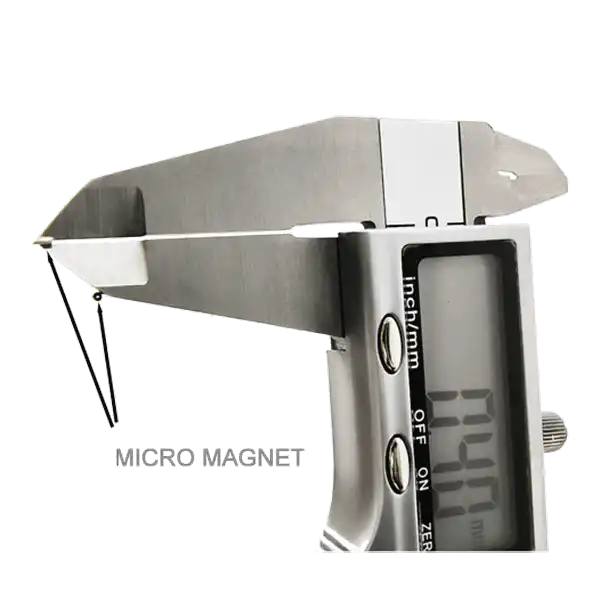
Gold gives visible magnets a bright metallic finish for jewelry, premium closures, instruments and exposed product hardware.
Gold itself resists oxidation. Finished corrosion performance still depends on the full layer stack, porosity, edges and wear condition.
A Gold outer surface is electrically conductive when the magnet is part of a defined contact or sensing interface.
Electroplated construction preserves compact assembly space compared with thick plastic or rubber encapsulation.
OSENC fixes pole direction and magnetic requirements on the drawing together with dimensions and Gold plating.
Visible parts are released against agreed appearance criteria instead of vague labels such as “premium quality.”
OSENC manufactures Gold Plated Magnets to customer drawings. The dimensions below are practical reference sizes for RFQ and prototype planning; final production dimensions follow the approved drawing.
| Geometry | Reference Size | NdFeB Grade | Typical Magnetization |
|---|---|---|---|
| Disco | D3 × 2 mm | N38 | Assiale |
| Disco | D5 × 1 mm | N50 | Assiale |
| Disco | D10 × 2 mm | Project grade | Assiale |
| Disco | D20 × 3 mm | N38 | Assiale |
| Blocco | 5 × 5 × 1.2 mm | N50 | Through thickness |
| Blocco | 10 × 3.5 × 5 mm | N52 | Through thickness |
| Blocco | 20 × 3.5 × 5 mm | N52 | Through 5 mm |
| Anello | OD5 × ID2 × 5 mm | N38 | Assiale |
Finished plated tolerance: ±0.10 mm standard and ±0.05 mm precision where the actual geometry and inspection capability support it.
OSENC uses Gold plating when the outer surface performs a defined job: conductivity, oxidation resistance, visible metallic appearance or a specified material interface.
Compact magnets where a conductive, oxidation-resistant outer surface or controlled interface is part of the assembly.
Small magnetic parts where final dimensions, pole direction, appearance and surface condition are drawing-controlled.
Magnetic clasps, decorative closures and visible hardware where the Gold appearance is part of the design.
Exposed magnetic closures and decorative hardware for gift boxes, cosmetics packaging and presentation cases.
Visible magnetic components used in high-end consumer products where a Gold-colored surface supports the design.
Gold-plated magnetic components can be supplied to buyer-defined device specifications. OSENC does not label Gold-plated parts as automatically skin-safe or implantable.
Gold is selected for appearance, conductivity and oxidation resistance, but a thin Gold surface is not a universal wear coating. Repeated abrasive contact can wear through the outer layer and expose the underlayer.
| Rivestimento | OSENC Selects It When | Main Boundary |
|---|---|---|
| Gold Plating | The outer surface must provide premium metallic appearance, conductivity, oxidation resistance or a specified Gold interface. | Thin Au surfaces require wear review. |
| Ni-Cu-Ni | General industrial magnets need a conventional metallic finish and cost efficiency is the priority. | Not the first choice for every skin-contact, chemical or corrosion-sensitive application. |
| Resina epossidica | Humidity and moisture protection matter more than metallic appearance. | Protect edges and surfaces from scratching, chipping and continuous abrasion. |
| Parylene | A thin conformal polymer barrier or electrical insulation is required. | Thickness, adhesion and device-level validation remain project-specific. |
| PTFE | Low friction or a defined chemical-compatibility requirement drives coating selection. | Exact chemical exposure, thickness and adhesion must be defined. |
If Gold is requested only for appearance but the magnet is hidden inside a housing, OSENC can move the project to a more cost-efficient coating that meets the actual environmental requirement.
| Voce di controllo | Controllo OSENC |
|---|---|
| Dimensioni finite | Critical OD, ID, length, width, thickness and features are inspected after Gold plating. |
| Magnetizzazione | Pole direction and pole layout are checked against the approved drawing. |
| Surface Appearance | Acceptance targets 0 exposed underlayer, 0 blister and 0 peeling; critical visible or functional surfaces are checked for damaging scratches, pits, stains or discoloration. |
| Spessore totale del rivestimento | The approved specification controls the finished plating build, typically within the 12–23 μm engineering range. |
| Au Top Layer | XRF-controlled when a target Au thickness or XRF requirement is specified on the project. |
| Magnetic Performance | Gauss, flux or other magnetic acceptance uses a defined test position, gap and method. |
| Adhesion / Environmental Tests | Project-specific adhesion, humidity, salt-spray or other validation is released against agreed test conditions and pass/fail criteria. |
| Imballaggio | Individual separation, PE protective layer or bag, foam or compartment trays are used to avoid direct Gold-surface rubbing. |
OSENC converts the complete RFQ into a production-ready magnet and plating specification.
| RFQ Item | Information to Send |
|---|---|
| Geometry | Drawing with dimensions, tolerances, holes, slots, radii, chamfers and critical datums |
| Magnetic Requirement | Grade if fixed, magnetization direction, pole pattern, working gap and Gauss / flux / force acceptance if applicable |
| Gold Plating | NdFeB + Ni-Cu-Ni + 24K Au, target Au thickness or XRF requirement, total build and cosmetic criteria |
| Ambiente | Temperature, humidity, chemicals, cleaning, body contact, abrasion and exposure duration |
| Assemblaggio | Adhesive, press fit, housing material, electrical contact, visible surface and mating parts |
| Validation | Inspection method, coating-thickness requirement, corrosion test, biological evaluation or customer documentation |
| Quantità | MOQ 1 prototype, first production lot and estimated repeat volume |
Yes. OSENC Gold Plated Magnets use a 24K Au outer finish over a Ni-Cu-Ni barrier system. Au top-layer thickness is controlled by the project drawing or XRF requirement when specified.
No. OSENC uses an NdFeB + Ni-Cu-Ni + Au multilayer system. Ni-Cu-Ni forms the plating base and barrier, with Gold as the outer surface.
Gold is chemically stable, but a thin Gold surface can wear under repeated rubbing or abrasive contact. OSENC uses the actual wear condition to define plating requirements or select a more wear-tolerant coating.
Yes. OSENC manufactures custom NdFeB geometries and controls pole direction or pole layout together with dimensions and plating on the approved drawing.
No. Magnetic performance comes from NdFeB grade, geometry, magnetization and the magnetic circuit. Gold is a nonmagnetic outer finish and becomes part of the physical working gap.
Yes. OSENC supports MOQ 1 for Gold Plated Magnet validation. Samples are used to approve finished dimensions, Gold appearance, magnetization, packaging and application fit before repeat production.
Gold plating alone does not automatically qualify a finished magnet as skin-safe. Body-contact projects must be evaluated against the complete plating stack, contact duration, wear condition, cleaning process and the applicable finished-device requirements. Send the required biological, chemical or nickel-release criteria before production.
Do not treat a Gold outer finish as automatic soldering approval. Soldering temperature, heating time, magnet grade, plating system, joint design and allowable magnetic loss must be reviewed together. If soldering is part of the assembly process, include the soldering profile and acceptance criteria in the RFQ.
Send the drawing, finished dimensions and tolerance, NdFeB grade or magnetic target, magnetization, Ni-Cu-Ni + 24K Au requirement, target Au thickness or XRF requirement, environment, quantity and validation requirements. OSENC will convert those inputs into a controlled finished-part specification for quotation and sampling.