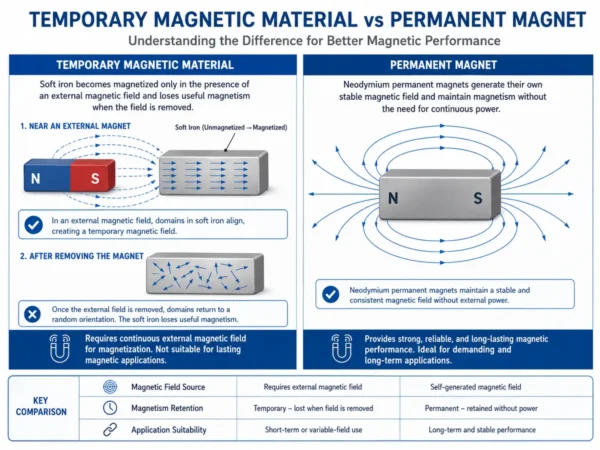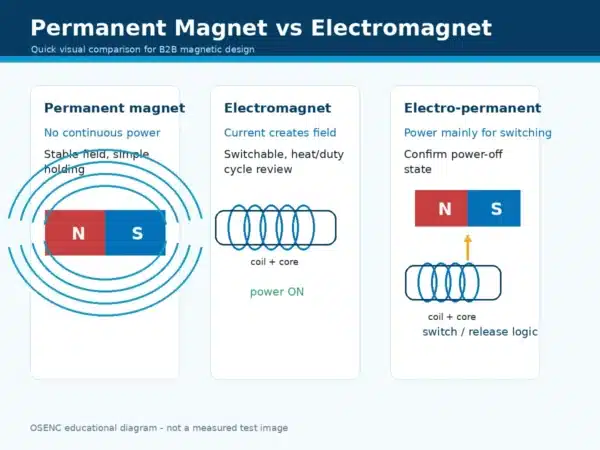







The strongest types of permanent magnets are neodymium (NdFeB) magnets used in motors, sensors, and tools. However, their strength has a disadvantage, which means that they rust readily. They are porous and contain a lot of iron; hence they readily exhibit oxidation when exposed to air or water. When you understand how rust develops, it’s easier to prevent it and extend magnet life.
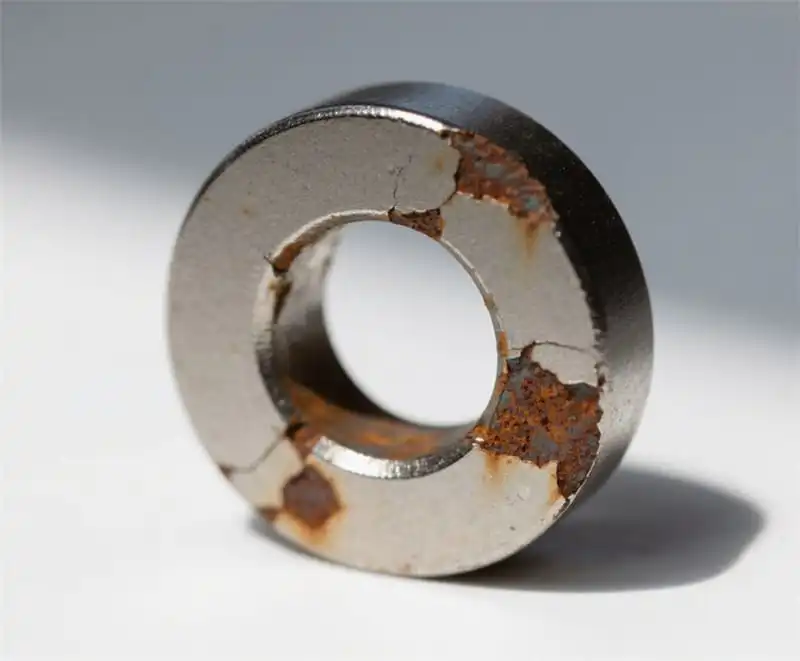
Why NdFeB magnets can rust?
Neodymium magnets are very sensitive to moisture and oxygen. In the absence of protective plating, the corrosion begins rapidly and degrades the surface and the strength.
What neodymium magnets are made of? (Nd-Fe-B core + porous microstructure)
The core and microstructure are porous (Nd-Fe-B core + porous microstructure). These magnets are made of neodymium, iron, and boron and are porous due to sintering. Minimal cracks hold moisture, which results in internal rust when uncoated.
Why iron content + porosity = Corrosion risk without protection?
Humidity combines quickly with iron, and the pores of the magnet allow the moisture to diffuse inside. This leads to pitting and flaking and therefore uncoated NdFeB magnets are very susceptible to corrosion especially in wet or marine environments.
Does rust weaken a magnet?
Yes. Rust directly weakens a neodymium magnet by damaging its surface and lowering magnetic output. Corrosion shortens lifespan and reduces performance over time.
Demagnetization at the surface and loss of working flux
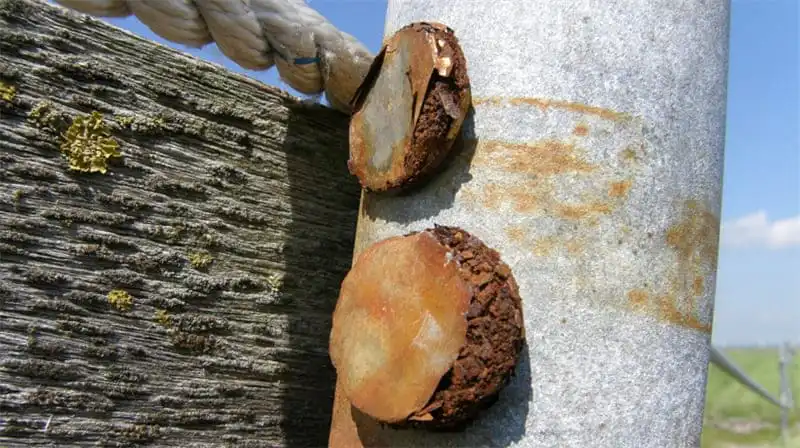
When rust forms, it breaks the smooth magnetic lines of flux, causing localized demagnetization. Affected areas lose pull force first, reducing overall field strength and efficiency, especially in precision uses like sensors or motors.
When corrosion becomes irreversible vs. recoverable?
Early rust can sometimes be cleaned and stabilized. But once corrosion reaches the magnetic grains, the loss is permanent. The structure changes, making full re-magnetization impossible, and replacement becomes the only option.
Common corrosion triggers
I magneti al neodimio sono molto reattivi e possono arrugginirsi facilmente in presenza di umidità, sale o condizioni atmosferiche avverse. Conoscere questi fattori scatenanti della corrosione consente di scegliere i rivestimenti e le tecniche di manutenzione più appropriati.
Acqua salata e ambienti ad alto contenuto di cloruri
I magneti al neodimio si corrodono facilmente se esposti ad acqua salata aggressiva o ad aria con un elevato contenuto di cloruri. Gli ioni cloruro compromettono i rivestimenti protettivi, raggiungono la superficie metallica e provocano l'ossidazione.
HUmidità elevata, sudore e cicli di condensa
I magneti esposti a condizioni piovose o toccati con le mani bagnate sono soggetti a umidità costante. La ripetizione dei cicli di condensazione e asciugatura favorisce la formazione di ruggine sui bordi o nelle microfessure, anche in presenza di strati protettivi.
Calore e umidità (ossidazione accelerata)
In presenza di calore e umidità, l'ossidazione accelera notevolmente. Le temperature elevate provocano la formazione di pori nel rivestimento, attraverso i quali l'ossigeno e il vapore acqueo raggiungono il nucleo metallico, intensificando il processo di corrosione.
Danni meccanici che provocano fessurazioni nel rivestimento
Il rivestimento del magnete può scheggiarsi o graffiarsi a causa di urti o attrito. In caso di danneggiamento, le superfici ferrose esposte si ossidano immediatamente e la corrosione si propaga sotto la placcatura, compromettendo la resistenza e l'aspetto del magnete.
Rivestimenti resistenti alla ruggine
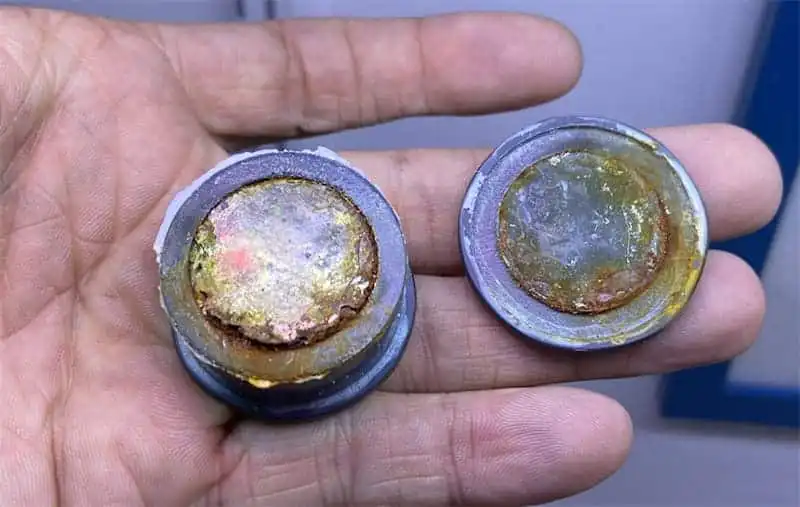
I materiali che costituiscono il nucleo dei magneti al neodimio si ossidano facilmente in presenza di aria umida o sale; è quindi necessario un rivestimento protettivo efficace. Il rivestimento crea una barriera tra il magnete e l'ambiente circostante, impedendo all'ossigeno e all'acqua di entrare in contatto con il magnete.
Placcatura Ni-Cu-Ni (nichel)
Il rivestimento a tre strati di nichel, rame e nichel è il più comune per i magneti al neodimio. Offre una finitura metallica brillante, una buona resistenza alla corrosione e una durezza media. Tuttavia, se il rivestimento si fessura o si scheggia, l'umidità può penetrare nel nucleo e innescare la formazione di ruggine.
Zincatura
La zincatura offre una finitura grigia opaca, con un'adesione eccellente ma una scarsa resistenza alla corrosione. È economica e adatta agli ambienti interni asciutti, mentre negli ambienti umidi o marini può corrodersi più rapidamente rispetto alla finitura in nichel.
Epossidico (nero/colorato)
I rivestimenti epossidici formano attorno al magnete una pellicola liscia, colorata e impermeabile. Offrono un’eccellente resistenza agli agenti chimici e una lunga durata. Il rivestimento epossidico può essere utilizzato in ambienti umidi o anche all’esterno, ma può graffiarsi in caso di manipolazione brusca.
Incapsulamento in parylene / PTFE / polimero
Questi rivestimenti creano un sottile strato polimerico liscio, chimicamente inerte e altamente resistente all’umidità. Parylene e PTFE trovano impiego in applicazioni medicali, marine o alimentari, nelle quali è importante garantire un isolamento totale dall’aria e dall’acqua.
Guscio in acciaio inox e alloggiamenti completamente sigillati
Il rivestimento dei magneti con acciaio inox o il loro inserimento in involucri sigillati impedisce l’ingresso di acqua e aria, eliminando completamente la formazione di ruggine e i danni.
Come prevenire la formazione di ruggine durante l’uso?
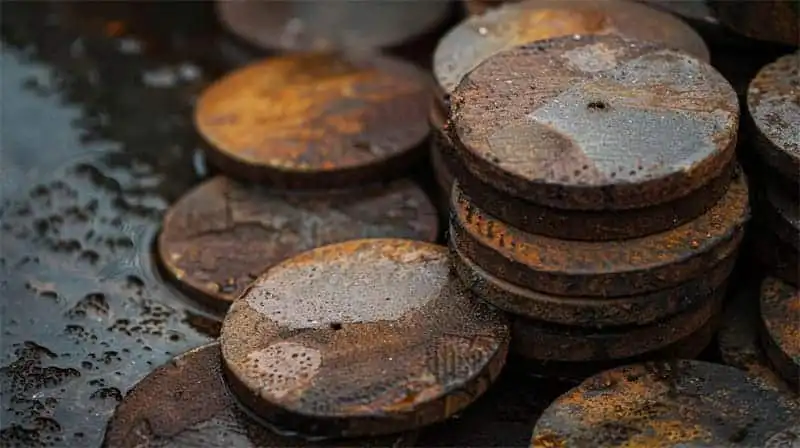
Per proteggere i magneti al neodimio dalla corrosione, è fondamentale manipolarli e conservarli correttamente. La scelta del rivestimento appropriato e la protezione dall’umidità garantiscono il funzionamento duraturo del componente in condizioni gravose.
Scegliere il rivestimento adatto all’ambiente di utilizzo (interno, esterno, marino, alimentare)
Individuare il rivestimento adatto alle condizioni di utilizzo. Il nichel viene impiegato in ambienti interni, l’epossidico o il PTFE in ambienti bagnati e umidi, mentre l’acciaio inox viene utilizzato nelle applicazioni marine o alimentari.
Incapsulare e resinare completamente i magneti per applicazioni in ambienti bagnati
In condizioni umide o in immersione, i magneti possono essere sigillati all’interno di resina epossidica oppure rivestiti con gomma o plastica per impedire infiltrazioni d’acqua. Ciò previene l’ossidazione, prolunga la vita utile e mantiene le prestazioni magnetiche.
Evitare scheggiature sui bordi: utilizzare distanziatori e superfici di contatto morbide
I bordi rappresentano punti deboli del rivestimento. Utilizzare distanziatori, protezioni in materiale espanso o rivestimenti morbidi per evitare urti e graffi che espongano il metallo e accelerino la formazione di ruggine.
Stoccaggio in ambiente asciutto e ventilato con essiccanti; opzioni di confezionamento in sacchetti e VCI
Keep the magnets of a store in a low-humid and well-ventilated place. Use silica gel, VCI bags or sealed pouches to prevent corrosion by absorbing the moisture during shipping or long-term storage.
Waterproofing and encapsulation methods
Neodymium magnets are only able to withstand exposure to moisture when sealed. Waterproofing provides an external coating, which prevents humidity, condensation, and contact with chemicals, guaranteeing long-term stability and strength.
PVC/TPU overmolding and plastic sleeves
Covering neodymium magnets with PVC or TPU adds a waterproof and flexible layer. These plastic coatings seal out moisture, protect against scratches, and make magnets safer to handle in wet or outdoor conditions.
Epoxy potting and two-part resins
Epoxy is used to encapsulate the magnets in a water-tight hard shell. Two-part resin systems close the cracks and borders, thus making them suitable in sensors, under-water motors, and equipment that are constantly in contact with wetness.
Rubber/ silicone over-coats for impact + moisture
Impact cushioning and humidity blocking are performed by rubber or silicone layers. They are flexible, protective, and increase the magnet life when subjected to vibration, motion, or moist high-friction temperatures.
Corrosion testing and standards
Corrosion testing will make sure that the neodymium magnets can endure adverse or wet conditions without being weakened. It assists manufacturers in verifying the validity of coating and protective layers.
Saltspray / salt fog (ASTM B117) basics
ATM B117 test subjects coated magnets to a controlled salt mist during hundreds of hours. This is a quicker test that mimics years of exposure to salty air or marine conditions, and it assists in the testing of the effectiveness of such coating as nickel or epoxy against corrosion damage.
Humidity and cyclic corrosion tests (overview)
The humidity and cyclic corrosion tests are interchanged by wet, dry and warm conditions to simulate weather change conditions in the real world. Such cycles allow the identification of micro cracks or weakening of the coating before it is used in the field, and it is a more valid performance analysis than the simple statical tests.
Maintenance and troubleshooting
Regular cleaning ensures that the magnets are not rusty and that they last longer. Corrosion on the surface can be checked by timely inspection and drying before spreading and interfering with magnet performance.
Early signs of coating failure and what to do?
Coating failure is characterized by discoloration, bubbling, or dull spots. When observed, wipe the surface with a clean cloth, keep the magnet dry, and apply a corrosion inhibitor/sealant at once to prevent oxidation.
Cleaning, drying, and safe storage after exposure
When in contact with water, wipe dry magnets with a soft cloth. Keep them in a low-humidity well ventilated place, ideally with desiccant or VCI bags. Do not pile them up roughly; this will chip or coat the cracks.
Conclusione
Corrosion should be prevented as this would safeguard the strength, appearance, and life of neodymium magnets. Not only do proper coatings, handling and maintenance prevent rust, but they also provide consistent performance of the magnet across the industrial, marine and ordinary applications.
Domande frequenti
Will neodymium magnets rust in fresh vs. saltwater?
Yes, the two are both corrosive; however, saltwater rusts at a high rate because of chloride ions.
Are “waterproof” neodymium magnets truly waterproof?
It is only waterproof when completely encapsulated; it is not entirely waterproof when just coated.
Can a rusted magnet be restored?
Rust on the metal can be washed; however, deep rust makes it weaker.
Do ceramic or samarium-cobalt magnets rust?
No, they are more resistant to oxidation, as they do not have any raw iron materials.
How long will a neodymium magnet lasts?
It can take decades until it decays, in case it is well coated and stored.
Quali sono gli svantaggi dei magneti al neodimio?
They are easy to corrode, are brittle, and weaken at high temperatures.
How to keep a magnet from rusting?
Apply thick coatings, keep it dry, and put it where it will not be touched by any material.
Will a neodymium magnet rust?
Yes, it will rust unless it has a good protective coating or is completely sealed.