






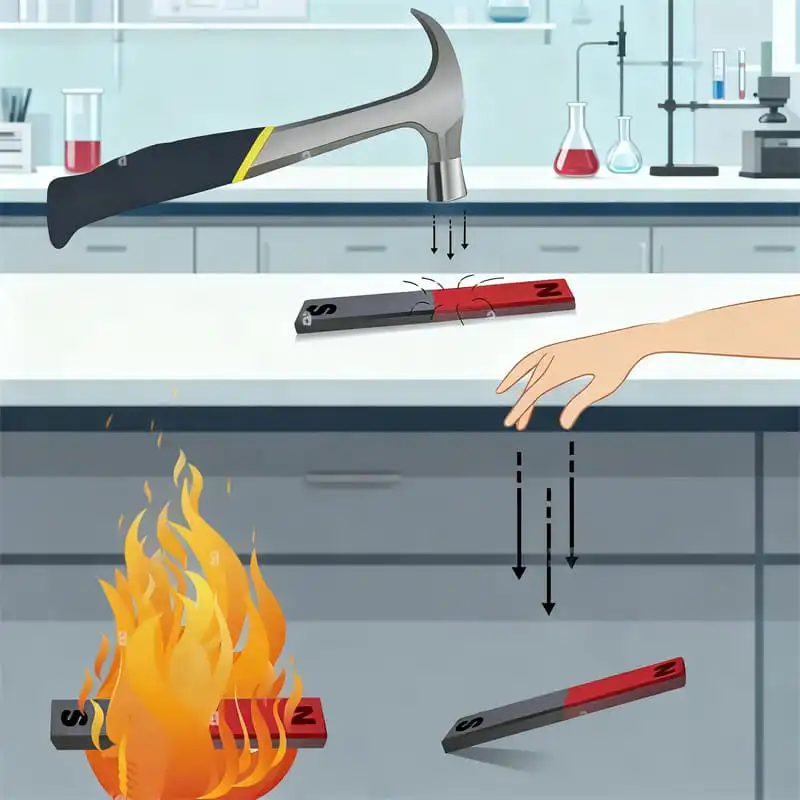
Magnes trwały rozmagnesowuje się przez zaburzenie uporządkowania jego domen magnetycznych. Jeśli zastanawiasz się, jak rozmagnesować magnes trwały, możesz go podgrzać, uderzyć lub zastosować prąd przemienny. Każda z tych metod inaczej wpływa na właściwości magnesu. Dobierając sposób rozmagnesowania magnesu trwałego, zawsze uwzględnij jego rodzaj. Magnesy neodymowe wymagają szczególnej ostrożności. Pamiętaj, że rozmagnesowanie magnesu trwałego może być trwałe lub jedynie tymczasowe. Jak bezpiecznie rozmagnesować magnes trwały? Zawsze postępuj zgodnie z instrukcją, zwłaszcza jeśli magnes ma specjalną powłokę lub pełni szczególną funkcję. 🧲
Powiązane: Dlaczego proces rozmagnesowania jest ważny
Metody rozmagnesowania magnesów trwałych
Zastosowanie prądu przemiennego
Magnes trwały można rozmagnesować, poddając go działaniu przemiennego pola magnetycznego wytwarzanego przez cewkę dobraną specjalnie do kształtu i materiału magnesu.
Metoda ta sprawdza się w przypadku wielu materiałów, w tym magnesy neodymowe, przy użyciu cewki i źródła zasilania dostarczającego silny prąd przemienny. Jako ogólną wytyczną można przyjąć natężenie pola od 50 do 100 kA/m przy niskiej częstotliwości około 1–8 Hz. Każdy cykl rozmagnesowania trwa zazwyczaj 6–20 sekund, zależnie od wymiarów i klasy magnesu.
⚡ Wskazówka: Podczas korzystania z urządzeń elektrycznych należy zawsze nosić okulary i rękawice ochronne oraz upewnić się, że demagnetyzer lub cewka są prawidłowo uziemione i przystosowane do planowanego natężenia prądu.
Instrukcja krok po kroku:
- Umieść magnes w całości w środku cewki, tak aby cały znajdował się w obszarze najsilniejszego pola.
- Włącz prąd przemienny i sprawdź, czy natężenie prądu, częstotliwość i temperatura pozostają w granicach zalecanych dla danego rodzaju magnesu.
- Powoli zmniejszaj natężenie prądu do zera, małymi krokami, ponieważ stopniowe obniżanie pozwala bardziej równomiernie zdezorganizować domeny niż nagłe wyłączenie.
- Wyjmij magnes z cewki i zmierz jego pozostałe namagnesowanie za pomocą gaussomierza lub prostego testu siły odrywania, aby potwierdzić, że uzyskany poziom rozmagnesowania spełnia wymagania.
Proces ten stopniowo dezorganizuje domeny magnetyczne, wskutek czego magnes traci większość lub całość namagnesowania. Według Osenc metoda ta jest odpowiednia do magnesów ze specjalnymi powłokami, takimi jak PTFE lub Parylene, które pomagają chronić powierzchnię magnesu podczas rozmagnesowania.
W testach warsztatowych i na małych liniach produkcyjnych tę metodę wykorzystującą pole przemienne często stosuje się do rozmagnesowywania narzędzi, przyrządów i elementów neodymowych przed montażem, aby nie przyciągały pyłu metalowego ani nie zakłócały działania pobliskich czujników.
Nagrzewanie powyżej temperatury Curie
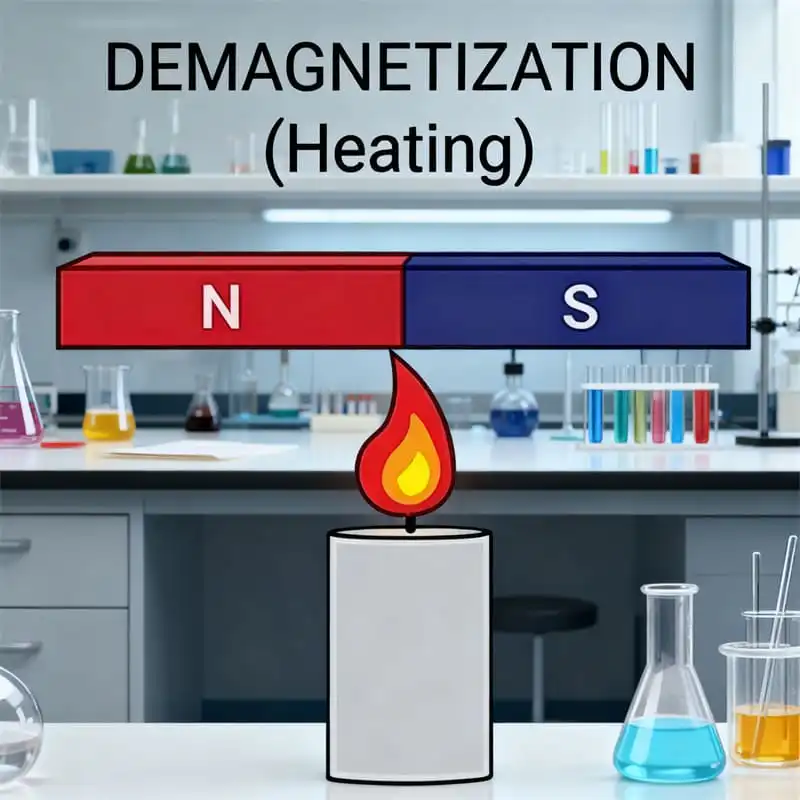
Nagrzanie magnesu powyżej temperatury Curie powoduje całkowitą utratę jego właściwości magnetycznych. Metodę tę stosuje się jednak zwykle tylko w kontrolowanych procesach przemysłowych lub recyklingowych, ponieważ późniejsze przywrócenie tych właściwości nie jest możliwe.
Temperatura Curie to temperatura, w której magnes traci właściwości magnetyczne. W przypadku magnesów neodymowych wynosi od 310 °C do 370 °C, a w przypadku magnesów samarowo-kobaltowych — od 700 °C do 800 °C. Magnesy ferrytowe tracą właściwości magnetyczne w temperaturze 450 °C.
| Materiał | Temperatura Curie (°C) |
|---|---|
| Neodym (NdFeB) | 310-370 |
| Samar-kobalt | 700-800 |
| Ferryt | 450 |
Instrukcja krok po kroku:
- Umieścić magnes w piecu z regulacją temperatury.
- Nagrzać magnes powyżej temperatury Curie.
- Pozostawić magnes do powolnego ostygnięcia.
🔥 Uwaga: Należy używać rękawic odpornych na wysoką temperaturę i mieć w pobliżu gaśnicę. Nie wolno nagrzewać magnesów z łatwopalnymi powłokami.
Magnesy neodymowe Osenc z powłokami PTFE lub Parylene są przeznaczone do wymagających warunków, jednak przed zastosowaniem nagrzewania jako metody rozmagnesowania należy zawsze sprawdzić maksymalną temperaturę pracy i stabilność chemiczną powłoki.
Oddziaływanie mechaniczne
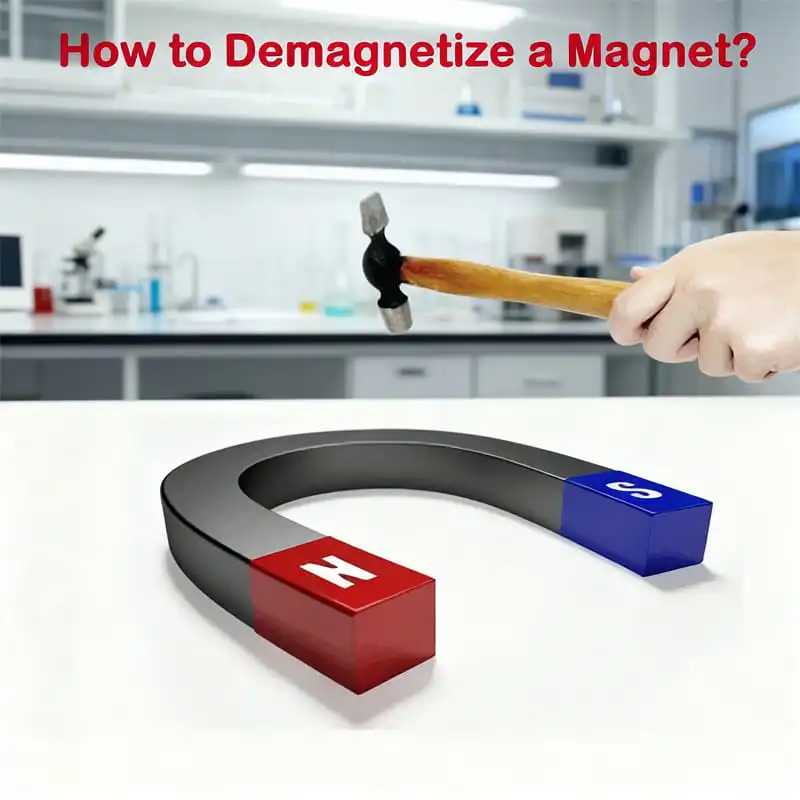
Uderzenie magnesu lub jego upuszczenie może spowodować częściowe rozmagnesowanie wskutek zaburzenia uporządkowania domen magnetycznych. Efekt ten jest jednak trudny do kontrolowania, dlatego metodę tę stosuje się głównie jako rozwiązanie zgrubne w przypadku starszych magnesów AlNiCo, a nie nowoczesnych elementów neodymowych.
Uderzenie magnesu lub jego upuszczenie zaburza uporządkowanie domen magnetycznych. Metoda ta jest najskuteczniejsza w przypadku magnesów AlNiCo. Może zmniejszyć namagnesowanie nawet o 30%.
Instrukcja krok po kroku:
- Put the magnet on a strong surface.
- Hit the magnet gently with a tool that is not metal.
- Check the magnet’s strength after each hit.
🛡️ Wskazówka: Always wear safety goggles and gloves. Use plastic wedges for big magnets.
Osenc’s coatings like nickel and epoxy help stop magnets from chipping when hit.
Striking The Magnet
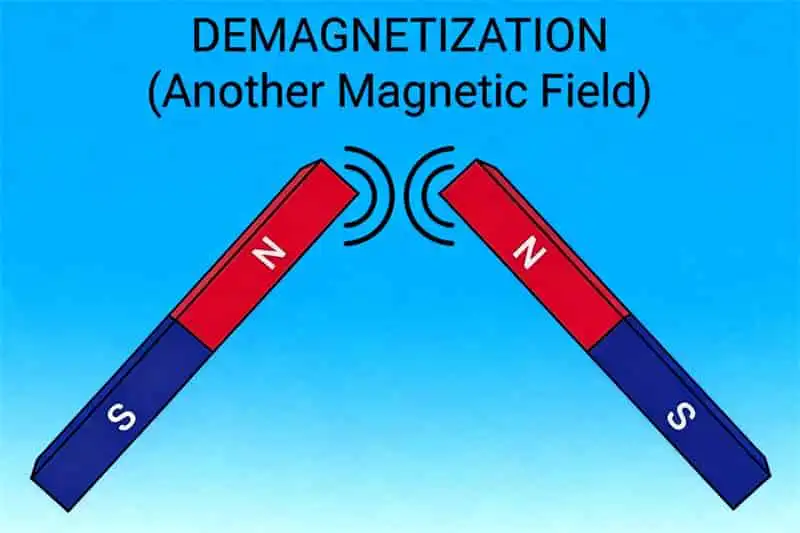
You can reduce a magnet’s strength by striking it with a hammer or dropping it from a height, especially if it has robust coatings like nickel or epoxy to prevent chipping.
Safety precautions:
- Wear safety goggles and gloves.
- Slide magnets apart, do not pull.
- Use plastic wedges to separate.
- Keep magnets far apart.
- Store in a dry, cool place.
- Never drill or cut magnets.
- Keep away from heat.
- Store away from children.
Instrukcja krok po kroku:
- Hold the magnet on a flat surface.
- Hit the magnet with a hammer.
- Look for cracks or chips.
🧤 Alert: Neodymium magnets break easily. Osenc’s coatings help stop breaking, but always be careful.
Reverse The Magnetic Field
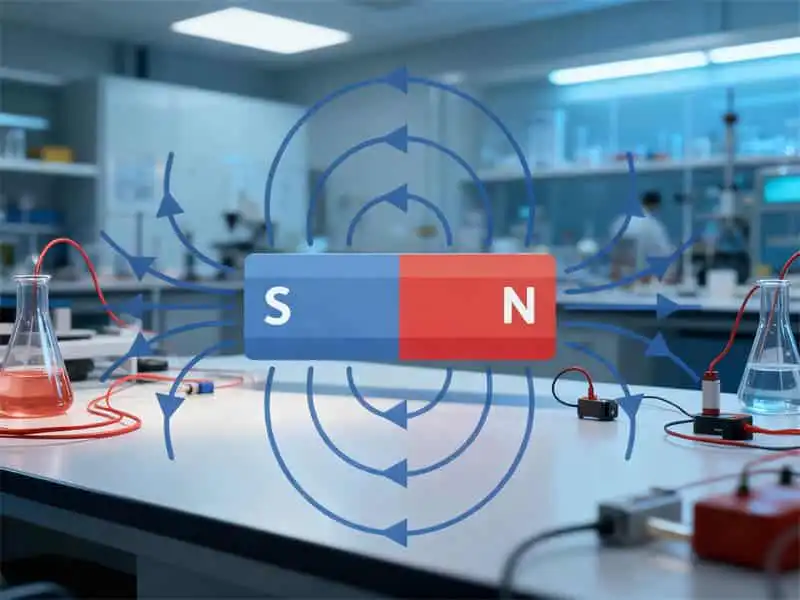
Applying a reverse magnetic field can demagnetize a permanent magnet by using a strong field in the opposite direction, which drives the domains into a less ordered state. A uniform coating helps this method work more effectively. Osenc’s treatments, such as PTFE and gold, provide smooth, corrosion-resistant surfaces that support stable demagnetization.
Instrukcja krok po kroku:
- Put the magnet in a demagnetizer or coil.
- Use a strong reverse magnetic field.
- Slowly lower the field strength.
🧲 Uwaga: Smooth coatings and fewer flaws make demagnetization easier and better.
How coatings affect demagnetization:
- Coatings make surfaces smooth and stop chipping.
- Nickel plating makes magnets stronger.
- Coatings that stop rust keep magnets safe.
- Good coatings help magnets demagnetize evenly.
Summary Table: Effectiveness of Demagnetization Methods
| Method | Effectiveness | Suitable for Neodymium | Notes |
|---|---|---|---|
| Heating above Curie temperature | High | Tak | Magnetism lost forever |
| Alternating current | High | Tak | Needs exact field settings |
| Physical impact | Moderate | Tak | Only some demagnetization |
| Striking | High | Tak | Be careful; coatings help protect |
| Reverse field | High | Tak | Even coating is important |
😊 Wskazówka: Osenc designs and tests neodymium magnets with different coatings in real industrial projects, so their engineering experience can help you choose a demagnetization method that is both safe and effective for your specific application.
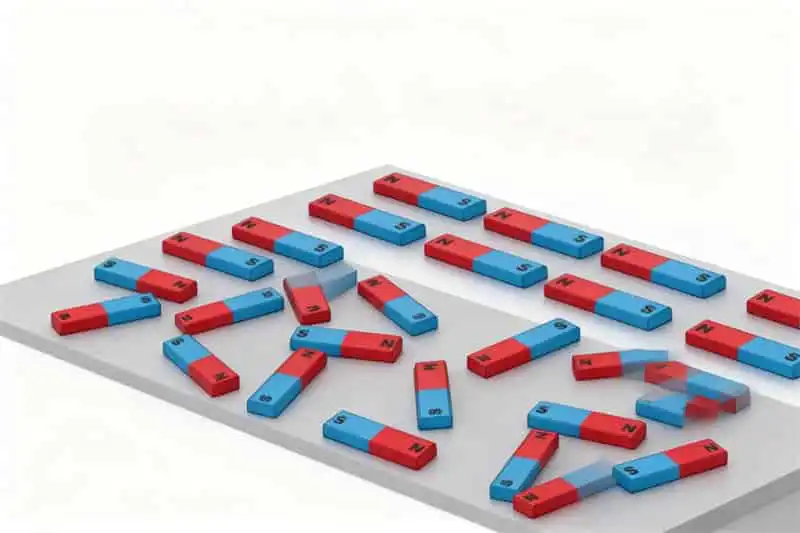
Magnetising and demagnetising magnetic materials
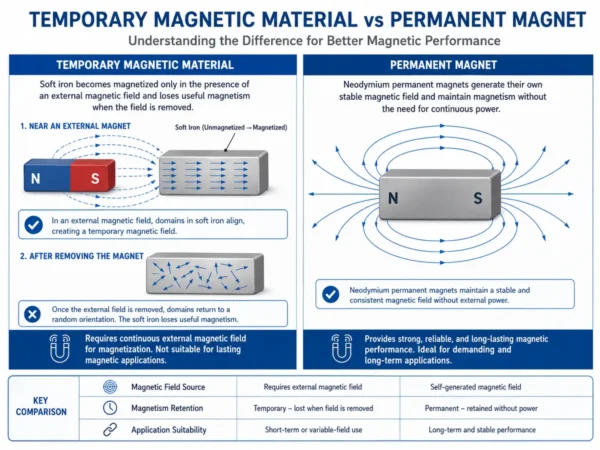
You change the magnetic properties of materials by magnetising or demagnetising them. Magnetising makes a material act like a magnet. Demagnetising takes away or lowers its magnetic power. You can use heat, hitting, or magnetic fields for both.
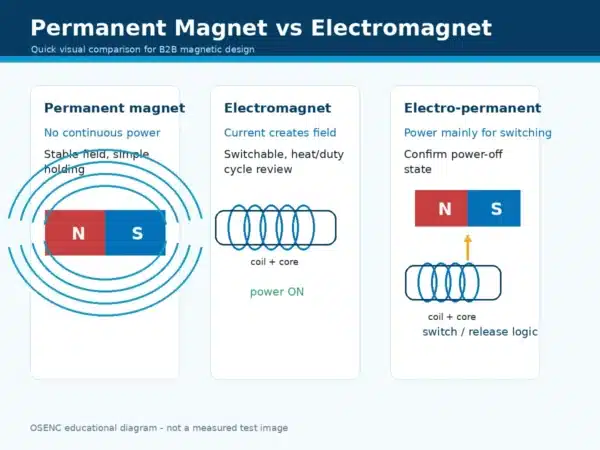
When you magnetise something, you line up its magnetic domains. You do this by putting the material in a strong magnetic field. You can use an electromagnet or a permanent magnet for this. The domains inside the material move and point the same way. This gives the material strong magnetism.
Demagnetizing does the opposite by disrupting the alignment of the domains so they no longer point in the same direction. You can use heat, hit the material, or use an alternating magnetic field. The demagnetization curve shows how much magnetism is left after these steps. This curve shows how magnetic strength drops when you change things.
Many industries need to magnetise and demagnetise materials repeatedly, so engineers rely on tested procedures, measured performance data, and safety standards to choose the right method. You see this in:
- Silniki elektryczne
- Medical devices
- Data storage technologies
Electric motors need magnets that are strong and work well. Medical devices need magnets that can be cleaned and used again safely. Data storage needs magnets that can save and erase information exactly.
The demagnetization curve helps engineers predict how a magnet behaves after repeated use or heating, and real test data based on this curve is often used to set process limits in motors, sensors, and medical devices. For example, some neodymium magnets can lose around 20–30% of their strength after repeated demagnetization cycles, so engineers usually track flux density or pull force before and after each process.
You can use tables to see how different materials react:
| Materiał | Magnetising Ease | Demagnetising Ease | Typical Strength Loss (%) |
|---|---|---|---|
| Neodym | High | Moderate | 30 |
| Ferryt | Moderate | High | 20 |
| AlNiCo | High | Low | 10 |
🧲 Wskazówka: Always check what kind of magnet and coating you have before you start. This helps you pick the best way and keeps your magnet safe.
How Do You Demagnetize a Magnet Safely?
You can safely demagnetize a magnet if you follow safety rules and pick the right way for your permanent magnet.
Safety Precautions
When you work with permanent magnets, especially strong neodymium magnets, you need to protect both yourself and your equipment from injury and damage. Here are some important safety tips:
- 🧤 Wear safety glasses and gloves to keep your eyes and hands safe.
- 🚫 Do not let kids or pets near magnets. They could swallow them.
- 🩺 Stay at least 20 cm away from pacemakers and other medical devices.
- 📱 Keep magnets away from phones and computers so they do not get ruined.
- ⚠️ Be careful not to pinch your skin. Magnets can snap together fast and trap your fingers.
- 🧭 Store magnets far from compasses and navigation tools.
- 🧑🔬 If you are allergic to nickel, do not touch nickel-coated magnets for a long time.
| Injury Type | Opis |
|---|---|
| Pinching Hazards | Magnets can catch your fingers or skin and hurt you. |
| Equipment Damage | Magnets can break or damage machines if they snap together. |
| Medical Device Interference | Strong magnets can mess up pacemakers and other medical electronics. |
Choosing the Right Method
You need to pick the best way to demagnetize a magnet by looking at its size, coating, and what you use it for. Small neodymium magnets work well with alternating current. Big magnets might need to be heated above their Curie temperature. If your permanent magnet has a special coating like PTFE or Parylene, check if it can handle heat and chemicals before you start.
What your magnet is made of and its grade change how it acts. For example, neodymium magnets with dysprosium can take more heat. This makes them good for cars or planes. If you use magnets in medical tools, pick ways that keep coatings safe and let you use the magnet again.
💡 Osenc helps with custom magnet projects and gives advice. You can ask for help to pick the right way to demagnetize your permanent magnet, especially if you need a special solution.
Is Demagnetization Permanent?
Demagnetization can be permanent or reversible, depending on how the magnet is treated, the magnet material (such as neodymium, ferrite, or AlNiCo), and the operating environment. If you heat a magnet above its Curie temperature, it loses magnetism for good. Strong impacts can also make it lose magnetism forever. If you use a weaker method, you can often get the magnet’s strength back.
Factors Affecting Permanence
Many things decide if demagnetization stays:
- Wysoka temperatura: Heating a magnet above its Curie temperature for a long time causes permanent loss. If you heat it for a short time and let it cool, some magnetism may come back.
- Physical Shock: Dropping or hitting a magnet can mess up its domains. Sometimes you can fix this, but strong hits often cause damage that stays.
- Opposing Magnetic Fields: Strong outside fields can mess up domain alignment. You might fix this if you use the right method.
- Time and Corrosion: Over time, magnets get weaker as domains move. Uncoated neodymium magnets lose magnetism faster because of rust.
- Magnetic Aging: New magnets may lose about 1% of their flux over 100 years, and rare-earth magnets such as neodymium lose even less because of their high coercivity.
- Energy required: The energy needed to demagnetize a magnet depends on its size, material, and temperature.
🧲 Wskazówka: High heat can cause losses that you can or cannot fix. Always check your magnet’s material and coating before you try to demagnetize it.
| Czynnik | Reversible Loss | Permanent Loss | Notes |
|---|---|---|---|
| Heat (below Curie) | Tak | Nie | Magnet gets better when cooled |
| Heat (above Curie) | Nie | Tak | Magnetism gone forever |
| Physical Shock | Czasami | Czasami | Depends on how hard the hit is |
| Opposing Field | Czasami | Czasami | Strong fields do more damage |
| Corrosion/Aging | Nie | Tak | Slow loss that stays |
Remagnetizing a Permanent Magnet
You can often make a magnet strong again with easy steps:
- You can often restore a weak magnet’s strength with simple steps, such as rubbing a strong magnet along its surface to realign the domains.
- You can also wrap copper wire around the magnet and connect the wire to a battery, creating an electromagnet that helps restore the magnet’s field.
- Use a magnetic energizer tool. These tools send pulses to restore magnetism.
⚡ Uwaga: If you work with big magnets, Osenc uses special tools to model and improve remagnetization. These tools show how magnets react to currents and fields. They help you get magnetism back in the way you want.
| Remagnetization Method | Effectiveness | Najlepsze zastosowanie |
|---|---|---|
| Strong Magnet Rubbing | Moderate | Small magnets at home |
| Electromagnet (Wire + Battery) | High | Medium or large magnets |
| Magnetic Energizer Tool | High | Magnets used in factories |
| Circuit Design & Simulation | Very High | Custom magnet assemblies |
😊 Wskazówka: If you need help with remagnetizing magnets for motors, sensors, or medical devices, Osenc’s team can help you from start to finish.
The safest and most effective ways to demagnetize permanent magnets are alternating-current fields and heating above the Curie point. 🧲 Always consider the magnet’s type, coating, and application before choosing a method.
In engineering projects, teams usually start with AC or reverse-field demagnetization tests on sample magnets, record the before-and-after flux or pull force, and then define standard settings for the production line. This kind of testing-based approach reduces risk and makes sure the chosen method really fits the magnet and the application.
Here is a quick guide:
| Method | Effectiveness | Safety Risk | Najlepsze zastosowanie |
|---|---|---|---|
| AC Field (Degausser) | Very High | Low | Sensitive applications |
| Heat (Curie Point) | Very High | High | Lab, bulk processing |
| Impact/Vibration | Low | Medium | Old, weak magnets |
- Put on gloves and goggles.
- Pick the right tools for the job.
- Mark parts that are demagnetized.
Osenc helps you with custom magnets and gives expert advice for any project.
Najczęściej zadawane pytania
How can you tell if a magnet is demagnetized?
You can check with a paperclip or compass.
If the magnet cannot pick up a paperclip or move a compass needle, it lost most of its strength. You may see up to 90% less pull force.
Can you remagnetize a demagnetized magnet?
Yes, you can remagnetize most magnets.
Use a strong magnet or an electromagnet. Rub the weak magnet with a strong one. For best results, use a magnetic energizer tool.
Does dropping a magnet always demagnetize it?
No, dropping only reduces strength by about 10–30%.
You may see a small loss in power. Strong coatings help protect the magnet from damage.
Is it safe to heat a magnet to demagnetize it?
Heating works but can be risky.
High heat above the Curie temperature (e.g., 310°C for neodymium) removes magnetism forever. Always wear gloves and goggles. Never heat magnets with flammable coatings.
Which method is best for neodymium magnets?
Alternating current works best for neodymium magnets.
This method gives you control and protects coatings. Osenc recommends this for magnets with PTFE, Parylene, or gold coatings.