






You demagnetize a permanent magnet by messing up the alignment of its magnetic domains. If you ask, “how do you demagnetize a permanent magnet,” you can heat it, hit it, or use an alternating current. Each way changes how the magnet acts. When you ask, “how do you demagnetize a permanent magnet,” always look at what kind of permanent magnet you have. Neodymium magnets need special care. If you ask, “how do you demagnetize a permanent magnet,” remember that it can be forever or just for a short time. “How do you demagnetize a permanent magnet” safely? Always follow the steps, especially if the magnet has a special cover or a special job. 🧲
관련 글: why demagnetization process is important
Demagnetization Methods for Permanent Magnets
Using Alternating Current
You can demagnetize a permanent magnet by exposing it to an alternating magnetic field generated by a coil that is specifically sized for the magnet’s shape and material.
This method works for many materials, including 네오디뮴 자석, using a coil and a power source that provides a strong alternating current. As a general guideline, the field can be set between 50 and 100 kA/m with a low frequency of about 1 to 8 Hz, and each demagnetization cycle typically lasts 6 to 20 seconds depending on the magnet size and grade.
⚡ 팁: Always wear safety goggles and gloves when using electrical tools, and make sure the demagnetizer or coil is properly grounded and rated for the current you plan to use.
Step-by-step instructions:
- Put the magnet fully inside the center of the coil so that the entire magnet is inside the strongest part of the field.
- Turn on the alternating current and confirm that the current, frequency, and temperature stay within the recommended limits for your magnet type.
- Slowly reduce the current to zero in small steps, because a gradual decrease helps randomize the domains more evenly than a sudden shutoff.
- 자석을 코일에서 꺼낸 후 가우스 미터 또는 간단한 인장력 시험으로 자기 성능을 측정하여 탈자 수준이 요구 조건을 충족하는지 확인합니다.
이 과정에서는 자구 배열이 점차 무질서해지면서 자석이 자성의 대부분 또는 전부를 잃게 됩니다. Osenc에 따르면 이 방법은 PTFE 또는 Parylene과 같은 특수 코팅이 적용된 자석에 적합하며, 해당 코팅은 탈자 과정에서 자석 표면을 보호하는 데 도움이 됩니다.
작업장 시험과 소규모 생산 라인에서는 조립 전에 공구, 지그 및 네오디뮴 부품을 탈자하여 금속 분진이 달라붙거나 인접 센서에 간섭하는 것을 방지하기 위해 이 AC 방식이 자주 사용됩니다.
퀴리 온도 이상으로 가열
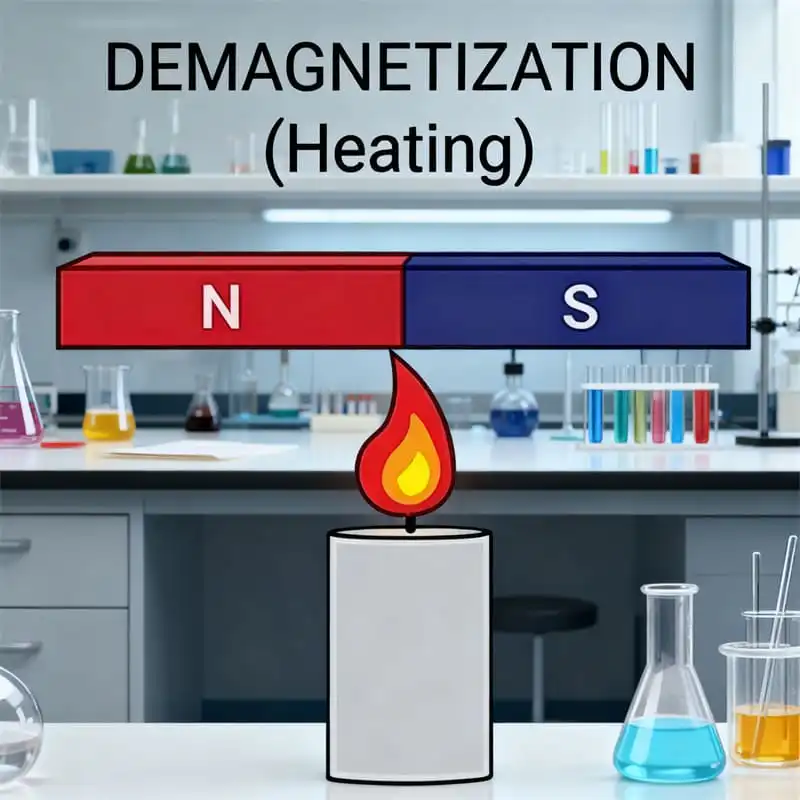
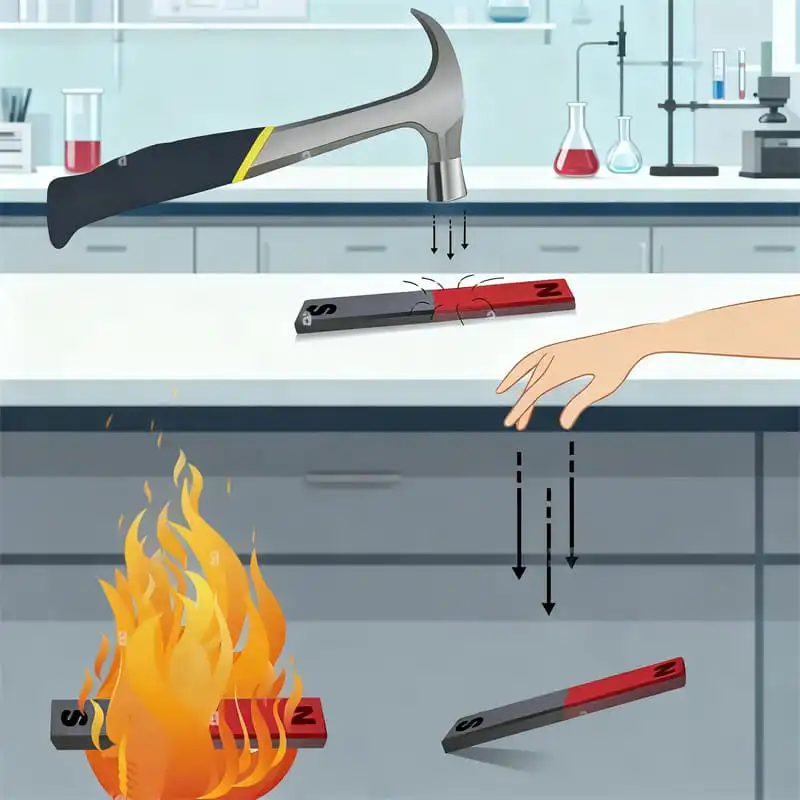
자석을 퀴리 온도 이상으로 가열하면 자성이 완전히 제거됩니다. 다만 이후 자성을 복원할 수 없으므로 일반적으로 관리된 산업 공정이나 재활용 공정에서만 사용됩니다.
퀴리 온도는 자석이 자성을 잃는 온도입니다. 네오디뮴 자석의 퀴리 온도는 310 °C~370 °C이고, 사마륨 코발트 자석은 700 °C~800 °C입니다. 페라이트 자석은 450 °C에서 자성을 잃습니다.
| 재질 | 퀴리 온도(°C) |
|---|---|
| 네오디뮴(NdFeB) | 310-370 |
| 사마륨 코발트 | 700-800 |
| 페라이트 | 450 |
Step-by-step instructions:
- 자석을 온도 제어 오븐에 넣습니다.
- 자석을 퀴리 온도 이상으로 가열합니다.
- 자석을 천천히 냉각합니다.
🔥 참고: Wear heat-resistant gloves and keep a fire extinguisher close. Do not heat magnets with flammable coatings.
Osenc’s neodymium magnets with PTFE or Parylene coatings are designed for demanding conditions, but you should always confirm the coating’s maximum temperature and chemical stability before using heat as a demagnetization method.
물리적 충격
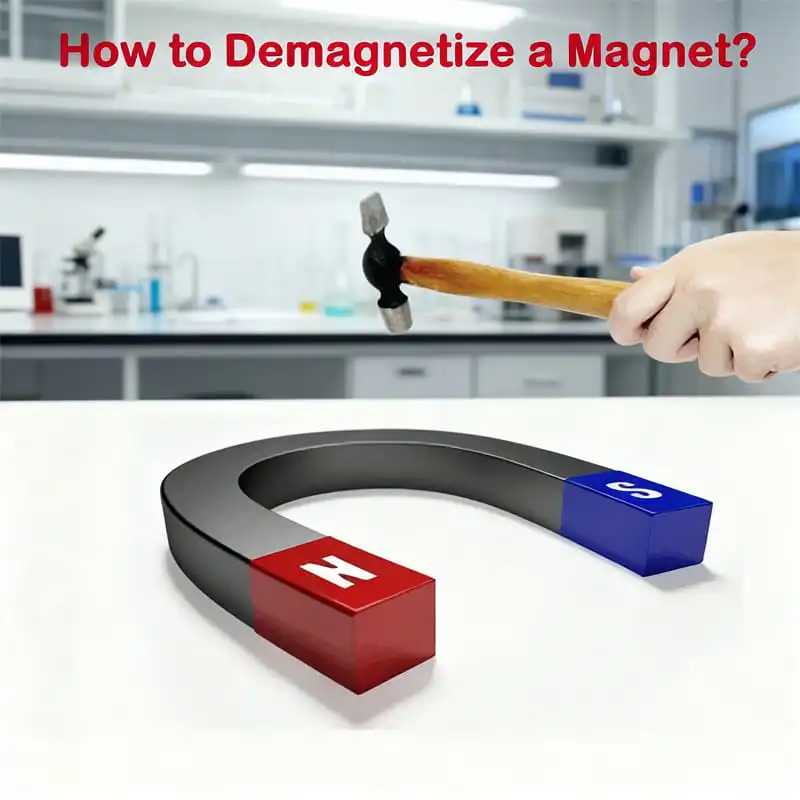
자석을 타격하거나 떨어뜨리면 자구 배열이 흐트러져 부분적으로 감자될 수 있습니다. 그러나 그 효과를 제어하기 어렵기 때문에 현대식 네오디뮴 부품보다는 주로 구형 AlNiCo 자석에 적용하는 대략적인 방법입니다.
타격하거나 떨어뜨리면 자구 배열이 흐트러집니다. 이 방법은 AlNiCo 자석에 가장 효과적이며, 자력을 최대 30%까지 낮출 수 있습니다.
Step-by-step instructions:
- 자석을 견고한 표면 위에 놓으십시오.
- 비금속 공구로 자석을 가볍게 타격하십시오.
- 타격할 때마다 자석의 자력을 확인하십시오.
🛡️ 팁: 항상 보안경과 장갑을 착용하십시오. 대형 자석에는 플라스틱 쐐기를 사용하십시오.
Osenc의 니켈 및 에폭시 코팅은 충격으로 자석이 깨지는 것을 방지하는 데 도움이 됩니다.
자석 타격
망치로 타격하거나 높은 곳에서 떨어뜨려 자석의 자력을 낮출 수 있습니다. 특히 깨짐을 방지하는 견고한 니켈 또는 에폭시 코팅이 적용된 경우에 적합합니다.
안전 주의사항:
- 보안경과 장갑을 착용하십시오.
- 자석을 당겨 떼지 말고 옆으로 밀어 분리하십시오.
- 플라스틱 쐐기를 사용해 분리하십시오.
- 자석을 서로 멀리 떨어뜨려 두십시오.
- 건조하고 서늘한 곳에 보관하십시오.
- 절대로 자석에 구멍을 뚫거나 절단하지 마십시오.
- 열원에서 멀리 두십시오.
- 어린이의 손이 닿지 않는 곳에 보관하십시오.
Step-by-step instructions:
- 자석을 평평한 표면에 놓으십시오.
- 자석을 망치로 두드리십시오.
- 균열이나 깨진 부분이 있는지 확인하십시오.
🧤 경고: 네오디뮴 자석은 쉽게 파손됩니다. OSENC의 코팅은 파손 방지에 도움이 되지만, 항상 주의해서 취급하십시오.
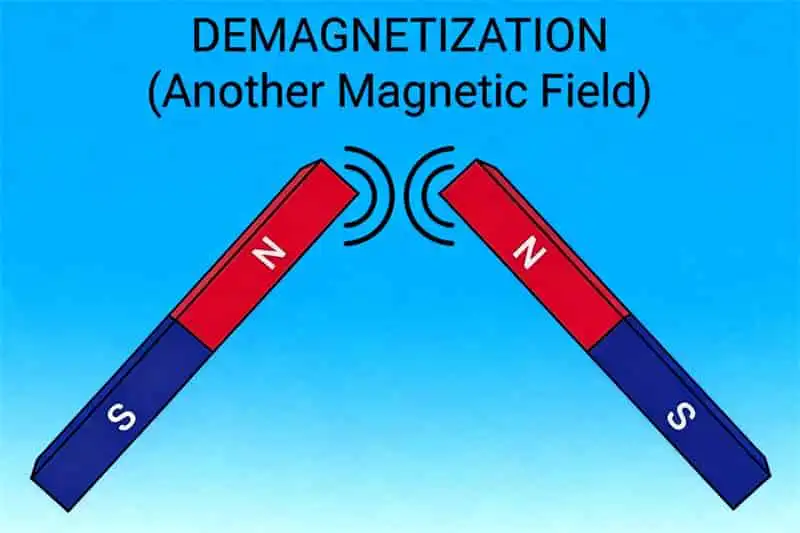
역방향 자기장

역방향 자기장을 가하면 반대 방향의 강한 자기장으로 자구를 덜 정렬된 상태로 이동시켜 영구자석을 탈자할 수 있습니다. 균일한 코팅은 이 방법이 더 효과적으로 작동하도록 돕습니다. PTFE 및 금과 같은 OSENC의 처리 방식은 매끄럽고 내식성 있는 표면을 형성하여 안정적인 탈자를 지원합니다.
Step-by-step instructions:
- 자석을 탈자기 또는 코일에 넣으십시오.
- 강한 역방향 자기장을 사용하십시오.
- 자기장 세기를 서서히 낮추십시오.
🧲 참고: 매끄러운 코팅과 적은 결함은 감자를 더 쉽고 효과적으로 만듭니다.
코팅이 감자에 미치는 영향:
- 코팅은 표면을 매끄럽게 하고 깨짐을 방지합니다.
- 니켈 도금은 자석을 더 강하게 만듭니다.
- 녹을 방지하는 코팅은 자석을 안전하게 보호합니다.
- 우수한 코팅은 자석이 균일하게 감자되도록 돕습니다.
요약 표: 감자 방법의 효과
| 방법 | 효과 | 네오디뮴 자석에 적합 | 비고 |
|---|---|---|---|
| 퀴리 온도 이상으로 가열 | 높음 | 예 | 자성이 영구적으로 소실됨 |
| 교류 | 높음 | 예 | Needs exact field settings |
| Physical impact | Moderate | 예 | Only some demagnetization |
| Striking | 높음 | 예 | Be careful; coatings help protect |
| Reverse field | 높음 | 예 | Even coating is important |
😊 팁: Osenc designs and tests neodymium magnets with different coatings in real industrial projects, so their engineering experience can help you choose a demagnetization method that is both safe and effective for your specific application.
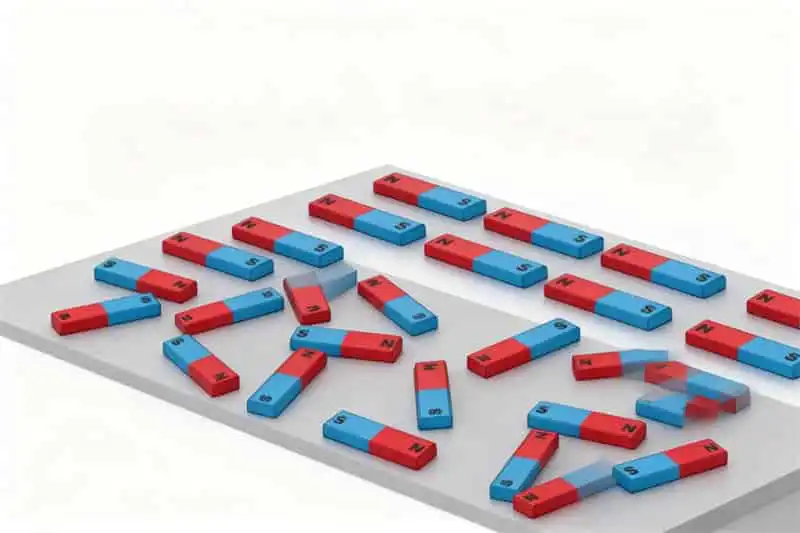
Magnetising and demagnetising magnetic materials
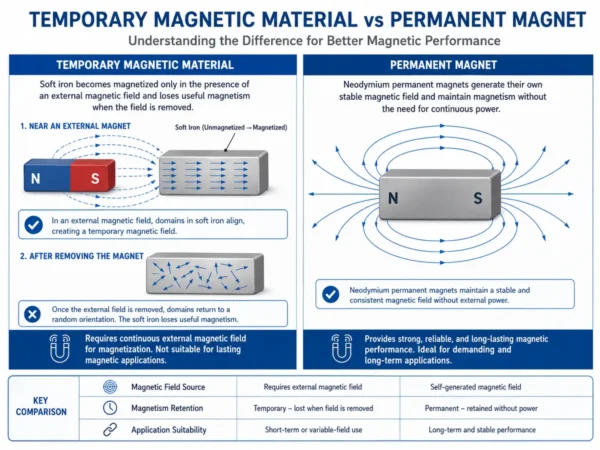
You change the magnetic properties of materials by magnetising or demagnetising them. Magnetising makes a material act like a magnet. Demagnetising takes away or lowers its magnetic power. You can use heat, hitting, or magnetic fields for both.
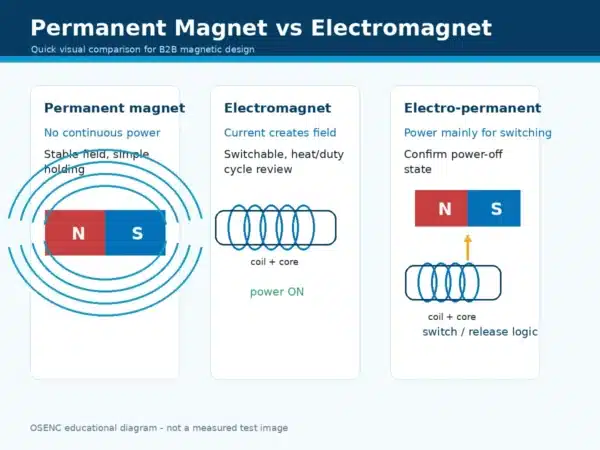
When you magnetise something, you line up its magnetic domains. You do this by putting the material in a strong magnetic field. You can use an electromagnet or a permanent magnet for this. The domains inside the material move and point the same way. This gives the material strong magnetism.
Demagnetizing does the opposite by disrupting the alignment of the domains so they no longer point in the same direction. You can use heat, hit the material, or use an alternating magnetic field. The demagnetization curve shows how much magnetism is left after these steps. This curve shows how magnetic strength drops when you change things.
Many industries need to magnetise and demagnetise materials repeatedly, so engineers rely on tested procedures, measured performance data, and safety standards to choose the right method. You see this in:
- 전기 모터
- Medical devices
- Data storage technologies
Electric motors need magnets that are strong and work well. Medical devices need magnets that can be cleaned and used again safely. Data storage needs magnets that can save and erase information exactly.
The demagnetization curve helps engineers predict how a magnet behaves after repeated use or heating, and real test data based on this curve is often used to set process limits in motors, sensors, and medical devices. For example, some neodymium magnets can lose around 20–30% of their strength after repeated demagnetization cycles, so engineers usually track flux density or pull force before and after each process.
You can use tables to see how different materials react:
| 재질 | Magnetising Ease | Demagnetising Ease | Typical Strength Loss (%) |
|---|---|---|---|
| 네오디뮴 | 높음 | Moderate | 30 |
| 페라이트 | Moderate | 높음 | 20 |
| AlNiCo | 높음 | Low | 10 |
🧲 팁: Always check what kind of magnet and coating you have before you start. This helps you pick the best way and keeps your magnet safe.
How Do You Demagnetize a Magnet Safely?
You can safely demagnetize a magnet if you follow safety rules and pick the right way for your permanent magnet.
Safety Precautions
When you work with permanent magnets, especially strong neodymium magnets, you need to protect both yourself and your equipment from injury and damage. Here are some important safety tips:
- 🧤 Wear safety glasses and gloves to keep your eyes and hands safe.
- 🚫 Do not let kids or pets near magnets. They could swallow them.
- 🩺 Stay at least 20 cm away from pacemakers and other medical devices.
- 📱 Keep magnets away from phones and computers so they do not get ruined.
- ⚠️ Be careful not to pinch your skin. Magnets can snap together fast and trap your fingers.
- 🧭 Store magnets far from compasses and navigation tools.
- 🧑🔬 If you are allergic to nickel, do not touch nickel-coated magnets for a long time.
| Injury Type | 설명 |
|---|---|
| Pinching Hazards | Magnets can catch your fingers or skin and hurt you. |
| Equipment Damage | Magnets can break or damage machines if they snap together. |
| Medical Device Interference | Strong magnets can mess up pacemakers and other medical electronics. |
Choosing the Right Method
You need to pick the best way to demagnetize a magnet by looking at its size, coating, and what you use it for. Small neodymium magnets work well with alternating current. Big magnets might need to be heated above their Curie temperature. If your permanent magnet has a special coating like PTFE or Parylene, check if it can handle heat and chemicals before you start.
What your magnet is made of and its grade change how it acts. For example, neodymium magnets with dysprosium can take more heat. This makes them good for cars or planes. If you use magnets in medical tools, pick ways that keep coatings safe and let you use the magnet again.
💡 Osenc helps with custom magnet projects and gives advice. You can ask for help to pick the right way to demagnetize your permanent magnet, especially if you need a special solution.
Is Demagnetization Permanent?
Demagnetization can be permanent or reversible, depending on how the magnet is treated, the magnet material (such as neodymium, ferrite, or AlNiCo), and the operating environment. If you heat a magnet above its Curie temperature, it loses magnetism for good. Strong impacts can also make it lose magnetism forever. If you use a weaker method, you can often get the magnet’s strength back.
Factors Affecting Permanence
Many things decide if demagnetization stays:
- 열: Heating a magnet above its Curie temperature for a long time causes permanent loss. If you heat it for a short time and let it cool, some magnetism may come back.
- Physical Shock: Dropping or hitting a magnet can mess up its domains. Sometimes you can fix this, but strong hits often cause damage that stays.
- Opposing Magnetic Fields: Strong outside fields can mess up domain alignment. You might fix this if you use the right method.
- Time and Corrosion: Over time, magnets get weaker as domains move. Uncoated neodymium magnets lose magnetism faster because of rust.
- Magnetic Aging: New magnets may lose about 1% of their flux over 100 years, and rare-earth magnets such as neodymium lose even less because of their high coercivity.
- Energy required: The energy needed to demagnetize a magnet depends on its size, material, and temperature.
🧲 팁: High heat can cause losses that you can or cannot fix. Always check your magnet’s material and coating before you try to demagnetize it.
| 요인 | Reversible Loss | Permanent Loss | 비고 |
|---|---|---|---|
| Heat (below Curie) | 예 | 아니요 | Magnet gets better when cooled |
| Heat (above Curie) | 아니요 | 예 | Magnetism gone forever |
| Physical Shock | 경우에 따라 다릅니다. | 경우에 따라 다릅니다. | Depends on how hard the hit is |
| Opposing Field | 경우에 따라 다릅니다. | 경우에 따라 다릅니다. | Strong fields do more damage |
| Corrosion/Aging | 아니요 | 예 | Slow loss that stays |
Remagnetizing a Permanent Magnet
You can often make a magnet strong again with easy steps:
- You can often restore a weak magnet’s strength with simple steps, such as rubbing a strong magnet along its surface to realign the domains.
- You can also wrap copper wire around the magnet and connect the wire to a battery, creating an electromagnet that helps restore the magnet’s field.
- Use a magnetic energizer tool. These tools send pulses to restore magnetism.
⚡ 참고: If you work with big magnets, Osenc uses special tools to model and improve remagnetization. These tools show how magnets react to currents and fields. They help you get magnetism back in the way you want.
| Remagnetization Method | 효과 | Best Use Case |
|---|---|---|
| Strong Magnet Rubbing | Moderate | Small magnets at home |
| Electromagnet (Wire + Battery) | 높음 | Medium or large magnets |
| Magnetic Energizer Tool | 높음 | Magnets used in factories |
| Circuit Design & Simulation | Very High | Custom magnet assemblies |
😊 팁: If you need help with remagnetizing magnets for motors, sensors, or medical devices, Osenc’s team can help you from start to finish.
The safest and most effective ways to demagnetize permanent magnets are alternating-current fields and heating above the Curie point. 🧲 Always consider the magnet’s type, coating, and application before choosing a method.
In engineering projects, teams usually start with AC or reverse-field demagnetization tests on sample magnets, record the before-and-after flux or pull force, and then define standard settings for the production line. This kind of testing-based approach reduces risk and makes sure the chosen method really fits the magnet and the application.
Here is a quick guide:
| 방법 | 효과 | Safety Risk | 적합한 용도 |
|---|---|---|---|
| AC Field (Degausser) | Very High | Low | Sensitive applications |
| Heat (Curie Point) | Very High | 높음 | Lab, bulk processing |
| Impact/Vibration | Low | Medium | Old, weak magnets |
- Put on gloves and goggles.
- Pick the right tools for the job.
- Mark parts that are demagnetized.
Osenc helps you with custom magnets and gives expert advice for any project.
자주 묻는 질문
How can you tell if a magnet is demagnetized?
You can check with a paperclip or compass.
If the magnet cannot pick up a paperclip or move a compass needle, it lost most of its strength. You may see up to 90% less pull force.
Can you remagnetize a demagnetized magnet?
Yes, you can remagnetize most magnets.
Use a strong magnet or an electromagnet. Rub the weak magnet with a strong one. For best results, use a magnetic energizer tool.
Does dropping a magnet always demagnetize it?
No, dropping only reduces strength by about 10–30%.
You may see a small loss in power. Strong coatings help protect the magnet from damage.
Is it safe to heat a magnet to demagnetize it?
Heating works but can be risky.
High heat above the Curie temperature (e.g., 310°C for neodymium) removes magnetism forever. Always wear gloves and goggles. Never heat magnets with flammable coatings.
Which method is best for neodymium magnets?
Alternating current works best for neodymium magnets.
This method gives you control and protects coatings. Osenc recommends this for magnets with PTFE, Parylene, or gold coatings.