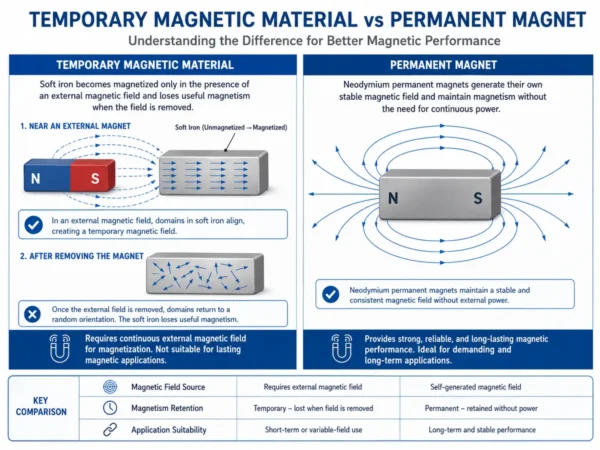







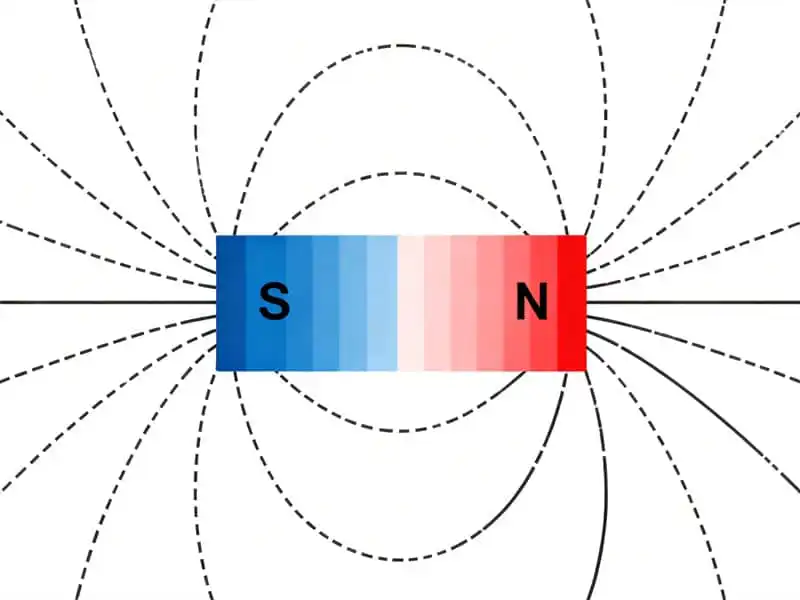
Magnes trwały to materiał, który wytwarza własne pole magnetyczne. Dzieje się tak, ponieważ znajdujące się w nim elektrony ustawiają się w określony sposób. Na co dzień korzystam z magnesów trwałych na wiele sposobów. W niektórych metalach, takich jak żelazo, kobalt i nikiel, spiny oraz ruch elektronów ulegają uporządkowaniu. W ten sposób powstaje silne i trwałe pole magnetyczne. Wyróżniam różne rodzaje magnesów, takie jak:
- Stopowe magnesy trwałe (np. neodymowo-żelazowo-borowe, samarowo-kobaltowe i AlNiCo)
- Ferrytowe magnesy trwałe
Magnesy te wspomagają działanie urządzeń w domach, samochodach i zakładach przemysłowych. 🧲
Podstawowe informacje o magnesach trwałych
Co sprawia, że magnes jest trwały
Magnes trwały zachowuje namagnesowanie, ponieważ jego struktura atomowa utrwala silne pole magnetyczne. 🧲
Działanie magnesów trwałych wynika z zachowania ich atomów i elektronów. Elektrony w tych materiałach mają niesparowane spiny. Spiny te są skierowane w tym samym kierunku, co powoduje powstanie silnego i stabilnego pola magnetycznego. Spiny tworzą domeny magnetyczne. Gdy większość domen jest skierowana w tę samą stronę, magnes zachowuje swoje właściwości przez długi czas.
Najważniejsze właściwości decydujące o trwałości magnesu:
- Remanencja: oznacza zdolność magnesu do zachowania namagnesowania po zaniku zewnętrznego pola magnetycznego.
- Koercja: określa odporność magnesu na odmagnesowanie. Wysoka koercja pozwala magnesowi zachować siłę przez wiele lat.
- Anizotropia magnetokrystaliczna: pomaga zachować stabilność magnesu i zapobiega łatwej zmianie kierunku namagnesowania.
- Stabilność termiczna: dobre magnesy trwałe tracą mniej niż 5% swojej siły przez wiele lat, nawet przy zmianach temperatury.
Poniższa tabela przedstawia te ważne właściwości:
| Właściwość | Opis |
|---|---|
| Indukcja magnetyczna (B) | Określa, jaka część pola magnetycznego przenika przez magnes. |
| Natężenie pola magnetycznego (H) | Określa natężenie pola wokół magnesu. |
| Wektor namagnesowania (M) | Określa kierunek i wartość namagnesowania wewnątrz magnesu. |
| Koercja | Określa odporność magnesu na utratę namagnesowania. |
| Anizotropia magnetokrystaliczna | Stabilizuje magnes poprzez utrzymywanie kierunku namagnesowania. |
| Stabilność cieplna | Określa, w jakim stopniu magnes zachowuje swoje właściwości magnetyczne w czasie i przy zmianach temperatury. |
Podsumowując, materiał na magnes trwały musi charakteryzować się wysoką remanencją i koercją. Właściwości te występują w magnesach neodymowych, samarowo-kobaltowych i ferrytowych. Magnesy te zachowują swoje właściwości magnetyczne dzięki uporządkowaniu domen magnetycznych. Do utrzymania namagnesowania nie wymagają działania siły zewnętrznej. Dzięki temu magnesy trwałe znajdują zastosowanie w silnikach, elektronice i urządzeniach medycznych. Około 30% wszystkich magnesów stosowanych obecnie w przemyśle stanowią magnesy trwałe. Pokazuje to ich znaczenie we współczesnej technice. ⚡
Jak działają magnesy trwałe
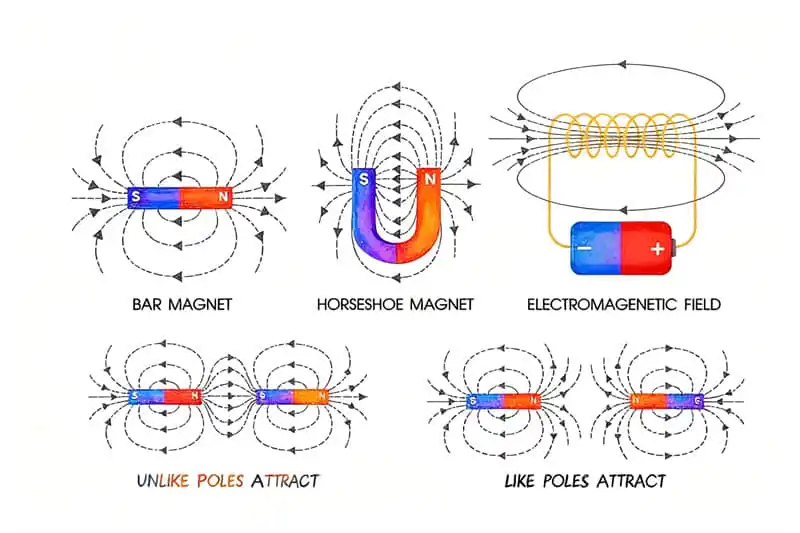
Magnesy trwałe wytwarzają pole magnetyczne dzięki sposobowi, w jaki elektrony poruszają się i ustawiają wewnątrz materiału. 🧲
Elektrony to bardzo małe składniki atomów. Wirują i poruszają się wokół środka każdego atomu. W większości materiałów elektrony tworzą pary, a ich spiny wzajemnie się znoszą. W żelazie, kobalcie i niklu niektóre elektrony pozostają niesparowane. Ich spiny są skierowane w tę samą stronę, co wywołuje silny efekt magnetyczny.
Najważniejsze etapy działania magnesów trwałych:
- Niesparowane elektrony w atomach mają spiny skierowane w tę samą stronę.
- Spiny te wytwarzają niewielkie pola magnetyczne, nazywane orbitalnymi momentami magnetycznymi.
- Momenty te ustawiają się zgodnie w grupach zwanych domenami magnetycznymi.
- Gdy większość domen jest skierowana w tę samą stronę, cały magnes wytwarza silne i trwałe pole magnetyczne.
Takie uporządkowanie nie zachodzi przypadkowo. Materiał musi być ferromagnetyczny — tylko wtedy domeny mogą zachować zgodne ustawienie. Pozostają uporządkowane nawet po ustaniu oddziaływania zewnętrznego. Dzięki temu magnesy trwałe zachowują swoje właściwości przez wiele lat.
Poniższa prosta tabela przedstawia procesy zachodzące wewnątrz magnesów trwałych:
| Etap | Co zachodzi wewnątrz magnesu |
|---|---|
| Spin elektronu | Niesparowane elektrony mają spiny skierowane w tę samą stronę |
| Powstawanie domen magnetycznych | Grupy atomów (domeny) ustawiają swoje momenty magnetyczne w jednym kierunku |
| Uporządkowanie domen | Większość domen jest skierowana w tę samą stronę, dzięki czemu magnes jest silny |
| Trwałe pole magnetyczne | Magnes zachowuje swoje pole bez oddziaływania zewnętrznego |
Używam magnesów trwałych w wielu urządzeniach. Nie tracą one łatwo swoich właściwości magnetycznych. Około 30% wszystkich magnesów stosowanych w przemyśle stanowią magnesy trwałe. Pokazuje to ich znaczenie w silnikach, czujnikach i elektronice. Każdego dnia korzystam z ich stabilnego pola magnetycznego.
Materiały magnetyczne
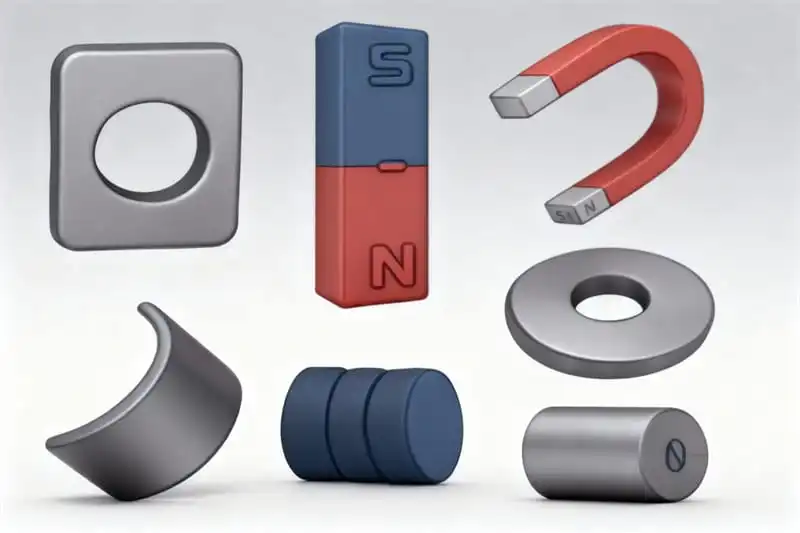
Zaawansowane materiały na magnesy trwałe
Najbardziej zaawansowanymi materiałami na magnesy trwałe są stopy metali ziem rzadkich, takie jak neodym-żelazo-bor (NdFeB) i samar-kobalt. 🧲
Materiały na magnesy trwałe z metali ziem rzadkich znacząco wpłynęły na rozwój technologii. Magnesy neodymowe wyróżniają się najsilniejszymi właściwościami magnetycznymi. Stosuje się je w silnikach samochodów elektrycznych, turbinach wiatrowych i głośnikach. Magnesy samarowo-kobaltowe dobrze sprawdzają się w wysokich temperaturach, na przykład w samolotach i maszynach wojskowych.
Poniższa tabela przedstawia najczęściej stosowane materiały oraz udział każdego z nich:
| Materiał | Skład (objętościowo) | Skład (masowo) |
|---|---|---|
| Neodym | 12% | 26.7% |
| Żelazo | Nie dotyczy | Nie dotyczy |
| Bor | Nie dotyczy | Nie dotyczy |
| Samar | Nie dotyczy | Nie dotyczy |
| Kobalt | Nie dotyczy | Nie dotyczy |
Neodym i żelazo są łatwiej dostępne niż samar i kobalt. Dzięki temu magnesy neodymowe są tańsze i bardziej rozpowszechnione.
Właściwości materiałów i ich wpływ na rozwój technologii
Wyjątkowe właściwości trwałych materiałów magnetycznych napędzają innowacje w wielu branżach. ⚡
Pierwiastki ziem rzadkich, takie jak neodym, oraz samar i kobalt umożliwiają wytwarzanie bardzo silnych magnesów trwałych. Magnesy neodymowo-żelazowo-borowe mają największą siłę magnetyczną. Ma to duże znaczenie w samochodach elektrycznych i turbinach wiatrowych. Magnesy samarowo-kobaltowe zachowują silne właściwości magnetyczne nawet w bardzo wysokiej temperaturze, dlatego są stosowane w samolotach i urządzeniach wojskowych.
Najważniejsze korzyści wynikające z zastosowania zaawansowanych trwałych materiałów magnetycznych:
- Możliwość miniaturyzacji urządzeń
- Większa sprawność silników
- Lepsza jakość obrazowania medycznego
- Zachowanie silnych właściwości magnetycznych w trudnych warunkach
Struktura atomowa pierwiastków ziem rzadkich zapewnia tym magnesom silne momenty magnetyczne i wysoką koercję. Dzięki temu zachowują stabilność i dobre parametry nawet w trudnych warunkach. Materiały te umożliwiają konstruowanie mniejszych i bardziej wydajnych urządzeń. Około 30% wszystkich magnesów stosowanych w przemyśle stanowią zaawansowane trwałe materiały magnetyczne. Pokazuje to ich znaczenie we współczesnej technice.
Rodzaje magnesów trwałych
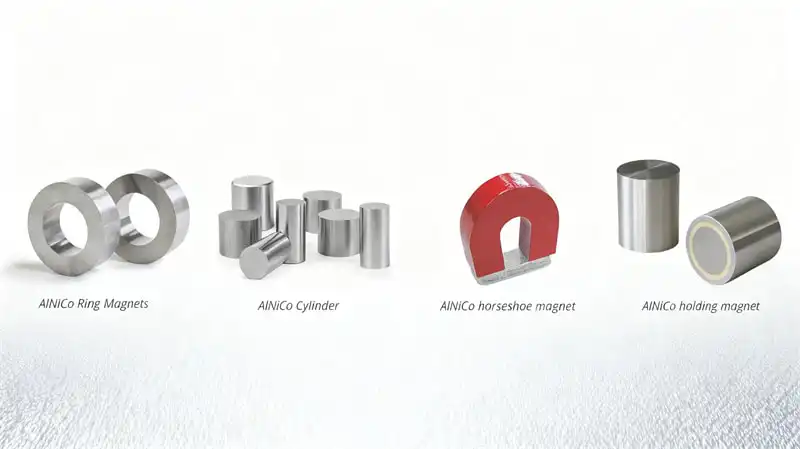
Istnieje pięć głównych rodzajów magnesów trwałych. Każdy z nich jest wykonany z innych materiałów i ma odmienne zastosowania. 🧲
Poniżej przedstawiono krótkie zestawienie składu materiałowego każdego rodzaju:
| Rodzaj magnesu | Skład materiałowy |
|---|---|
| Magnesy neodymowe (NdFeB) | Neodymium, Iron, Boron |
| Samarium Cobalt Magnets (SmCo) | Samarium, Cobalt |
| Magnesy Alnico | Aluminum, Nickel, Cobalt, Iron (plus copper, titanium) |
| Ferrite Magnets (Ceramic) | Iron oxide with barium or strontium |
| Flexible Rubber Magnets | Ferrite powder mixed with rubber or plastic binders |
magnesów neodymowych
magnesów neodymowych are the strongest and most used permanent magnets. 💪
People use neodymium magnets because they are very powerful. They make magnetic fields much stronger than ferrite magnets. Their energy product is over 50 MGOe. This makes them important for new technology. You can find them in electric car motors and wind turbines. They are also in electronics, speakers, headphones, and medical machines. Even magnetic trains use them.
Key properties of neodymium magnets:
- Very strong magnetic power
- Small size but powerful
- Some types work up to 230°C
Common uses:
- Electric and hybrid car motors
- Wind turbines
- Hard drives, phones, headphones
- MRI machines and other medical devices
- Magnetic gears, brakes, and sensors
At Osenc, I only work with neodymium magnets and their parts. I have many shapes and sizes, from tiny to very big. I also add special coatings for tough or medical places. This keeps them working well.
Samarium cobalt magnets
Samarium cobalt magnets work well in high heat and resist rust. 🔥
I pick samarium cobalt magnets for very hot or tough places. They keep their strength up to 260°C (500°F). They do not lose much power when it gets hot or cold. I use them in planes, military tools, and hot factories.
Advantages of samarium cobalt magnets:
- Resist rust very well
- Stay strong at high temperatures
- Tough and last long in hard places
Common uses:
- Airplane and defense tools
- Strong motors and generators
- Sensors and measuring tools
- Medical and science equipment
Samarium cobalt magnets cost more than others. But they are worth it for important jobs.
Alnico magnets
Alnico magnets make strong fields and handle heat well. 🎸
I use alnico magnets when I need them to work in heat or under stress. They have aluminum, nickel, cobalt, iron, and a little copper and titanium. They do not rust easily and keep their power in rough places.
Key properties of alnico magnets:
- Work well in high heat
- Strong and tough
- Reliable in hard conditions
Common uses:
- Guitar pick-ups and microphones
- Plane sensors and navigation tools
- Motors and generators
- Medical and science devices
Alnico magnets are still used in music, planes, and factories because they are strong and steady.
Ferrite magnets
Ferrite magnets are cheap, do not rust, and are used every day. 🏠
I pick ferrite magnets for things that do not need a lot of power. They are made from iron oxide and barium or strontium. They work up to 250°C and do not rust, even in water. They are cheap, so they are used in many products.
Key properties of ferrite magnets:
- Do not rust easily
- Hard and keep their power
- Work up to 250°C
Common uses:
- Fridge magnets and whiteboards
- Speakers and small motors
- Car sensors and ABS brakes
- Magnetic separators and machines
Ferrite magnets are used a lot in homes and cars because they are low-cost.
Flexible rubber magnets
Flexible rubber magnets are bendy and easy to shape. 🧲✂️
I use flexible rubber magnets when I need them to bend or fit odd shapes. They are made by mixing ferrite powder with rubber or plastic. They are light, strong, and not expensive. I see them in crafts, toys, signs, and ads.
Key features of flexible rubber magnets:
- Medium strength for close use
- Can bend and take hits
- Easy to cut or shape
Typical applications:
- Fridge seals and iceboxes
- Signs, labels, and displays
- Toys, games, and crafts
- Small motors and electronics
Flexible rubber magnets are great for creative and factory uses where hard magnets will not work.
Podsumowanie:
I see many types of permanent magnets in life and work. Each type is best for certain jobs. Neodymium magnets are the most powerful. Samarium cobalt magnets are best for hot or tough places. Alnico magnets work well in heat and stress. Ferrite magnets are cheap and used every day. Flexible rubber magnets are good for bending and shaping.
Difference Between Electromagnets & Permanent Magnets
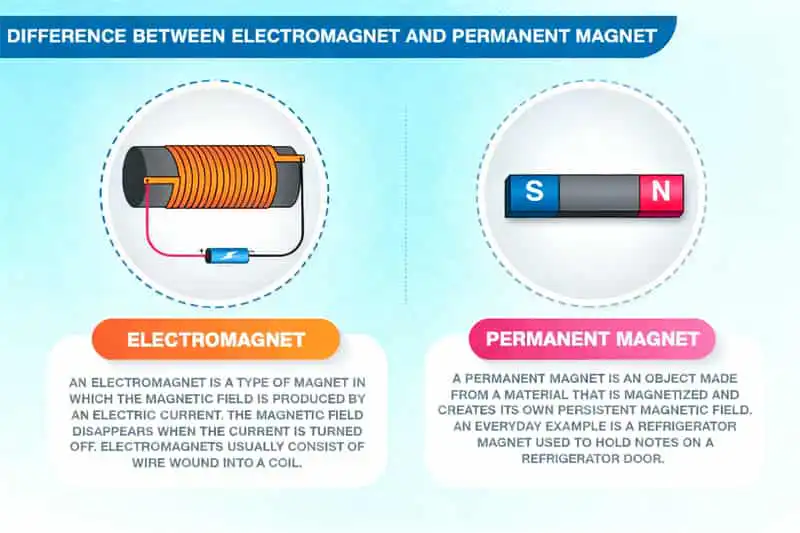
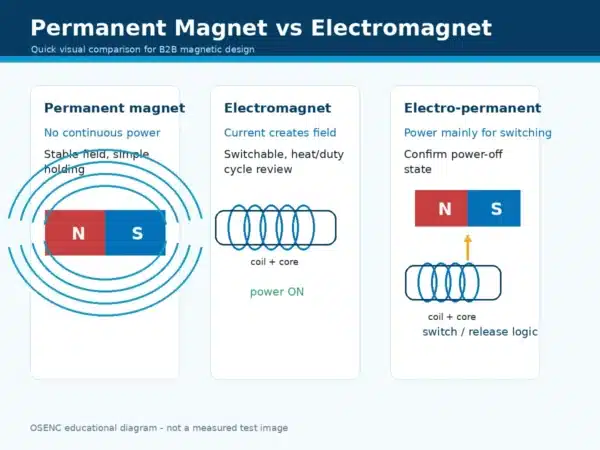
Electromagnets and permanent magnets are not the same. 🧲 They work in different ways and have their own uses. Electromagnets need electricity to make a magnetic field. Permanent magnets have a magnetic field all the time. I use both types for different jobs.
Electromagnets need electric current. Permanent magnets do not need power.
Here is a table that shows the main differences:
| Cecha | Elektromagnesy | Magnesy trwałe |
|---|---|---|
| Magnetic Field Generation | Electric current creates the field | Magnetic field exists naturally |
| Power Requirement | Needs power to work | Works without power |
| Magnetic Field Control | Can turn on and off | Always active |
| Siła magnetyczna | Can change with current | Fixed strength |
| Cost and Availability | More expensive and complex | Easier to find and cheaper |
| Zastosowania | Used in electronics, manufacturing | Used in motors, generators, loudspeakers |
Electromagnets can be stronger than permanent magnets if I use enough current. I can change how strong they are. I can also turn them on or off. This is good for machines that need switching. I use electromagnets in cranes, MRI machines, and relays.
Permanent magnets always have a magnetic field. I use them in motors, generators, and speakers. They do not need power, so they save energy. About 30% of all magnets in industry are permanent magnets. I count on them for steady work.
Key points to remember:
- Electromagnets need electricity; permanent magnets do not.
- I can switch electromagnets on and off.
- Permanent magnets work all the time.
- Electromagnets fit jobs that need control.
- Permanent magnets fit jobs that need steady power.
I pick the right type for each job. If I need to control the magnet, I use electromagnets. If I need a magnet that is always strong, I use permanent magnets. Both types help me make better machines and devices. ⚡
Applications of permanent magnets
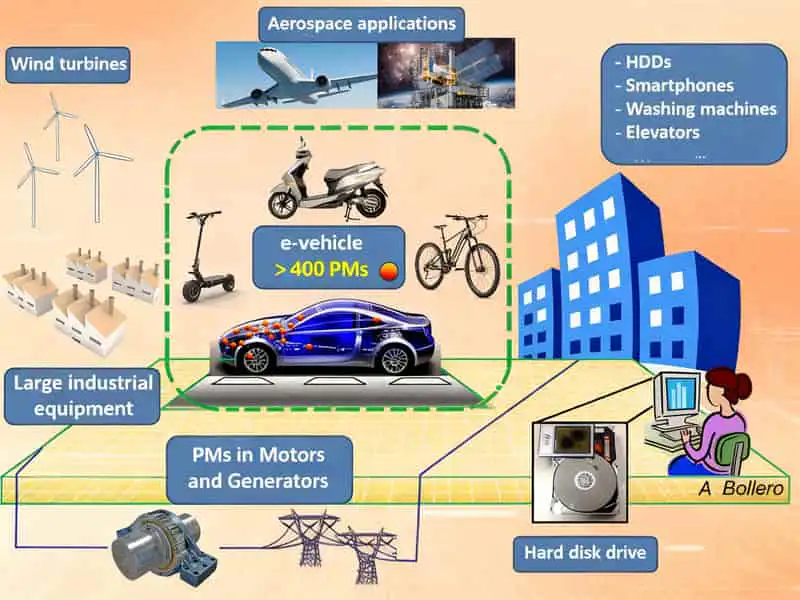
Household and everyday uses
Permanent magnets power many household items I use every day. 🏠
These magnets are in things like kitchen tools, electronics, and toys. They help doors stay shut, save information, and make sounds. The market for these magnets in homes was $22.18 billion in 2023. It may grow to $39.71 billion by 2030. This shows they are very important in daily life.
Here is a table showing common household items and how magnets work inside them:
| Household Item | Funkcja |
|---|---|
| Refrigerators | A small magnet in the door keeps it closed tightly. |
| Hard Disk Drives | Three magnets help read/write data and spin the disk. |
| Doorbells | Magnets interact with solenoids to make sound when pressed. |
| Microwave Ovens | Magnets in the magnetron create waves to heat food. |
Magnets are also in speakers, headphones, and some toys. These uses of permanent magnets make my life easier and more dependable.
Industrial and automotive applications
Permanent magnets drive innovation in factories and vehicles. 🚗🏭
I use these magnets in motors, sensors, and machines that work by themselves. They help machines work well and safely. In factories, magnets sort materials, lift heavy things, and power robots. In cars, they make driving safer and help cars use less energy.
- I see permanent magnets in:
- Motors for robots and machines
- Magnetic separators for sorting materials
- Lifting tools for heavy objects
- In cars, I use magnets for:
- Anti-lock brakes (ABS)
- Electric car motors (neodymium magnets for better power)
- Fuel pumps, airbag parts, and steering sensors
These uses of permanent magnets help factories and cars save energy and work better. I often pick special coatings for magnets in tough places, like hot or wet spots. Osenc makes strong coatings and custom parts, so magnets last longer and work well in hard jobs.
Electronics and medical devices
Permanent magnets play a key role in modern electronics and medical technology. 💻🩺
I use magnets in computers, phones, and medical machines. They help store data, make sound, and power sensors. In medical tools, they help doctors find and treat problems safely.
- In electronics, I find magnets in:
- Hard drives and speakers
- Microphones and sensors
- Smartphones and tablets
- In medical devices, I rely on:
- MRI machines (strong magnets for pictures inside the body)
- Magnetic drug targeting for careful treatment
- Cochlear implants and dental tools
- Magnetic tools for surgery
- Magnet-based health monitors you can wear
MRI machines use permanent magnets to make strong, even fields for pictures. Neodymium magnets have the highest energy product, so they are great for advanced medical tools. I often choose special coatings for magnets in medical devices to keep them safe and stop rust. Osenc gives these advanced choices for medical and electronic uses.
Advanced engineering and research
Permanent magnets enable breakthroughs in engineering and scientific research. 🧑🔬⚙️
I use magnets in new projects, from new materials to high-tech machines. Research teams make new permanent magnets with advanced methods. They want to use less rare earth elements. For example, the VCU Permanent Magnet Research project looks at other metals like iron, cobalt, nickel, and manganese.
| Project | Opis |
|---|---|
| VCU Permanent Magnet Research | Developing new magnets with additive manufacturing to reduce rare earth use. |
I also use magnets in particle accelerators, maglev trains, and special sensors. These projects need magnets in special shapes, sizes, and coatings. Osenc helps engineers design, test, and make custom magnets for research and new technology.
Wskazówka: I always think about temperature, size, and tough conditions when picking magnets for special uses. Advanced coatings and custom solutions from Osenc help me meet strict needs in cars, medical tools, electronics, and research projects.
A permanent magnet makes its own magnetic field and keeps it for years. There are five main types. These are neodymium, samarium cobalt, alnico, ferrite, and flexible rubber. These magnets help in daily life and in factories.
- Permanent magnets are in home appliances and electronics.
- In hospitals, they are in MRI machines and hearing aids.
- In cars and planes, they power motors and sensors.
- In green energy, they help wind turbines and solar panels.
Neodymium magnets made devices smaller and stronger. I use rare earth permanent magnetic products for better electric cars, speakers, and wind turbines. Permanent magnets are everywhere. They help shape the world and industry today.
A permanent magnet is a material that keeps its magnetic field without needing power.
Najczęściej zadawane pytania
What is the strongest type of permanent magnet?
Neodymium magnets are the strongest permanent magnets. 💪
I use these magnets in motors, electronics, and medical devices. Their energy product can go over 50 MGOe. This makes them about 30% stronger than other types.
How long does a permanent magnet last?
A permanent magnet can last for decades. ⏳
Most magnets lose less than 5% of their strength over many years. If used the right way, they keep their power for more than 30 years.
Where do I use permanent magnets most often?
I use permanent magnets in motors, sensors, and electronics.
Here is a quick list:
- Electric car motors 🚗
- Speakers and headphones 🎧
- MRI machines 🩺
- Household appliances 🏠
Can permanent magnets lose their magnetism?
Yes, permanent magnets can lose magnetism.
Some things can make magnets weaker:
- High temperatures above their safe limit
- Strong magnetic fields that go the other way
- Physical damage
In normal use, they lose less than 5% of their power.
What coatings protect permanent magnets?
I use nickel, zinc, epoxy, PTFE, and gold coatings.
| Powłoka | Use Case |
|---|---|
| Nikiel | General protection |
| PTFE | Corrosive environments |
| Złoto | Medical devices |
| Epoksyd | Elektronika |