






Czy magnesy zużywają się z czasem? Choć tarcie i zużycie technicznie rzecz biorąc nie “rozładowują” magnesów tak jak przedmiotów fizycznych, stałe oddziaływanie określonych czynników może z czasem osłabiać ich właściwości magnetyczne.
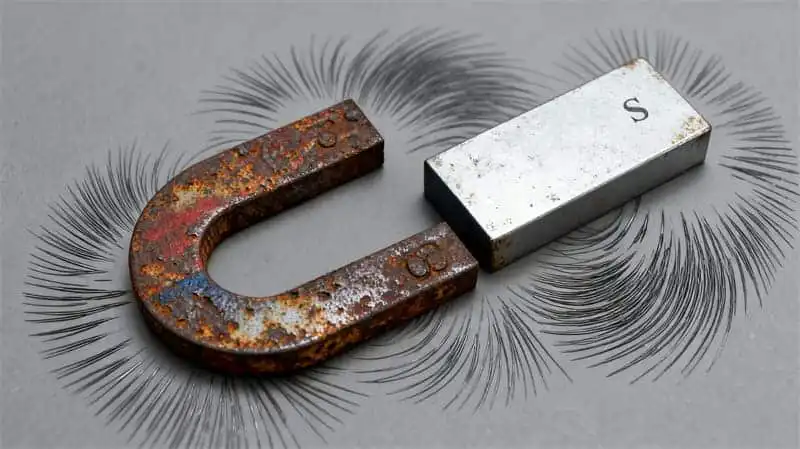
Czy magnesy zużywają się z czasem?
W codziennym użytkowaniu może jednak nasuwać się pytanie: czy magnesy zużywają się w typowych warunkach domowych lub przemysłowych?
Tak, ale bardzo powoli. Magnesy trwałe, takie jak magnesy ferrytowe, alnico, samarowo-kobaltowe i neodymowe, nie zużywają się jak baterie czy żarówki, jednak w niekorzystnych warunkach mogą stopniowo tracić właściwości magnetyczne.
Większość współczesnych magnesów trwałych zachowuje w przybliżeniu ten sam poziom namagnesowania przez dziesięciolecia, o ile są prawidłowo przechowywane i użytkowane.
Narażenie na działanie takich czynników jak wysoka temperatura, udary mechaniczne, korozja lub silne przeciwne pola magnetyczne może zatem przyspieszyć utratę właściwości magnetycznych wskutek zmiany uporządkowania domen magnetycznych lub uszkodzenia materiału.
Dlatego nawet jeśli magnes na lodówkę prawdopodobnie nie ulegnie zniszczeniu w całym okresie użytkowania, nadal oddziałują na niego czynniki środowiskowe i upływ czasu.
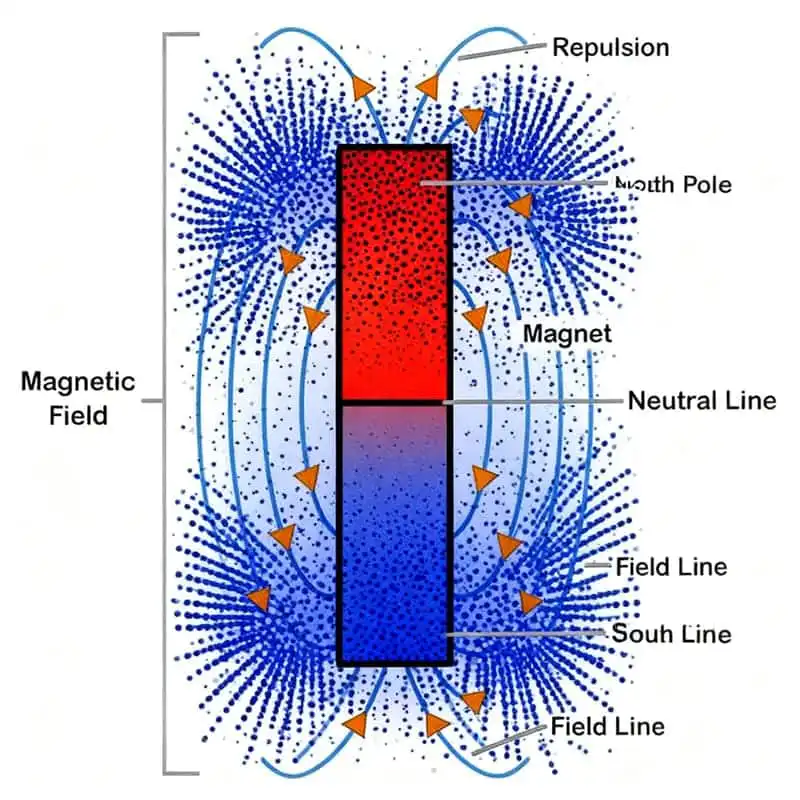
Trwałość magnetyczna: po jakim czasie magnesy się zużywają?
“Żywotność” magnesu najlepiej określa czas, przez jaki zachowuje on znaczną część swoich początkowych właściwości magnetycznych w normalnych warunkach — w przypadku wysokiej jakości magnesów trwałych użytkowanych w odpowiednim środowisku. Czy przy stabilnych warunkach przechowywania magnesy zużywają się w mierzalnym stopniu w ciągu dekady? Zazwyczaj straty pozostają niezwykle małe.
Według niektórych źródeł w idealnych warunkach właściwości magnetyczne mogą spadać o mniej niż 1% co 10 lat.
Czynniki wpływające na żywotność magnesu
- Skrajne temperatury: Wysoka temperatura może całkowicie lub częściowo zniszczyć materiał.
- Udary mechaniczne: Upuszczenie lub uderzenie powoduje zmianę uporządkowania domen magnetycznych.
- Antymagnetyczność: Długotrwałe oddziaływanie pól magnetycznych może osłabić namagnesowanie.
- Wilgoć i korozja osłabiają strukturę magnesów na bazie żelaza.
Czynniki te odpowiadają również na często zadawane pytanie: czy pod wpływem naprężeń lub niewłaściwego przechowywania magnesy zużywają się szybciej?
Wydłużenie trwałości magnesu
- Aby wydłużyć trwałość magnesu:
- Należy unikać obciążeń mechanicznych i poważnych wypadków.
- Należy stosować powłoki ochronne zapobiegające rdzewieniu.
- Należy unikać źródeł przeciwnie skierowanych pól magnetycznych.
- Podczas przechowywania należy stosować zwory z miękkiego żelaza, które pomagają utrzymać uporządkowanie domen magnetycznych.
- Przy odpowiedniej pielęgnacji dobry magnes z materiału magnetycznie twardego może zachować właściwości przez dziesięciolecia, a nawet stulecia.
Najważniejsze czynniki wpływające na trwałość magnesu:
temperatura: Przekroczenie znamionowej maksymalnej temperatury pracy powoduje nieodwracalne rozregulowanie domen magnetycznych. Na przykład w temperaturze około 80 °C w przypadku wielu popularnych klas magnesów neodymowych rozpoczyna się trwała degradacja.
Corrosion: Damage to protective coatings causes oxidation, which weakens the magnetic material, especially in neodymium magnets, which are fragile and contain iron. (wholesale neodymium magnets)
Non-magnet Strong external magnetic field or opposite direction: Degeneration can be accelerated if the magnet is subjected to 30 alternating fields or sits in a field that opposes its magnetism.
Mechanical damage or physical shock: Sticking or splitting can weaken the magnetic material by reducing its effective strength.
Neo-magnets. In essence, magnets don’t “expire” like milk, but how long they retain their full strength depends on their treatment and environment.

How long do neodymium magnets last?
Common types of rare earth magnets (neodymium, NdFeB) have a fairly long lifespan if properly maintained.
According to the study, a high-quality neodymium magnet can retain most of its magnetic strength for 30 to 50 years under low-stress conditions at normal room temperature. Under ideal conditions, they may actually lose less than 5% of their strength over a century. (Recommended read: Jak silny jest magnes neodymowy?)
Do Magnets Wear Out in Neodymium (NdFeB) Grades?
Yes, but very slowly under the right conditions. Commonly used neodymium, iron, and boron (NdFeB) magnets, among the strongest permanent magnets on the market, retain a high proportion of their initial strength. When properly packaged and used according to specifications. Even then, the practical answer to Do Magnets Wear Out remains “very slowly,” unless abused by heat, shock, or corrosive humidity.
These are some examples of common numbers:
- In one study, NdFeB magnets exposed to the outside for about 12 years showed a flux loss of 1% in 30 years and about 1.3% in 50 years.
- Another explanation is that under most circumstances, you can estimate an age of more than 20 years with less damage. However, under unfavourable conditions (e.g., extreme heat, humidity, or shock), it can be as short as a few years.
- According to a general question, if not overheated, typical neodymium magnets can lose about 1% of their strength in 10 years.
Tips
- Keep outside the upper temperature range recommended by the manufacturer and store in a cool, dry place.
- Protect the cover from being damaged or wet.
- Strong external magnetic fields, including those representing the orientation of magnets
- Prevent fragile magnet material from bending, sticking, or physically impacting.
- By doing this, you can improve the “throw” of your neodymium magnet.

How to make magnets last longer
Magnets are powerful devices used in everything from refrigerators and scientific instruments to speakers and motors. Although permanent magnets can last for years, they can gradually lose their strength due to poor storage and exposure to the elements.
This post describes tried-and-true techniques for protecting and maintaining magnet strength if you’re wondering how to extend their life.
- Proper care and storage of the magnet are essential if it is to remain strong for many years. First, because both can cause problems with internal magnetic alignment, magnets should be kept away from extreme heat and strong opposing magnetic fields.
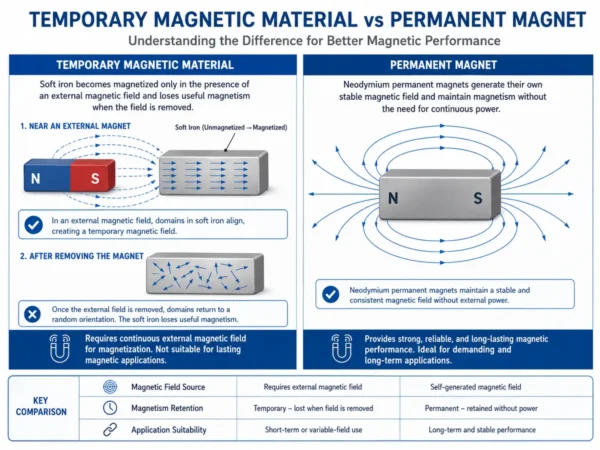
- Especially for older magnetic types, such as Alnico, placing the magnets with cappers. Soft iron bars attached to the poles can help preserve their magnetic field and prevent demagnetisation.
- Physical protection is also important, as microscopic cracks created by dropping, hitting, or scratching the magnet can disrupt the neat arrangement of the magnetic Si domains within.
- A protective coating can prevent corrosion, a primary factor in long-term deterioration in rare-earth magnets such as neodymium.
- Typically, a magnet can last for decades in a stable environment that is cool and dry and mechanically soft.
What can cause a magnet to lose its magnetic properties?
When the internal domain alignment is disrupted, magnets lose their magnetic properties. They have several reasons.
Volume loss
A magnet’s magnetic field decreases when it physically loses material due to wear, corrosion, or abrasion. Because less magnetic material is available to generate a force.
magnesów neodymowych exposed to moisture and lacking protective coatings are particularly susceptible to this. Lower magnetic strength is a direct result of reduced volume.
External demagnetizing fields
A magnet can also weaken when exposed to strong external magnetic fields. For example, two magnets with opposite poles can partially demagnetise each other over time. (Recommended reading: Jak silny jest magnes neodymowy?)
Magnetic fields generated by electric current in adjacent devices can cause a disturbance in the magnet’s domain, which gradually reduces its strength.
Wysoka temperatura
One of the most important variables affecting the performance of a magnet is temperature. The internal structure of the magnet changes, and it permanently loses its ability to attract electricity when heated above a certain threshold, sometimes called the Curie temperature in weak materials.
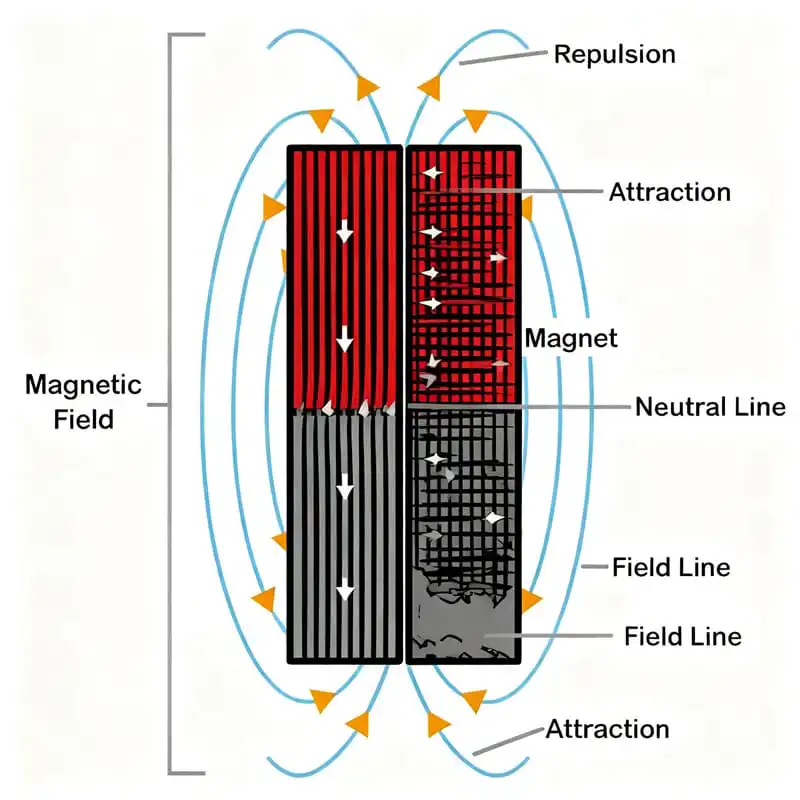
Magnetic stability
The material and structure of a magnet determine how stable its magnetic field is. Neodymium, samarium (NdFeB), cobalt (SmCo), and Alnico magnets are examples of permanent magnets that last for many years, sometimes decades.
But even the strongest magnets can lose their strength over time. The internal magnetic domains of a magnet are small sections that point in the same direction. This has been done incorrectly over time, which causes this damage.
This alignment can be disrupted by things like extreme heat, physical trauma, or exposure to opposing magnetic fields, which reduces the magnet’s total strength.
An important factor in magnetic stability is temperature. Every magnet has a Curie temperature, which is the point at which it completely loses its ability to attract.
Samarium-cobalt magnets can withstand temperatures above 300°C (572°F), but neodymium magnets lose their ability to magnetise at 80°C (176°F). A magnet can become permanently demagnetised if it is operated near or above its Curie temperature.
Magnet storage and considerations
The long-term strength of a magnet depends on proper storage. Magnetic fields can be weakened by demagnetisation or by attracting metal debris when they are stored carelessly.
Important elements of magnetic storage
- Humidity
- temperatura
- Skutki fizyczne
- Corrosion interference with magnetic fields
Things to consider when using magnets
- The safety of the individual: Strong magnets can pinch a finger. Wear gloves when working with large magnets.
- Office and Home Safety: Children and dogs should not be near magnets. Avoid placing magnets near electronic storage devices.
How to prevent demagnetization
- Prevent high temperatures:
Magnets should not be near heat sources, as this can cause their domains to reattach and reduce their magnetic strength.
- Reduce mechanical shock:
Micro-fracture or misalignment caused by dropping or bumping of the magnet may result.
- Store with keepers:
Place soft iron keepers on the poles of the bar magnets. By doing this, field loss is avoided, and its magnetic circuit is protected.
- Stay away from hostile fields:
Magnets should not be near strong electromagnetic fields that could reverse their polarity.
- Dry environment:
Store magnets in a dry place to prevent them from rusting, especially neodymium magnets that are prone to rust.
Conclusion
Although magnets can weaken over time, it usually happens very slowly, over decades under normal conditions. Magnets can be kept strong and active for many years with proper handling, temperature management, and storage. Knowing how to preserve
Magnetic stability, in addition to extending the life of magnets, guarantees their reliability in critical applications, such as household appliances and research instruments.
By protecting the magnet from heat, collisions, and opposing fields, its magnetic strength can be preserved for decades. Magnetization can also help a disabled person recover.
Simply put, magnets “wear out,” yet with proper care, they can remain magnetized for nearly a lifetime.
Najczęściej zadawane pytania
Can magnets be remagnetized?
In many situations, it is possible to remagnetize the magnets. During the procedure, a powerful external magnetic field oriented in the desired direction is applied to the magnet.
For example:
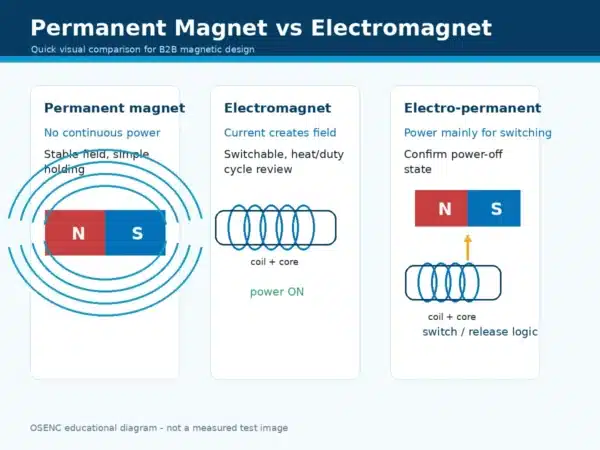
Special coils or electromagnets are used in industrial demagnetization to increase or restore magnet strength.
Although the effect is usually mild, small-scale techniques such as rubbing a strong magnet against a weak one can sometimes increase its magnetisation.
So, complete demagnetization may not be possible if the internal structure of the magnet is damaged (e.g., by heat or fracture).
Refer: neodymium magnets wiki