







Custom Magnets for Welding Fixtures
Welding fixtures magnets are selected by holding direction, working gap, heat exposure, steel contact and mounting method, not by catalog pull force alone.
Osenc supports custom neodymium magnets and magnetic assemblies for fixture builders who need drawing review, magnet shape selection, coating review, magnetization direction and RFQ-ready specifications before sampling.
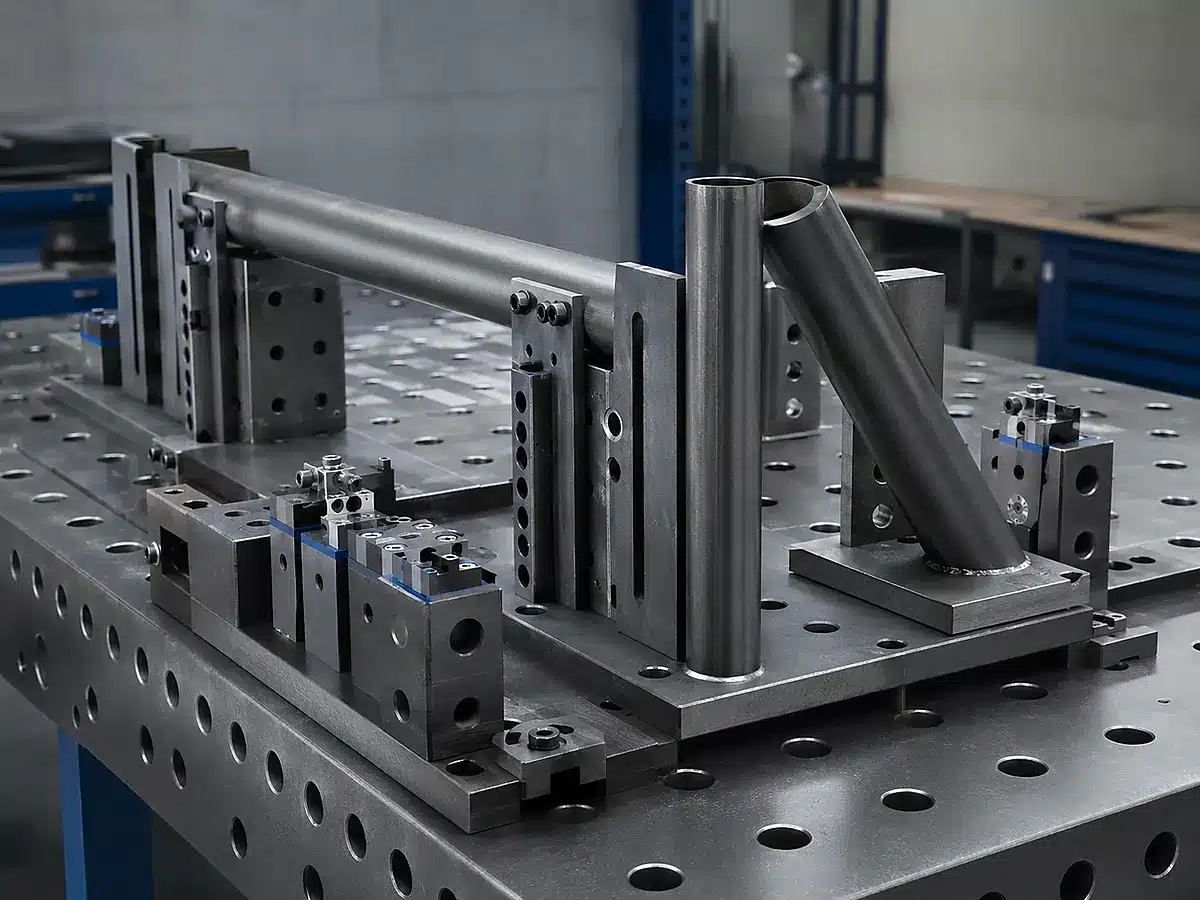
Selection Overview
In a welding fixture, a magnet may help position parts, hold temporary alignment, support repeatable setup or simplify a removable stop. The useful result depends on the complete fixture condition: the workpiece material, contact area, gap, heat path, weld sequence and whether the operator needs quick release.
Application Points
The magnet position should be defined by the fixture function. A magnet used as a removable locator has different requirements from a magnet used inside a steel housing or a magnetic base.
Magnets can help locate tubes, brackets or plates before tack welding when the holding face, release path and weld sequence are controlled.
Custom block, disc or ring magnets may be integrated into mechanical stops, locating nests or replaceable fixture modules.
Steel housings, pot-style structures, threaded features or protective covers may improve mounting reliability and reduce handling damage.
Force Review
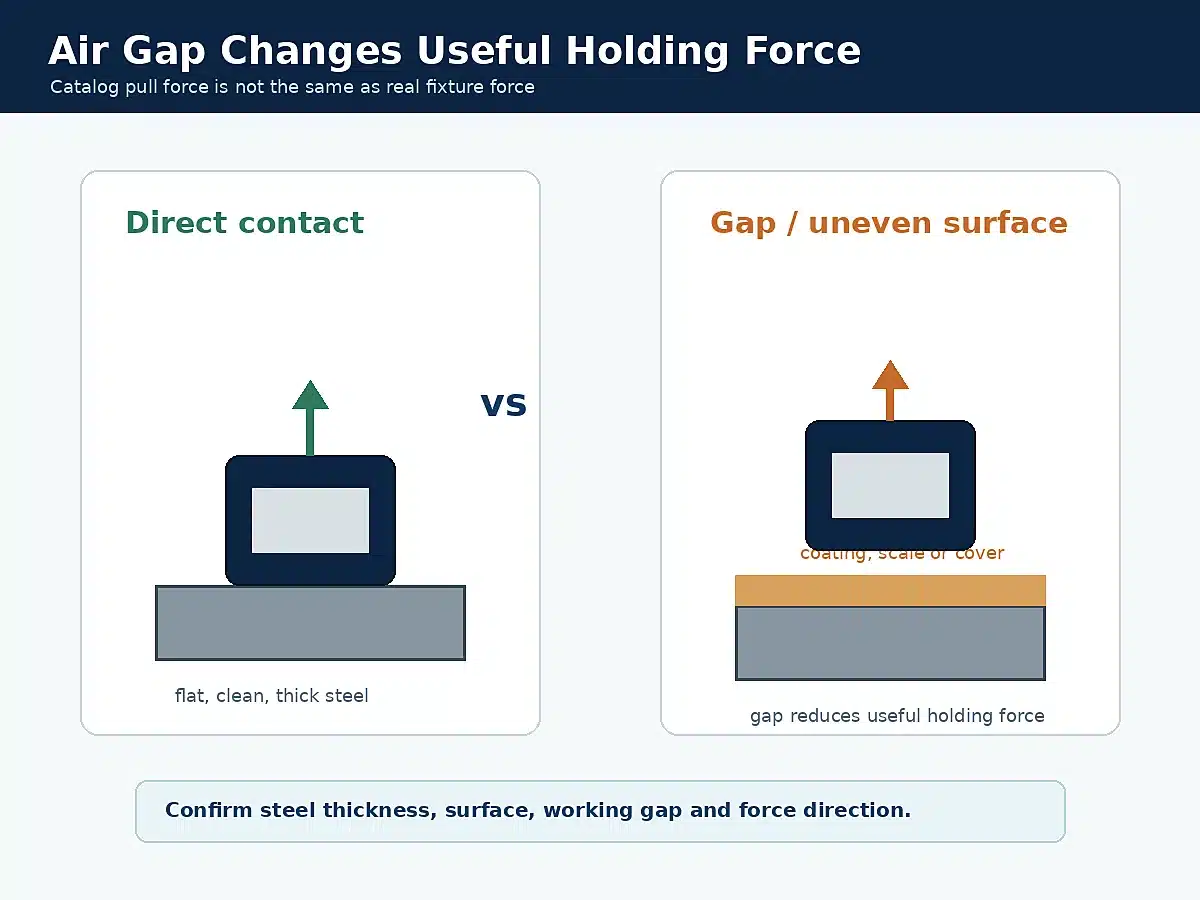
Catalog pull force is normally measured under controlled contact conditions. In a welding fixture, useful holding force can change when the steel is thin, curved, coated, dirty, hot, uneven or separated from the magnet by a housing, coating, air gap or protective layer.
The force direction also matters. A magnet that performs well in direct pull may behave differently in sliding, shear, vibration or quick-release use.
Magnet and Assembly Options
For welding fixture projects, the right choice may be a simple neodymium block magnet, a disc or ring magnet, a pot magnet, a rubber-coated unit or a custom magnetic assembly with mounting features. The decision depends on the required holding direction, release method and heat protection.
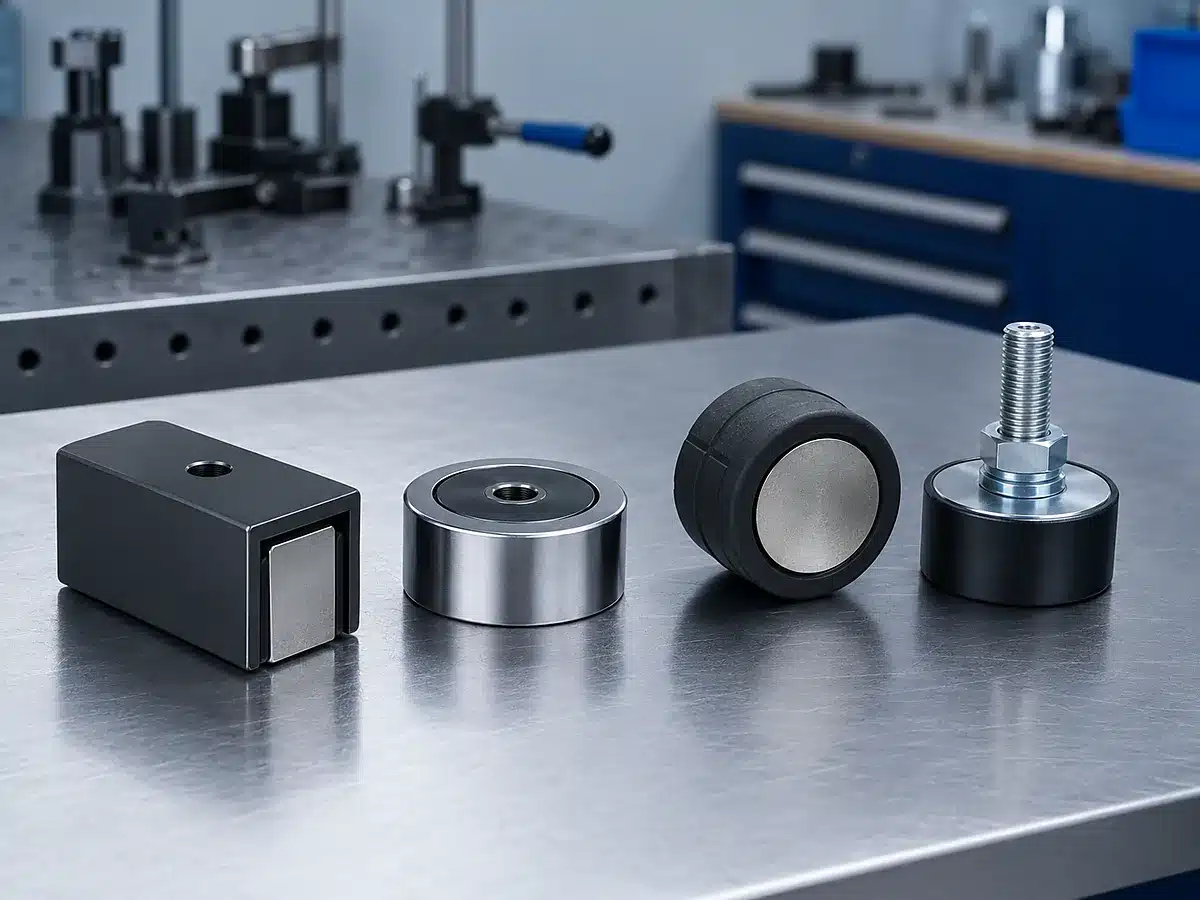
| Option | When it may fit | What to review before sampling |
|---|---|---|
| Neodymium block magnets | Flat contact faces, compact stops, rectangular holding areas or fixture inserts. | Edge chipping risk, coating, magnetization direction, press-fit stress and available adhesive or mechanical retention. |
| Disc or round magnets | Round pockets, compact locating points or small magnetic modules. | Diameter, thickness, pole face, working gap, contact area and release method. |
| Pot magnets | Higher focused holding on a steel contact surface with integrated housing or mounting options. | Pull direction, side load, base material, heat path and whether the housing protects or traps heat. |
| Rubber coated magnets | Applications where surface protection or friction is more important than maximum direct pull. | Gap introduced by the coating, heat exposure, wear condition and contamination from welding spatter. |
| Custom magnetic assemblies | Projects needing a defined mounting structure, removable module, threaded feature or controlled pole layout. | Drawing, tolerance, assembly method, magnetization, coating stack and sample inspection plan. |
Selection Factors
Air gaps from coatings, covers, uneven steel or fixture housings reduce useful holding force and must be included in the review.
Direct pull, shear load, sliding load and vibration behave differently. The RFQ should define the real load direction.
The magnetization direction should match the contact face, steel path and assembly function instead of being assumed from shape alone.
Nickel, epoxy or other coatings should be reviewed against humidity, handling, abrasion, adhesive use and final assembly gap.
Heat and Spatter Boundary
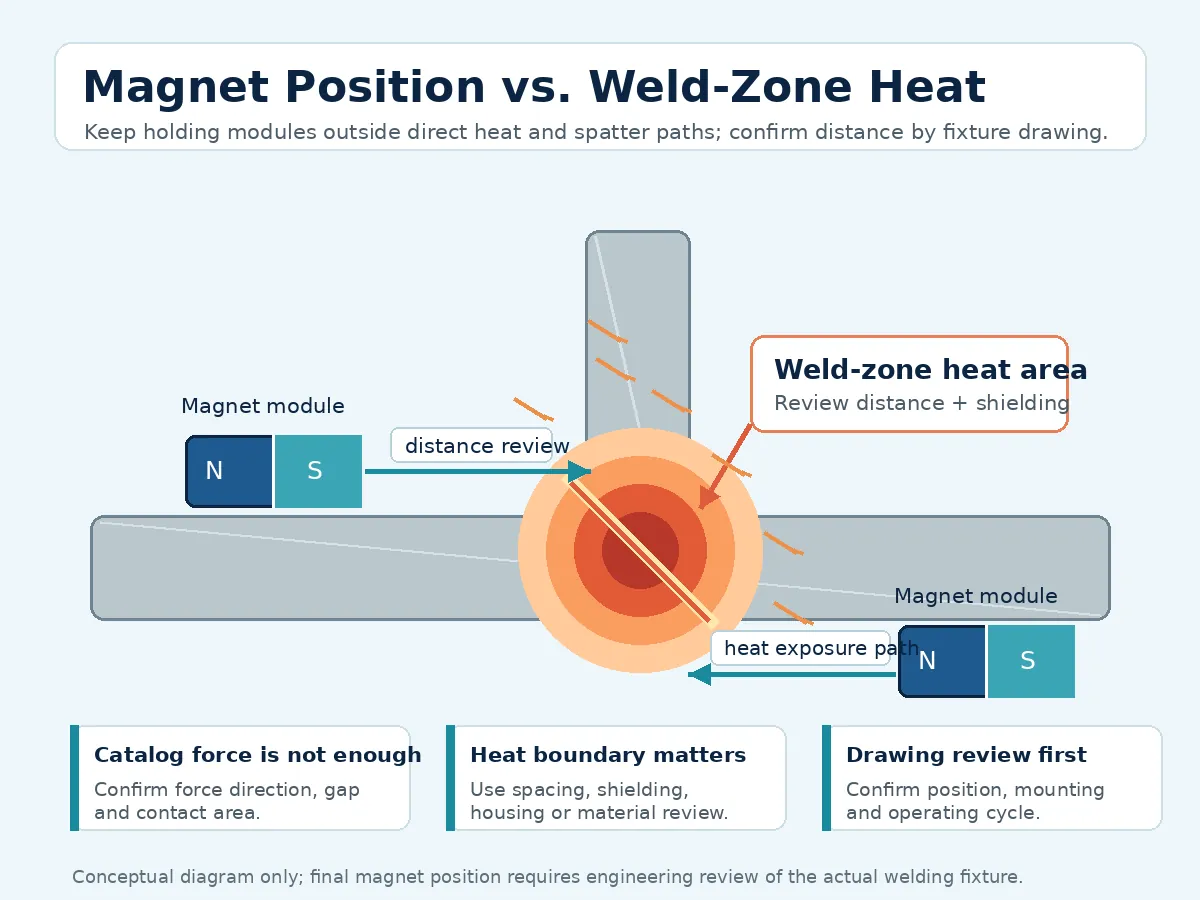
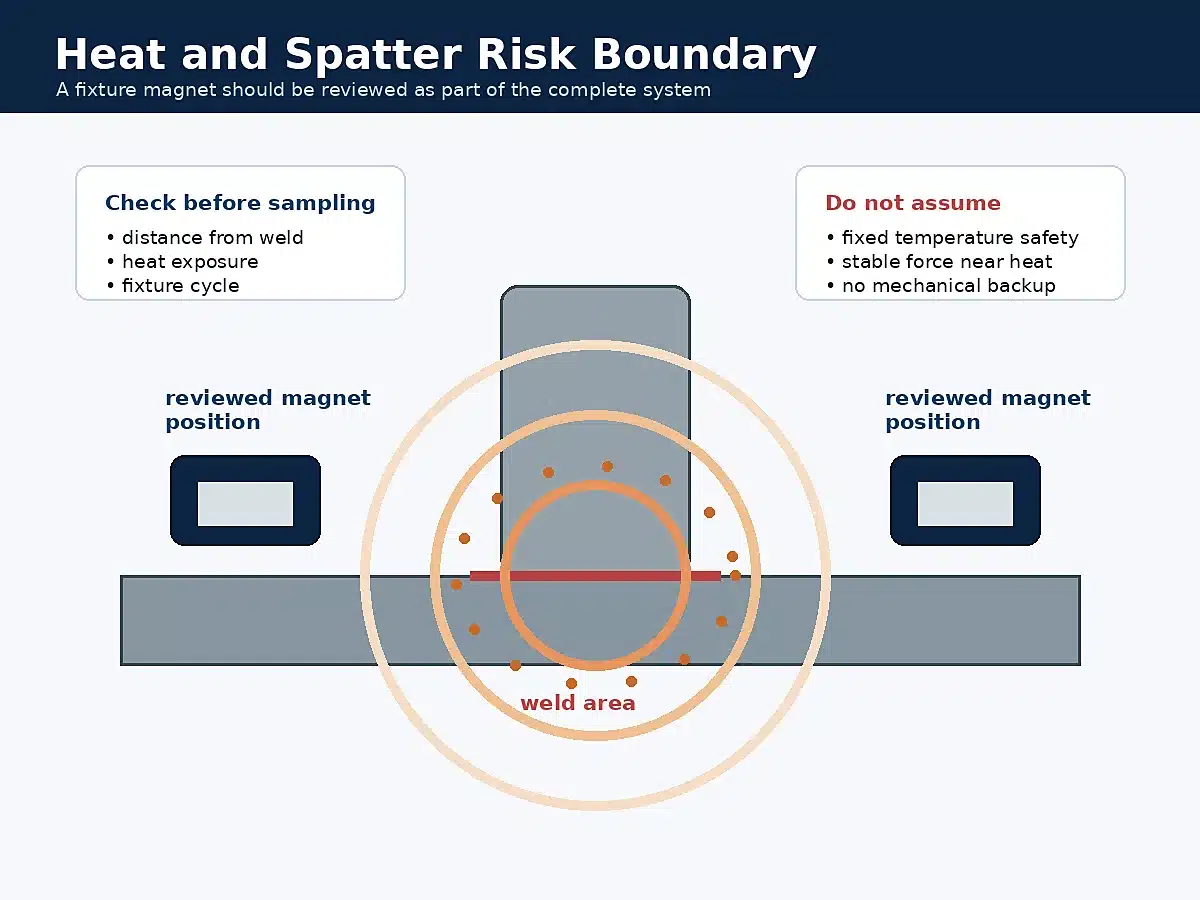
Neodymium magnets are sensitive to heat compared with some other permanent magnet materials. For welding fixtures, the magnet should not be placed in the direct weld zone or exposed to uncontrolled spatter, impact or grinding debris without review.
Distance from the weld, shielding, housing design, duty cycle, workpiece heat transfer and cleaning method should be evaluated before the magnet grade and coating are locked.
Engineering Review Process
Osenc can help convert the fixture requirement into a magnet or magnetic assembly specification that is easier to quote, sample and inspect.
Confirm magnet position, steel contact, weld-zone distance, mounting pocket and release requirement.
Compare loose magnets, pot magnets, rubber coated units or a custom magnetic assembly.
Review force target, gap, heat exposure, corrosion risk, magnetization direction and coating stack.
Lock drawing details, quantity, tolerance, test condition and inspection requirements before sampling.
RFQ Checklist
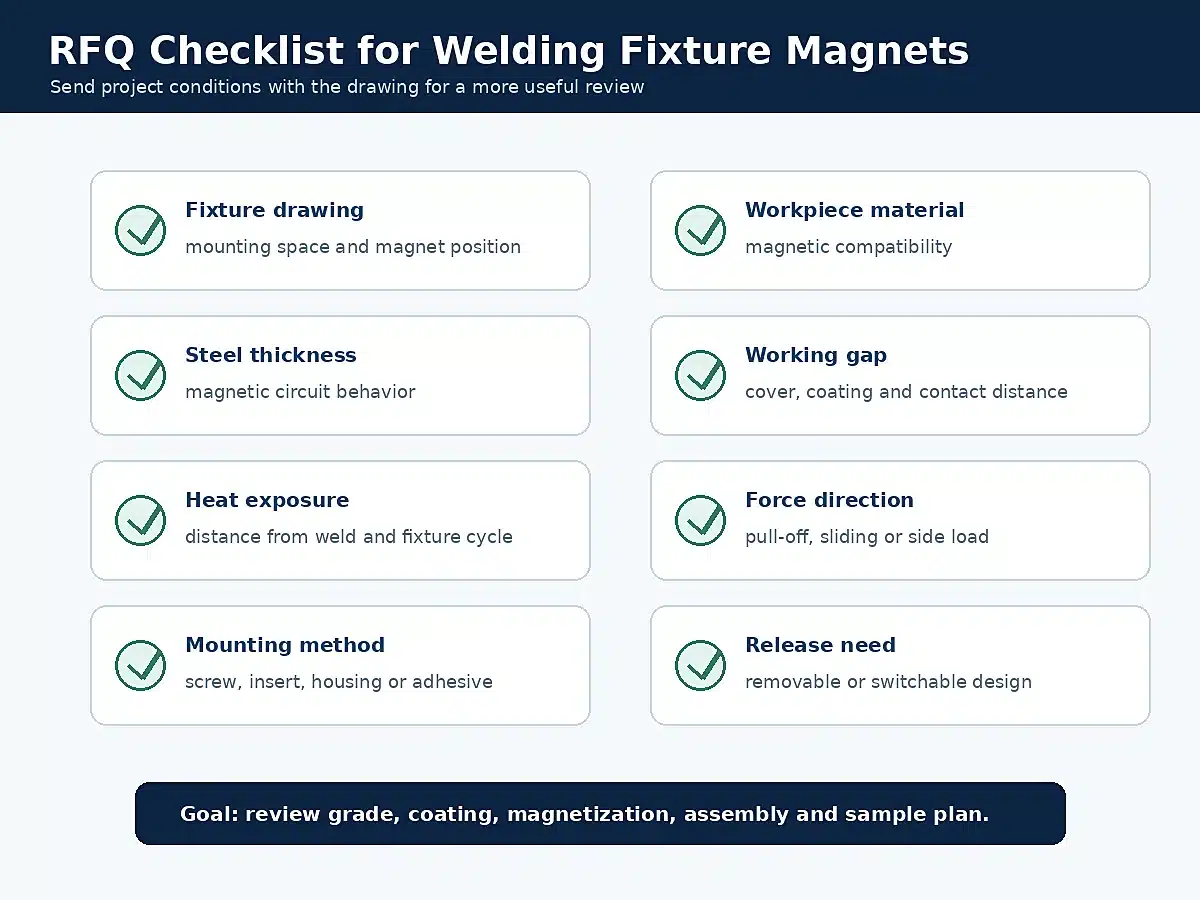
For custom magnets for welding fixtures, the most useful RFQ is not only a magnet size. Send the fixture condition so the magnet can be reviewed as part of the mechanical and thermal system.
FAQ
They can be suitable for positioning, holding or modular fixture functions when the magnet is protected from excessive heat, spatter, impact and uncontrolled gaps. The final choice should be reviewed against the fixture drawing and operating conditions.
No. Pull force is only a starting point. Steel thickness, contact area, air gap, surface condition, coating, force direction and heat exposure can all change the useful holding result.
A loose magnet may work for simple inserts, but a housed assembly, pot magnet or protected magnetic module may be better when mounting, release, impact protection or repeatability matters.
Send the fixture drawing, workpiece material, steel thickness, working gap, force direction, weld-zone distance, heat exposure, mounting method, coating preference, quantity and any inspection requirement.
No. Holding force depends on the actual fixture and test condition. Osenc can review the drawing and RFQ data before recommending a magnet or magnetic assembly for sampling.
Engineering RFQ
Send your fixture drawing, working gap, workpiece material, weld-zone distance, mounting method and target holding direction. Osenc can help review whether your project needs a custom neodymium magnet, a pot magnet, a protected magnetic module or a custom magnetic assembly.