







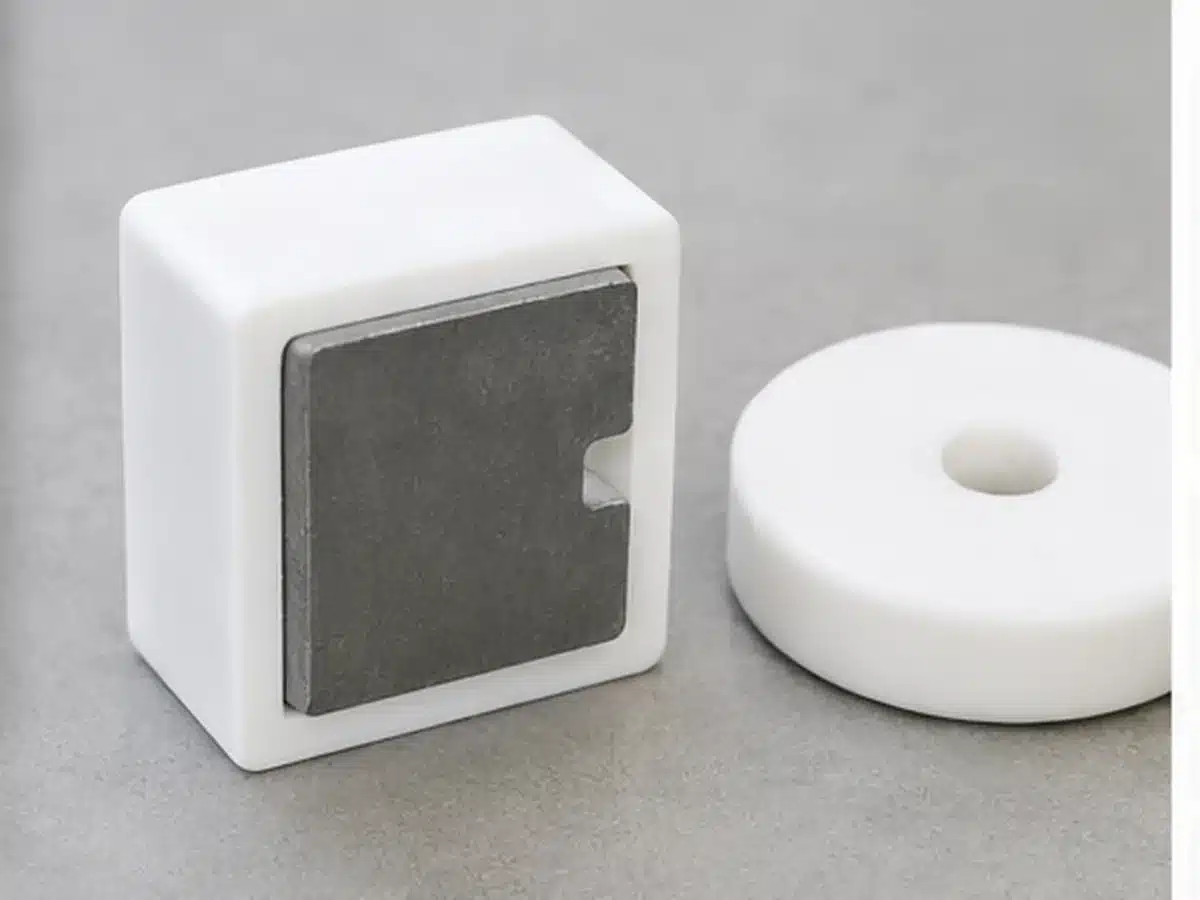
OSENC manufactures PTFE coated neodymium magnets in two controlled constructions: black NdFeB + Ni-Cu-Ni + PTFE coating and white PTFE encapsulation. We control PTFE build, finished dimensions, tolerance, magnet grade, magnetization and protected surfaces to the approved drawing.
Material naming: this page specifies the surface system as PTFE. The historical URL is retained for continuity, but quotations and drawings use the PTFE construction defined for the project.
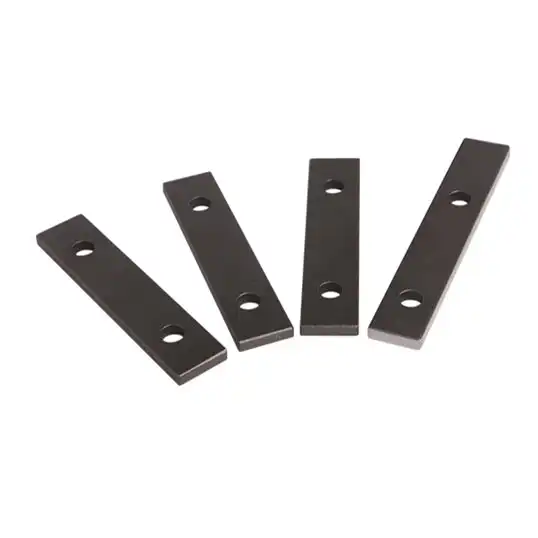
OSENC quotes black PTFE coating and white PTFE encapsulation as separate engineering systems because they have different dimensional build, protection behavior and magnetic air-gap consequences.
| Specification | Black PTFE Coated Magnet | White PTFE Encapsulated Magnet |
|---|---|---|
| Construction | NdFeB + Ni-Cu-Ni + PTFE | NdFeB magnetic core inside PTFE housing / encapsulation |
| PTFE Build | 15–35 μm; 25 μm typical | Approx. 0.5–1.5 mm wall; 0.7–1.0 mm common on thin working faces |
| Finished Tolerance | ±0.10 mm standard; ±0.05 mm precision | ±0.10 mm standard; ±0.20 mm engineering tolerance for more complex housings |
| Protection | Thin conformal functional layer over the plated magnet | Full-encapsulation version provides a 100% PTFE external surface |
| Choose This When | Minimum build, low friction and chemical-exposure resistance are priorities | Complete PTFE isolation and wet / liquid-contact protection are priorities |
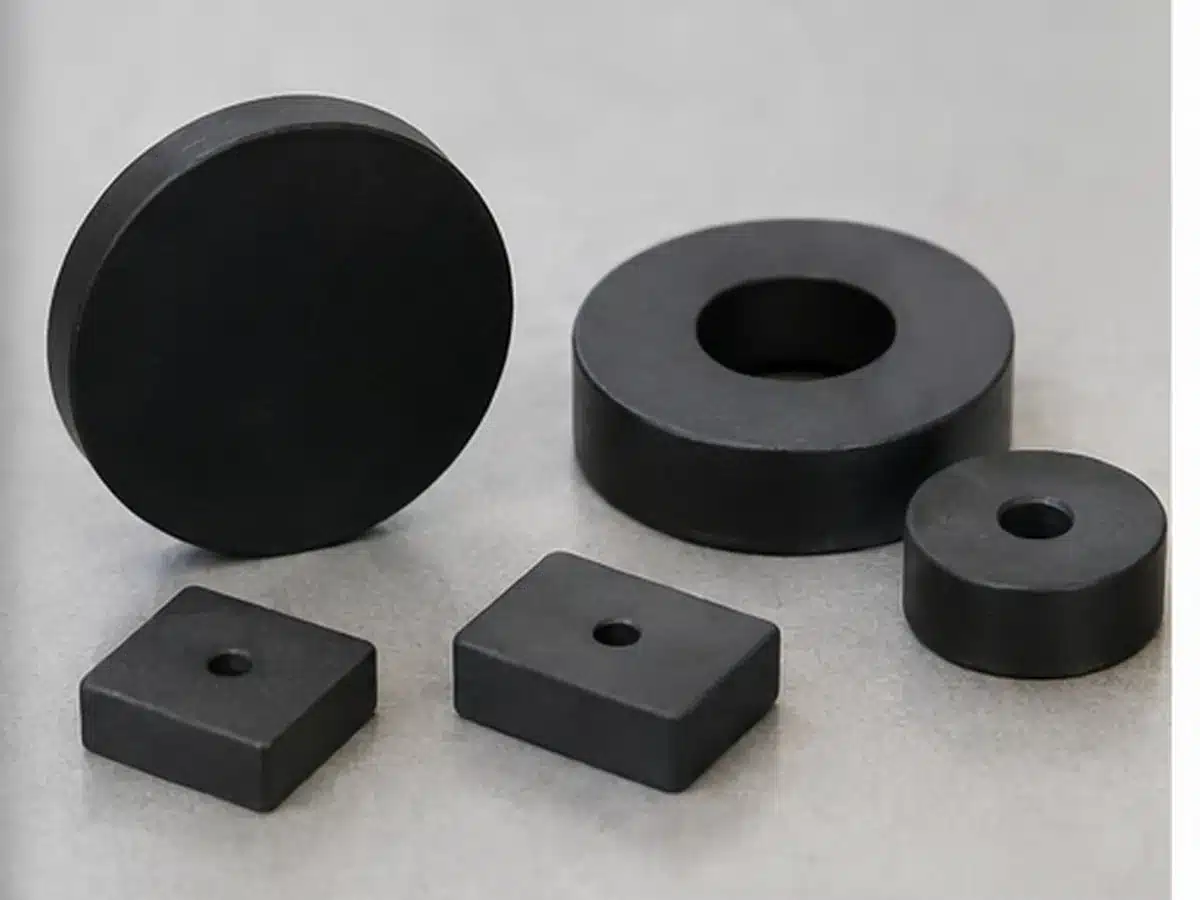
OSENC does not treat black and white PTFE as color options. Coating versus housing changes the finished size, protected edges, inspection method and magnetic working distance.
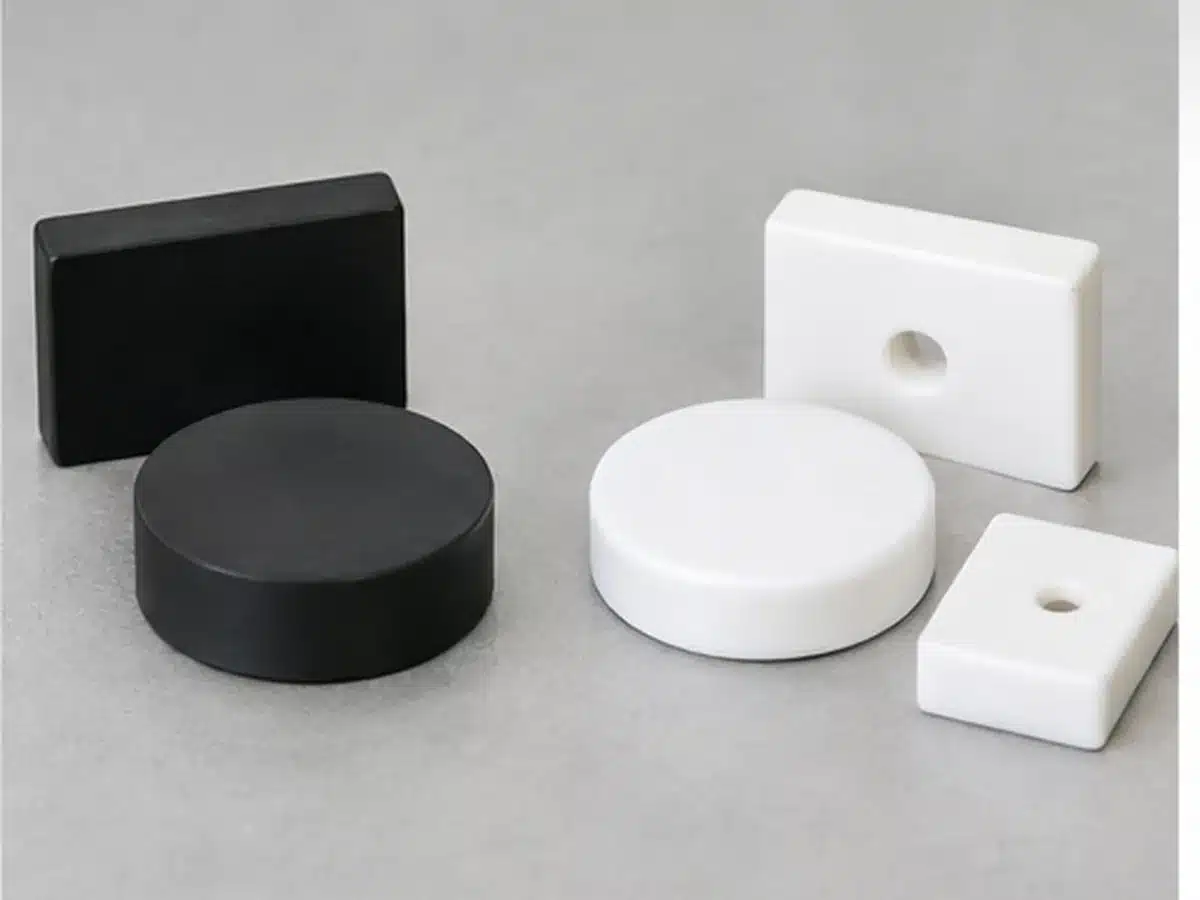
We build the coating, magnetic material and finished-part requirements into one controlled specification instead of treating PTFE as an afterthought.
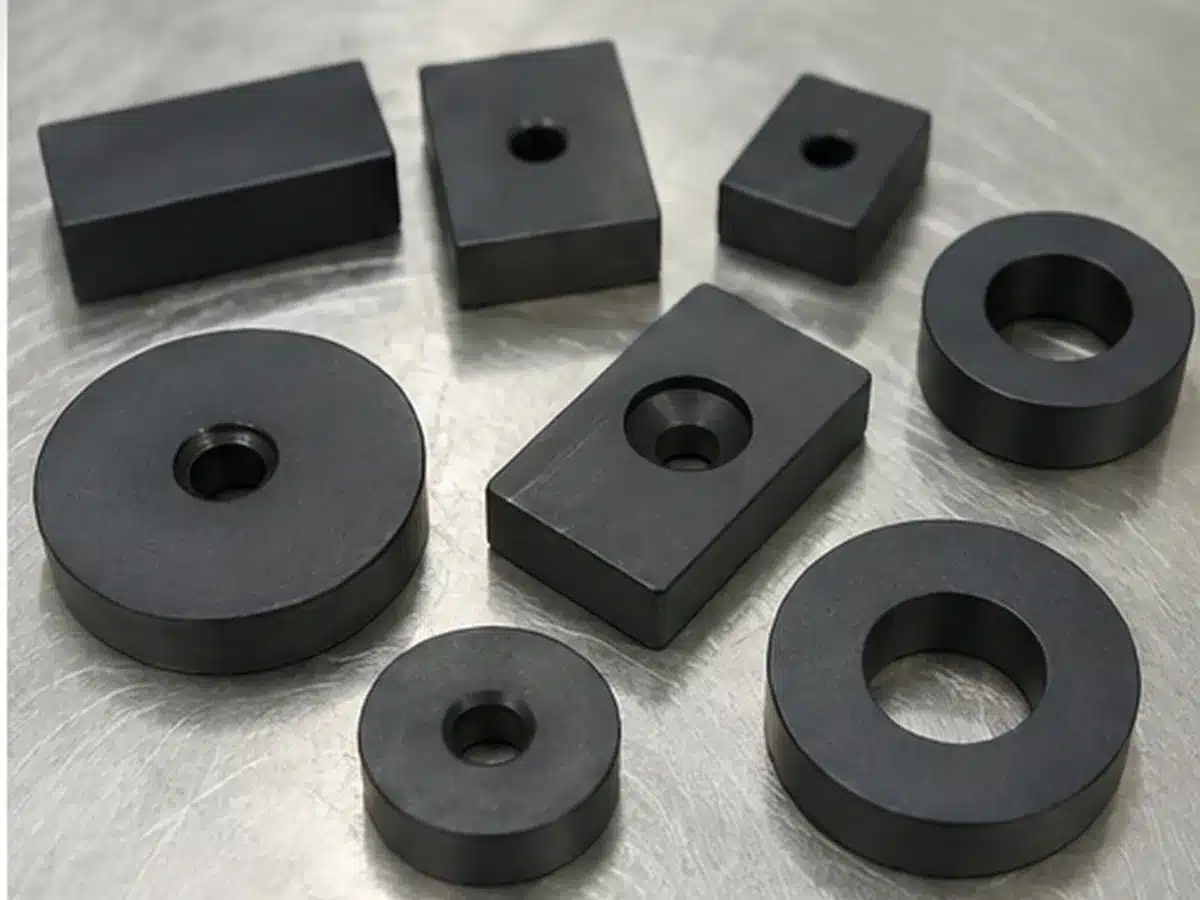
OSENC manufactures PTFE coated and PTFE encapsulated magnets in disc, block, ring, cylinder, countersunk and custom assembly geometries. We control the finished PTFE part to the approved drawing rather than applying bare-magnet dimensions to the coated component.
PTFE thickness is not only a surface specification. It changes the magnetic working distance. Black PTFE adds only tens of microns to the finished part, while white PTFE encapsulation can add millimeters across the diameter.
A 15–35 μm PTFE layer adds approximately 0.03–0.07 mm across two coated sides before any other dimensional features are considered.
A 0.7 mm radial PTFE wall increases the outside diameter by about 1.4 mm.
OSENC includes PTFE build in the assembly clearance and magnetic air-gap review before the sample is released.
We rate the finished magnet from the magnetic grade and magnetic circuit, not from the PTFE resin temperature alone. The following grade classes are the first engineering boundary for PTFE-coated NdFeB designs.
| NdFeB Grade Class | Reference Continuous Operating Limit | OSENC Selection Direction |
|---|---|---|
| Standard N42 | 80 °C | General PTFE-coated magnet applications without elevated-temperature duty. |
| H | 120 °C | Higher-temperature magnetic circuits using the appropriate H-grade material. |
| SH / N42SH | 150 °C | High-temperature PTFE-coated designs requiring SH-grade coercivity. |
| UH | 180 °C | Higher-temperature assemblies using UH-grade NdFeB. |
| EH | 200 °C | High-temperature assemblies where EH-grade material and the magnetic circuit support the duty. |
OSENC PTFE projects cover N35–N52 plus H, SH, UH and EH families.
Disc / Ring / Cylinder: axial or diametrical. Block: thickness, length or width. Special parts can use multipole layouts.
OSENC specifies PTFE when its surface or isolation behavior solves a defined working-condition problem.
Water, oils, solvents, acids, alkalis and cleaning media where the actual chemical, concentration, temperature and exposure duration are defined.
Sliding, release and non-stick surfaces where reducing friction and material buildup is part of the design.
White full-encapsulation structures where the NdFeB core must remain physically isolated from the working environment.
PTFE surface requirements combined with the correct H, SH, UH or EH magnetic grade for the operating temperature.
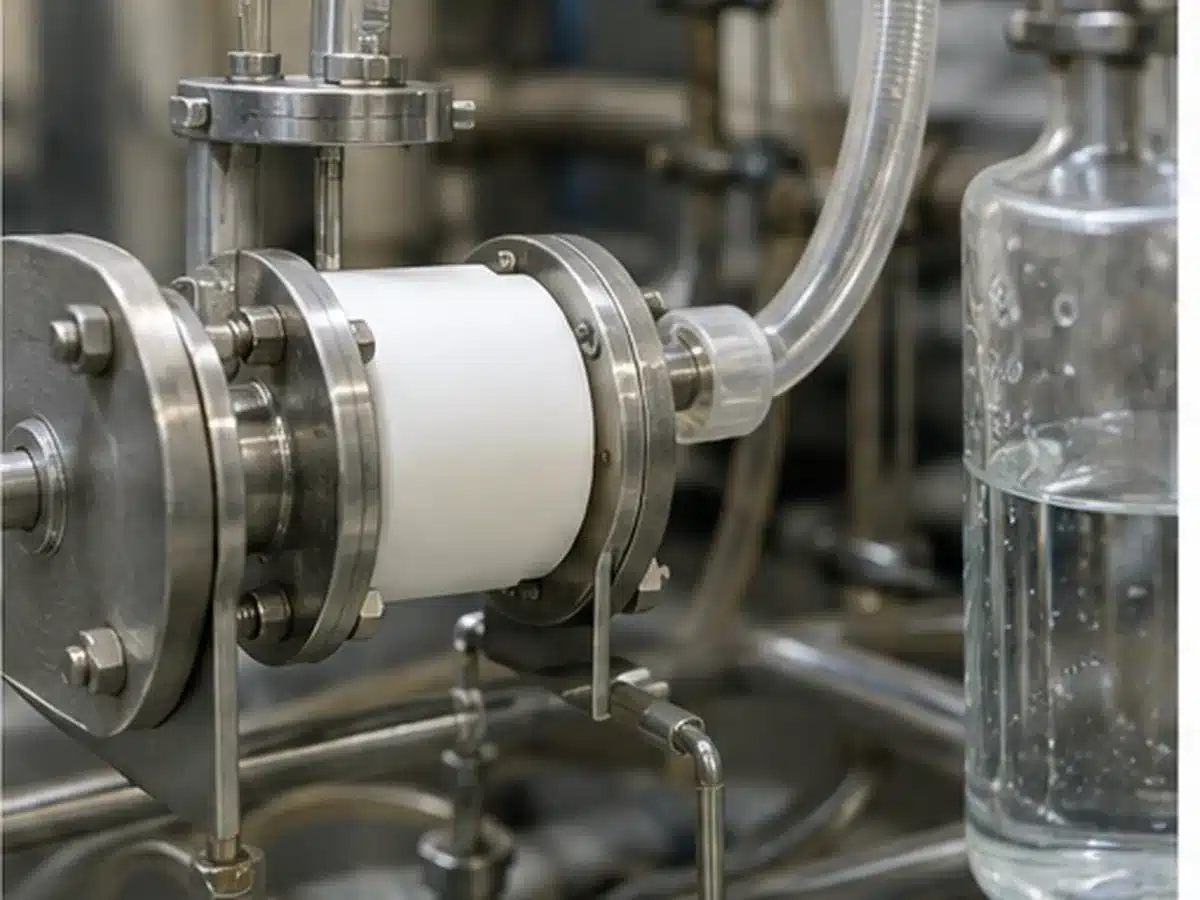
PTFE magnet constructions are used in engineered components for laboratory equipment, chemical handling, sensors, battery-material equipment and other controlled magnetic assemblies. Food, pharmaceutical or medical compliance is only specified when the required PTFE resin and project documentation are defined.
We select the coating from the required surface behavior, environment and dimensional build rather than using a generic corrosion ranking.
| Coating | OSENC Uses It When | Main Purchasing Check |
|---|---|---|
| PTFE | Low friction, non-stick behavior, clean release or chemical exposure is central to the design. | Coating versus encapsulation, PTFE build, chemical medium, temperature and edge coverage. |
| Parylene | A thin conformal polymer barrier or electrical-insulation layer is required with less dimensional build than PTFE encapsulation. | Required thickness, adhesion, coverage, operating environment and finished-part validation. |
| Epoxy | A polymer protective finish is required without the dimensional or surface behavior of PTFE. | Coating system, edge damage, finished dimensions and corrosion-test condition. |
| Nickel-Based | A common metallic finish is appropriate for general handling and assembly. | Layer stack, corrosion environment, contact condition and dimensional build. |
For thin conformal polymer protection where PTFE encapsulation adds too much magnetic air gap, compare Parylene coated magnets. For broader coating selection, review neodymium magnet coating options.
We inspect critical dimensions after the complete PTFE coating or housing process, not from the bare magnet alone.
Protected surfaces, holes, countersinks, masked areas and exposed functional areas are checked against the approved drawing.
We inspect protected surfaces for exposed substrate or underlayer and control coating adhesion against the approved project requirement.
Pole direction and magnetization configuration are controlled to the drawing or approved sample.
Send the finished-part requirement and OSENC can move directly into engineering review and sampling.
Choose black PTFE when low friction, non-stick behavior and chemical protection are required with minimal dimensional build. Choose white PTFE encapsulation when complete PTFE isolation is more important than minimizing magnetic air gap.
OSENC specifies the black PTFE top layer at 15–35 μm, with 25 μm as a typical design value. The white PTFE housing is much thicker, approximately 0.5–1.5 mm.
PTFE housing thickness increases the distance between the magnetic core and the target. For example, a 0.7 mm radial wall adds about 1.4 mm to outside diameter. OSENC includes this air gap in the magnetic and assembly review before sampling.
Use the NdFeB grade as the first boundary: standard N42 80 °C, H 120 °C, SH 150 °C, UH 180 °C and EH 200 °C. Final allowable temperature also depends on magnet geometry, magnetic circuit, operating point and exposure duration.
Yes. OSENC can include through-hole walls and countersunk surfaces in the PTFE coating area, and can mask specified bonding or electrical contact surfaces.
Yes. MOQ 1 is available for custom sampling. Send the finished drawing, grade or magnetic target, magnetization, PTFE construction, operating environment and inspection requirements.
Send the drawing, PTFE construction, finished dimensions, grade or magnetic target, magnetization, operating temperature, chemical environment and quantity. OSENC will define the coating or encapsulation build, finished tolerance and magnetic grade before sampling.