







OSENC manufactures custom large neodymium discs, blocks, rings and segmented magnetic structures for OEM and industrial systems. We engineer geometry, NdFeB grade, magnetization, coating, tolerance and magnetic-circuit requirements as one production package.
Send us your drawing, working gap, pole direction and target field or holding requirement. OSENC will define the production route: one-piece large NdFeB magnet, segmented magnet structure or complete magnetic assembly.
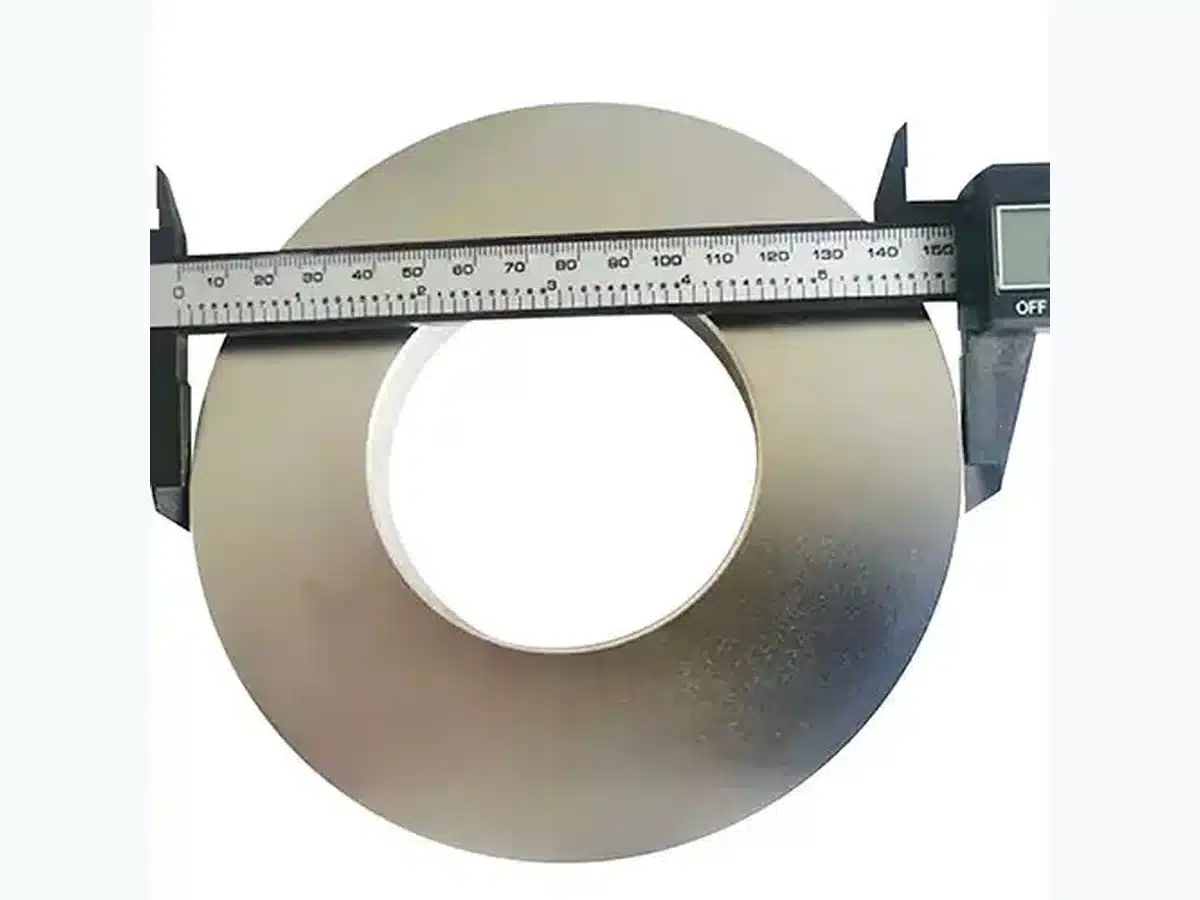
OSENC manufactures large-format neodymium magnets from customer drawings and assembly requirements. Size capability is confirmed on the complete geometry rather than on one isolated maximum diameter or length, because thickness, wall section, orientation length, grade, magnetization and tolerance all affect the production route.
We manufacture large disc magnets from drawing-defined diameter, thickness, pole direction, finished tolerance and coating requirements.
We manufacture large rectangular NdFeB blocks with L × W × T controlled against the required pole faces, orientation direction and assembly fit.
We manufacture large rings from complete OD × ID × H geometry, with wall thickness, brittleness, coating and magnetization controlled as one configuration.
When one large magnet is not the best production or magnetic solution, OSENC builds the project around multiple controlled magnet segments or a complete magnetic assembly.
For a production decision, send the full drawing together with pole direction, grade target if known, tolerance, coating and operating conditions.
Check My Large Magnet DesignOSENC defines a large disc by diameter × thickness, a block by L × W × T, and a ring by OD × ID × H plus wall thickness. We lock the complete geometry before the production route is finalized.
That geometry is matched to grade, preferred orientation, pole direction, coating, tolerance, inspection method, handling and transport. This prevents a dimension that looks acceptable by itself from becoming an impractical magnetization, machining or logistics problem later.
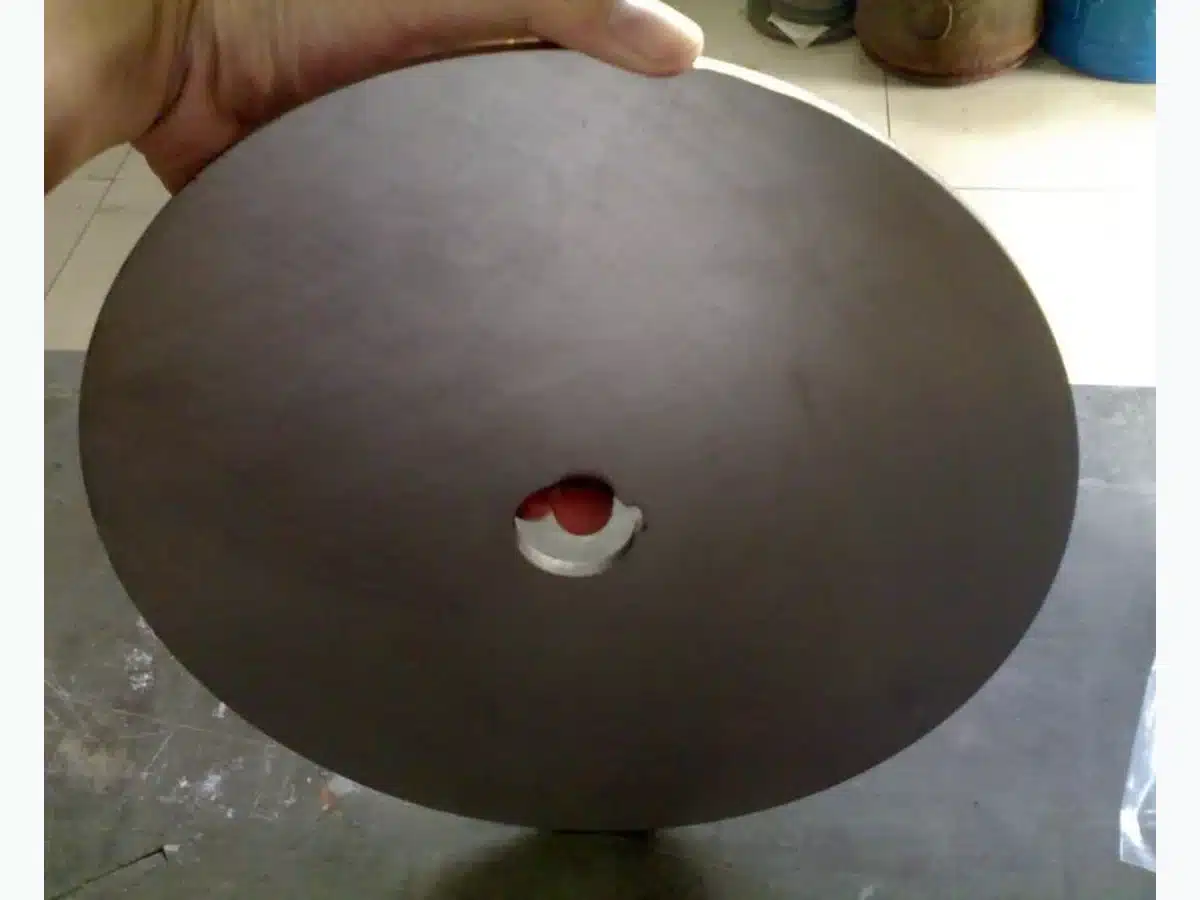
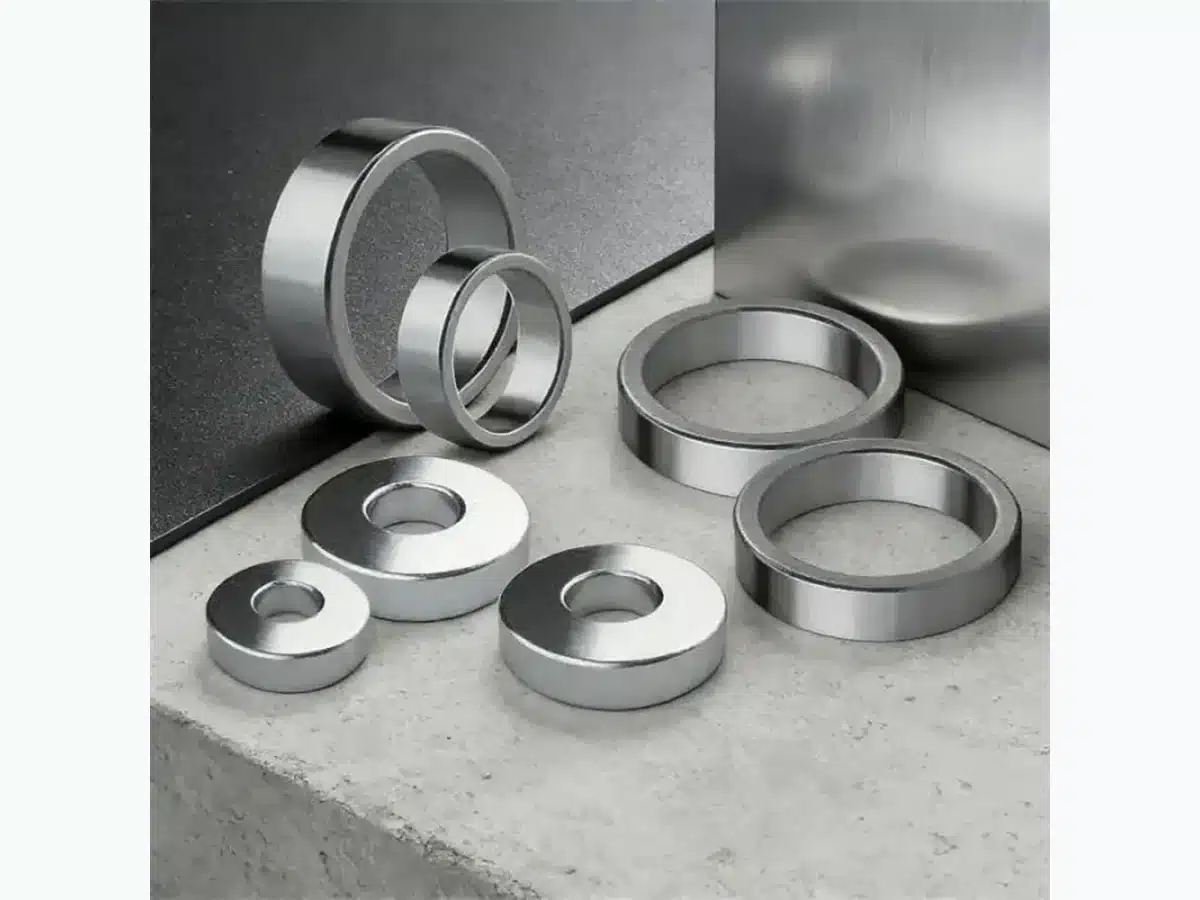
A one-piece magnet reduces part count and alignment interfaces, but it is not automatically the best production or magnetic solution. When full-part geometry, orientation length, magnetization, handling or transport becomes restrictive, OSENC moves the design to controlled segments or a complete magnetic assembly.
| One-Piece Large Magnet | Segmented / Magnetic Assembly |
|---|---|
| Used when the mechanical design genuinely requires one continuous component. | Used when the magnetic structure is better produced as controlled modules. |
| Reduces part count and assembly interfaces. | Can simplify magnetization, handling, installation or replacement. |
| The full geometry must work with the selected orientation and magnetizing route. | Allows multiple magnets to be oriented as part of a larger magnetic circuit or Halbach-type structure. |
| Packaging and installation must control the force of the complete magnet. | Smaller controlled modules can simplify transport and final installation. |
| Design Input | What OSENC Controls |
|---|---|
| Large disc | Diameter × thickness, grade, pole direction, coating and tolerance are locked as one production configuration. |
| Large block | L × W × T is matched to the required pole faces, orientation direction and assembly fit. |
| Large ring | OD × ID × H + wall thickness is controlled together with coating, magnetization, brittleness and handling. |
| High grade | Grade × size feasibility is confirmed for the actual geometry instead of assumed from a general material table. |
| Tight tolerance | Size × geometry × tolerance is treated as one machining and inspection requirement. |
| Special magnetization | Pole direction + orientation length are fixed before the magnetizing route is released. |
Finished geometry, critical mating surfaces and drawing-defined tolerances are controlled before final magnetization.
Pole direction, preferred orientation and orientation length are defined before production so the finished part can be magnetized as designed.
Gauss, flux or pull-force requirements are tied to defined test conditions instead of being treated as isolated catalog values.
Magnetized parts are separated, restrained and packed around the real geometry, attraction force and transport route.
OSENC engineers surface field, flux and pull-force requirements around the actual magnet geometry and measurement setup. Material Br is not the same as surface Gauss, and pull force cannot be predicted from magnet size alone.
Define magnet dimensions, grade, pole direction, measurement location, probe direction and air gap.
Define the measurement method and magnetic circuit so the acceptance value can be reproduced during inspection.
Define the steel material and thickness, contact condition, air gap, contact area and pull direction.
OSENC uses the actual large-magnet geometry and defined test conditions as the engineering basis. Values from smaller magnets are not simply scaled up as substitutes for the real project.
Send the target together with the test setup. We will engineer the size, grade, pole direction and magnetic circuit around that requirement.
Send My Magnetic TargetMachining, coating, magnetization, inspection and logistics are linked on large sintered NdFeB parts. OSENC controls the sequence from drawing release through final packed condition so one stage does not create a problem for the next.
Geometry and critical dimensions are locked before final magnetization.
The selected corrosion-protection system is applied to the machined part.
The part is magnetized along the approved preferred orientation and pole direction.
Drawing-defined dimensional, coating and magnetic requirements are checked using the agreed acceptance method.
Magnetized parts are kept separated to reduce impact, chipping and uncontrolled attraction.
Spacing, restraint and shielding are matched to the packed magnetic field and transport route.
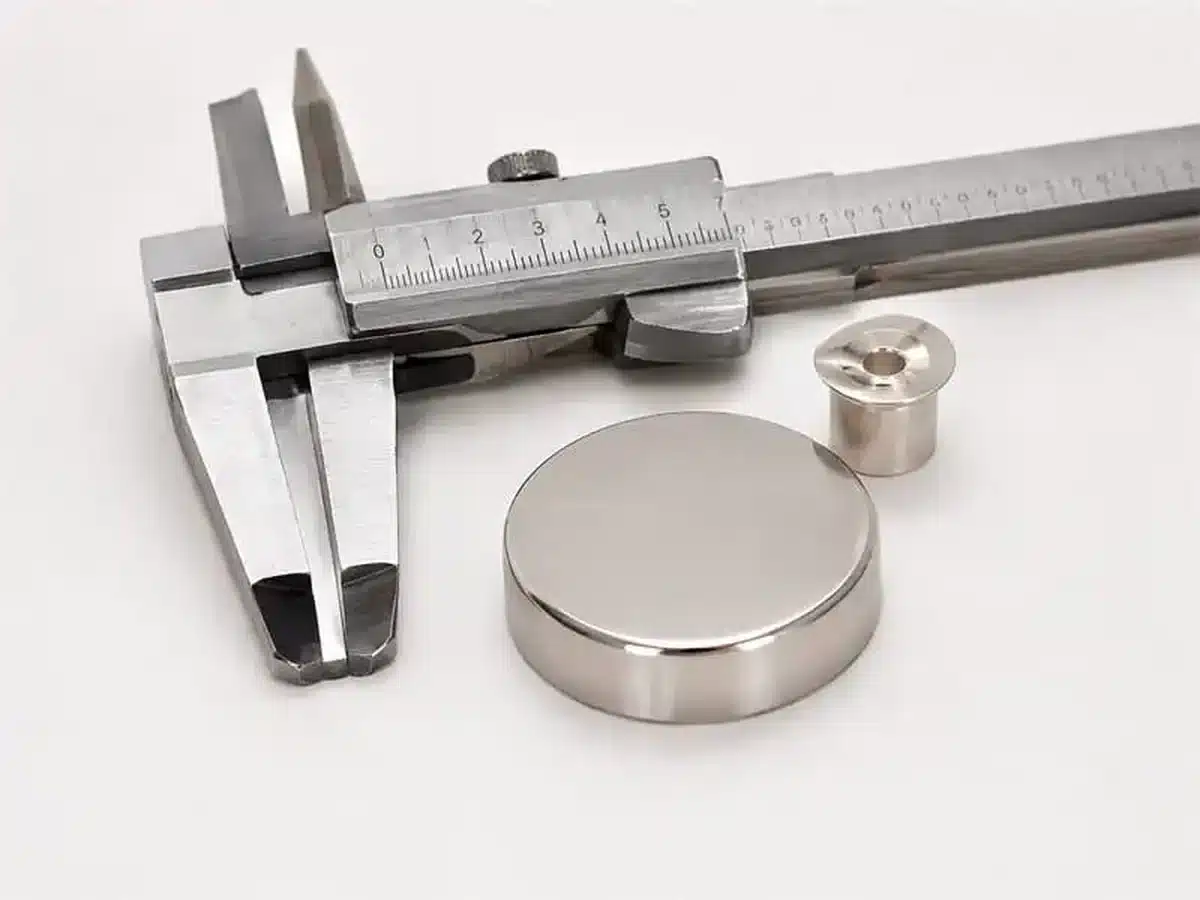
OSENC matches grade to the actual disc, block or ring geometry together with required magnetic output, working temperature, available volume and the surrounding magnetic circuit.
Nickel / Ni-Cu-Ni, zinc and epoxy / E-coat are established NdFeB coating routes. The coating system is selected around part geometry, operating environment and fit-sensitive finished dimensions.
Include the working temperature, operating environment, pole direction and finished-dimension sensitivity in the RFQ so the material and coating route can be defined with the geometry.
Large sintered NdFeB combines high magnetic energy with limited mechanical toughness. OSENC controls separation, restraint, edge protection and packaging around the finished magnetized geometry rather than treating packing as an afterthought.
For air shipment, the final packed configuration must meet the current applicable IATA Dangerous Goods Regulations and carrier requirements. Air-shipment feasibility is confirmed after the finished package and leakage field are evaluated.

OSENC manufactures large rings, blocks and segmented pole structures for designs where the required pole area exceeds standard magnet formats.
Large NdFeB components are engineered as part of the separator magnetic circuit, including steel structure, working gap and target field.
Large magnets and segmented structures are used when the system requires high magnetic energy inside a defined mechanical envelope.
OSENC defines the magnet arrangement from the required field region, air gap and available installation space.
2D/3D drawing, complete dimensions, holes or ID, thickness, wall thickness, tolerances and assembly clearances.
Grade if known, pole direction, working temperature, Gauss / flux / pull-force target and complete test conditions.
Quantity, installation method, destination, shipping method, packaging limits and whether air shipment is required.
OSENC will define whether the project should use one large magnet, controlled segments or a complete magnetic assembly, then quote the production configuration.
Send My Large-Magnet ProjectWe confirm the complete geometry together with grade, preferred orientation, magnetization, coating and tolerance. One maximum diameter or length is not used by itself to guarantee every thickness and magnetic configuration.
We use the required N/S pole faces, preferred orientation, orientation length, grade and complete geometry to define the magnetization route. Mark the required pole faces directly on the drawing.
No. Surface Gauss depends on magnet size, grade, pole geometry, measurement position and distance. Material Br is not a direct surface-Gauss value.
Not in a simple proportional way. Pull force depends on magnet geometry, pole direction, steel target, steel thickness, air gap, contact condition, contact area and pull direction.
Yes. Send the available space, air gap, surrounding steel, working temperature and target measurement condition. OSENC uses those inputs to engineer magnet size, grade, pole direction and the one-piece or segmented configuration.
Selected packed shipments can move by air after packaging and leakage-field control are evaluated against the current applicable IATA Dangerous Goods Regulations and carrier requirements.
Send the complete drawing, grade if known, pole direction, working temperature, coating requirement, tolerance, magnetic target with test conditions, quantity, installation method and shipping destination.
OSENC will define the production route from geometry, grade, preferred orientation, magnetization, coating, magnetic target, handling and transport requirements, then quote the complete manufacturing configuration.