







OSENC makes small neodymium magnets for compact OEM products where size, pole direction, coating, fit and repeatability all matter. Send us your drawing or tell us what the magnet needs to do. We check the magnet together with the housing, gap and mating part before the specification is locked.
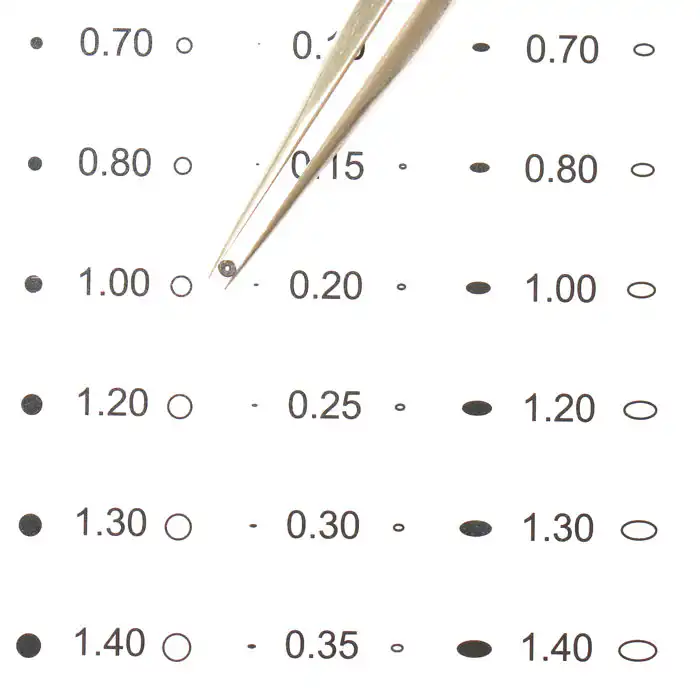
For this product family, OSENC uses 0.8–15 mm as the small-magnet production range based on the largest finished side. If any critical feature drops below 0.8 mm, we move the job into a micro-magnet review. That keeps thin walls, narrow sections, coating build and handling risks from getting buried inside an otherwise ordinary-looking part.
Example: a 10 mm-long magnet with a 0.5 mm critical thickness is not treated like a normal 10 mm part. The 0.5 mm feature drives the manufacturing review.
| OSENC Route | When We Use It | What We Check |
|---|---|---|
| Small Magnet Production | Largest finished side 0.8–15 mm, with no critical feature below 0.8 mm | We review the drawing, magnetization, coating, gap and fit as the main small-magnet route. |
| Micro Magnet Review | Any critical feature below 0.8 mm, even when the overall part is larger | We check the sub-millimeter feature first, including tolerance, coating build, handling and assembly risk, before we quote. |

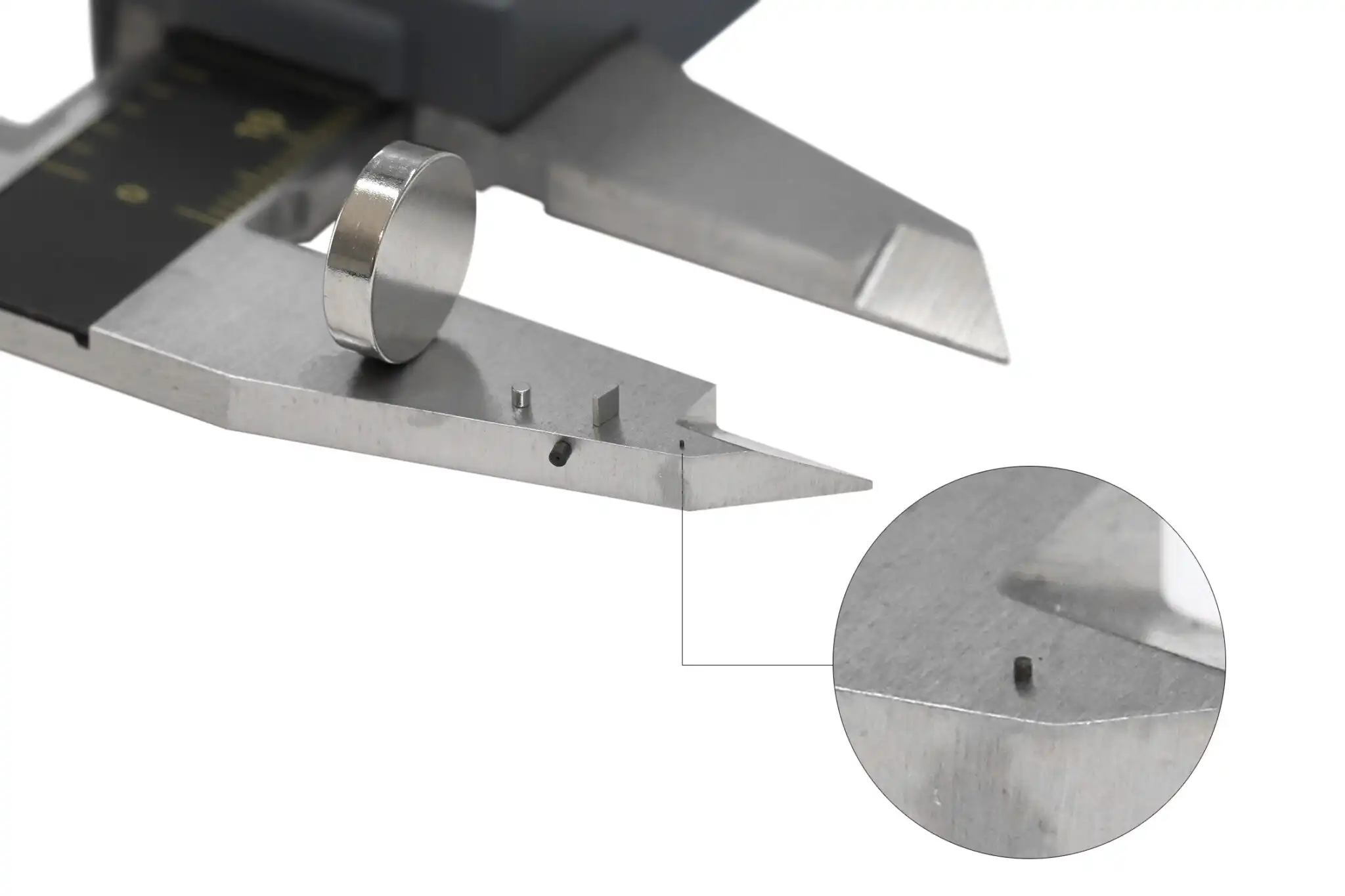
A higher neodymium grade does not automatically fix a weak assembly. On a small magnet, even a small change in thickness, coating or working gap can change the fit and the magnetic result at the working point.
Start with the finished dimensions that must fit the housing, pocket, shaft or mating part. Tell us which dimension is function-critical and whether your drawing dimensions are before or after coating.
Specify which faces must be north and south, or show the required field direction on the drawing. A physically correct magnet with the wrong magnetization direction is still the wrong part.
Adhesive, paint, plastic walls, covers and coatings create distance. If the magnet must hold, sense, actuate or trigger through a gap, include that gap in the RFQ.
Tell us the maximum operating temperature and duty conditions before grade selection. Temperature requirements can change the material-grade decision even when the magnet dimensions stay the same.
Coating is selected around moisture, corrosion exposure, wear, bonding and finished-size requirements. On a small part, the coating should be treated as part of the dimensional stack-up.
NdFeB is brittle. Small parts can chip during separation, feeding or collision, so packaging and assembly handling need to match the magnet size and production method.
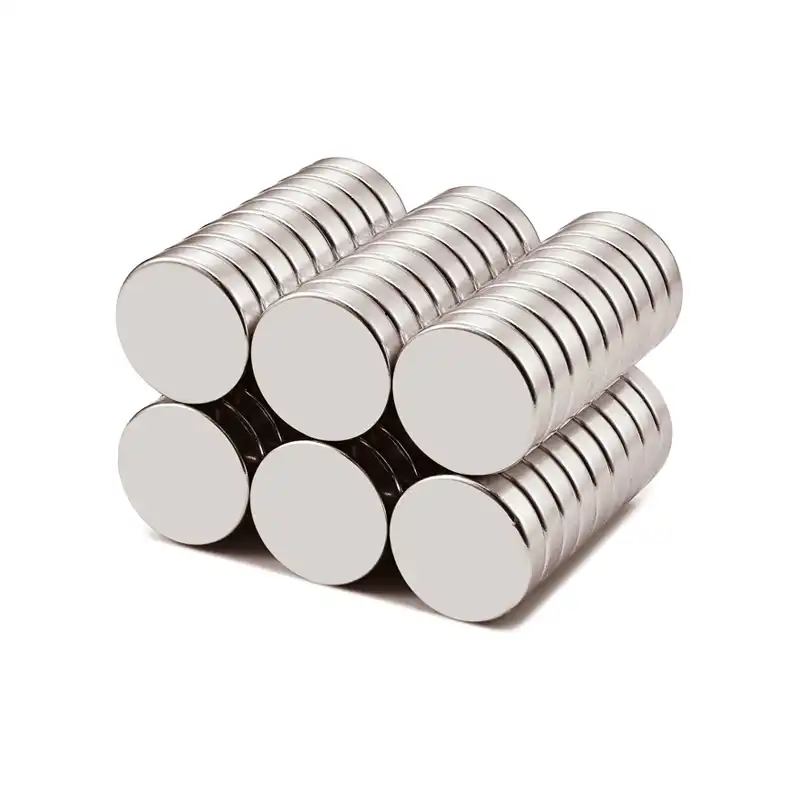
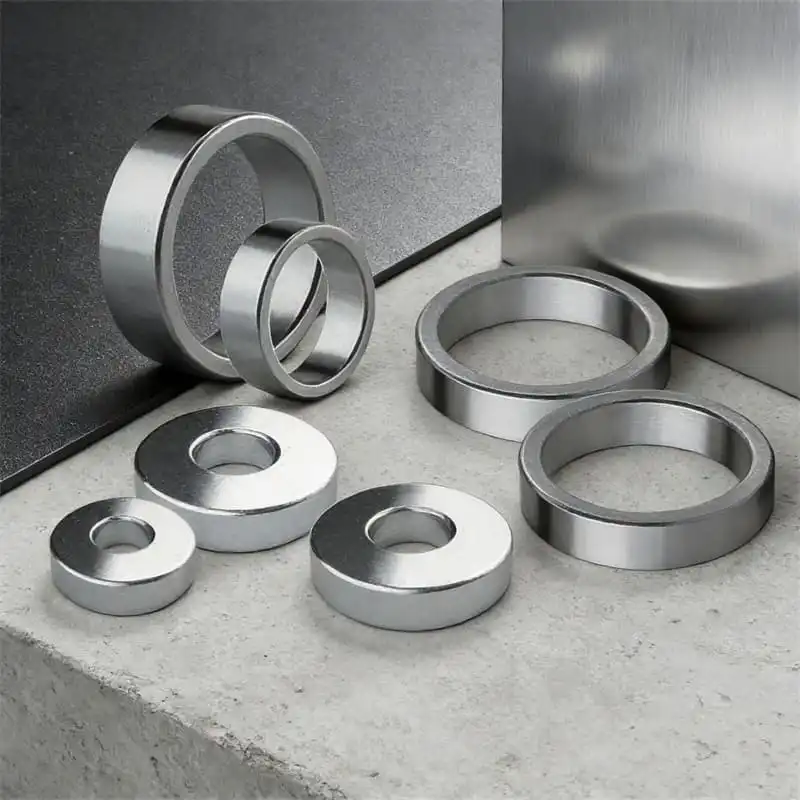
OSENC manufactures small disc, block, ring, cylinder and drawing-defined neodymium magnets. We match the shape to the space in your assembly and the magnetic job the part has to do.
DiscBlock / RectangleRingCylinder / RodThin PiecesCustom Geometry
| Application | What the Magnet Does | What We Need From You |
|---|---|---|
| Sensors & switches | Provides a compact magnetic trigger or position reference. | Sensor position, working gap, pole direction and target switching condition. |
| Compact electronics | Handles closure, positioning, sensing or actuation inside tight spaces. | Available space, nearby parts, cover thickness, coating and assembly method. |
| Small motors & actuators | Provides the magnetic element inside a compact moving or rotating system. | Geometry, pole direction, operating temperature, motion and magnetic target. |
| Closures & positioning | Holds, locates or aligns two parts in a small assembly. | Working gap, mating steel or second magnet, required holding behavior and installation space. |
| Precision OEM assemblies | Fits into a controlled pocket, housing or mechanism where repeatability matters. | Critical dimensions, tolerance stack, orientation, feeding and packaging requirements. |
“I need a strong 5 mm magnet” is not enough to quote the right part. Give us the dimensions, pole direction, gap and working conditions that actually control the assembly.
Length × width × thickness, diameter × thickness, OD × ID × thickness, or your controlled drawing.
Grade if already specified, magnetization direction, target field or holding function, and the actual working gap.
Coating or environment, tolerance-critical dimensions, operating temperature, quantity and any assembly/packaging constraints.
For this product family, OSENC uses 0.8–15 mm as the small-magnet production range based on the largest finished side.
If any critical feature is below 0.8 mm, we use the micro-magnet review even when the overall part is larger. That small feature can control machining, coating, handling and tolerance.
Yes. Send the drawing or finished dimensions, shape, pole direction, coating or environment, critical tolerances and quantity. We build the magnet specification around the real assembly.
No. OSENC selects the final grade after the geometry, working gap, operating temperature and magnetic target are clear. A higher grade cannot fix the wrong shape, wrong pole direction or too much gap.
Because coating adds thickness to every coated surface. On a small part, that build can affect pocket fit, air gap and final dimensions, so we treat coating as part of the finished size.
Send the drawing or finished dimensions, shape, pole direction, grade or performance target, coating or environment, operating temperature, critical tolerances, working gap, mating part and quantity.
Send us the drawing and tell us what the magnet has to do. We check the size, pole direction, coating, temperature, gap and assembly conditions, then lock the production specification around the real assembly.