






Magnesy interesują ludzkość od czasów najwcześniejszych cywilizacji, kiedy odkryto występujące w naturze kamienie magnetyczne. Zainteresowanie to trwa również we współczesnym świecie zaawansowanych magnesów projektowanych inżyniersko. Magnesy są niezbędne w nowoczesnej technice — od urządzeń gospodarstwa domowego po złożoną aparaturę naukową.
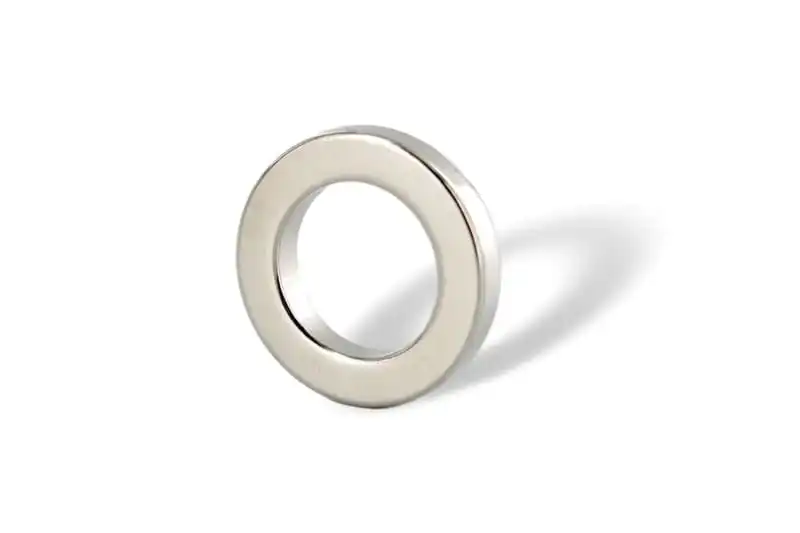
Czym są magnesy pierścieniowe?
Magnes pierścieniowy, jak wskazuje nazwa, ma kształt pierścienia, a właściwie obwarzanka, z otworem pośrodku. Nie jest to wyłącznie kwestia konstrukcji. Otwór umożliwia nasunięcie magnesu na pręt lub wał, tak aby pole magnetyczne oddziaływało wokół tej osi. Taki kształt jest przydatny w małych silnikach, generatorach i sprzęgłach magnetycznych (urządzeniach przenoszących ruch bez bezpośredniego kontaktu). Magnesy pierścieniowe są dostępne w wielu średnicach i grubościach.
W porównaniu ze zwykłymi magnesami sztabkowymi lub blokowymi magnesy pierścieniowe umożliwiają przeprowadzenie przez środek wału, pręta lub śruby bez pogorszenia ich właściwości magnetycznych. Dzięki temu dobrze sprawdzają się w silnikach, generatorach, głośnikach, sprzęcie medycznym i urządzeniach naukowych.
Ze względu na siłę odrywania, wszechstronność i wymiary magnesy pierścieniowe są chętnie wybieranym rozwiązaniem zarówno w energetyce odnawialnej, jak i elektronice użytkowej.
Cechy i właściwości magnesów pierścieniowych
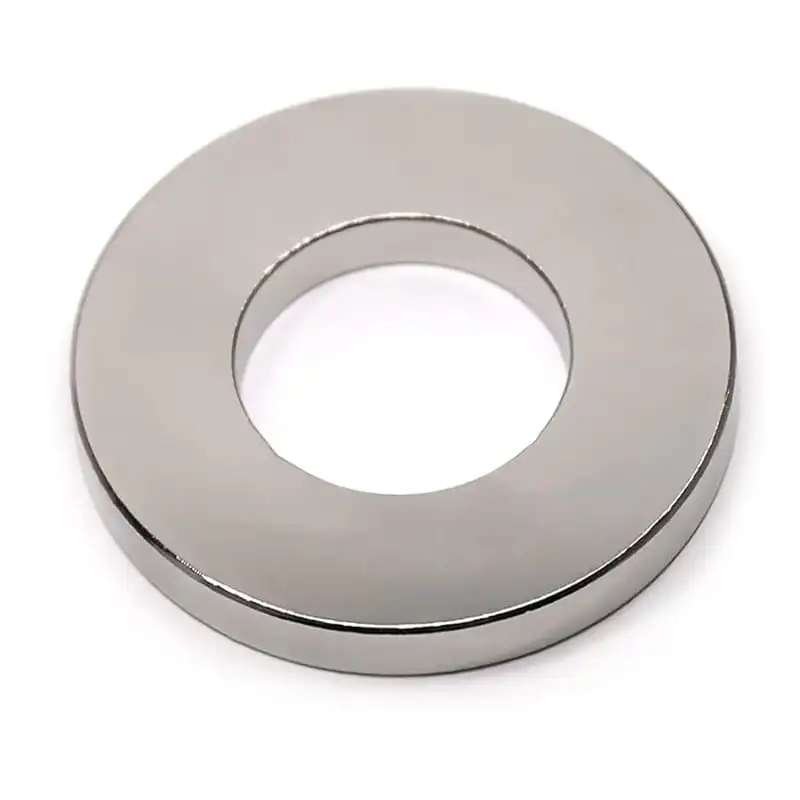
Magnesy pierścieniowe mogą wydawać się prostymi elementami, mają jednak szczególne właściwości, które je wyróżniają. Poniżej przedstawiono szczegółowo ich najważniejsze cechy i właściwości:
Kształt i budowa
Otwór centralny nie oznacza marnowania materiału — ułatwia montaż, zmniejsza całkowitą masę produktu i znajduje zastosowanie tam, gdzie wymagany jest ruch obrotowy lub odpowiednie ustawienie.
Sposoby magnesowania
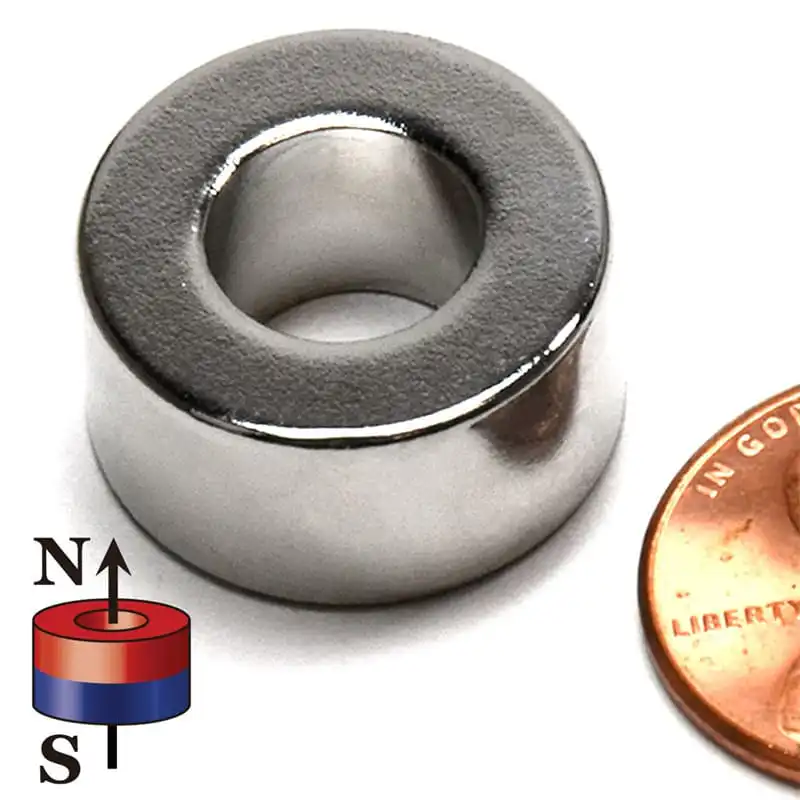
Magnesy pierścieniowe można magnesować na różne sposoby. Przy magnesowaniu osiowym bieguny północny i południowy znajdują się na płaskich powierzchniach. W przypadku magnesowania promieniowego bieguny mają układ obwodowy. Ta elastyczność pozwala spełnić różnorodne wymagania inżynierskie.
Materiały
Zdecydowaną większość magnesów pierścieniowych wytwarza się z neodymu (ndfeB), materiału ceramicznego/ferrytu, samarowo-kobaltowego (SmCo) lub alnico. Każdy z tych materiałów wpływa na siłę magnesu, koszt oraz odporność na czynniki środowiskowe.
Siła magnetyczna
Neodymowe magnesy pierścieniowe są bardzo silne; zwykle należą do najsilniejszych magnesów trwałych dostępnych na rynku. Nawet niewielkie elementy mogą przenosić duże obciążenia. Słabsze magnesy pierścieniowe z materiału ceramicznego również mogą być stosowane w ekonomicznych rozwiązaniach.
Trwałość i stabilność
Ring magnets can withstand high temperatures, resist corrosion, and be magnetically active, depending on the material used.
To sum up, ring magnets are one of the most convenient magnet designs in contemporary technology, due to the combination of hollow structure and strong materials.
Advantages of Ring Magnets
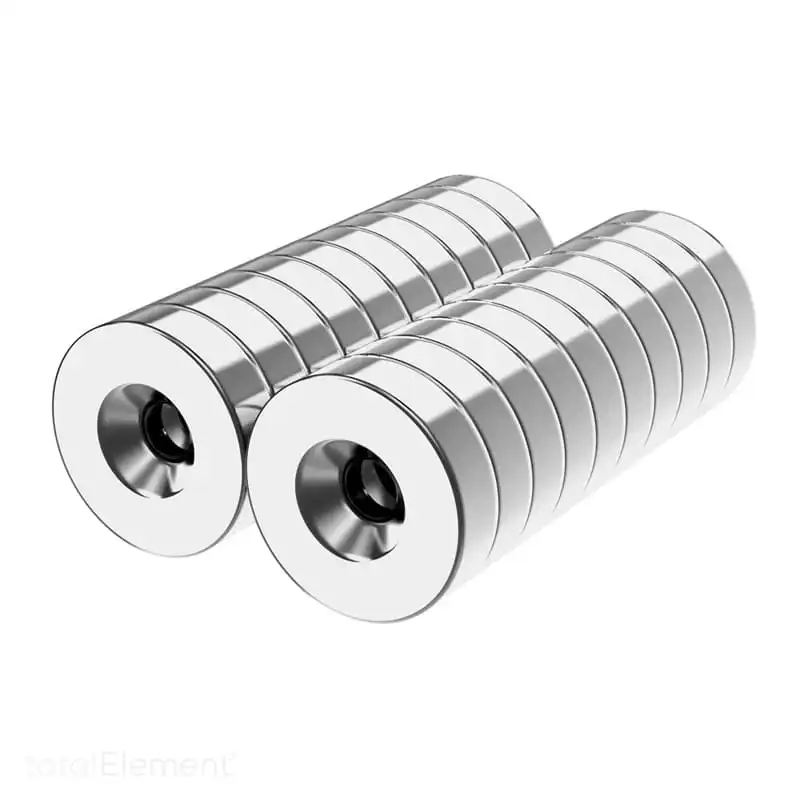
There are several advantages of ring magnets compared to other shapes and designs. We will examine their major strengths in more detail:
1. Strong Magnetic Force
Ring magnets, particularly magnets that are made of neodymium, possess very powerful magnetic fields. They can lift or support objects many times their own weight, although they are small. This is their strength and is applied in situations where precision and power are needed, such as electric generators or motors.
2. Compact design, high performance
The donut shape is not only aesthetic. It’s highly functional. Ring magnets can be easily incorporated into shafts, rods, and rotating machines through the central hole without causing unnecessary space. The small but high-energy design is essential in the current engineering of a high-performance system that should not occupy much space.
3. Durable
The selection of material determines the durability. Ceramic ring magnets do not corrode naturally, whereas the neodymium magnets are generally covered with nickel, zinc or epoxy to ensure that they do not rust. Samarium cobalt magnets are not only resistant to corrosion, but can withstand heat as well. This strength implies that the ring magnets will take years before they lose their magnetism.
4. Multi-Functional
Ring magnets are also the most versatile magnets. They are applicable in speakers, motors, renewable energy systems, medical devices, toys, and even do-it-yourself science projects. Their design allows them to also be useful in industrial machines as well as in common products.
How Do Ring Magnets Work?
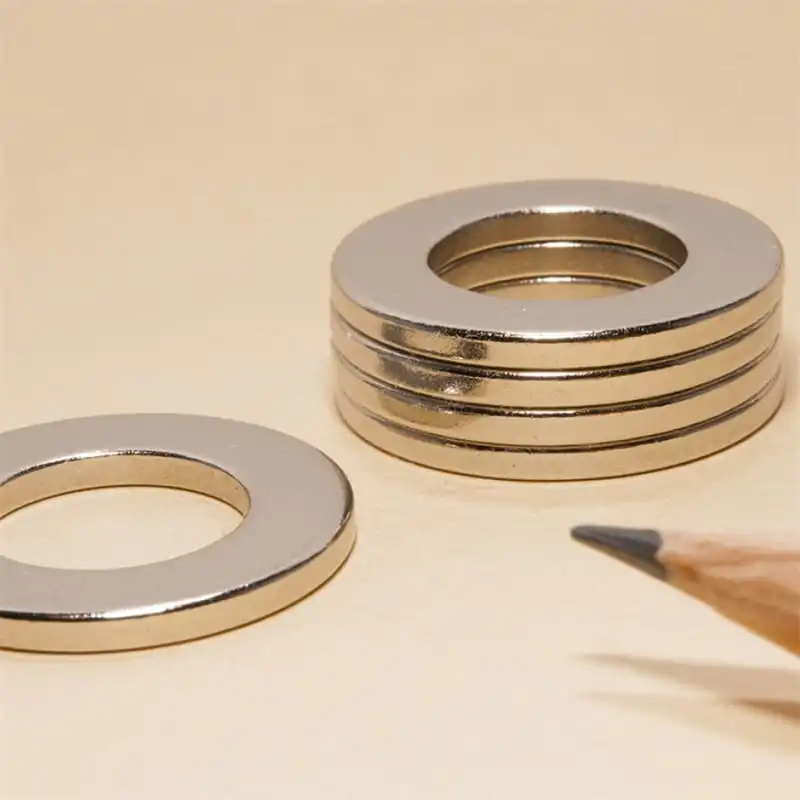
In order to get a sense of how the ring magnets operate, it is necessary to first find out how magnets operate. A magnet generates a magnetic field – an invisible energy that can pull some metals such as iron, nickel, and cobalt.
The odd magnetic field is influenced by the unusual ring shape. In an axially magnetized ring, the north and south poles are on the flat circular faces, forming a tugging force perpendicular to the thickness of the ring. This is a type that is widespread in holding and lifting applications.
Bieguny pierścienia magnesowanego promieniowo znajdują się na jego krawędziach i tworzą kołowe pole magnetyczne. Ten rodzaj magnesowania znajduje zastosowanie zwłaszcza w silnikach i maszynach wirujących, w których pierścieniowy kształt magnesu zwiększa sprawność ruchu.
Przelotowy otwór jest również praktyczny, ponieważ umożliwia prowadzenie przez środek elementów mechanicznych, takich jak pręty, śruby lub wały, bez zakłócania pola magnetycznego. Dzięki temu magnesy pierścieniowe mogą być stosowane w układach z elementami poruszającymi się lub obracającymi.
Zastosowania magnesów pierścieniowych
Magnesy pierścieniowe mają bardzo różnorodne zastosowania w wielu sektorach. Poniżej przedstawiono niektóre z najważniejszych:
1. Zastosowania przemysłowe
Silniki i generatory: Magnesy pierścieniowe odgrywają istotną rolę w silnikach, wspomagając przekształcanie energii elektrycznej w energię mechaniczną. Stosuje się je również w turbinach wiatrowych i generatorach do wytwarzania energii elektrycznej.
Czujniki i przyrządy pomiarowe
Magnesy pierścieniowe stosuje się w czujnikach prędkości, czujnikach momentu obrotowego i innych urządzeniach pomiarowych w celu uzyskania prawidłowych odczytów.
Głośniki
Głośniki: W wielu głośnikach stosuje się magnesy pierścieniowe do wytwarzania dźwięku poprzez wprawianie membran w drgania w reakcji na zmienne sygnały elektryczne.
Urządzenia medyczne
W aparatach MRI i innych urządzeniach diagnostycznych stosuje się silne magnesy pierścieniowe do precyzyjnego obrazowania.
2. Projekty typu „zrób to sam”
Magnesy pierścieniowe znajdują zastosowanie nie tylko w przemyśle — są również powszechnie używane przez hobbystów i konstruktorów. Do typowych zastosowań w projektach DIY należą:
• Budowa silników lub generatorów według własnego projektu.
• Projektowanie doświadczalnych układów lewitacji magnetycznej.
• Stosowanie jako elementy mocujące lub uchwyty do małych narzędzi.
• Science experiment in the classroom to illustrate magnetism.
3. Renewable Energy Projects
Strong magnets are essential to renewable energy systems. Ring magnets are used significantly in:
Turbiny wiatrowe
These are used within generators to generate electricity more efficiently.
In EVs
Ring magnets are commonly used in the motors of EVs so that maximum power is obtained, and at the same time, the size of the motor remains small.
Solar Tracking Systems
In certain solar technologies, ring magnets are used to turn solar panels to allow the maximum amount of sunlight to reach the panel.
How to Choose the Right Ring Magnet?
Not every ring magnet is made equal. It all depends on your project or industry to select the correct one. Here’s what to consider:
1. Materiał magnetyczny
Neodym (NdFeB)
The strongest, however requires a protective coating. Most suitable when it needs to be fast and small.
Ceramic/Ferrite
Inexpensive, rust-resistant, and stronger, but less durable. Economical on the budget.
Samar-kobalt (SmCo)
Hard and very heat and corrosion-resistant. Suited to high temperatures.
Alnico
Not as strong as neodymium or SmCo, but can be used at high temperatures.
2. Magnet Strength
You must know the necessary force needed to pull. In heavy work or industry, neodymium magnets are used. Ceramic magnets can be used in lighter applications.
3. Temperature Considerations
High temperature causes loss of strength in magnets. At temperatures above 80 °C, Neodymium is weak, and SmCo and Alnico are stronger at higher temperatures. Never select without first checking the temperature limits.
4. Magnet Size
The field strength is influenced by the size (outer diameter, inner diameter and thickness). A bigger magnet can produce more power, but might not be suitable in small devices. Select the size to suit your design.
5. Kształt magnesu
Even in ring magnets, there are proportions. A fat ring will pull better than a thin one. Give thought to the trade-off involving size and magnetic power.
Podsumowanie
Ring magnets might look simple, but they are one of the strongest and useful magnet shapes on the market. Their hollow nature and strong properties of magnetism make them indispensable to modern technology.
Ring magnets have found their value in numerous applications, be it in motors and renewable energy, in medical devices, and in DIY work. The correct selection of one is based on factors such as material, strength, size, and operating temperature.
Technology does not stand still, and the need for especially small but powerful solutions will keep increasing, and the ring magnets will stay in the focus of most changes. You might be either an engineer, a student, or even a hobbyist, but knowing about ring magnets can open up new vistas in design and creativity.
Najczęściej zadawane pytania
What is the difference between Neodymium Ring and Ceramic Ring Magnets?
Neodymium magnets are stronger but costly and have to have a coating to prevent rust. Ceramic magnets are also cheaper, weaker, and intrinsically corrosion-resistant.
What are ring magnets made of?
Most are typically neodymium, ceramic/ferrite, samarium cobalt, or alnico engineered magnetic materials.
Are ring magnets strong?
Yes. Even very small neodymium ring magnets are very powerful. Ceramic ones are not that strong, but all-purpose.
What are the common materials used for ring magnets?
The top four include neodymium, ceramic/ferrite, samarium cobalt, and alnico.
Ring vs. disc/square magnets: Which is stronger given the same volume?
When of the same material and size, they are alike in strength. But in rotational systems, ring magnets are the best, and discs or blocks are the best in flat contact surfaces.
What are the limitations of strong magnetic transportation/aviation?
Planes may have sensitive navigation equipment that these very large and strong magnets can interfere with. This is the reason strong neodymium magnets shipped by air must be specially packaged and safety-approved.