







Magnesy neodymowe N52 to wysokoenergetyczne, spiekane magnesy NdFeB stosowane, gdy obwód magnetyczny wymaga dużej energii magnetycznej przy ograniczonej przestrzeni. OSENC produkuje niestandardowe magnesy N52 w kształcie dysków, prostopadłościanów, pierścieni i walców oraz magnesy według rysunku technicznego, z kontrolowanymi wymiarami części gotowej, kierunkiem magnesowania, powłoką i określonymi kryteriami odbioru parametrów magnetycznych.
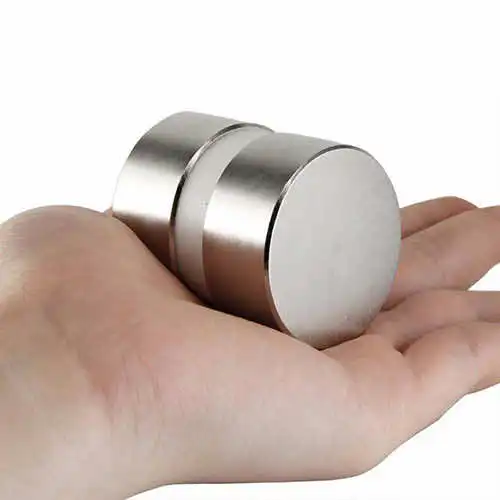
N52 is selected when a design needs high magnetic energy within limited magnet volume. The values below are published N52 material references for engineering comparison. Production acceptance follows the approved material specification, finished-part drawing and agreed order requirements.
| Właściwość | Published N52 Reference | How OSENC Uses It |
|---|---|---|
| Remanence, Br | 1,42–1,46 T | Used as a material-level reference when evaluating N52 for the magnetic circuit. |
| Intrinsic coercivity, HcJ | ≥ 955 kA/m (≥ 12 kOe) | Reviewed when operating temperature or opposing demagnetizing fields affect grade selection. |
| Coercivity, HcB | ≥ 836 kA/m (≥ 10.5 kOe) | Considered together with the demagnetization curve and working point. |
| Maximum energy product, (BH)max | 382–414 kJ/m³ (48–52 MGOe) | Supports designs that need high magnetic energy from a compact magnet volume. |
| Temperature reference | Published standard-N52 references commonly fall around 60–80°C; N52M references can reach 100°C under defined conditions | Continuous temperature, peak temperature, geometry and working point are reviewed before the final grade is locked. |
Reference note: These material values are not a blanket finished-part guarantee. When Br, HcB, HcJ or (BH)max is an acceptance item, the requirement should be written into the RFQ and controlled by the approved production specification.
OSENC manufactures custom N52 neodymium magnets around the finished assembly requirement rather than treating the grade number as a complete specification. Geometry, magnetization, coating, operating condition and critical magnetic output are reviewed together before quotation.
| Item | OSENC Manufacturing Scope | What to Define in the RFQ |
|---|---|---|
| Kształt | Geometrie dyskowe, blokowe, pierścieniowe, walcowe i zgodne z rysunkiem | Finished dimensions, holes, radii, chamfers and critical interfaces |
| Klasa | N52 selected against the magnetic and operating requirement | N52 requirement or target magnetic performance |
| Magnesowanie | Axial, diametrical and drawing-defined configurations | Magnetization direction or pole drawing |
| Powłoka | Ni-Cu-Ni, cynk, powłoka epoksydowa i technologie powlekania dostosowane do projektu | Humidity, chemical exposure, assembly process and appearance requirement |
| Dimensions | Manufactured to the approved finished-part drawing | Nominal dimensions, tolerances and mating-part interfaces |
| Magnetic performance | Flux, pull force or torque requirements can be linked to defined conditions | Target value plus measurement position, fixture or operating geometry |
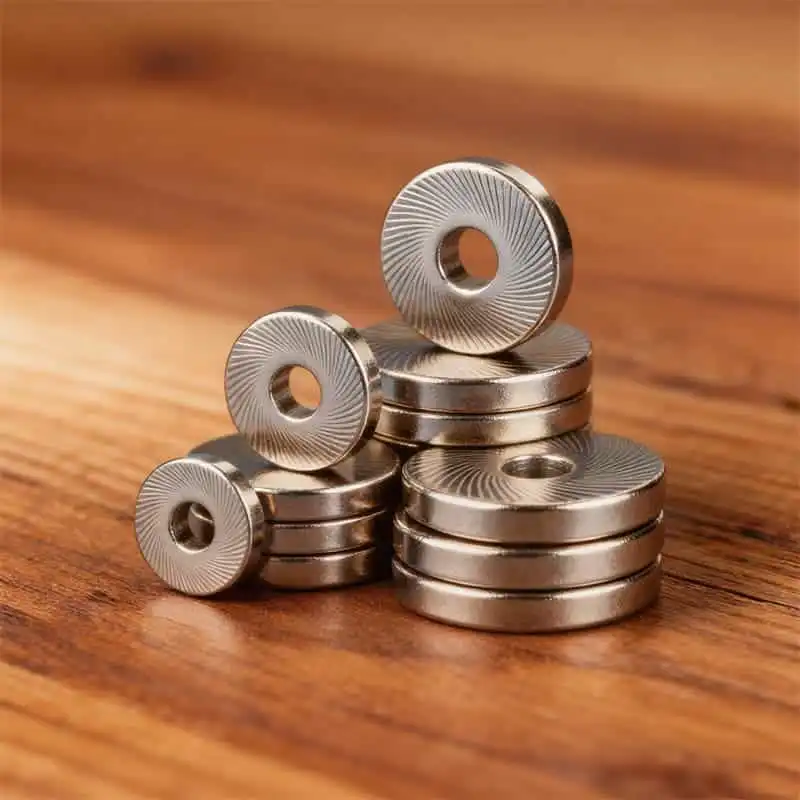
N52 performance depends on more than the material grade. OSENC controls the finished magnet around the drawing, magnetization, coating and agreed magnetic acceptance conditions so the part is defined for the actual assembly rather than by grade name alone.
| Wymaganie | OSENC Production Control |
|---|---|
| Material requirement | The N52 requirement is linked to the approved material specification used for the order. |
| Finished dimensions | Nominal dimensions and critical tolerances are controlled by the approved finished-part drawing. |
| Magnesowanie | Direction or pole layout is defined before production so the finished magnet matches the assembly requirement. |
| Surface flux density | Critical flux requirements are linked to a defined measurement position and finished geometry when specified. |
| Pull force | Critical pull requirements are defined with the relevant fixture, steel condition, pull direction and gap or contact condition. |
| Powłoka | Surface protection is selected around corrosion exposure, assembly method and finished dimensional interfaces. |
| Final acceptance | The approved drawing and agreed inspection or magnetic acceptance criteria become the production basis. |
N52 is most useful when higher magnetic energy density solves a real space or performance constraint. OSENC compares the grade against the magnetic circuit rather than treating N52 as automatically better than every lower NdFeB grade.
| Design Condition | OSENC N52 Decision |
|---|---|
| Limited magnet volume | Prefer N52 when the circuit needs higher magnetic energy within the available space. |
| Maximum energy per unit volume matters | Prefer N52 when the working point allows the higher-energy grade to create a useful output advantage. |
| Larger magnet volume is acceptable | Compare N42, N45 or N48 against the same finished performance target before locking N52. |
| Higher operating temperature | Review the working point and a higher-coercivity grade direction before assuming standard N52 is the correct choice. |
| Cost dominates the design | Optimize magnet geometry and the steel return path before paying for energy density the assembly does not use. |
| Large air gap or weak steel return path | Improve the magnetic circuit first; increasing grade alone may not recover the required finished performance. |

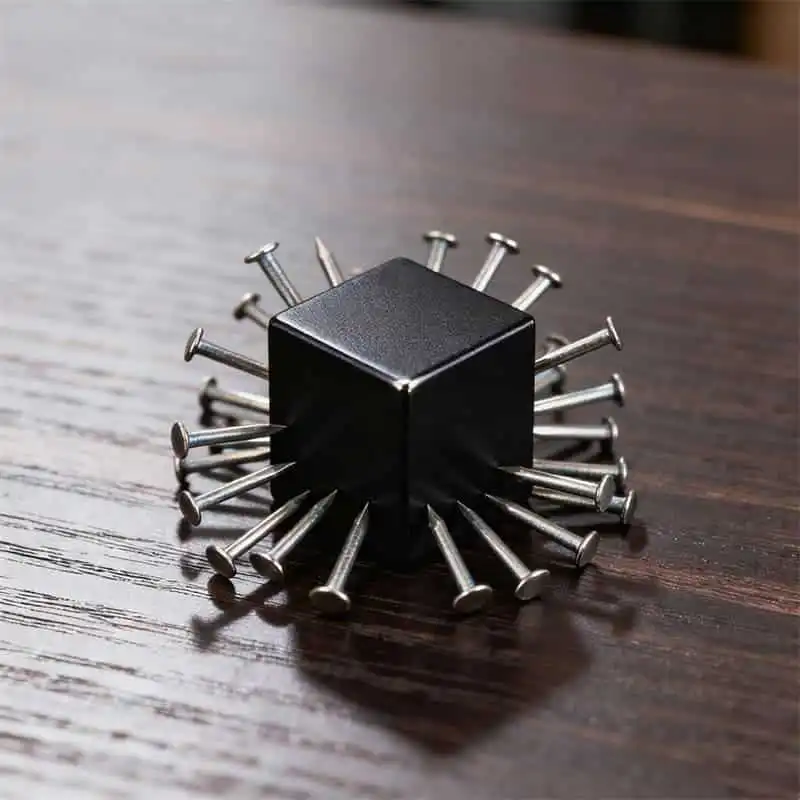
Sintered NdFeB is brittle and corrosion-sensitive compared with ordinary structural metals. That means the N52 grade, magnetic working point and surface protection must be treated as separate design decisions.
OSENC reviews the relevant operating temperature, corrosion exposure, assembly method and risk of magnet-to-magnet or magnet-to-steel impact before the finished specification is locked. If the application condition exceeds what standard N52 can support, the grade direction or magnetic circuit should be changed instead of relying on the N52 label alone.
For air shipment, packaged magnetic field is treated as a shipment-configuration requirement. Packaging and shielding are reviewed for the actual shipment rather than inferred from coating or magnet size.
The useful question is not whether a supplier can quote “N52.” It is whether the finished magnet can be defined around the assembly, drawing and acceptance condition. OSENC keeps those requirements connected from RFQ through production specification.
Finished dimensions, critical interfaces and magnetization are built around the approved part drawing instead of a generic stock-magnet description.
When flux, pull force or torque matters, the target is linked to a defined measurement position, fixture or operating geometry rather than a standalone number.
Grade, geometry, coating and the magnetic circuit are reviewed together so N52 is used where it creates actual design value.
OSENC reviews the geometry, grade, magnetization, coating, operating condition and magnetic acceptance criteria before quotation. A finished-part drawing is the fastest route to a production-ready custom N52 magnet specification.
Get an N52 Magnet QuoteNo. N52 is a high-energy grade, and OSENC selects it when its energy density fits the magnetic circuit and operating conditions. A higher grade number is not automatically the better engineering choice for every assembly.
No single grade number defines finished pull force. Higher-energy material can increase output in the same magnetic circuit, but pull force also depends on magnet dimensions, air gap, contact area, steel thickness, return path and the test method.
OSENC does not lock standard N52 by temperature alone. Published references vary around 60–80°C depending on material source, geometry and working point. Continuous and peak temperature should be included in the RFQ so the finished design can be reviewed against the actual operating condition.
Coating selection depends on corrosion exposure, assembly process, coating-damage risk and dimensional interfaces. Ni-Cu-Ni, zinc, epoxy and project-specific coating routes can be reviewed with the finished-part drawing.
Yes. OSENC manufactures N52 magnets in disc, block, ring, cylinder and drawing-specific geometries. Finished dimensions, critical interfaces, coating and magnetization direction are reviewed together before quotation.
Send the drawing, finished dimensions, magnetization, coating, operating temperature, application, quantity and any critical magnetic-performance target. When pull force, flux or torque is an acceptance item, include the test condition or working geometry.
Send OSENC the finished-part drawing, magnetic requirement and operating conditions. We review the N52 grade, geometry, coating and magnetization as one production specification before quotation.
Prześlij rysunek techniczny