






Znajdziesz tu odpowiedzi na większość typowych pytań dotyczących magnesów i magnetyzmu, w tym jego historii, materiałów i właściwości magnetycznych, orientacji magnetycznej, biegunów magnetycznych oraz innych zagadnień. Więcej informacji technicznych na ten temat zawiera nasz poradnik projektowy Magnetics 101.
Poproś o wycenę lub zadzwoń do nas jeszcze dziś, aby sprawdzić, jak możemy pomóc w realizacji Państwa specjalistycznych wymagań. MagnetShop.com ma również w magazynie duże ilości magnesów neodymowych, samarowo-kobaltowych, AlNiCo, ceramicznych i elastycznych, które można kupić online.
1. Historia

Starożytni Grecy i Chińczycy odkryli, że niektóre rzadko spotykane kamienie są naturalnie namagnesowane. Nazywano je magnetytami. Kamienie te w niezwykły sposób przyciągały drobne kawałki żelaza. Zaobserwowano również, że zawieszone swobodnie na sznurku lub unoszące się na wodzie zawsze wskazywały ten sam kierunek. Magnesy wykorzystywano jako prymitywne kompasy — pierwsi żeglarze polegali na nich przy wyznaczaniu kierunku poruszania się po morzu.
Termin „magnes” pochodzi od Magnezji, regionu w Tesalii w Grecji, gdzie prawdopodobnie wydobyto pierwszy magnetyt.
Na przestrzeni lat magnesy ewoluowały do znanych obecnie magnesów o dużej sile. Odkryto, że tworzenie stopów różnych materiałów pozwala uzyskać efekty podobne do występujących w naturalnych skałach magnetytowych, a także zwiększyć stopień namagnesowania.
Pierwsze magnesy wytworzone przez człowieka wynaleziono jednak w XVIII wieku. Postęp w opracowywaniu silniejszych stopów magnetycznych był bardzo powolny aż do lat 20. XX wieku, kiedy powstały stopy magnetyczne AlNiCo (stopy niklu, aluminium i kobaltu). W latach 50. i 70. XX wieku wynaleziono odpowiednio magnesy ferrytowe i magnesy ziem rzadkich. Od tego czasu znaczenie magnetyzmu w nauce gwałtownie wzrosło, a materiały magnetyczne o dużej mocy umożliwiły konstruowanie miniaturowych urządzeń o wysokiej wydajności.
2. Podstawy wiedzy o magnesach i magnetyzmie
Czym właściwie jest magnes?

Magnesy wytwarza się przez umieszczenie substancji magnetycznej, zwykle żelaza lub stali, w silnym polu magnetycznym. W ten sposób można uzyskać magnesy trwałe, magnesy tymczasowe oraz elektromagnesy.
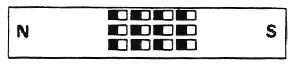
W materiałach łatwo ulegających namagnesowaniu, takich jak żelazo, stal, nikiel i kobalt, atomy są uporządkowane w niewielkie obszary zwane domenami. Domeny są zbyt małe, aby można je było zobaczyć pod mikroskopem, lecz każda z nich zawiera miliardy miliardów atomów i zachowuje się jak miniaturowy magnes. Po umieszczeniu materiału magnetycznego w silnym polu magnetycznym poszczególne domeny, zwykle zorientowane w różnych kierunkach, stopniowo ustawiają się zgodnie z kierunkiem pola. Obejmują przy tym również sąsiednie domeny. Gdy większość domen zostanie zorientowana zgodnie z polem, materiał staje się magnesem.
Domeny magnetyczne przed namagnesowaniem
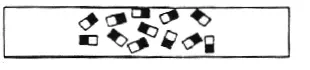
Domeny magnetyczne po namagnesowaniu
Jak właściwie działa magnes?
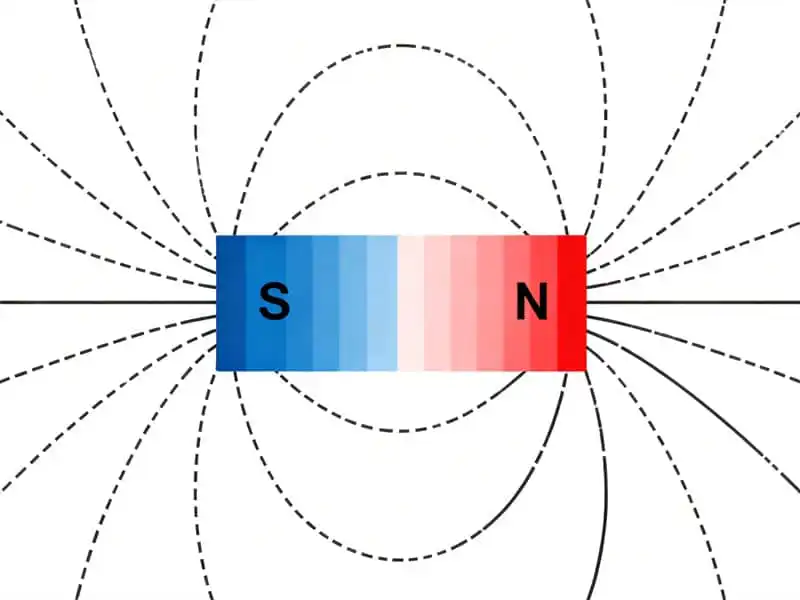
Magnesy oddziałują w następujący sposób:
- Przyciągają do siebie niektóre substancje, w tym żelazo, nikiel, kobalt, niektóre stale i inne stopy.
- Oddziałują na inne magnesy siłą przyciągającą lub odpychającą — bieguny jednoimienne odpychają się, a różnoimienne przyciągają.
- Oddziałują na przewodniki elektryczne, gdy magnes i przewodnik są w ruchu.
- Wpływają na tor ruchu cząstek naładowanych elektrycznie w przestrzeni swobodnej.
W wyniku tych oddziaływań magnesy przekształcają energię z jednej postaci w inną bez utraty własnej energii. Funkcje magnesów obejmują:
- Przekształcanie energii mechanicznej w mechaniczną, np. poprzez przyciąganie i odpychanie.
- Przekształcanie energii mechanicznej w elektryczną, np. w generatorach i mikrofonach.
- Przekształcanie energii elektrycznej w mechaniczną, np. w silnikach, głośnikach oraz przy odchylaniu cząstek naładowanych.
- Przekształcanie energii mechanicznej w cieplną, np. w urządzeniach wykorzystujących prądy wirowe i moment histerezowy.
- Rezonans magnetyczny, urządzenia wykorzystujące efekt Halla oraz magnetorezystancję.
Jak produkuje się magnesy?
Współczesne materiały magnetyczne wytwarza się przez odlewanie, prasowanie i spiekanie, spajanie pod ciśnieniem, formowanie wtryskowe, wytłaczanie lub kalandrowanie. Po wytworzeniu magnesy zwykle wymagają dodatkowej obróbki, takiej jak szlifowanie lub inne operacje obróbki mechanicznej, a następnie montażu w zespół wyższego rzędu. Więcej informacji o obróbce i montażu na zamówienie można znaleźć na naszej stronie poświęconej produkcji i montażowi.
Jakie są rodzaje magnesów?
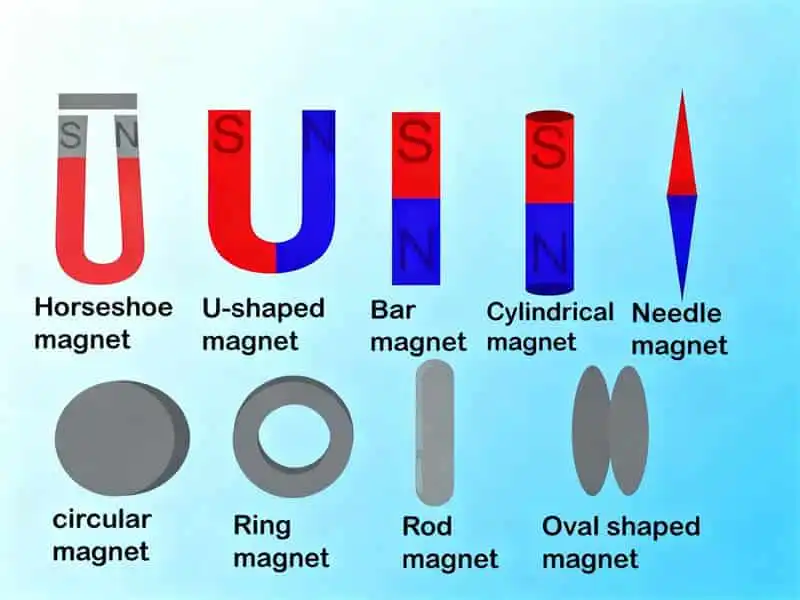
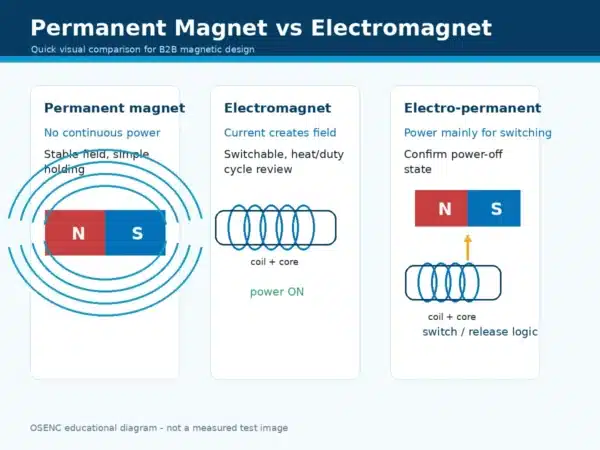
Istnieją trzy kategorie magnesów: magnesy trwałe, magnesy tymczasowe i elektromagnesy.
Magnesy trwałe nie wymagają zewnętrznego źródła pola magnetycznego ani energii elektrycznej do jego wytwarzania.
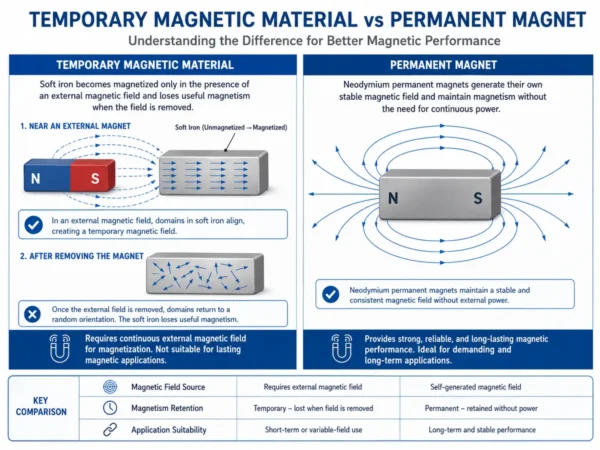
Magnesy tymczasowe wykazują właściwości magnetyczne po połączeniu ze źródłem pola magnetycznego lub w jego pobliżu, lecz tracą je po usunięciu tego źródła.
Elektromagnesy wymagają energii elektrycznej, aby działać jak magnes.
Do wytwarzania magnesów trwałych wykorzystuje się wiele rodzajów materiałów magnetycznie trwałych, z których każdy ma własne szczególne cechy. Każdy materiał występuje w szeregu klas o nieznacznie różniących się właściwościach, mimo takiego samego składu.
Z czego wykonuje się magnesy trwałe?
Współczesne magnesy trwałe wykonuje się ze specjalnych stopów, które opracowano w wyniku badań ukierunkowanych na uzyskanie lepszych magnesów. Obecnie najbardziej rozpowszechnione materiały na magnesy trwałe to stopy aluminium, niklu i kobaltu (AlNiCo), materiały strontowo-żelazowe (ferryty, czyli materiały ceramiczne), neodymowo-żelazowo-borowe (nazywane również magnesami neodymowymi lub supermagnesami) oraz materiały magnetyczne samarowo-kobaltowe. Rodziny materiałów samarowo-kobaltowych i neodymowo-żelazowo-borowych określa się łącznie jako materiały ziem rzadkich. Więcej informacji: Jak powstają magnesy neodymowe?
Czym są magnesy ziem rzadkich?
Magnesy ziem rzadkich są wykonane z pierwiastków należących do grupy ziem rzadkich. Najpopularniejsze typy magnesów ziem rzadkich to magnesy neodymowo-żelazowo-borowe (magnesy neodymowe) oraz samarowo-kobaltowe (magnesy SmCo).
Co oznacza pojęcie magnesu tymczasowego?
Słabe pole wystarcza do łatwego namagnesowania miękkiego żelaza i niektórych stopów żelaza, takich jak permaloj (stop żelaza i niklu). Po usunięciu pola materiały te tracą jednak właściwości magnetyczne. Dzięki temu dobrze sprawdzają się jako magnesy tymczasowe, na przykład w telefonach i silnikach elektrycznych.
Czym jest elektromagnes?
Elektromagnesy stosuje się tam, gdzie potrzebne są magnesy o bardzo dużej mocy. Elektromagnes powstaje przez umieszczenie metalu w postaci rdzenia wewnątrz cewki z przewodu, przez który płynie prąd elektryczny. Prąd płynący przez cewkę wytwarza pole magnetyczne. Moc elektromagnesu zależy od natężenia prądu elektrycznego i liczby zwojów przewodu. Jego biegunowość zależy od kierunku przepływu prądu. Podczas przepływu prądu rdzeń może działać jak magnes, jednak po wyłączeniu prądu właściwości magnetyczne natychmiast zanikają. Elektromagnesy są stosowane w silnikach elektrycznych, telewizorach, pociągach Maglev, telefonach, komputerach i większości innych współczesnych urządzeń.
Czym są prądy wirowe w magnetyzmie?
Są to prądy elektryczne indukowane wskutek ruchu pola magnetycznego względem przewodnika elektrycznego znajdującego się w zasięgu tego pola. Prądy wirowe wytwarzają z kolei pole magnetyczne przeciwdziałające względnemu ruchowi pierwotnego pola magnetycznego i przewodnika elektrycznego.
Ile zazwyczaj kosztują magnesy?
Koszty poszczególnych materiałów magnetycznych mogą się znacznie różnić. Poniżej podano orientacyjne ceny magnesów.
Uwaga: koszty podane w tej kolumnie są wartościami względnymi i dotyczą dużych ilości materiałów magnetycznych, które nie wymagają specjalnej obróbki ani nie mają innych szczególnych cech.
W przeliczeniu na funt magnesy neodymowe mogą być wyjątkowo drogie w porównaniu ze stopami miedzi. Nie są jednak aż tak kosztowne w przeliczeniu na BHmax. Silniejsze pole magnetyczne pozwala znacznie zmniejszyć wymiary całego urządzenia, w którym zastosowano magnes. Przekłada się to na oszczędności przemawiające za zastosowaniem silniejszych materiałów magnetycznych.
Czy istnieją normy branżowe dotyczące magnesów?
Tak. Stowarzyszenie Producentów Materiałów Magnetycznych (MMPA) oraz Stowarzyszenie Dystrybutorów i Wytwórców Magnesów (MDFA) ustanowiły odpowiednie normy. Oba stowarzyszenia działają obecnie pod nazwą International Magnetics Association. Poniżej dla wygody przedstawiono wybrane publikacje i normy opracowane przez te organizacje.
Rodzaj zastosowania: Należy określić, czy magnes będzie służył do przytrzymywania, podnoszenia, separacji, przemieszczania, detekcji czy do innego celu.
Preferowany kształt magnesu: Na przykład dysk, pierścień, prostopadłościan, walec, kula lub geometria niestandardowa.
Wymagane wymiary magnesu: Podaj dokładne wymiary, takie jak średnica, długość, szerokość, wysokość i grubość.
Wymagania dotyczące tolerancji: Określ dopuszczalną w danym zastosowaniu odchyłkę wymiarową.
Środowisko pracy: Należy uwzględnić warunki, takie jak wysoka temperatura, narażenie na wilgoć, użytkowanie na zewnątrz lub wewnątrz pomieszczeń oraz kontakt z materiałami korozyjnymi.
Wymagana siła magnetyczna: Określ wymaganą siłę odrywania, wartość indukcji w gaussach lub klasę magnesu (np. N35, N42, N52). (Dowiedz się więcej o Klasy magnesów)(Magnesy N42, N45 i N52, Magnes N35 a N52)
Ograniczenia budżetowe: Jeśli cena magnesu nie może przekroczyć określonego poziomu, pomoże to ustalić, które materiały lub klasy magnesów będą odpowiednie.
Wymagana ilość: Określ, czy potrzebne są pojedyncze próbki, małe partie czy duże ilości produkcyjne.
Zrozumienie podstaw magnetyzmu wymaga materiałów o przewidywalnych właściwościach. Osnec produkuje magnesy o powtarzalnych parametrach w zakresie biegunowości, rozkładu pola i reakcji materiału, dzięki czemu nadają się one do objaśniania podstawowych zjawisk. Studenci i inżynierowie mogą obserwować jednorodny rozkład pola, co ułatwia prezentowanie i analizowanie podstawowych zasad przyciągania, odpychania i orientacji.
3. Zrozumienie siły magnetycznej
Jak długo magnes zachowuje swoją siłę?
Magnes dłużej zachowa swoje właściwości magnetyczne, jeśli przedmiot, w którym się znajduje, będzie przechowywany z dala od czynników oddziałujących na niego niekorzystnie, takich jak linie elektroenergetyczne, inne magnesy czy wysoka temperatura.
Jakie czynniki mogą wpływać na siłę magnesu?
Na siłę magnesu mogą wpływać następujące czynniki:
- Wysoka temperatura
- Radiation
- Powerful electric currents near the magnet.
- Other magnets in proximity.
- Unless they are coated, neodymium magnets will corrode in humid environments with a high level of humidity.
- Modern magnet materials are immune to shock and vibration, unless it is great enough to cause mechanical damage to the material.
Do magnets lose their strength over time?
Contemporary magnet substances do not lose a very limited portion of their magnetism with time. In the case of samarium cobalt magnets, e.g., this has been demonstrated to be less than 1 percent in ten years.
Which types of magnets are the most powerful?
The most powerful types of magnets in the market today are the rare-earth magnets. Among the rare-earths, the strongest are those made of neodymium. At high temperatures (around 150 °C or more), however, samarium cobalt magnets can also be stronger than neo magnets, depending on the magnetic circuit.
What are superconducting magnets?
These are magnets of the strongest kind. They do not even require a metal core; instead, they consist of coils of wire composed of special metal alloys that turn superconductors when exposed to extremely low temperatures.
Can an existing magnet be made stronger?
When a magnet has become fully magnetized, it is said to be saturated and can no longer be strengthened. Magnets, in that case, are like buckets of water: when full, they cannot be made any fuller.
Is it possible to remagnetize a magnet that has lost its magnetic properties?
Most magnets can be re-magnetized back to their original strength, provided the material is not too hot.
How is a magnet’s strength or power defined?
The strength of a magnet is most commonly measured by the use of Gauss meters, magnetometers, or pull-testers. Gauss meters are measured in Gauss; Magnetometers in Gauss or any arbitrary unit (it is easy to compare one magnet to another); and pull-testers in pounds and kilograms, or other units of force. A sophisticated measurement of magnets is also made using Helmholtz Coils, search coils, and permeameters.
Special Gauss meters may cost up to a few thousand dollars. Integrated Magnetics stocks a few kinds of Gauss meters between 400 and 1500 apiece. Contact us if you wish to know more about them or place an order.
Suppose I have an NdFeB magnet having a Br of 12,300 Gauss. Will I be able to measure 12,300 Gauss on its surface?
No. The measurement of the Br value is done under closed-circuit conditions. A closed-circuit magnet is, however, of little use. Practically, you will find a field under 12,300 Gauss in the near vicinity of the magnetic surface. Whether the magnet contains any steel or not, the distance between the measurement point and the surface, and the size of the magnet will determine the real measure (assuming that the measurement is being done at room temperature).
In a few examples, a 1″ diameter Grade 35 neodymium magnet that is ¼” long will measure approximately 2,500 Gauss when 1/16″ away from the surface, and 2,200 Gauss when 1/8″ away from the surface.
4. Magnetic Fields and Their Behaviour
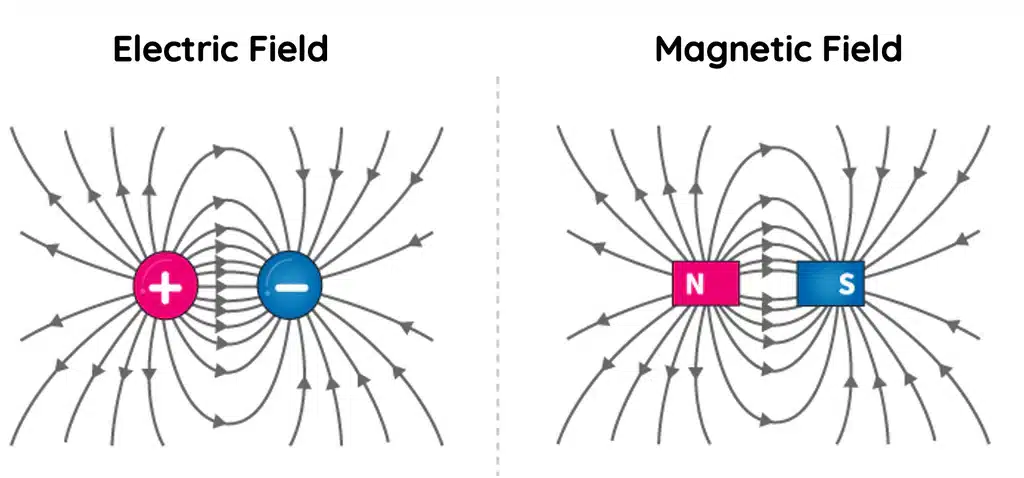
What is the strength of the magnetic field of the Earth?
The earth has a surface field strength of approximately 0.5 gauss, which can range up to 10 per cent depending on the strength of the crustal field. Between 0.85 and 0.45 is the range that is available in the world. The changes can be between 1% to 5% long lasting between a few hours and a full day, as a result of the geomagnetic storms.
What is the formula that describes the dependence of a magnetic field on distance?
The intensity of a magnetic field is decreasing more or less exponentially with distance.
The following is one illustration of the drop-off with distance of the field (in Gauss) of a samarium cobalt Grade 18-disc magnet 1/2″ long and 1″ in diameter:
What is the field strength equation with respect to distance?
In the case of a circular magnet with radius R and length L, the field Bx in the centerline of the magnet at a distance X from the surface is given by the following expression, where Br is the remaining induction of the substance:
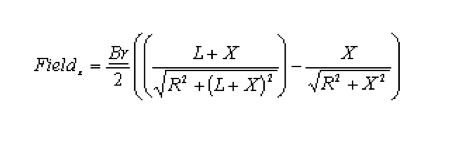
Field strength equation
It is also possible to use other formulae to compute the field of different other rectangular magnets and other rectangular magnets. Calculate self-field levels using our online calculators.
What can I use to block a magnetic field?
The only materials that can block a magnetic field are those attracted to a magnet. The magnetic field will be partially or even blocked in its entirety, depending on the thickness of the blocking piece.
For field mapping, Osnec magnets produce clean and well-defined magnetic fields that work well with Hall-effect sensors and visualization tools. This stable pattern makes them suitable for practical demonstrations and precision testing.
5. Magnetic Poles and Their Definitions
What are magnetic poles?
The surfaces, where the invisible lines of magnetic flux radiate out of, and the invisible lines of magnetic flux reenter the magnet, are known as magnetic poles.
What are the conventional definitions of the North and South poles?
A north pole is a pole of a magnet in which when it is left to move freely it tends to go towards the north pole of the earth. Stated differently, the north pole of a magnet will be in pursuit of the north pole of the Earth. Likewise, the south pole of the magnet follows the south pole of the Earth.
Can a specific pole be identified?
Yes, it can be marked top or the bottom of a magnet, depending upon what is specified.
How in the world do you know it is the North Pole when there is no sign of it?
You can’t tell by looking. You know by bringing a compass near the magnet. The tip of the needle, which usually moved towards the north pole of the Earth, would be directed towards the south pole of the magnet.
6. Magnetic Flux and How It Behaves
How do lines of magnetic flux behave in space?
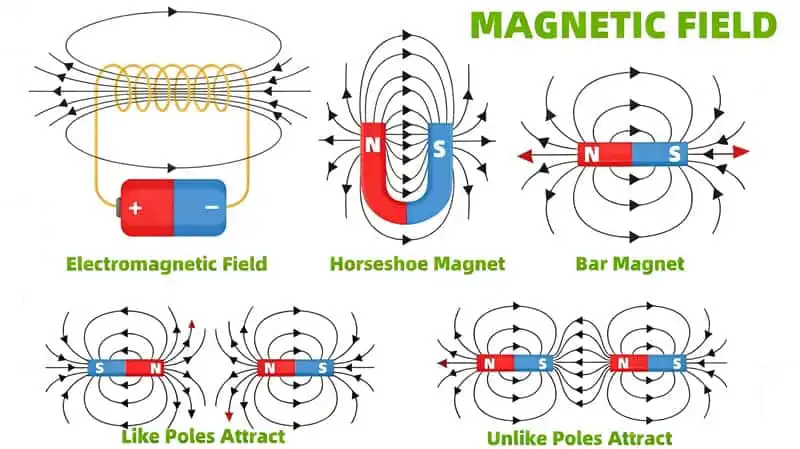
The forces are three-dimensional as lines and surround a bar magnet on each side.
Opposites repel, and the unlike opposites attract. Two magnets with opposite poles increase the force lines, which become united on coming into contact, and the two magnets attract.
As the similar poles of a magnet are close another line of force is pushed away, and the magnet repels another.
Controlling flux density is a major challenge in rare-earth magnets. Brands like Osnec perform thermal-cycle testing and flux stability analysis to ensure their magnets maintain consistent flux even under mechanical or temperature stress.
7. Magnetic Orientation and Easy Axes
What does “direction of orientation” mean in magnets?
The majority of modern magnet materials are grained; they can be most easily maximally magnetized only in one direction. This is the easy axis, or the orientation direction, or the axis.
Un-oriented magnets (also called “Isotropic magnets”) are far weaker compared to oriented magnets, and may be made to be magnetized in any direction. Oriented magnets (or as they are sometimes called, Anisotropic magnets) are not directed everywhere – they are preferentially oriented in a direction they are supposed to be magnetized.
Whether axial, diametrical, or radial orientation is required, Osnec manufactures magnets with tightly controlled orientation tolerances. This consistency improves the overall performance of assemblies and rotational systems.
8. Key Magnetic Characteristics
Three major properties of magnets include:
Residual Induction: Assuming the symbol is Br, and in units of Gauss, this is an indication of the strength of the magnet that it could be.
Coercive Force: Since Hc is a symbol and is determined in Oersteds, this is a measure of the toughness of the task of de-magnetizing the magnet.
Maximum Energy Product: Using the various designations, BHmax, abbreviated as bhmax, the measurement unit being Gauss-Oersteds, is an indicator of the amount of magnet material needed to project a specified amount of magnetic flux.
9. Magnetic Properties of Common Materials
What are the characteristics of the common magnet materials?
The following are the three significant characteristics of magnets of some of the most frequently used types of magnets today:
How can this information be used in practice?
Given the size of the magnet, you can get an approximation of the amount of the magnetic flux various materials will project at a particular distance. This information may also be used to compare a material with another.
Example: What is the difference in flux that a neodymium grade 35 magnet will project as compared to a ceramic grade 5 of the same size at a given distance? Simply divide the Br of the neo 35 by the Br of ceramic 5 (12300/3950) to get 3.1. This means that the neo grade 35 will project 3.1 times the flux a same-size ceramic grade 5 would at a given distance.
Since the flux needed at a certain distance from the magnet is known, you can use this to determine and estimate the size of the volume of a magnet material you will need for varying magnets.
Problem: What would be the volume at which 5 magnets of ceramic would produce the same flux as a grade -35 of neodymium magnet at that distance? All that you have to do is divide BHmax of neo-35 by BHmax of ceramic-5 (35/3.6) to obtain 9.7. This implies that the amount of the ceramic-5 magnets would be 9.7 times more than that of the neo-35 magnet to produce the same flux.
10. Operating Temperatures of Magnet Materials
What are the maximum recommended operating temperatures for different magnet materials?
The highest temperature that a magnet can work with is heavily dependent on the permeance coefficient, or Pc, of the material. Pc is dependent upon the magnetic circuit on which the magnet is functioning. The greater the Pc (the more closed is the circuit), the greater the temperature within which the magnet may be used without severe demagnetism. The following table presents a range of the maximum operating temperatures of the various classes of magnet material. Special care may be required at temperatures near those given below to make sure that the magnet will not become demagnetized.
What is the highest temperature at which a magnet can still function effectively?
The magnets serve at various efficiency levels depending on the various circuits that they are involved with. The more closed the circuit is in which the magnet is operating in the more stable it will be, and the less the temperature will have an impact on the magnet.
11. Machining and Processing Magnets
Is it possible to machine magnets?
Yes, magnets can be machined. Nonetheless, the hard magnet materials are so hard to machine as opposed to the flexible or rubber-like magnet materials. There should be as much as possible, machining in the unmagnetized form, by the use of diamond tools and/or soft grinding wheels. Generally, machine-hardened magnet materials are not worth attempting to machine unless you are conversant with these special machining practices.
What factors affect the cost of machining magnets?
The factors that require the determination of the cost of the machine of the magnets include:
Ilość: The greater the quantity, the less the cost, as set-ups have to spread the set-up cost over the quantity, and special tooling is possible to machine a greater quantity.
Material: It is more expensive to machine SmCo materials; they are very brittle, and it is cheaper to machine the flexible materials due to their physical behaviors.
Shape: The shapes that are complex cost more than those that are simple.
Tolerances: The tighter the tolerances required, the further the magnets will be from the machine.
Machining magnets requires careful control to avoid cracking and chipping. Osnec produces sintered materials with cleaner edges and improved structural integrity, making post-machining processes safer and more predictable.
12. Magnetic Assemblies and Their Design
What is meant by a magnetic assembly?
Magnetic Assemblies are made up of one or more magnets, their other constituents, typically components like steel that tend to influence the functionality of the magnet.
How should magnets be mounted or assembled in my device?
In case the magnet should be attached to a machine, you can fix the magnet using some mechanical means, or you may do it using some adhesives.
Magnets are usually held by adhesives. When applying magnets on uneven surfaces then one needs an adhesive that has a large amount of body to enable conformability to the uneven surface. Hot glues are also discovered to be effective in attaching magnets to ceramics, wood, cloth, and other. In the case of magnets to be bonded to metal, superglue may be applied with high success.
Integrated Magnetics may provide flexible magnets that have adhesives already attached, so all one has to do is peel off the liner and stick the magnet onto your product. Call us, or request us to make a quote on a specialty order, or look at a large stock inventory listed online at www.magnetshop.com, where you can buy online.
It is also noted that just like any other adhesive application, the very most important thing would be to make sure all surfaces involved in bonding are clean and dry before bonding.
In assemblies, factors like adhesive choice, housing precision, and orientation balance matter. Osnec designs assemblies with these considerations in mind, ensuring stable magnetic performance and higher operational efficiency.
13. Safe Handling and Storage of Magnets
Guidelines for using and storing magnets
Magnets are to be handled with special care always! The magnets may shatter and cut people or hurt them.
Store magnets out of the magnetic pieces like floppy disks, credit cards, and computer screens.
Keep the store magnets in close packaging containers so that they do not pick up metal debris.
In case you have multiple magnets being stored, they should be in attractive places.
Due to the ease of demagnetization, alnico magnets must be kept with their keepers, which are iron or steel plates that tend to magnetize together, forming the attaching plates of the first one.
Safe handling and storage prevent magnet damage, corrosion, and accidental injury. Osnec uses packaging systems designed to limit over-attraction, moisture exposure, and impact-related stress during transport. These protective measures demonstrate the importance of proper storage practices and help users understand how environmental factors can impact long-term magnet performance.
14. Further Reading and Reference Resources
What are some recommended reference books on magnetism?
- Permanent Magnet Design Handbook, by Lester Moskowitz, a 385-page book aimed at the technical layperson.
- Permanent Magnets and their Applications, by Dr. Peter Campbell, a 203-page book aimed at the technical person.
- The Driving Force, by James Livingston, a 310- page book aimed at the non-technical reader. A very well written and interesting book on the history of magnets and some of their more exotic applications.
Request a Quote or Contact Us today and tell us how we can serve you with your specialty needs of custom magnets. Magnets are also available for purchase online at MagnetShop.com, with a large inventory.
Najczęściej zadawane pytania
Z jakich materiałów wykonuje się magnesy?
Magnesy są zazwyczaj wykonywane z metali ferromagnetycznych i specjalistycznych stopów, do których należą głównie neodymowo-żelazowo-borowe (NdFeB), samarowo-kobaltowe (SmCo), ferrytowe (ceramiczny tlenek żelaza), alnico (aluminium–nikiel–kobalt) oraz elastyczne magnesy gumowe z proszkiem ferrytowym lub NdFeB. Osenc koncentruje się na wysokowydajnych magnesach neodymowych z grupy magnesów ziem rzadkich (NdFeB), projektowanych z myślą o większej energii magnetycznej, precyzyjnym magnesowaniu oraz powłokach i kształtach dostosowanych do konkretnych zastosowań przemysłowych.
Jak powstają magnesy naturalne?
Magnesy naturalne powstają, gdy minerały bogate w żelazo, takie jak magnetyt, ulegają trwałemu uporządkowaniu zgodnie z ziemskim polem magnetycznym wskutek zjawisk geologicznych lub wyładowań atmosferycznych. Takie naturalne “magnesy kamienne” występują stosunkowo rzadko i wykazują niezbyt silne właściwości magnetyczne. We współczesnym przemyśle OSENC opracowuje natomiast wysokowydajne magnesy neodymowe (NdFeB), stosując kontrolowane procesy spiekania, obróbki mechanicznej i magnesowania, aby uzyskać precyzyjnie określone właściwości magnetyczne oraz stabilne parametry użytkowe.
Co się stanie, jeśli przełamię magnes na pół?
Przełamanie magnesu na pół nie powoduje powstania odizolowanych biegunów północnego i południowego — każdy fragment staje się mniejszym magnesem z własnym biegunem północnym i południowym. Jednak udar mechaniczny i nieregularne powierzchnie przełomu mogą spowodować częściowe rozmagnesowanie materiału, zmniejszyć użyteczny strumień magnetyczny i wpłynąć na parametry pracy.
Jaki rodzaj magnesu jest najsilniejszy?
Najsilniejszymi dostępnymi na rynku magnesami trwałymi są spiekane magnesy neodymowo-żelazowo-borowe (NdFeB) z metali ziem rzadkich, zwłaszcza wysokich klas, takich jak N52. W porównaniu z magnesami ferrytowymi, alnico i SmCo magnesy te charakteryzują się najwyższym (BH)max oraz wyjątkowo wysoką remanencją, dzięki czemu idealnie nadają się do kompaktowych konstrukcji wymagających wysokiego momentu obrotowego lub dużej siły. Jako wyspecjalizowany producent magnesów neodymowych firma Osenc projektuje klasy NdFeB, powłoki i kierunki magnesowania w celu maksymalizacji parametrów magnetycznych, z uwzględnieniem odporności na temperaturę i ochrony przed korozją w różnych zastosowaniach przemysłowych. (Dowiedz się więcej o Jak silny jest magnes neodymowy?)