







OSENC produkuje niestandardowe magnesy neodymowe z powłoką Ni-Cu-Ni-Cr do zastosowań OEM wymagających większej odporności na ścieranie wskutek tarcia, metalicznego wyglądu i kontrolowanych wymiarów gotowego wyrobu.
Produkujemy niestandardowe magnesy dyskowe, prostopadłościenne, pierścieniowe, walcowe, łukowe, z otworem stożkowym oraz wykonywane na podstawie rysunku technicznego. Powłoka chromowa, wymiary gotowego wyrobu, tolerancje, magnesowanie, kryteria akceptacji powierzchni i opakowanie są kontrolowane według zatwierdzonego rysunku produkcyjnego.
Prześlij dane dotyczące kształtu, wymiarów gotowego wyrobu, tolerancji, klasy materiału lub docelowych parametrów magnetycznych, magnesowania, wykończenia chromowego, środowiska pracy i ilości oraz rysunek techniczny.
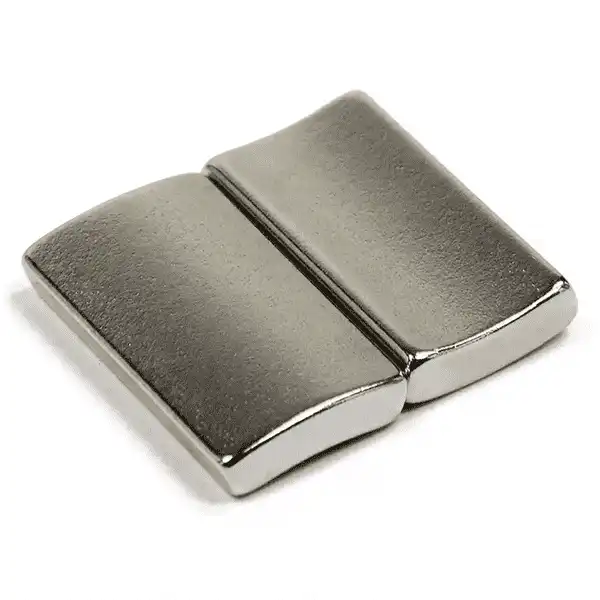
OSENC dostarcza magnesy NdFeB z powłoką chromową jako gotowe detale techniczne. W standardowym procesie nakładania powłoki stosujemy układ NdFeB + Ni + Cu + Ni + Cr, w którym chrom stanowi zewnętrzną warstwę funkcjonalną. Gotowy detal jest kontrolowany według zatwierdzonego rysunku, w tym pod względem wymiarów końcowych, kierunku biegunów, stanu powierzchni i opakowania. Gdy grubość powłoki lub precyzyjne pasowanie mają krytyczne znaczenie, wymagania dotyczące powłoki i wymiarów określa się w specyfikacji projektu, zamiast przyjmować je jako założenia katalogowe.
| Specyfikacja | OSENC Capability | Engineering Boundary |
|---|---|---|
| Materiał magnetyczny | Spiekane magnesy NdFeB | Grade is matched to magnetic target, operating temperature, geometry and magnetic circuit. |
| Struktura powłoki chromowej | NdFeB + Ni + Cu + Ni + Cr | Chrome is the outer functional layer; individual Ni/Cu/Ni/Cr layer thicknesses are not published as universal values. |
| Total Coating Thickness | Approx. 15 µm | Finished dimensions include the plating build. Critical fits must be specified on the final coated dimension. |
| Kształty | Disc, Block, Ring, Cylinder, Arc, Countersunk, Custom | Through holes, countersinks, chamfers and thin sections are reviewed with edge protection in mind. |
| Overall Size Capability | 0.2–200 mm published custom capability | Exact manufacturability depends on complete geometry, aspect ratio, holes, coating and magnetization. |
| Tolerancja wymiarów gotowego wyrobu | Standardowa: ±0,10 mm / precyzyjna: ±0,05 mm | These are finished magnet dimensions after plating. Tighter features are reviewed from the drawing. |
| Klasy | N35 / N38 / N42 / N48 / N52 / H / SH | Final grade is selected around magnetic performance and operating temperature, not coating alone. |
| Chrome Finish | Bright / Standard Chrome / Black Chrome | Mirror and satin are not presented as standard Chrome finishes on this product page. |
| Magnesowanie | Axial, Diametrical, Thickness, Length, Width, Multipole | Direction is locked before manufacturing because sintered NdFeB orientation is part of the magnetic design. |
| Akceptacja powierzchni | 0 blister / 0 peeling / 0 exposed NdFeB substrate | No deep scratch or edge chip that affects functional surfaces, assembly or appearance. Non-functional handling marks follow approved limit samples. |
| Salt-Spray Framework | 5% NaCl at 35°C | No universal 24/48/72 h promise is published. Acceptance hours remain tied to the actual OSENC test report and project requirement. |
| Pakowanie | Single-piece separation, PE bag, plastic spacer, foam or compartment tray | Selected to prevent magnet-to-magnet collision and Chrome surface scratching. |
OSENC manufactures the NdFeB geometry and Chrome surface requirement as one finished component. Shape, edge condition, holes, wall thickness and magnetization are reviewed before plating so the finished part fits the real assembly.
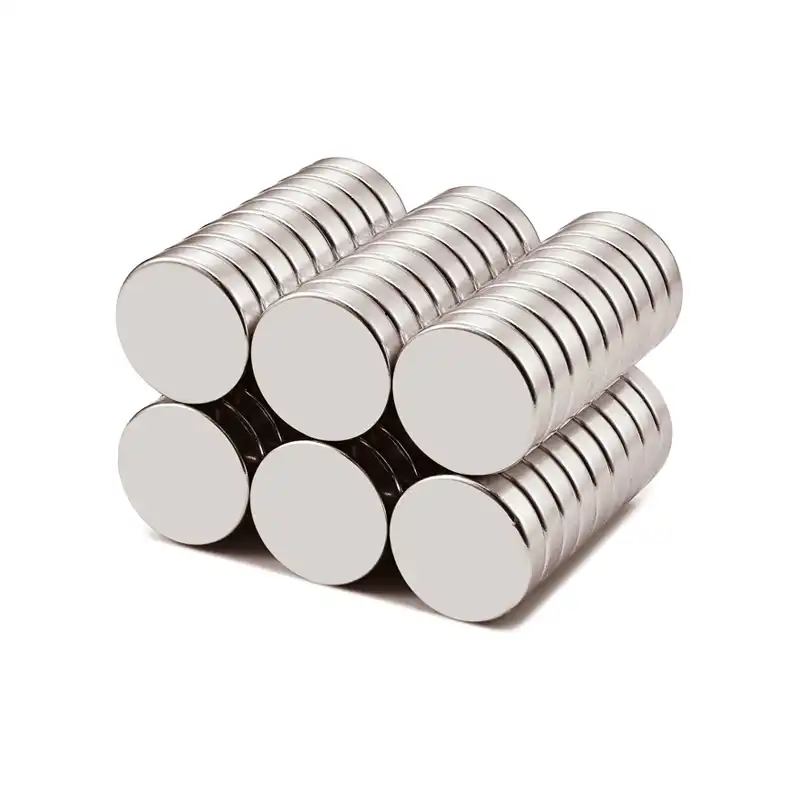
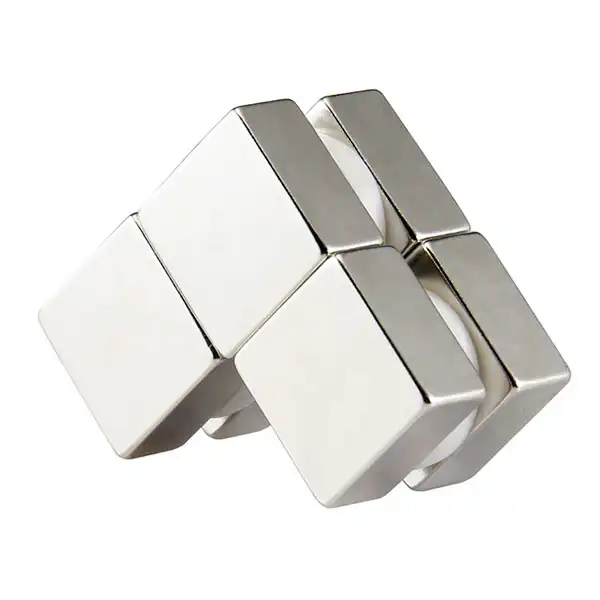
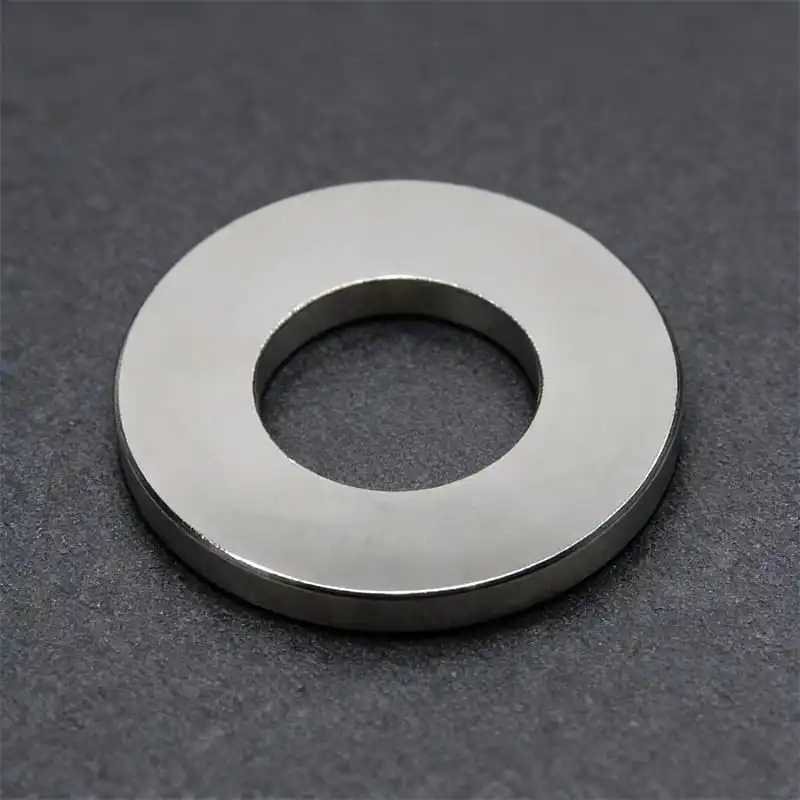

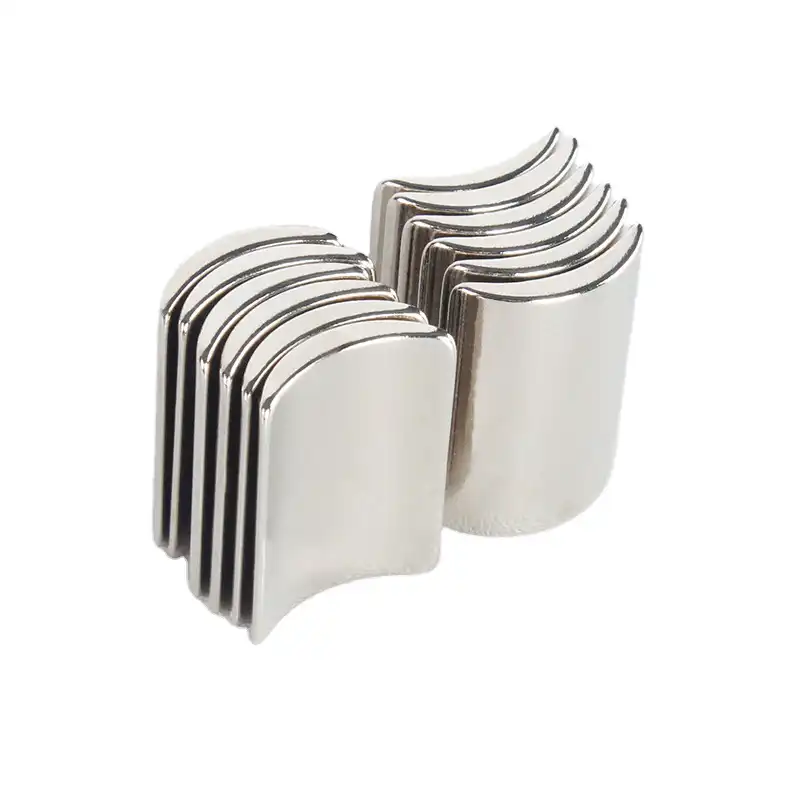
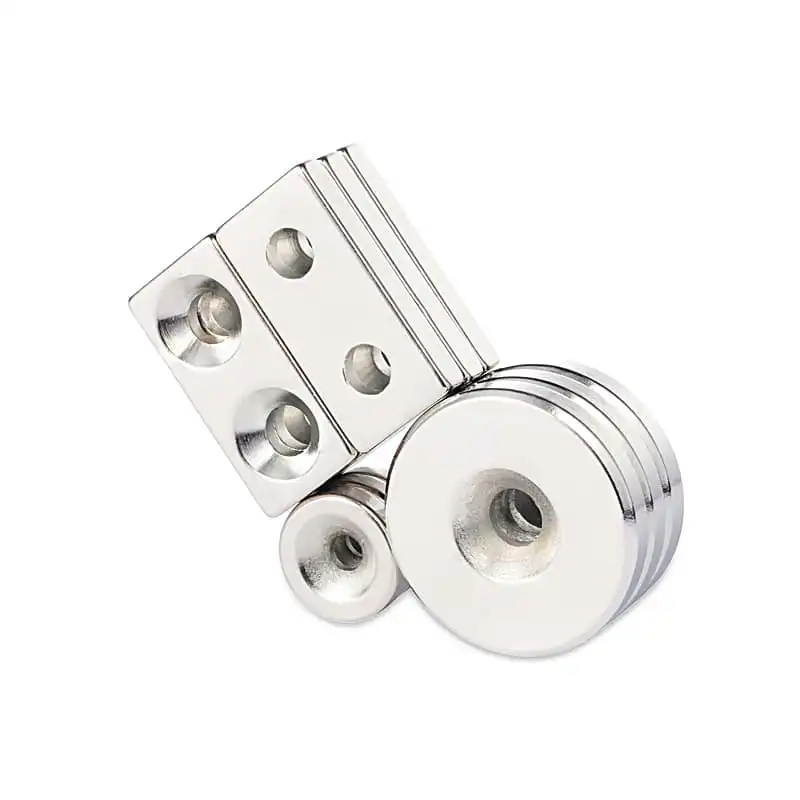
OSENC manufactures Chrome coated magnets to customer drawings. The sizes below are practical geometry references for RFQ discussion; final dimensions, coating build and tolerances are produced against the approved finished-part drawing.
OSENC's standard Chrome magnet route uses NdFeB + Ni + Cu + Ni + Cr. The Ni-Cu-Ni base system supports the NdFeB substrate and creates a stable metallic foundation; Chrome forms the final external surface for appearance and wear-related contact requirements.
The typical total coating thickness is approximately 15 µm. We intentionally publish the total coating build rather than inventing universal Ni, Cu, Ni and Cr layer-by-layer values. Individual layer control belongs to the plating process specification and inspection record for the actual project.
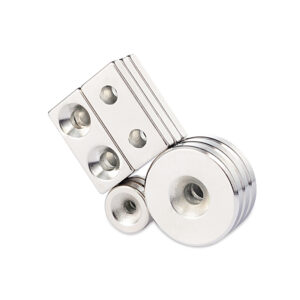
Chrome plating does not set the maximum operating temperature of the finished magnet. OSENC selects the NdFeB material family from the magnetic target, geometry, magnetic circuit and temperature requirement.
For elevated-temperature projects, OSENC supplies H and SH grade options. Final operating temperature is confirmed from the selected grade, magnet geometry, magnetic circuit and operating point.
Disc, Ring and Cylinder magnets support axial or diametrical magnetization. Blocks support through-thickness, length or width magnetization. Special designs can use multipole magnetization when the magnetic structure requires it.
Chrome is strongest as a surface choice when a project combines metallic appearance with frequent handling, rubbing, sliding contact or pressure. It gives OSENC another option between a general-purpose Nickel finish and polymer coatings selected primarily for moisture or chemical protection.
OSENC inspects the finished magnet after plating because the coating, finished size, pole direction and surface condition all affect assembly performance. The objective is simple: the part must fit, function and arrive without preventable Chrome damage.
| Inspection Item | OSENC Control |
|---|---|
| Finished Dimensions | Checked after Chrome plating against the approved finished-part drawing. |
| Tolerancja | Controlled to the drawing-defined finished tolerance; precision features are confirmed before production. |
| Surface | No blister, peeling or exposed NdFeB substrate on qualified product. |
| Functional Faces | No deep scratch or damaging edge chip that affects assembly or appearance. |
| Magnesowanie | Pole direction checked against the approved drawing. |
| Adhesion | Included in the coating quality-control process. |
| Pakowanie | Anti-collision and anti-scratch separation selected by size, force and quantity. |


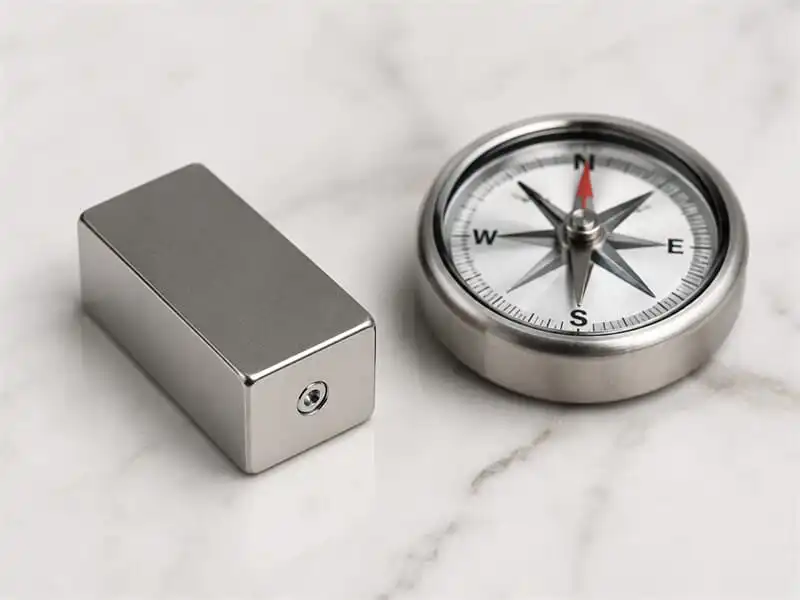

For magnets that are repeatedly handled, rubbed or exposed as a visible metallic component, OSENC selects Chrome ahead of standard Ni-Cu-Ni. For general industrial assemblies where cost and conventional metallic protection dominate, Ni-Cu-Ni remains the standard route. For humidity, immersion or aggressive chemical exposure, OSENC moves the project to the coating system that matches the environment.

| Surface Route | OSENC Uses It When | Main Engineering Boundary |
|---|---|---|
| Chrome / Ni-Cu-Ni-Cr | Rubbing resistance, repeated handling, pressure contact and visible metallic appearance matter. | Not the first choice for permanent seawater immersion or aggressive chemical exposure. |
| Ni-Cu-Ni | A general industrial metallic finish and cost-effective standard protection are required. | Less focused on repeated rubbing and premium Chrome appearance. |
| Epoksyd | Humidity and moisture protection are more important than metallic appearance. | Protect the coating from scratches, edge chips and continuous abrasion. |
| Parylen | A thin conformal polymer barrier is needed for precision or sensitive assemblies. | Thickness, coverage, adhesion and environment remain part of the project specification. |
| Other Coatings | Chemical resistance, low friction, insulation or another special surface function drives the project. | Selection follows the actual medium, temperature, mechanical contact and validation requirement. |
OSENC quotes the finished Chrome plated magnetic part. Complete inputs let our engineering team lock the geometry, magnetic function, plating requirement and acceptance standard before sampling.
OSENC's standard Chrome route uses NdFeB + Ni + Cu + Ni + Cr. The Ni-Cu-Ni layers form the metallic base system and Chrome is the final external functional layer.
Approximately 15 µm is used on this page as the standard Ni-Cu-Ni-Cr engineering reference. The production requirement is confirmed in the actual project specification, especially when coating build affects a press fit, air gap or precision interface.
Critical dimensions are confirmed from the drawing and measured on the finished plated part. Standard and precision tolerance targets are agreed before production so plating build is included in the final assembly fit.
OSENC supplies Bright / Standard Chrome and Black Chrome for projects where metallic appearance and surface handling are part of the requirement.
No. Chrome improves the surface for rubbing and handling, but the sintered NdFeB core remains hard and brittle. Repeated magnet-to-magnet collision or heavy impact still requires mechanical protection.
Depending on size, magnetic force and quantity, OSENC uses single-piece separation, PE bags, plastic spacers, foam or compartment trays to reduce collision, chipping and Chrome surface scratching.
Send the finished geometry, tolerance, NdFeB grade or magnetic target, magnetization direction, Chrome finish, operating temperature, working environment, inspection requirement and quantity. OSENC will convert those inputs into a controlled finished-part specification for quotation and sampling.
Request a Chrome Magnet Quote