






Microphone Magnet Selection
Osenc helps B2B buyers review custom neodymium magnet requirements for microphone components before sampling, including drawings, samples, dimensions, coating, magnetization direction, working gap and inspection needs.
Application Boundary
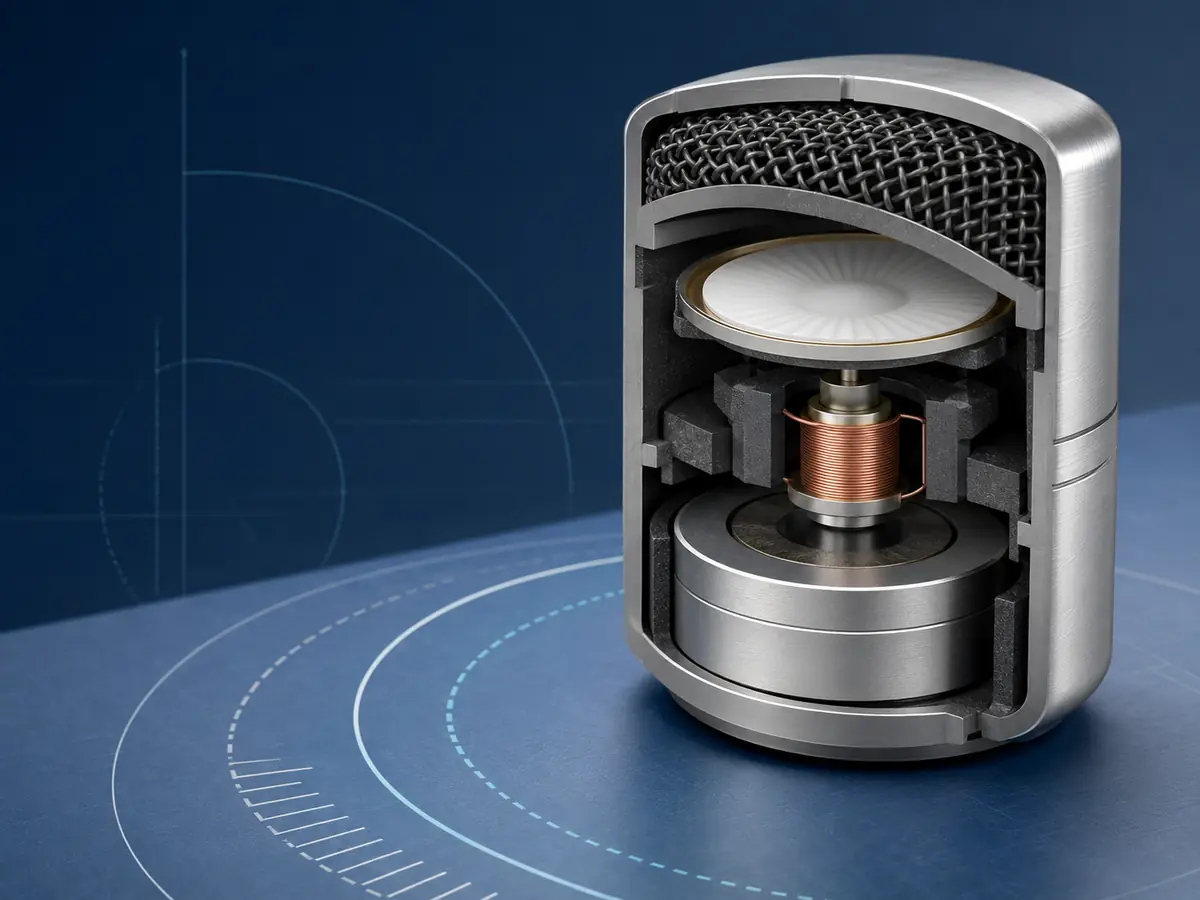
This page is for OEM microphone components and audio assemblies where the magnet works inside the device. It does not cover magnetic microphone mounts, clips, stand accessories or speaker magnet selection.
Small neodymium magnets used near a diaphragm, voice coil, pole piece or compact microphone magnetic circuit.
Shape, size, tolerance, coating, magnetization direction, working gap, sample check and inspection method.
Exact grade, dimensions, field target, material choice and test method must be confirmed from the application conditions.
Magnetic Circuit
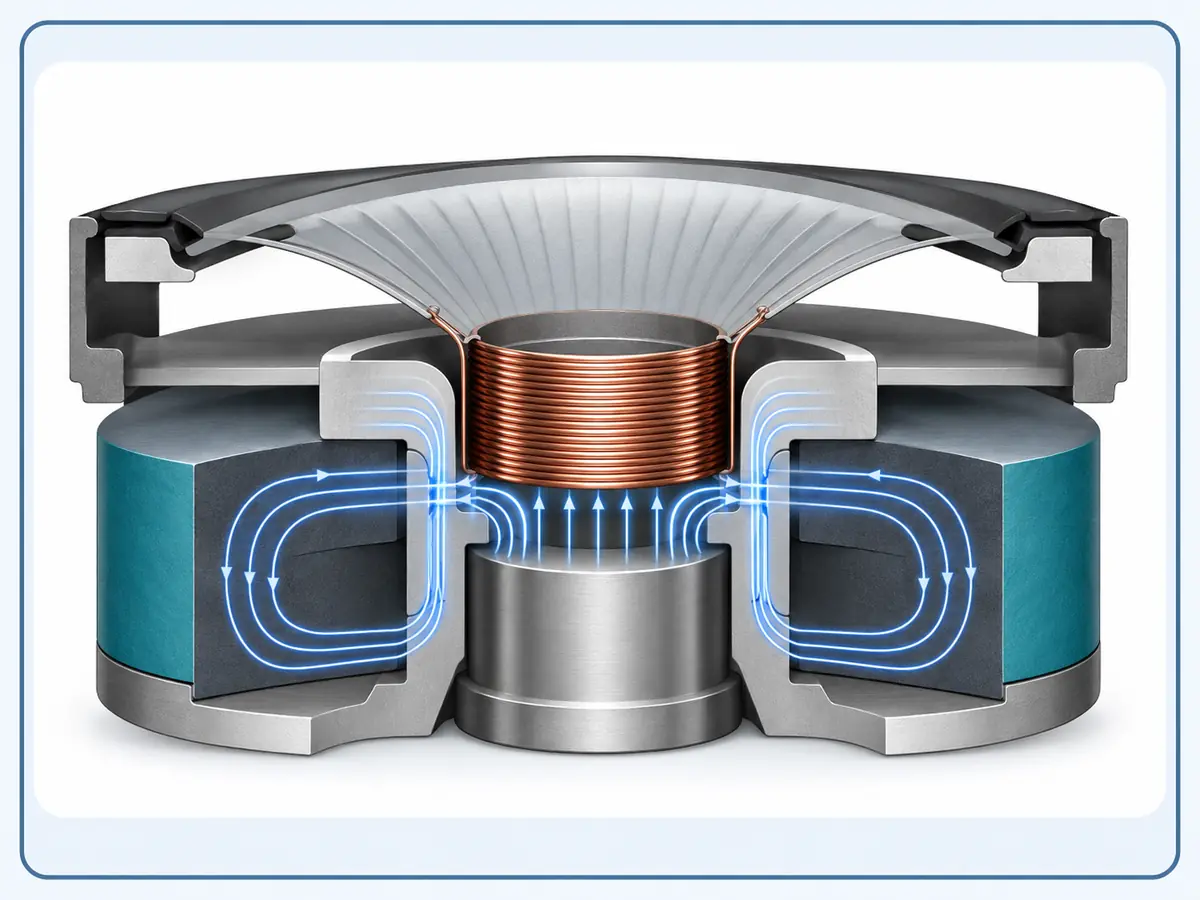
In a simplified dynamic microphone structure, the diaphragm and voice coil move within a magnetic field produced by a permanent magnet and pole structure. For a magnet buyer, the practical question is not only whether neodymium is strong enough. The question is whether the magnet geometry, direction and assembly clearance support the intended magnetic circuit.
A small change in coating thickness, tolerance stack-up or magnetization direction can affect the working gap and final assembly fit. That is why Osenc treats microphone magnet selection as a drawing and application review task, not only a catalog-size matching task.
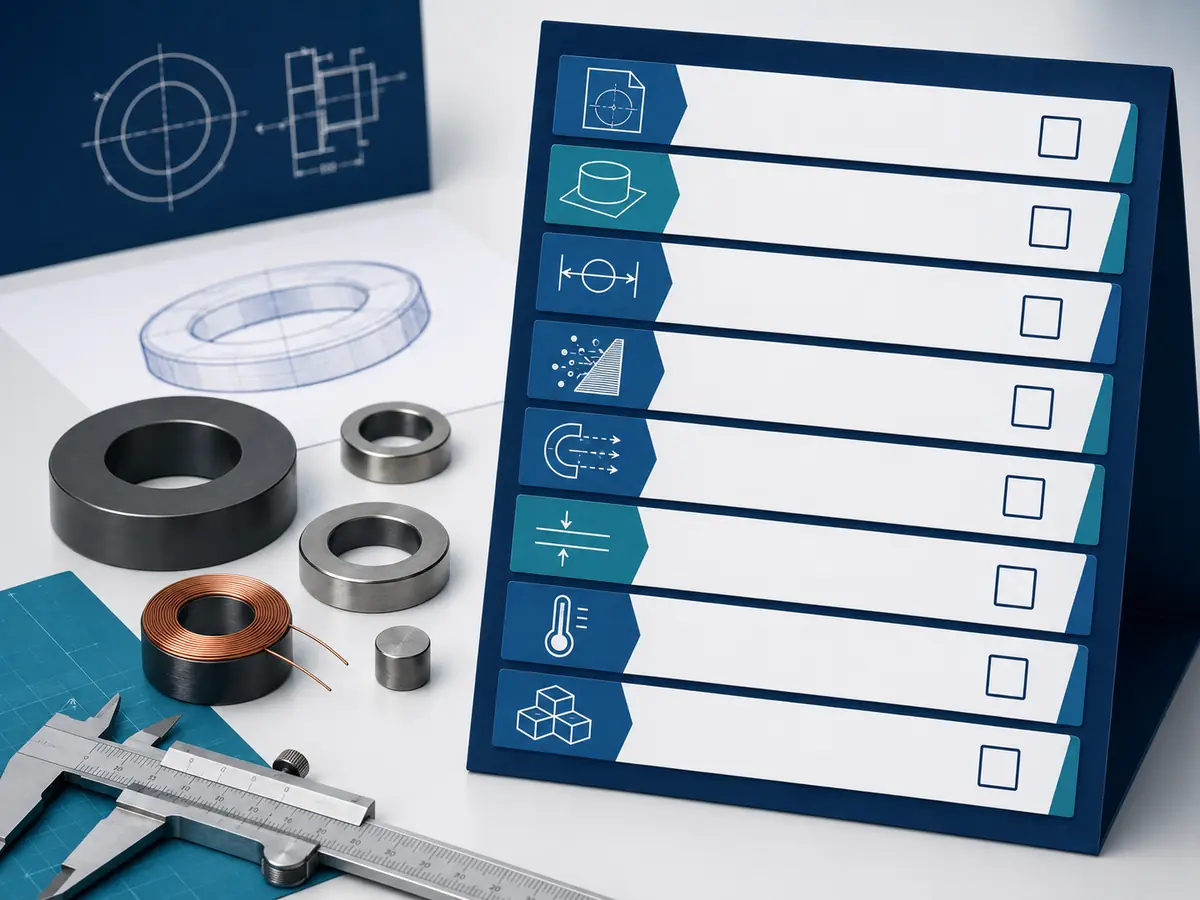
근거 참고 사항: The images on this page are conceptual visuals and simplified diagrams. They are not customer drawings, Osenc microphone case photos or measured test records.
Selection Factors
For custom magnets for microphones, the best starting point is a controlled specification review. The table below shows the main variables Osenc asks buyers to confirm before quotation or sampling.
| Selection factor | 중요한 이유 | What to send for RFQ review |
|---|---|---|
| Size and shape | Microphone components often have limited internal space and tight assembly clearance. | Drawing, 3D file, sample photo or target outside and inside dimensions. |
| 공차 | Tolerance stack-up can change the coil clearance, seating position and working gap. | Critical dimensions, tolerance class and assembly contact surfaces. |
| 착자 방향 | The magnet direction must match the pole layout and useful magnetic circuit. | Axial, diametrical, radial or custom direction requirement if known. |
| 작동 간극 | Air gap affects the useful field inside the microphone structure. | Gap distance, pole piece structure and nearby magnetic or non-magnetic materials. |
| 코팅 | Coating affects corrosion resistance and final dimensions. | Environment, coating preference and whether coating thickness is critical. |
| 검사 | Pull force or surface field alone may not represent microphone performance. | Required inspection method, sample approval rule and critical acceptance points. |
Magnet Options
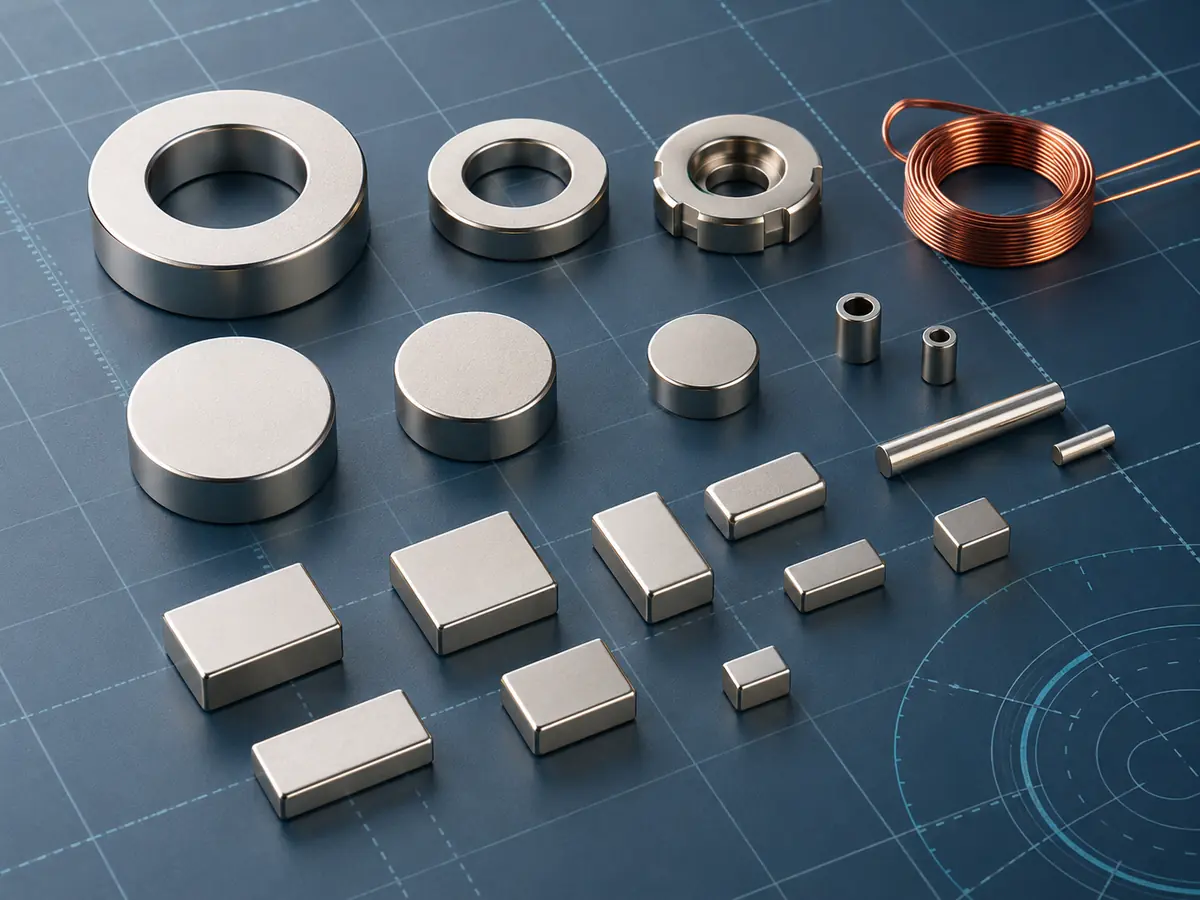
Microphone magnet projects may use small ring magnets, disc magnets, short rods, compact blocks or custom micro magnet shapes. The suitable form depends on the magnetic circuit, assembly space, pole structure and target inspection method.
Osenc can review requirements through 마이크로 자석, neodymium ring magnets, neodymium disc magnets and other 네오디뮴 자석 capabilities. Final feasibility depends on geometry, coating, tolerance, handling and manufacturability.
Material note: NdFeB is often considered where compact size and strong magnetic field are required. Other magnet materials may be reviewed only when the temperature, corrosion, demagnetization or cost conditions justify them.
Decision Risks
The safest selection process avoids one-variable decisions. A high grade or strong pull reading does not automatically mean the magnet is right for a microphone component.
Higher grade may not solve a geometry, temperature, coating or demagnetization issue. Grade should be reviewed with the whole structure.
Wrong magnetization can make an otherwise correct-looking part unsuitable for the intended magnetic circuit.
Coating can change final dimensions and assembly clearance, especially in compact microphone components.
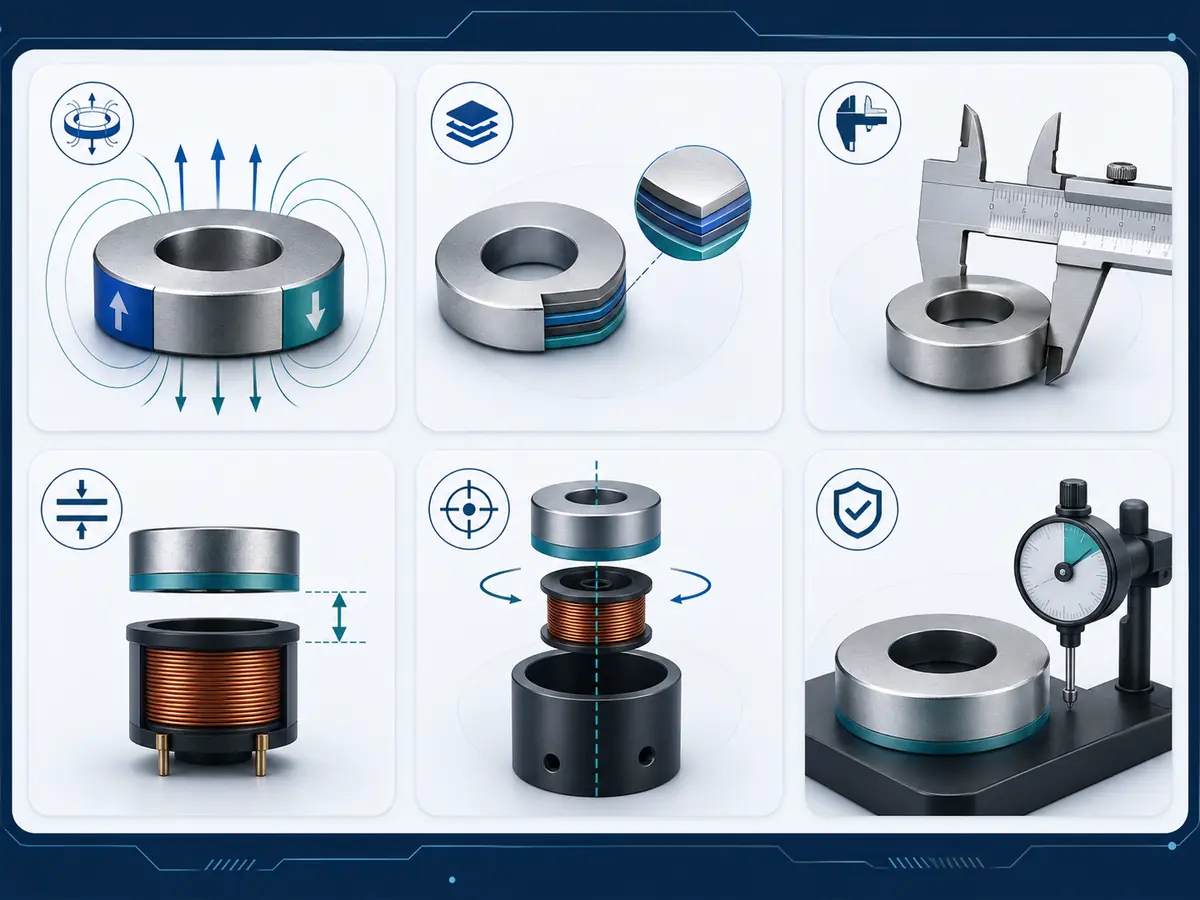
Performance boundary: Pull force and surface field can support inspection, but they should not be presented as complete proof of microphone acoustic performance. The useful test method depends on the final microphone structure and buyer acceptance requirements.
Engineering Review
Osenc reviews microphone magnet requirements before sampling so the buyer can reduce unclear specifications and avoid avoidable sample iterations.
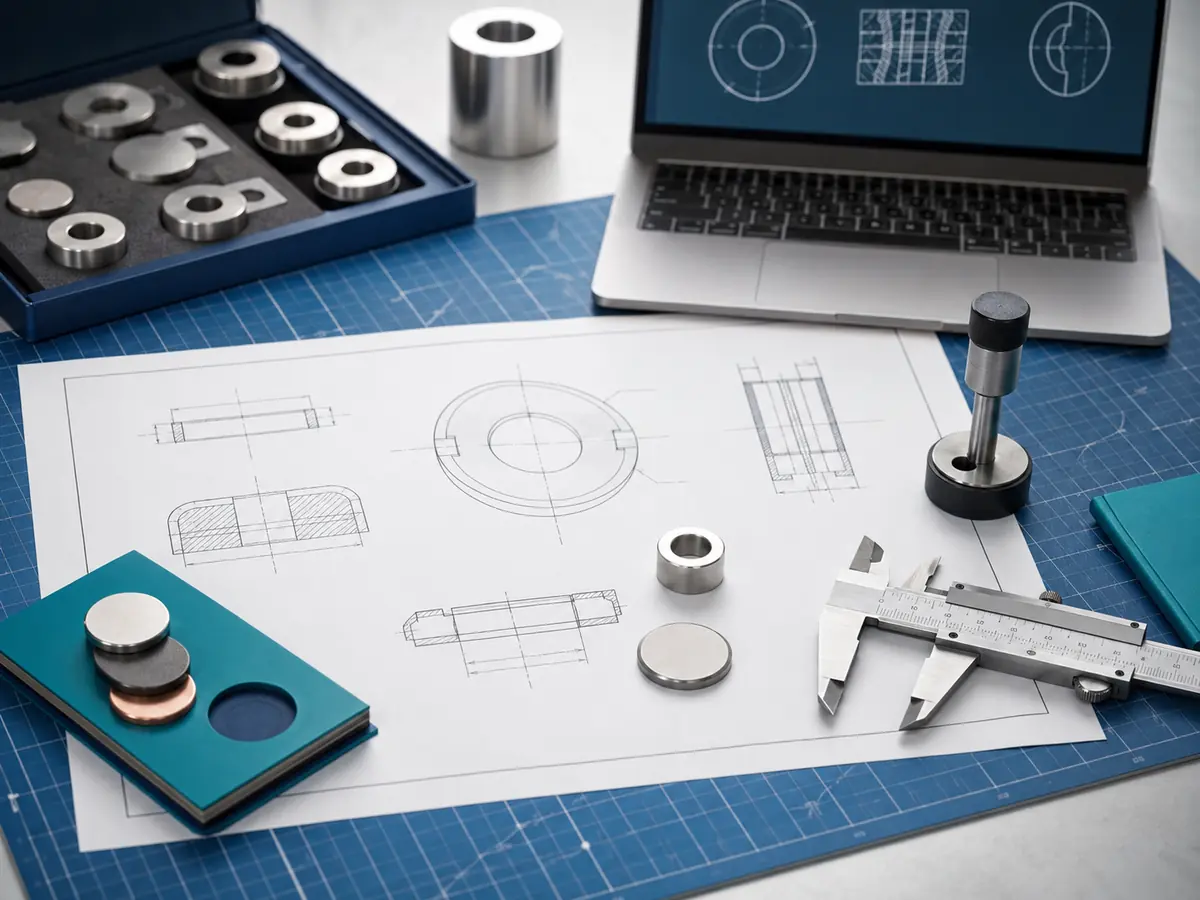
Confirm whether the request is for an internal microphone component, magnetic circuit or unrelated mount accessory.
Review size, tolerance, coating, magnetization direction, working gap and assembly method.
Define sample quantity, inspection point and acceptance requirement before trial production.
Prepare clearer quotation inputs for custom magnet manufacturing and project communication.
RFQ Checklist
For faster review, send the information below with your inquiry. If some details are not available, Osenc can start from the drawing, sample photo and application description.
Related Osenc Capabilities
These confirmed Osenc pages help buyers prepare a better custom magnet inquiry.
자주 묻는 질문
네오디뮴 자석은 제한된 공간에서 강한 자기장이 필요한 소형 마이크 부품에 사용될 수 있습니다. 최종 설계는 마이크 구조, 작동 간극, 착자 방향 및 조립 방식에 따라 달라집니다.
아닙니다. N52는 일부 소형화 설계에 유용할 수 있지만, 자석 등급은 온도, 형상, 비용, 코팅, 작동 간극 및 감자 위험을 고려해 선정해야 합니다.
아닙니다. 인장력과 표면 자속 밀도는 자석 검사에 활용할 수 있지만, 마이크의 음향 성능을 완전히 나타내지는 않습니다. 적절한 합격 판정 방법은 최종 어셈블리와 구매자의 시험 요구사항에 따라 달라집니다.
Osenc can review micro magnet and custom neodymium magnet requirements. Final manufacturability depends on geometry, tolerance, coating, handling, magnetization and inspection requirements.
No. This page is about internal microphone component magnets. Magnetic mounts, clips and stand accessories have a different selection intent and are outside the page scope.
Osenc can review custom microphone magnet requirements including shape, tolerance, coating, magnetization direction, working gap, sample rule and RFQ details before production discussion.