







골전도 헤드폰 트랜스듀서 어셈블리용 네오디뮴 자석
Bone conduction headphone magnets must match the transducer structure, coil position, magnetic path, working gap, coating environment, tolerance, and assembly method. The right choice is not simply the strongest small magnet available.
Osenc는 맞춤형 네오디뮴 자석 review for bone conduction headphone and compact audio transducer projects. Send your drawing, sample photo, current specification, magnetization direction, coating request, and assembly details for review before sampling.
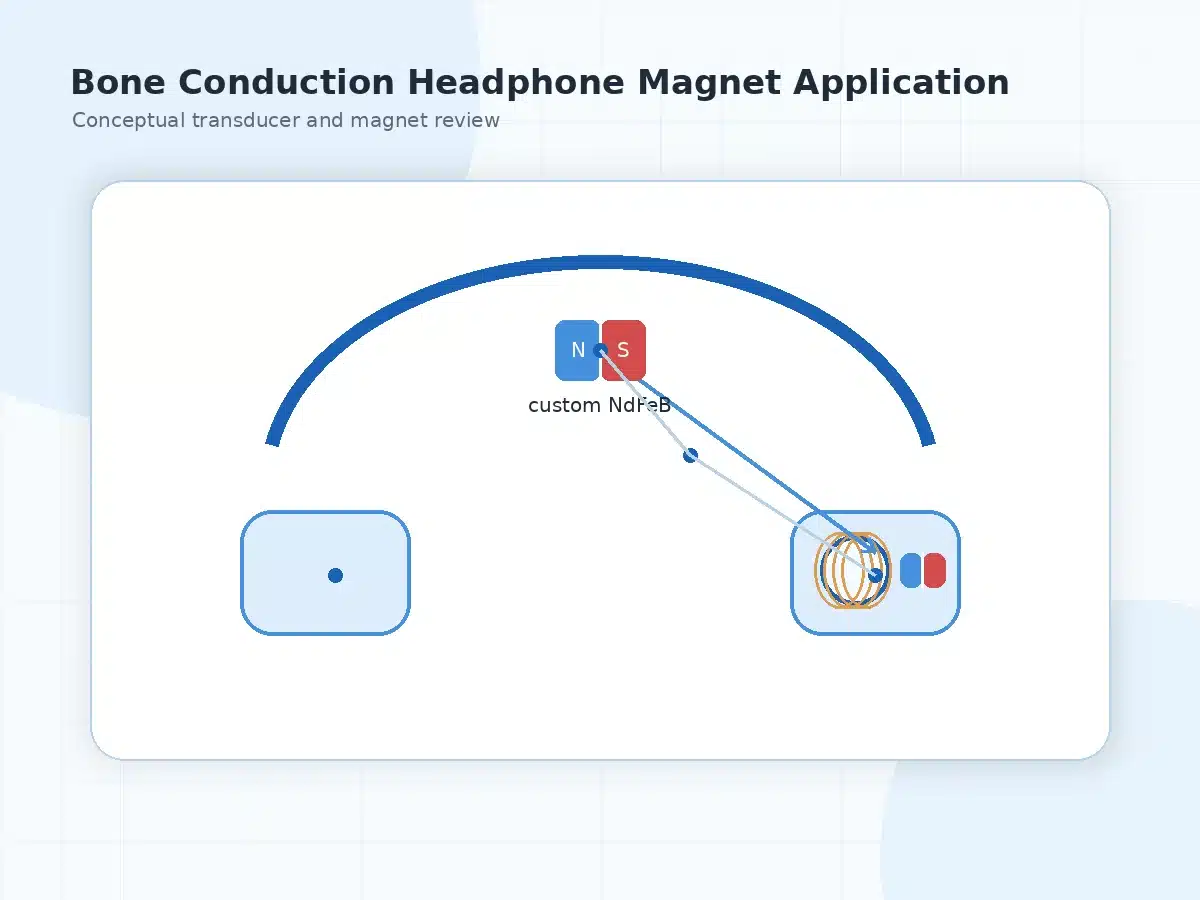
Start With the Transducer Structure, Not the Magnet Grade
A common mistake is to start with the strongest available grade. For bone conduction headphone magnet projects, that is not always the right approach.
The better starting point is the actual transducer structure. Confirm the available space, usable shape, magnetization direction, working gap, coating, tolerance limits, and how the sample will be validated inside the final device.
A higher grade may provide stronger magnetic potential, but it is not automatically better. The final choice depends on the magnetic circuit, coil position, working gap, temperature condition, coating, cost target, and production method.
Why Bone Conduction Magnet Selection Is Different
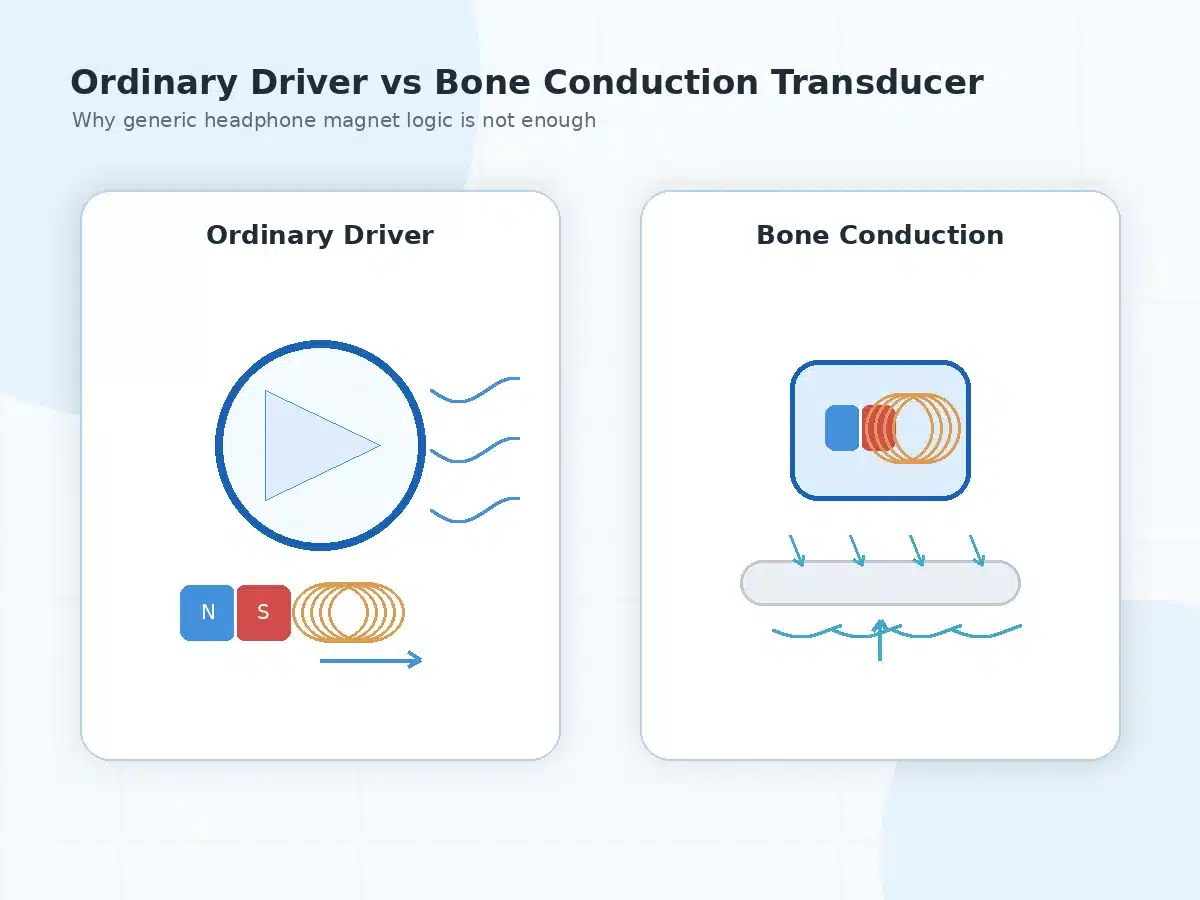
In an ordinary headphone driver, the magnet and coil usually help move a diaphragm to create sound waves through air. In a bone conduction headphone, the transducer must create controlled mechanical vibration that can be transferred through the contact area.
That is why general headphone magnet advice is not enough. Pull force or surface field values alone do not confirm performance inside the transducer. The magnet must be reviewed in its working position, together with the coil, nearby metal path, housing, vibration part, and assembly gap.
For this reason, Osenc treats bone conduction headphone magnets as application-specific custom parts rather than simple catalog items.
Where the Magnet May Fit in the Transducer System
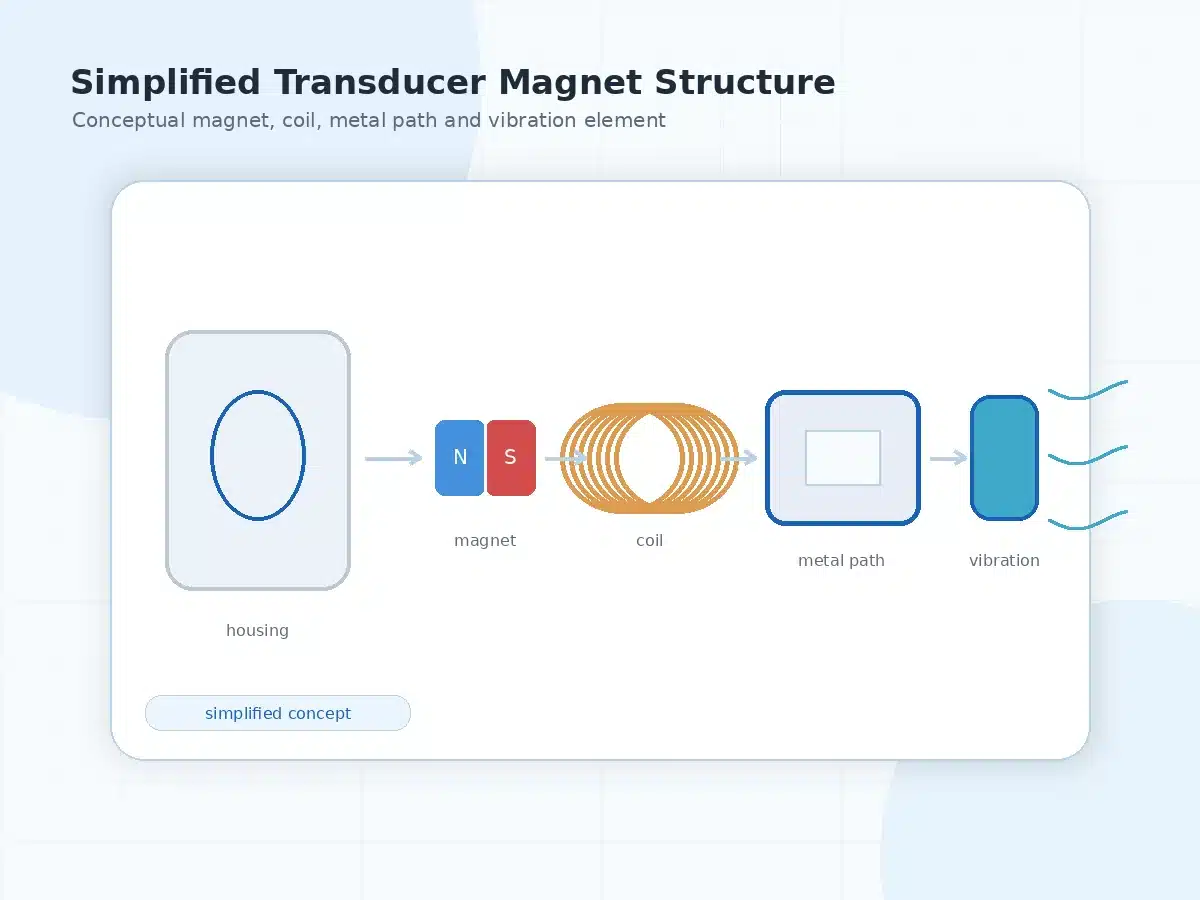
Different bone conduction transducer designs can use different structures. Depending on the design, the magnet may work with a coil, yoke, metal path, diaphragm, spring, housing, or other vibration element.
Osenc should not recommend a fixed magnet shape or grade before reviewing the project details. The magnet may be supplied as a loose custom magnet, or it may need to be discussed as part of a magnet-related assembly.
- Magnet position affects the magnetic path and available assembly space.
- Coil position helps define the useful magnetic field area.
- Nearby metal parts may change the magnetic path and working result.
- Air gap or working distance can affect useful magnetic performance.
- Assembly method can affect chipping, alignment, coating damage, and fit.
샘플 제작 전 확인해야 할 주요 설계 요소
Before requesting custom bone conduction headphones magnets, engineers and buyers should confirm the main design factors. These details help Osenc review manufacturing feasibility and reduce avoidable sampling problems.
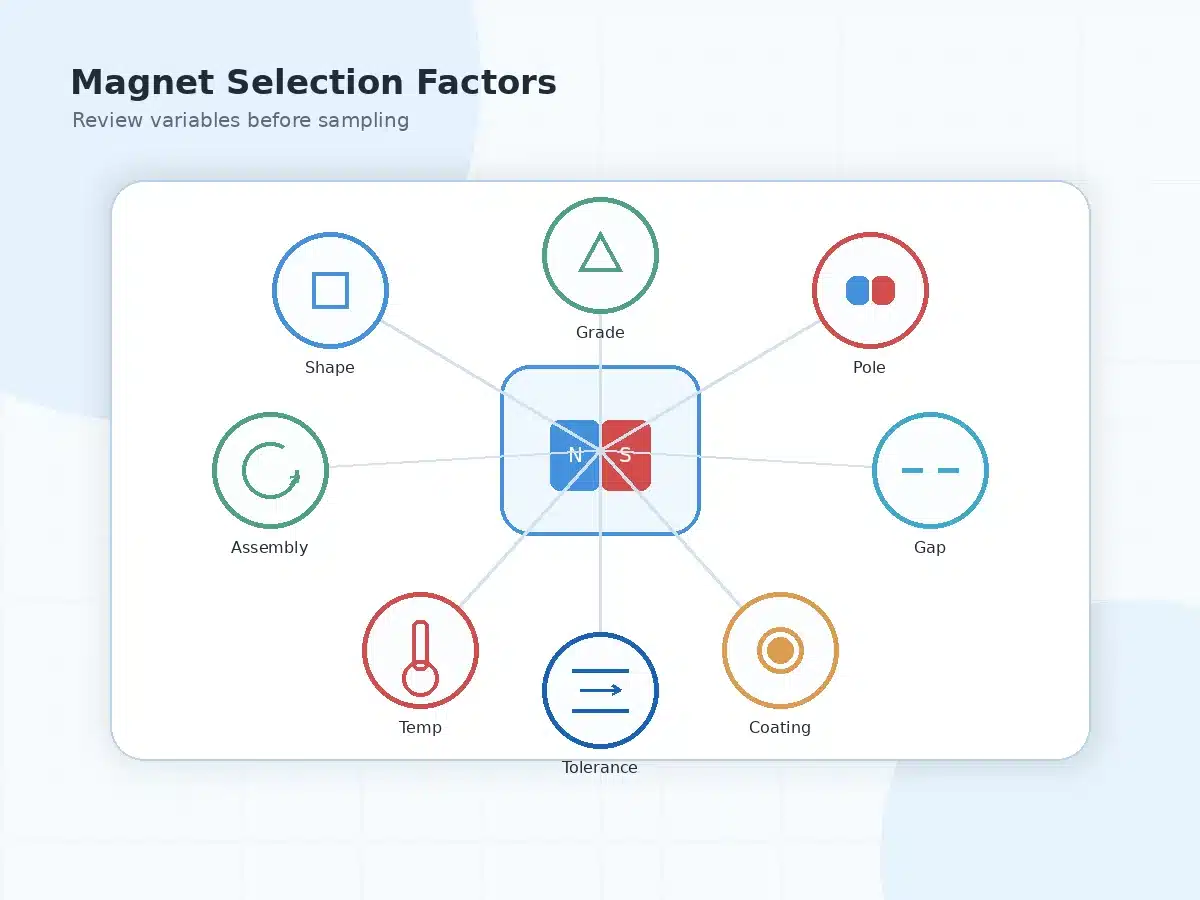
| 설계 요소 | Why It Matters in Bone Conduction Projects | 검토를 위해 보내야 할 자료 |
|---|---|---|
| Shape and size | The magnet must fit the transducer space without blocking nearby parts. | 2D drawing, 3D file, sample photo, or current magnet sample. |
| Magnet grade | Grade should match space, temperature, magnetic circuit, cost, and performance target. | Existing grade, target requirement, or sample for comparison. |
| 착자 방향 | Wrong pole direction may make the magnet unusable in the assembly. | Pole direction drawing, marked sample, or assembly drawing. |
| Air gap / working gap | Useful magnetic performance depends on the working position, not only the magnet itself. | Section drawing or gap information. |
| 코팅 | Coating affects corrosion resistance, bonding, final size, and assembly clearance. | Environment, sweat/humidity exposure, adhesive contact, or housing material. |
| 공차 | Small parts can be sensitive to size variation and batch consistency. | Required tolerance, fit requirement, or mating part details. |
| 온도 | NdFeB grade choice must match the expected working and storage conditions. | Working and storage temperature range. |
| 조립 방식 | NdFeB magnets are hard and brittle, so handling method matters. | Press-fit, bonding, insert assembly, fixture assembly, or other process notes. |
If you do not know every detail yet, send the available drawing, sample photo, current magnet information, or a short application note first. Osenc can review the information and help identify which details still need confirmation before sampling.
Which Magnet Options Should Be Reviewed?
There is no universal “best magnet” for bone conduction headphones. The right option depends on the transducer structure, magnetic path, working gap, assembly process, and production requirements.
| 자석 옵션 | 적용을 검토할 수 있는 경우 | 확인 사항 |
|---|---|---|
| 디스크 자석 | 설계상 소형 원형 자석이 필요한 경우. | 직경, 두께, 착자 방향, 코팅 및 공차. |
| 링 자석 | 구조상 중앙 구멍 또는 특정 자석 배치가 필요한 경우. | 외경, 내경, 두께, 착자 및 모서리 상태. |
| 블록 자석 | 내부 배치에 직사각형 자석 부품이 필요한 경우. | 길이, 폭, 높이, 배치 방향 및 조립 여유. |
| 주문형 형상 자석 | When standard shapes cannot fit the transducer or housing design. | 도면, 가공 가능성, 공차, 코팅 및 자기 특성 요구사항. |
| Micro or small magnets | 제품 내부 공간이 제한된 경우. | 취급 방법, 포장, 검사 및 주요 치수. |
| 맞춤 착자 | 착자 방향이 특정 조립 방향과 일치해야 하는 경우. | 착자 도면, 참조 샘플 또는 극성 표시. |
Important: Osenc does not recommend choosing a shape only because it is common in ordinary headphones. The drawing, sample, and assembly details should decide which option is practical.
Common Selection Mistakes in Bone Conduction Magnet Projects
자석을 너무 성급하게 선정하면 샘플 제작 과정에서 많은 문제가 발생합니다. 크기상 적합해 보여도 최종 적용 조건에는 맞지 않을 수 있습니다.
등급만으로 선정
A higher grade can be useful in some designs, but grade alone does not decide whether the magnet is suitable. The magnet must work with the transducer structure, working gap, temperature condition, coating, and assembly method.
착자 방향 무시
크기와 재질이 정확하더라도 착자 방향이 설계와 일치하지 않으면 자석이 예상대로 작동하지 않을 수 있습니다. 착자 방향은 도면에 명확히 표시하거나 참조 샘플로 확인해야 합니다.
표면 자계를 최종 판단 기준으로 간주
표면 자계는 비교에 유용할 수 있지만, 최종 자기 회로와 작동 간극 및 조립 구조에서의 검증을 대체할 수는 없습니다.
코팅과 조립 간극 간과
Coating should be selected according to corrosion risk, appearance needs, bonding method, and assembly clearance. In a compact assembly, even small dimensional changes may matter.
Ignoring Edge and Handling Risk
Neodymium magnets are hard and brittle. Small magnets with thin edges, tight insertion conditions, adhesive bonding, or automated feeding requirements should be reviewed carefully before sampling.
Copying Another Magnet Too Quickly
Two magnets may look similar but behave differently in different transducer designs. Housing material, air gap, coil position, magnetization direction, and assembly process can all affect the final result.
Loose Magnet or Magnet-Related Assembly?
Some buyers only need a custom loose magnet because the transducer design is already stable. Other buyers may need support reviewing the magnet together with nearby metal parts, housing, pole direction, or assembly process.
| 상황 | Better Direction |
|---|---|
| Stable transducer drawing and only the magnet is needed. | Custom loose magnet review. |
| Magnet position or pole direction is difficult to control. | Magnet-related assembly review. |
| Coating thickness affects the final fit. | Drawing and sample review before coating selection. |
| The magnet chips or cracks during assembly. | Edge, handling, and process review. |
| Batch consistency is critical for the device. | Tolerance and inspection planning. |
| The current magnet does not meet the application target. | Compare sample, drawing, and working condition before changing grade. |
Osenc can review custom magnets and magnet-related assembly requirements based on drawings or samples. Complete bone conduction transducer manufacturing should be confirmed separately based on the project scope.
How Osenc Reviews Your Requirement
A clear review process helps reduce wrong samples and repeated communication. Osenc reviews the magnet requirement from the working structure, not from size or grade alone.
- Send project details: drawing, sample photo, application note, or current magnet information.
- Review key variables: shape, size, grade, magnetization, coating, air gap, tolerance, and assembly method.
- Confirm sample direction: discuss a feasible sample specification after the main variables are clear.
- Discuss inspection needs: review size, appearance, magnetization, coating, and batch consistency requirements.
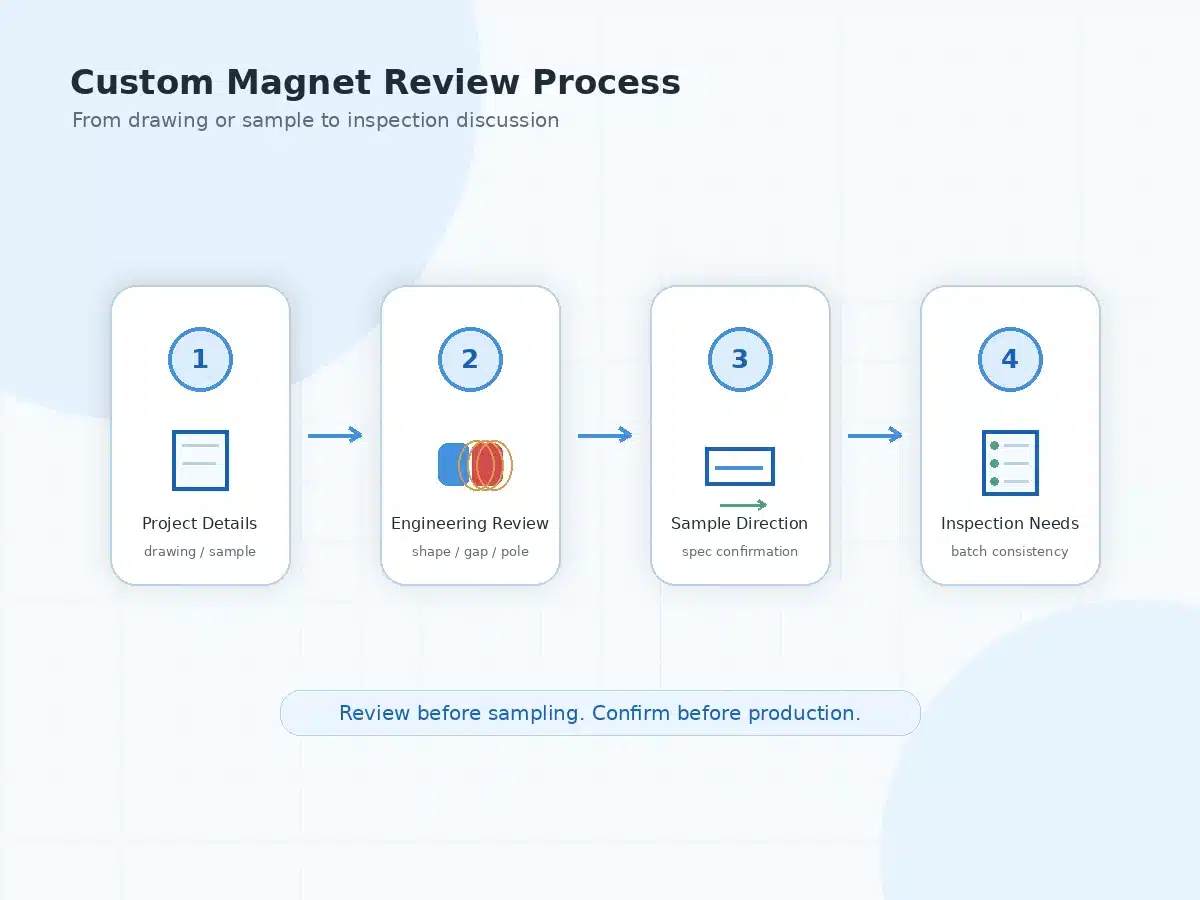
How Osenc Supports Bone Conduction Headphone Magnet Projects
Osenc의 주력 분야는 네오디뮴 자석, custom magnets, and magnet-related components for OEM projects. For bone conduction headphone applications, Osenc can help review the magnet design from the manufacturing and application side.
도면 및 샘플 검토
Review magnet drawings, sample details, current specifications, magnetization direction, and missing information before sampling.
Small Magnet Customization
Discuss small neodymium magnets, micro magnets, disc magnets, ring magnets, or custom shapes based on the structure.
제조 가능성
Review grade, coating, magnetization direction, critical dimensions, packaging, and handling considerations for compact magnets.
Osenc does not replace the customer’s complete acoustic design or final product validation. The finished magnet should still be tested inside the customer’s actual bone conduction headphone structure.
What Should You Send for a Bone Conduction Magnet RFQ?
명확한 RFQ를 보내면 Osenc가 프로젝트를 더 신속하게 파악할 수 있습니다. 전체 도면을 보내거나 샘플 사진과 기본 적용 정보를 먼저 보내셔도 됩니다.
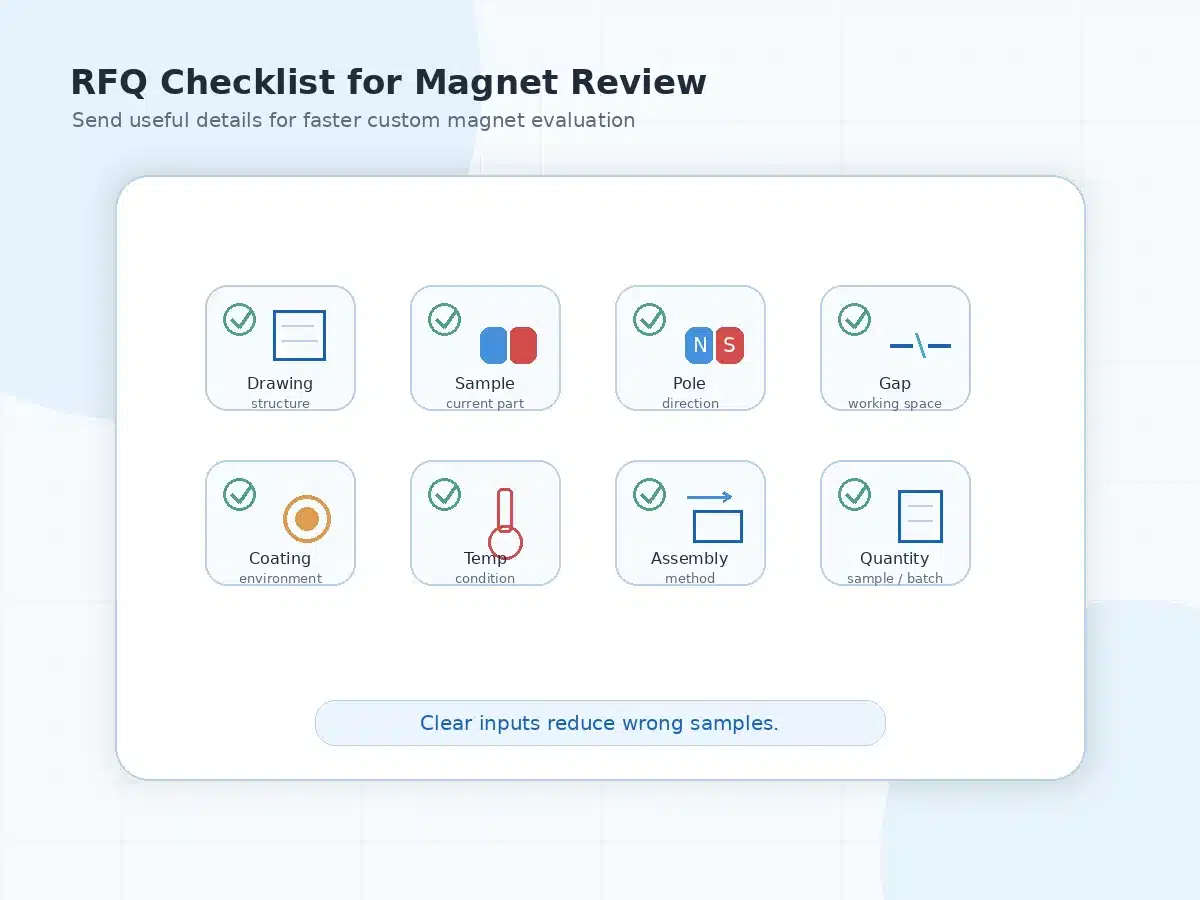
- Device type and application context.
- Transducer drawing, 3D model, sample photo, or current specification.
- Magnet shape and dimensions.
- Critical tolerance requirements.
- 이미 지정된 경우 필요한 자석 등급.
- 코팅 요구사항(알고 있는 경우).
- 착자 방향 또는 극성 표시.
- Air gap or working distance information.
- Nearby coil, yoke, metal part, or housing details.
- Assembly method, such as adhesive bonding, housing insertion, or fixture assembly.
- Working or storage temperature condition.
- Sample quantity, production target, and inspection requirement.
자석 등급, 코팅 또는 착자 방향이 아직 정해지지 않았다면 보유한 도면이나 샘플 정보를 먼저 보내십시오. Osenc에서 해당 정보를 검토하고 샘플 제작 전에 확인해야 할 사항을 명확히 정리할 수 있도록 지원합니다.
Related Osenc Magnet Capabilities
Bone conduction headphone magnet projects may connect with several Osenc product and service areas. The correct choice should be based on the actual drawing and application conditions.
구매 담당자가 자주 묻는 질문
골전도 헤드폰에는 어떤 자석이 사용되나요?
자석 유형은 변환기 설계에 따라 달라집니다. 네오디뮴 자석은 제한된 공간에서 높은 자기 성능을 제공할 수 있으므로 적합할 수 있지만, 최종 형상, 등급, 코팅, 치수 공차 및 착자 방향은 도면 또는 샘플을 기준으로 확인해야 합니다.
네오디뮴 자석은 골전도 헤드폰 트랜스듀서에 적합합니까?
자석 사양이 트랜스듀서 구조에 부합하면 적용에 적합할 수 있습니다. 중요한 것은 자석의 세기뿐만 아니라 자기 회로, 공극, 코일 위치, 작동 온도, 코팅 및 조립 방식입니다.
자석 등급은 높을수록 항상 더 좋은가요?
아닙니다. 자기 특성이 더 높은 등급이 항상 최선의 선택은 아닙니다. 자석 등급은 가용 공간, 작동 온도, 자기 회로, 목표 원가 및 생산 안정성에 맞춰 선정해야 합니다.
What magnetization direction should I choose?
The magnetization direction should be confirmed from the magnetic circuit and assembly drawing. If the direction is wrong, the magnet may not work correctly even when the size and grade look correct.
What coating should be considered for this application?
Coating depends on humidity, sweat exposure, bonding method, plastic or metal contact, and available assembly clearance. Coating thickness should also be considered in compact transducer designs.
Can Osenc review my bone conduction headphone magnet drawing?
Yes. You can send the drawing, sample photo, current magnet information, pole direction, working gap, coating environment, and assembly method. Osenc can help review the custom magnet direction before sampling.
Can Osenc support loose magnets or magnet-related assemblies for bone conduction headphone projects?
Yes. Osenc can review custom magnets and magnet-related assembly requirements based on drawings or samples. If your project requires a complete bone conduction transducer, that scope should be confirmed separately before quoting.
Send Your Bone Conduction Magnet Drawing or Sample for Review
If you are developing bone conduction headphones or compact audio transducer assemblies, send Osenc your drawing, sample, or application details.
Osenc can help review the magnet shape, size, grade, magnetization direction, coating, tolerance, working gap, and assembly risk before sampling.