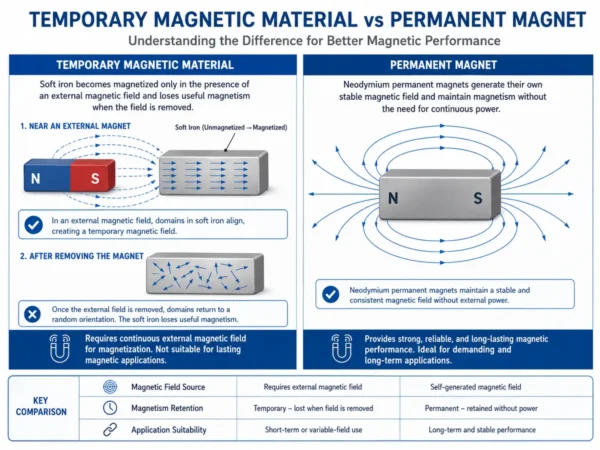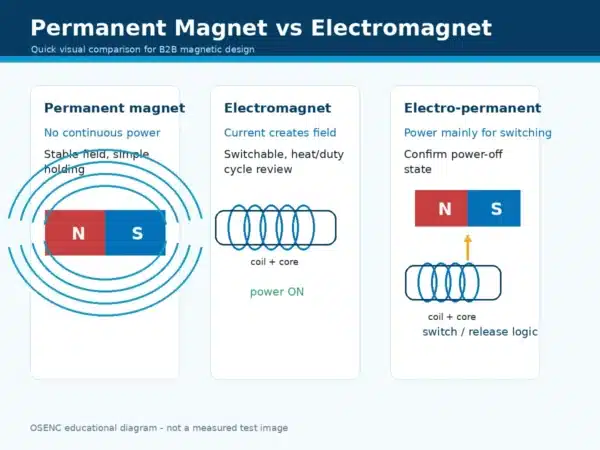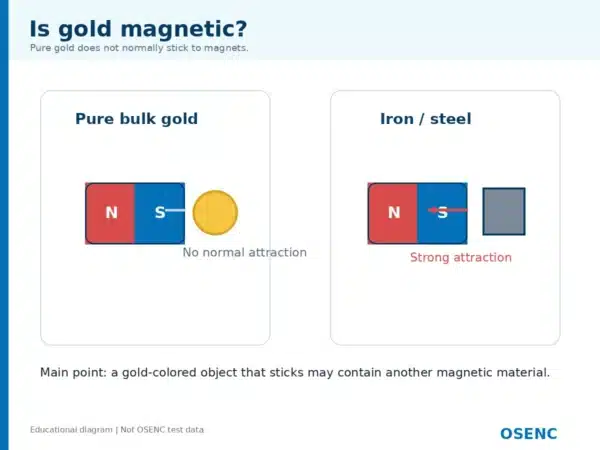







NdFeB 자석이라고도 하는 네오디뮴 자석은 세계에서 가장 강력한 영구자석입니다. 스피커, 모터, 전기자동차, 컴퓨터 하드디스크, 풍력 터빈 등 일상에서 사용하는 많은 제품에 이 자석이 사용됩니다. 과학적 원리와 고온 공정, 정밀 엔지니어링이 결합되는 만큼 제조 과정은 쉽지 않습니다. 이 글에서는 네오디뮴 자석의 흥미로운 제조 공정을 자세히 살펴보겠습니다. (관련 글: 네오디뮴 자석이란?)
네오디뮴 자석은 어떻게 제조됩니까?
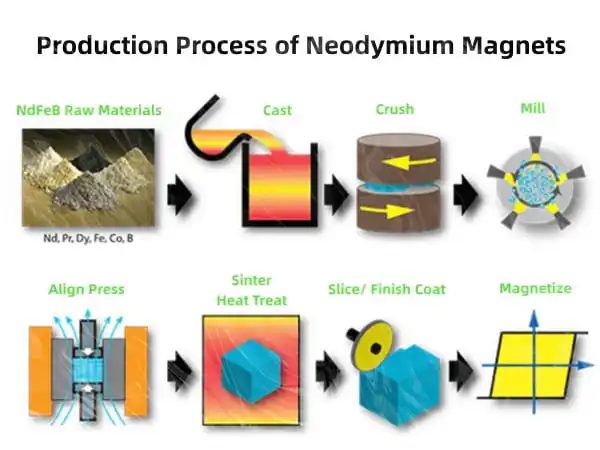
네오디뮴 자석의 제조 공정은 다음과 같습니다.
1단계: 희토류 금속 채굴
공정은 지하 깊은 곳에서 시작됩니다. 네오디뮴은 바스트네사이트와 모나자이트 같은 광물에서 흔히 발견되는 희토류 원소로, 일반적으로 프라세오디뮴 및 세륨과 같은 다른 희토류 원소와 함께 존재합니다.
광석을 채굴하고 분쇄한 후 화학 처리하여 산화 네오디뮴(Nd₂O₃)을 얻습니다. 정제 공정에서는 용매 추출과 이온 교환을 통해 순수 네오디뮴과 기타 원소를 분리합니다.
네오디뮴의 대부분이 중국에서 채굴 및 정제되므로 중국은 전 세계 자석 생산을 지배하고 있습니다. 추출된 산화물은 네오디뮴 자석을 구성하는 강력한 합금의 핵심 원료가 됩니다.
2단계: 용해
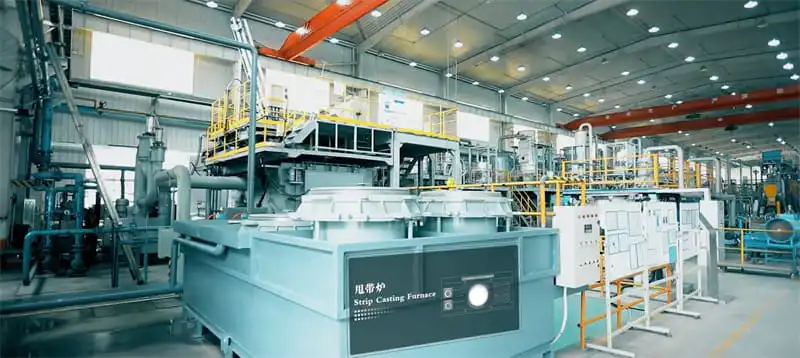
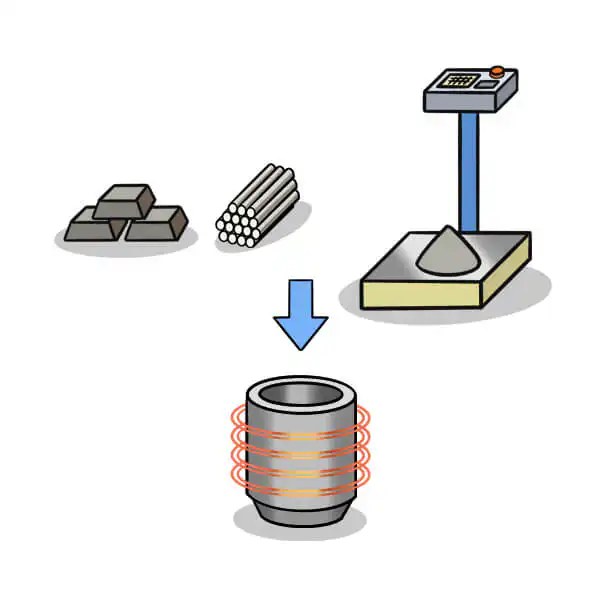
이어서 산화 네오디뮴을 철(Fe), 붕소(B)와 혼합합니다. 이 세 원소는 Nd₂Fe₁₄B 화합물을 구성합니다. 이 원료들이 산화되지 않도록 진공 유도 용해로에서 함께 용해합니다.
균질한 용융 합금을 형성하기 위해 온도를 1300 °C 이상으로 높입니다. 원료를 용융한 후 빠르게 냉각하여 잉곳 또는 플레이크 형태로 만듭니다. 이 합금은 이후 강력한 자성 재료를 만드는 기반이 됩니다.
3단계: 분쇄
고체 합금은 제트 밀 또는 볼 밀링을 통해 미세 분말로 분쇄됩니다. 자성 특성은 일반적으로 폭이 수 µm인 초미세 균일 입자의 형성 여부에 따라 결정되므로, 이 단계는 매우 중요합니다.
네오디뮴 분말은 공기나 수분과 빠르게 반응하므로, 밀링은 공기가 차단된 환경에서 진행됩니다. 이렇게 얻은 분말은 다음 단계에서 압축 성형하기에 적합합니다.
4단계: 압축 성형
미세 분말을 압축하여 형태를 만듭니다. 압축 과정에서는 일반적으로 자기장을 가해 미세 입자를 한 방향으로 배향하며, 이를 통해 자석의 향후 인력과 척력 방향을 결정할 수 있습니다.
일반적으로 다음 두 가지 방법을 사용합니다.
금형 압축: 분말을 한 방향으로 금형에 압축합니다.
등방압 성형: 모든 방향에서 동일한 압력을 가해 더욱 균일한 밀도를 구현합니다.
압축이 끝나면 자석은 눈에 보이지 않지만 형태는 확인할 수 있는 그린 컴팩트(green compact)가 됩니다. 아직 강도는 낮지만 소결할 준비가 된 상태입니다.
5단계: 소결
소결은 가장 중요한 단계 중 하나입니다. 그린 컴팩트를 진공로에서 약 1,000~1,100 °C로 가열합니다. 이 온도에서 입자는 녹지 않은 상태로 서로 결합하여 치밀한 고체 블록이 됩니다.
이로써 자석의 강도, 경도 및 안정성이 향상됩니다. 이 공정은 자석의 강도, 경도 및 안정성을 높입니다. 소결 후에는 자석의 구조가 균일해지고 밀도가 이론적 최대치에 가까워집니다. 이 단계에서 자석의 강한 인력을 생성하는 주된 원천인 Nd₂Fe₁₄B 결정상이 완전히 형성됩니다.
6단계: 어닐링
그런 다음 자석을 다시 약 500–600°C and then allowed to cool gradually. This reduces internal stress and enhances mechanical stability.
Annealing is also used in enhancing the magnetism, and thus the magnets become less susceptible to demagnetization and temperature changes. In the absence of this step, any little amount of stress or heat might break or weaken the magnet.
Step 7: Machining
The sintered magnets, after cooling, are then formed into final shapes by diamond-coated grinders or wire EDM (electrical discharge machining).
Since neodymium magnets are extremely hard yet brittle, they can’t be cut with regular tools. Careful machining needs to be taken to avoid cracking or overheating of the machined part to reduce the magnetic strength.
The magnets at this stage are shaped into common objects such as discs, rings or blocks, as per future use.
Step 8: Plating
Neodymium magnets are powerful but also vulnerable — they corrode easily. To safeguard them, they are shielded with metals like nickel, copper, zinc, gold, or epoxy.
The most used coating is the Ni-Cu-Ni (Nickel-Copper-Nickel) as it offers excellent corrosion resistance and a smooth finish. The coating can be done through electroplating or E-Poxy spraying.
This coating is a shield, and it prevents the magnet from being wet or oxidized, which makes the magnet operate longer.
Step 9: Magnetizing
To this point, the magnets are not actually magnetic. They have to be magnetized with a very strong electromagnetic pulse.
The magnet is inserted into a coil, and a high intensity (but short) current produces a magnetic field (around 3–5 Tesla). 이 공정을 통해 자석 내부의 자구가 한 방향으로 정렬되며, 이 정렬 상태가 유지되어 자성을 갖게 됩니다.
자석을 착자한 후 균일성, 세기 및 방향을 검사한 다음 포장합니다.
관련 글:
네오디뮴 자석은 어떤 재료로 만듭니까?
네오디뮴 자석은 주로 네오디뮴, 철, 붕소로 만들며, 성능 향상을 위해 미량 원소를 첨가하기도 합니다.
• 네오디뮴(Nd): 높은 자기 특성을 구현하는 데 필수적인 핵심 원소입니다.
• 철(Fe): 구조를 형성하고 내구성을 부여합니다.
• 붕소(B): Nd₂Fe₁₄B 결정 화합물의 형성을 돕습니다.
• 디스프로슘(Dy) 또는 터븀(Tb): 내열성을 높이기 위해 간혹 사용됩니다.
• Protective coatings: Nickel, zinc, or epoxy will stop corrosion.
A combination of all these ingredients forms an ideal balance of strength, stability, and resistance.
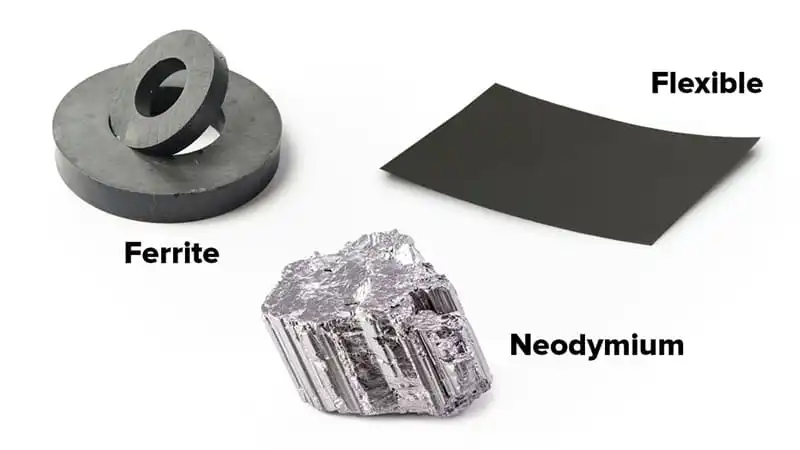
How are rare earth magnets produced?
Other rare earth magnets, such as neodymium and samarium-cobalt magnets are manufactured in the same manner: melting, milling, pressing, sintering and magnetizing.
The major distinction is in their material structure and thermal character. Neodymium magnets are stronger but more sensitive to heat, while samarium-cobalt magnets perform better at higher temperatures.
Both types require precise control over each step to achieve maximum strength and uniformity.
How does sintering work in magnet manufacturing?
The process of sintering is the diffusion process; the fine powder particles are warmed until they fuse. The heat results in the movement of atoms between the particle boundaries and closes the gaps to form a solid and thick material.
This is done under vacuum to avoid oxidation. What comes out is a powerful, small, and stable magnet. The material would not have been strong enough to contain the energy of a magnet and would not have been porous without sintering.
How are neodymium magnets magnetized?
The process of magnetization occurs in a special magnetizing coil. A magnetic pulse, which is short and intense, aligns the internal domains of the magnet.
When properly aligned, the magnet stays in that way, unless it is subjected to extremely high temperatures or powerful counter-magnetism. It is in the process that the magnet gets its strong and permanent pull.
How are neodymium magnets coated or plated?
Coating protects neodymium magnets from corrosion. Common coatings include:
Nickel-Copper-Nickel (Ni-Cu-Ni): Offers a bright and long-lasting finish.
Zinc plating: It provides moderate protection and is bluish in appearance.
Epoxy coating: Suited to humid conditions.
Gold plating: It is applicable in decorative or medical applications as it is biocompatible.
Each coating is applied either by electroplating or by spraying, and ensures that the magnet will last several years without rusting.
What machines are used in magnet production?
High-precision industrial machines are used to manufacture magnets, and these include:
- Alloy melting vacuum furnaces.
- Grinding in jet or ball mills.
- Powder compacting hydraulic presses.
- Sintering bonding furnaces.
- Annealing ovens for stress relief.
- Shaping is done on diamond grinders and EDM machines.
- Several coating electroplating units.
- Magnetizing coils for charging final magnets
All machines have different functions in ensuring consistency and quality.
What affects neodymium magnet quality?
The strength and quality of neodymium magnets depend on several important factors:
- Material purity: Even small impurities can lower the magnet’s performance.
- Particle size: Finer, evenly sized particles create stronger and denser magnets.
- Sintering control: If the temperature or timing is off, the magnet can crack or lose strength.
- Composition ratio: The right balance of neodymium, iron, and boron determines the magnet’s grade and power.
- Coating quality: A strong, even coating prevents corrosion and extends the magnet’s lifespan.
- Magnetizing strength: Using a powerful magnetic field ensures the magnet is fully charged.
Each step needs careful attention to produce magnets that meet top-quality standards.
Wrapping Up
Neodymium magnets are a result of precision, heat, and chemistry — from mining rare earth metals to pressing, sintering, plating, and magnetizing. Every single stage makes raw materials into one of the most powerful forces of modern technology. Our devices, our cars, and our renewable energy systems cannot operate without these magnets, which is evidence that a small amount of metal can produce a world of power.
관련 글:
자주 묻는 질문
Are neodymium magnets environmentally friendly?
Not entirely. Mining and refining rare earths cause pollution, but modern recycling and cleaner refining methods are reducing environmental impact.
How are rare earths recycled in magnet production?
Old or defective magnets are demagnetized and chemically processed to recover rare earth metals, which are reused to make new magnets.
How to increase the neodymium magnet strength?
Use high-quality alloys, add small amounts of dysprosium, improve sintering, and ensure proper magnetic alignment.