






Silnik z magnesami trwałymi jest zwykle lepszym wyborem, gdy najważniejsze są wysoka sprawność, niewielkie gabaryty, duża gęstość momentu obrotowego i precyzyjne sterowanie. Silnik indukcyjny sprawdza się zazwyczaj lepiej, gdy większe znaczenie mają niższy koszt początkowy, wytrzymała konstrukcja, łatwa dostępność i możliwość standardowej wymiany w instalacjach przemysłowych.
Właściwy wybór zależy od całego układu: cyklu pracy, zakresu prędkości obrotowej, profilu obciążenia, sterownika, chłodzenia, temperatury pracy, materiału magnetycznego, możliwości obsługi technicznej oraz kosztu w całym cyklu eksploatacji.
| Pytanie | Zwykle lepszy wybór | Dlaczego ma to znaczenie |
|---|---|---|
| Najwyższa sprawność lub gęstość momentu obrotowego | Silnik z magnesami trwałymi / PMSM | Strumień magnetyczny wirnika jest wytwarzany przez magnesy, co może ograniczyć straty elektryczne w wirniku i umożliwić zmniejszenie gabarytów silnika. |
| Najniższy koszt początkowy | Silnik indukcyjny | Nie są wymagane magnesy ziem rzadkich, a standardowe rozmiary obudów są powszechnie dostępne. |
| Regulacja prędkości, kompaktowe układy automatyki lub sterowanie serwonapędem | Silnik z magnesami trwałymi | Wysoka gęstość momentu obrotowego i precyzyjne sterowanie mogą uzasadniać koszt sterownika i magnesów. |
| Pompy, wentylatory, sprężarki i przenośniki | Często silnik indukcyjny | Standardowe silniki indukcyjne pozostają praktycznym rozwiązaniem w wymagających zastosowaniach, w których liczą się dostępność i koszt. |
| Praca w wysokiej temperaturze lub w warunkach wrażliwych na awarie | To zależy | W silnikach z magnesami trwałymi należy przeanalizować klasę magnesu i ryzyko rozmagnesowania; w silnikach indukcyjnych nadal konieczna jest ocena izolacji, łożysk i chłodzenia. |
Silnik z magnesami trwałymi a silnik indukcyjny — krótkie porównanie
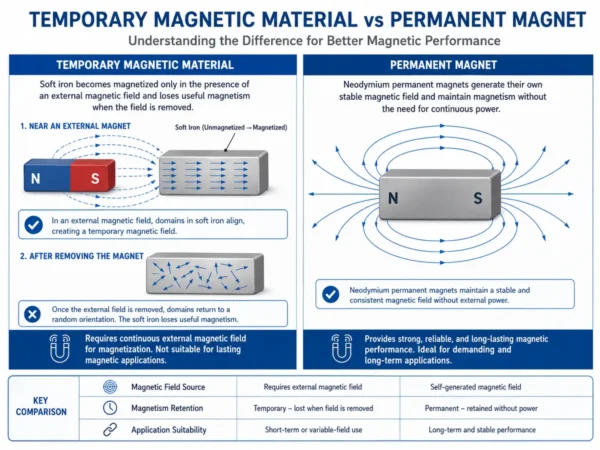
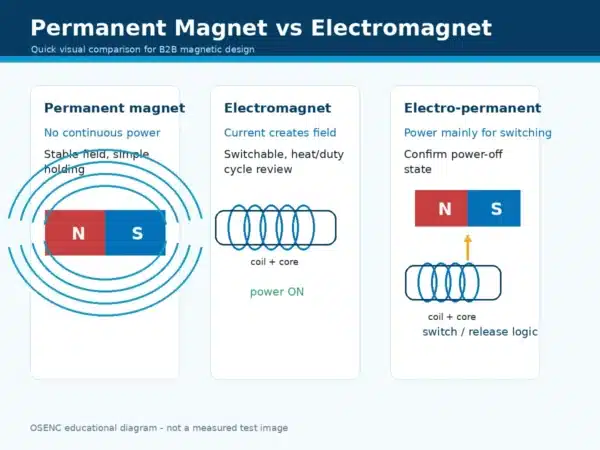
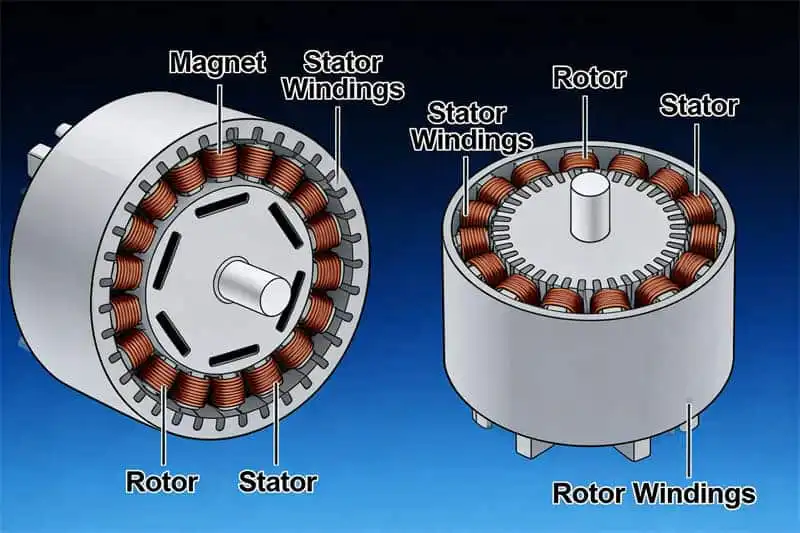
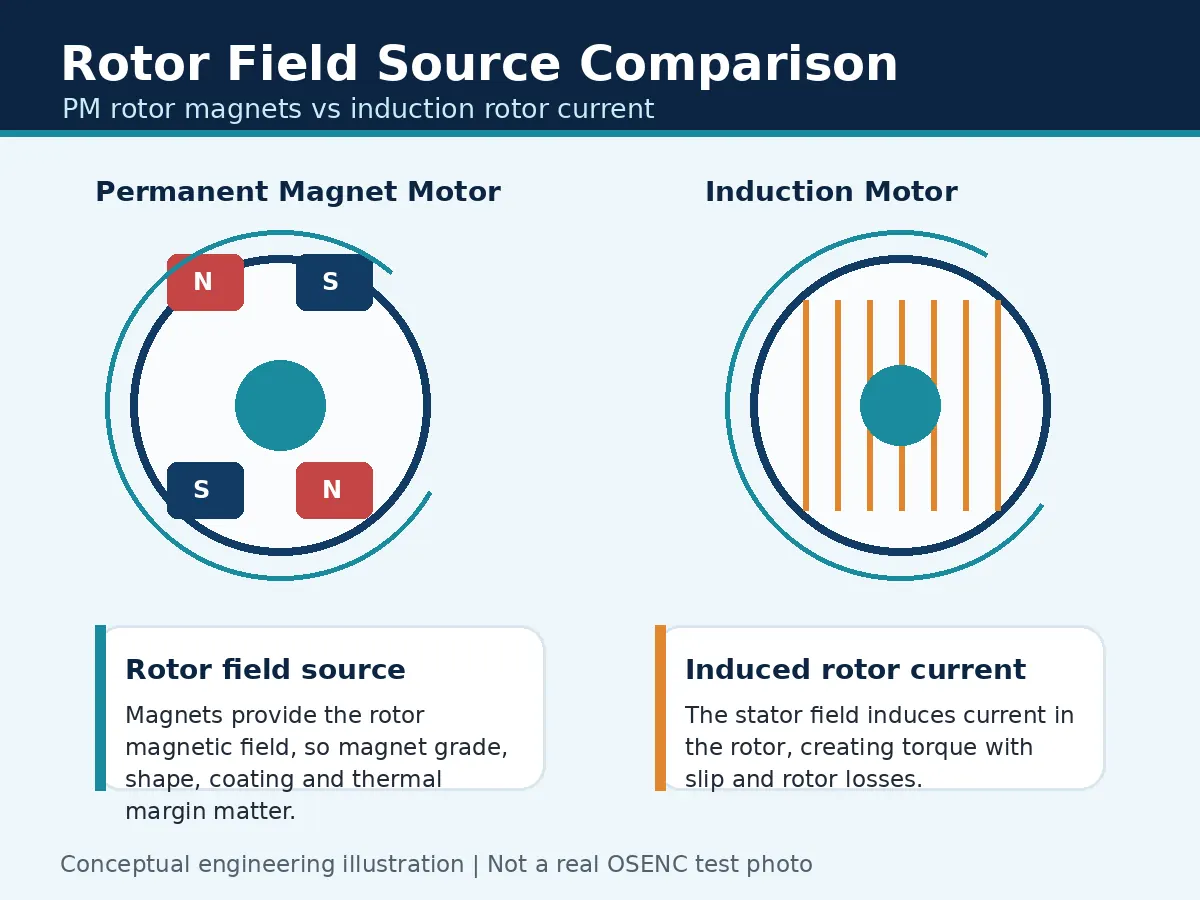
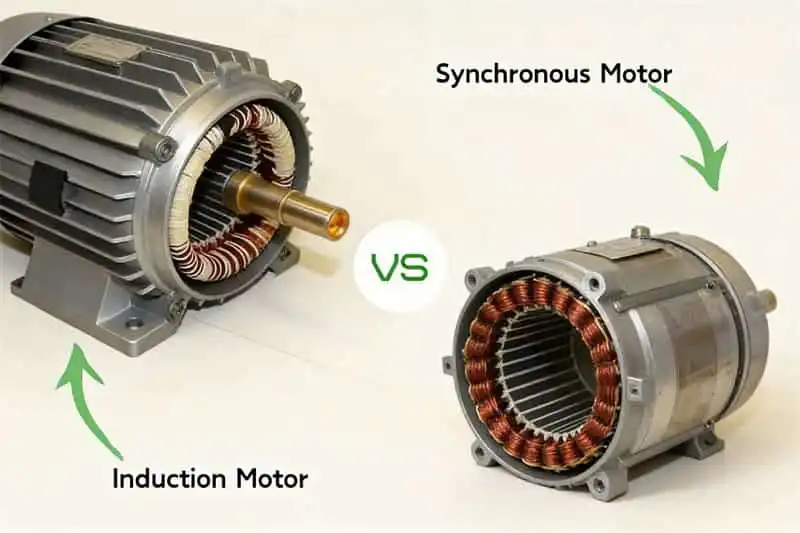
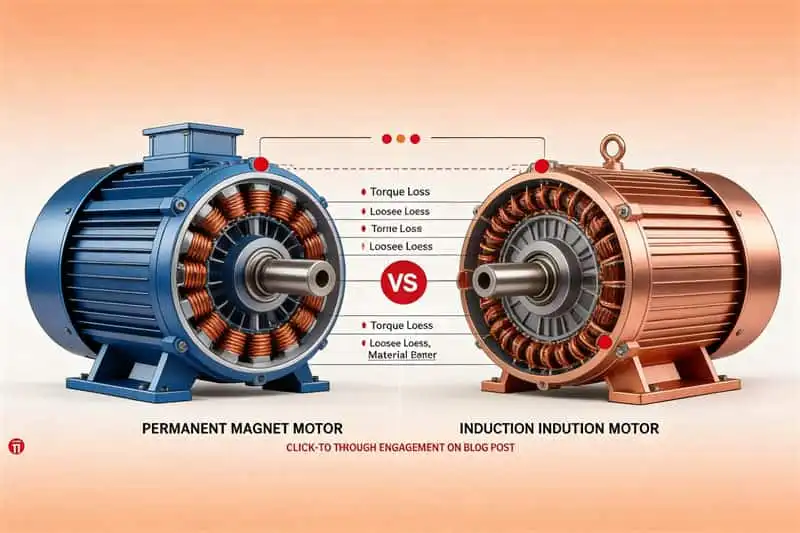
Podstawowa różnica dotyczy źródła pola magnetycznego wirnika. W silniku z magnesami trwałymi pole wirnika wytwarzają magnesy trwałe. Silnik indukcyjny wykorzystuje indukcję elektromagnetyczną: pole stojana indukuje prąd w wirniku, a ich wzajemne oddziaływanie wytwarza moment obrotowy.
| Czynnik | Silnik z magnesami trwałymi | Silnik indukcyjny |
|---|---|---|
| Konstrukcja wirnika | Wykorzystuje magnesy trwałe, często NdFeB, ferrytowe lub SmCo, zależnie od założeń konstrukcyjnych. | Wykorzystuje przewodzące pręty lub uzwojenia wirnika, w których pole stojana indukuje prąd. |
| Efficiency behavior | Often strong at part load and in compact high-performance designs. | Can be efficient near rated load, but rotor losses and slip matter. |
| Sterowanie | Usually requires accurate drive control and rotor-position or sensorless control strategy. | Can be simple in fixed-speed duty; VFDs are common for speed control. |
| Material risk | Magnet cost, supply, coating and demagnetization margin must be reviewed. | Avoids permanent magnet cost, but still depends on lamination, conductor, insulation and cooling quality. |
| Best fit | EVs, robotics, servo systems, compact drives, high-efficiency machines. | Pumps, fans, conveyors, HVAC, compressors and general industrial machinery. |
Efficiency, Rotor Losses and Duty Cycle
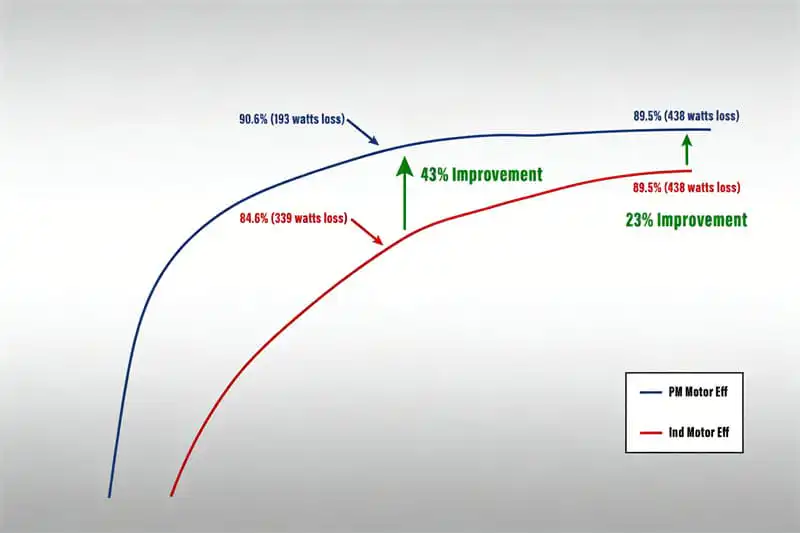
Permanent magnet motors can reduce rotor electrical losses because the rotor magnetic field is supplied by magnets. A U.S. Department of Energy technical support document explains that permanent magnet motors do not need rotor current to produce magnetic flux, which contributes to their high efficiency. Induction motors use rotor current, so rotor losses and heat must be considered during efficiency comparison.
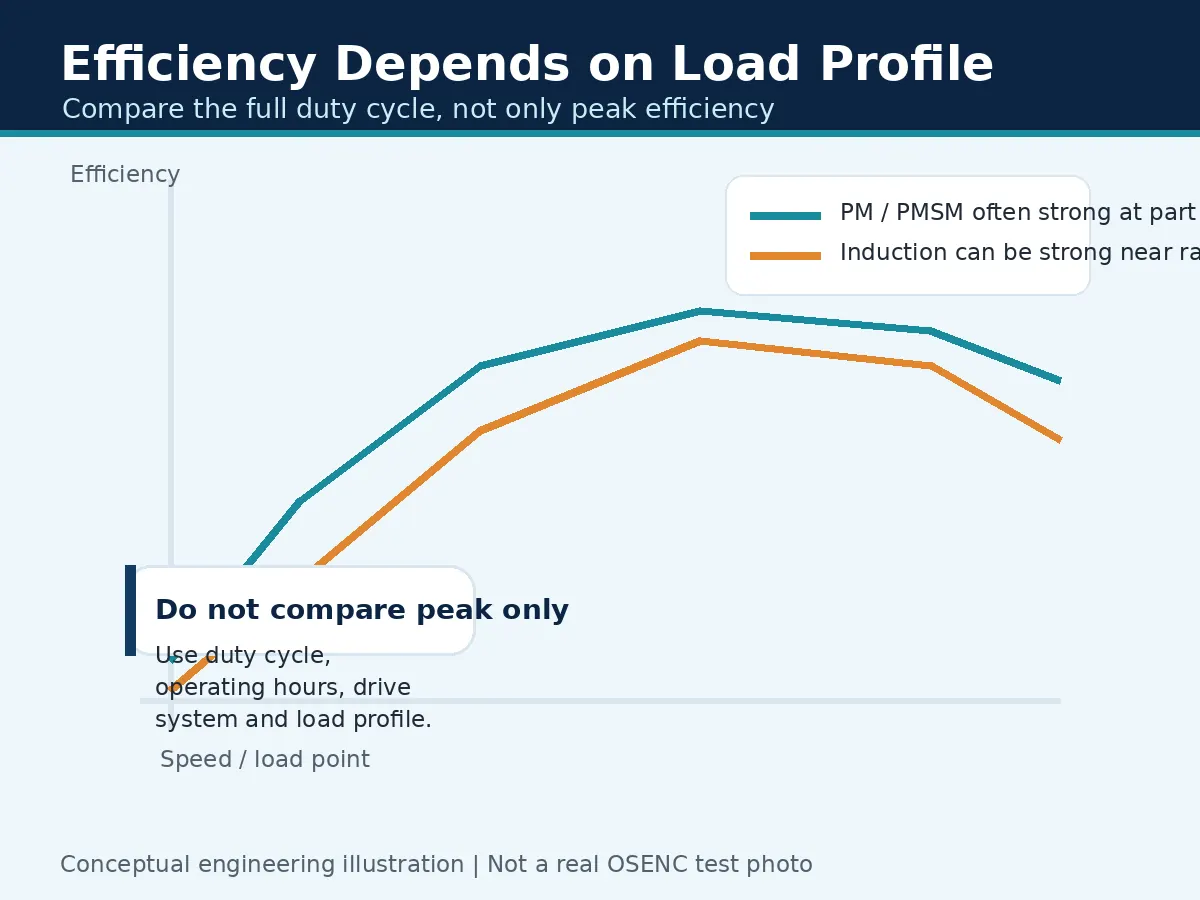
This does not mean every permanent magnet motor is automatically cheaper to run. Efficiency must be evaluated at the real operating points: startup, rated load, partial load, low speed, idle periods, cooling conditions and controller behavior.
PMSM, PM AC Motor and 3-Phase Permanent Magnet Motor
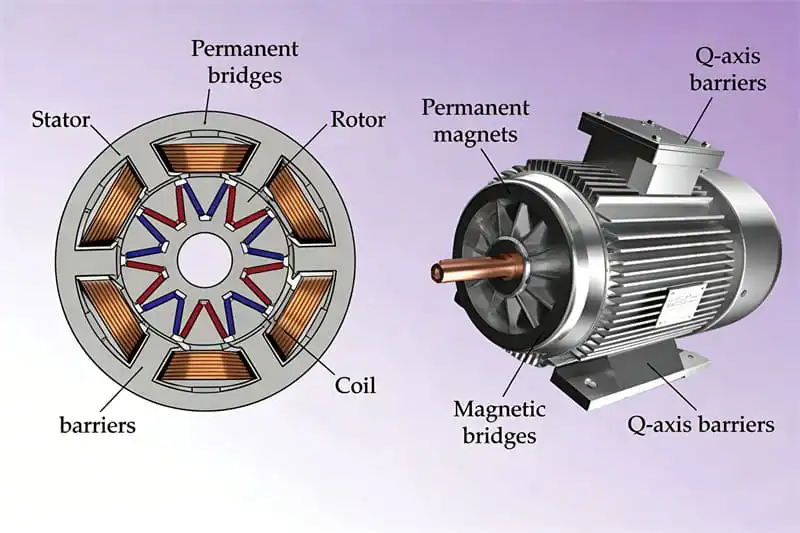
Many buyers searching this topic also compare PMSM, permanent magnet AC motor and 3-phase permanent magnet motor. In practice, these searches often refer to motor families where permanent magnets are used in the rotor and the stator is driven by AC power through a controller. A PMSM runs synchronously with the stator rotating magnetic field, while an induction motor normally runs slightly below synchronous speed because slip is needed to induce rotor current and torque.
Cost: Purchase Price vs Lifecycle Cost
Induction motors usually win on initial price because they do not need permanent magnets and are widely produced in standard industrial designs. Permanent magnet motors cost more when rare-earth magnets, precision rotor assembly and advanced control are required.
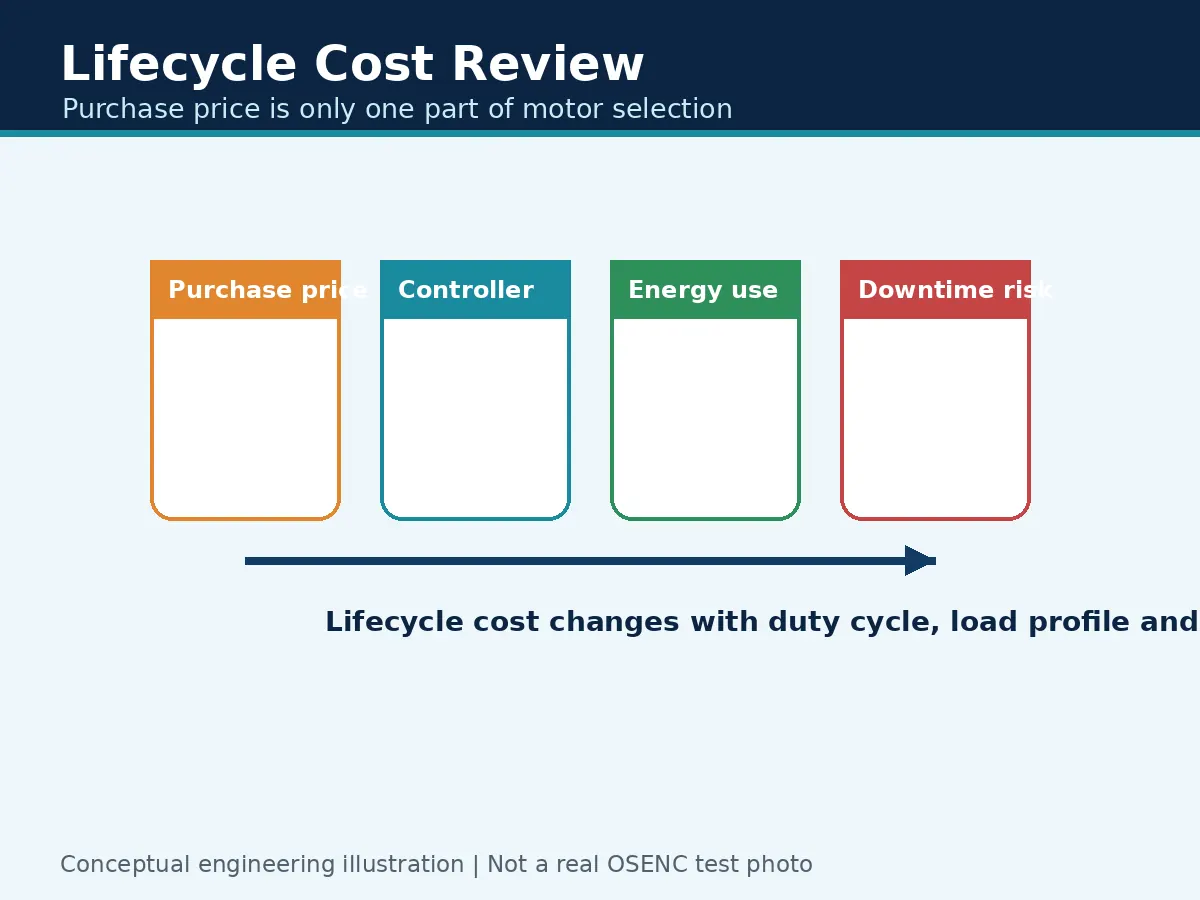
For continuous-duty or space-constrained equipment, the higher initial cost of a permanent magnet motor may be justified by energy savings, smaller package size, higher torque density or better motion control. For simple, rugged and cost-sensitive equipment, an induction motor may remain the more practical choice.
Thermal and Demagnetization Risk
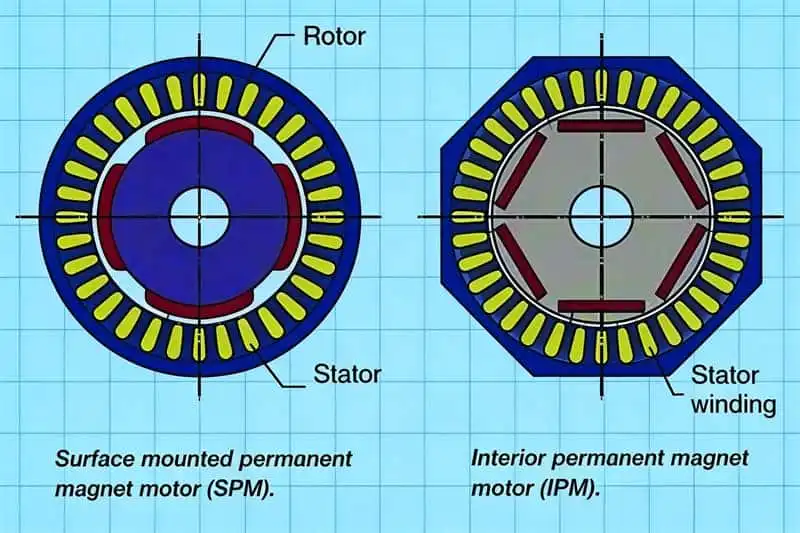
Permanent magnet motors need a thermal review because magnet performance can weaken if the wrong grade is used or if operating temperature, opposing fields, mechanical stress or fault conditions exceed the design margin. NREL-indexed research on permanent magnet AC machines identifies rotor demagnetization as an important fault type, and thermal modeling is a major part of high-power-density IPM motor development.
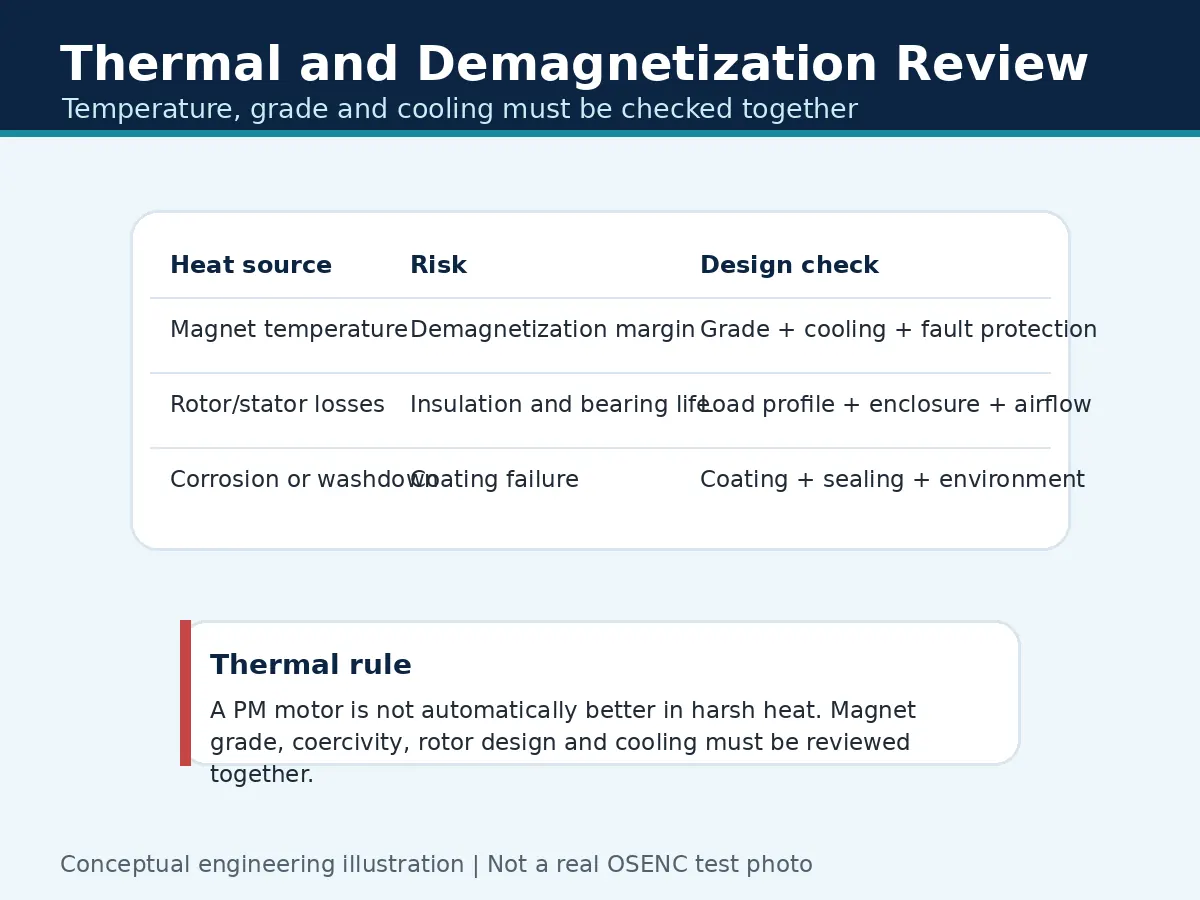
Induction motors also need thermal review. Their reliability depends on winding insulation, bearings, cooling paths, enclosure, dust, load stability and duty cycle. Heat is not only a permanent magnet motor issue; the difference is that PM motors add magnet-grade and demagnetization review to the normal motor reliability checklist.
Application-Based Recommendations
| Zastosowanie | Common Choice | Selection Logic |
|---|---|---|
| Electric vehicles and compact traction drives | Silnik z magnesami trwałymi / PMSM | High torque density, compact size and efficiency can be valuable. |
| Robotics, servo systems and automation | Silnik z magnesami trwałymi | Precise control, fast response and compact design often matter. |
| Pumps, fans, compressors and HVAC | Często silnik indukcyjny | Ruggedness, standard availability and lower upfront cost may dominate. |
| Conveyors and general industrial machinery | Często silnik indukcyjny | Easy sourcing, maintenance familiarity and standard frames are useful. |
| High-efficiency custom equipment | To zależy | Compare lifecycle energy cost, motor size, controller, duty cycle and magnet risk. |
How Motor Magnet Design Affects PM Motor Performance
For permanent magnet motors, the magnet is not just a material choice. The motor designer must review magnetic grade, remanence, coercivity, temperature class, coating, shape, tolerance, magnetization direction, air gap, rotor retention and assembly method.
Magnet grade and coercivity
Higher magnetic strength can help torque density, but the grade must match the motor temperature and demagnetizing field risk. Higher coercivity may be needed when the motor faces high temperature, fault current, aggressive field weakening or demanding duty cycles.
Shape, tolerance and air gap
Arc magnet thickness, width, chamfer and length tolerance can influence flux distribution, air gap uniformity, cogging torque, vibration, assembly yield and coating damage risk.
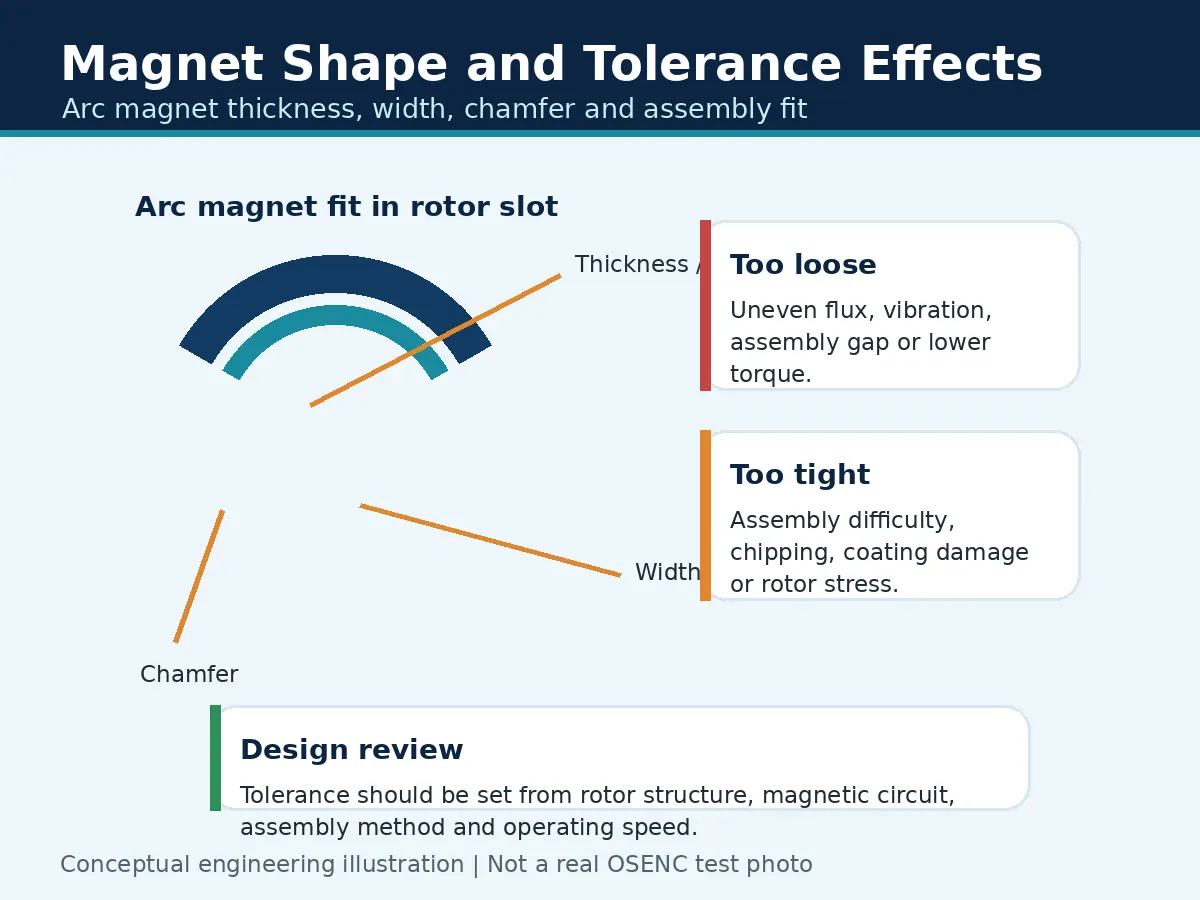
Osenc can support custom motor magnet requirements including NdFeB magnet grade selection, coating review, magnetization direction, arc magnet shape, rotor assembly tolerance and sample-to-production communication.
How to Choose: A Practical Decision Flow
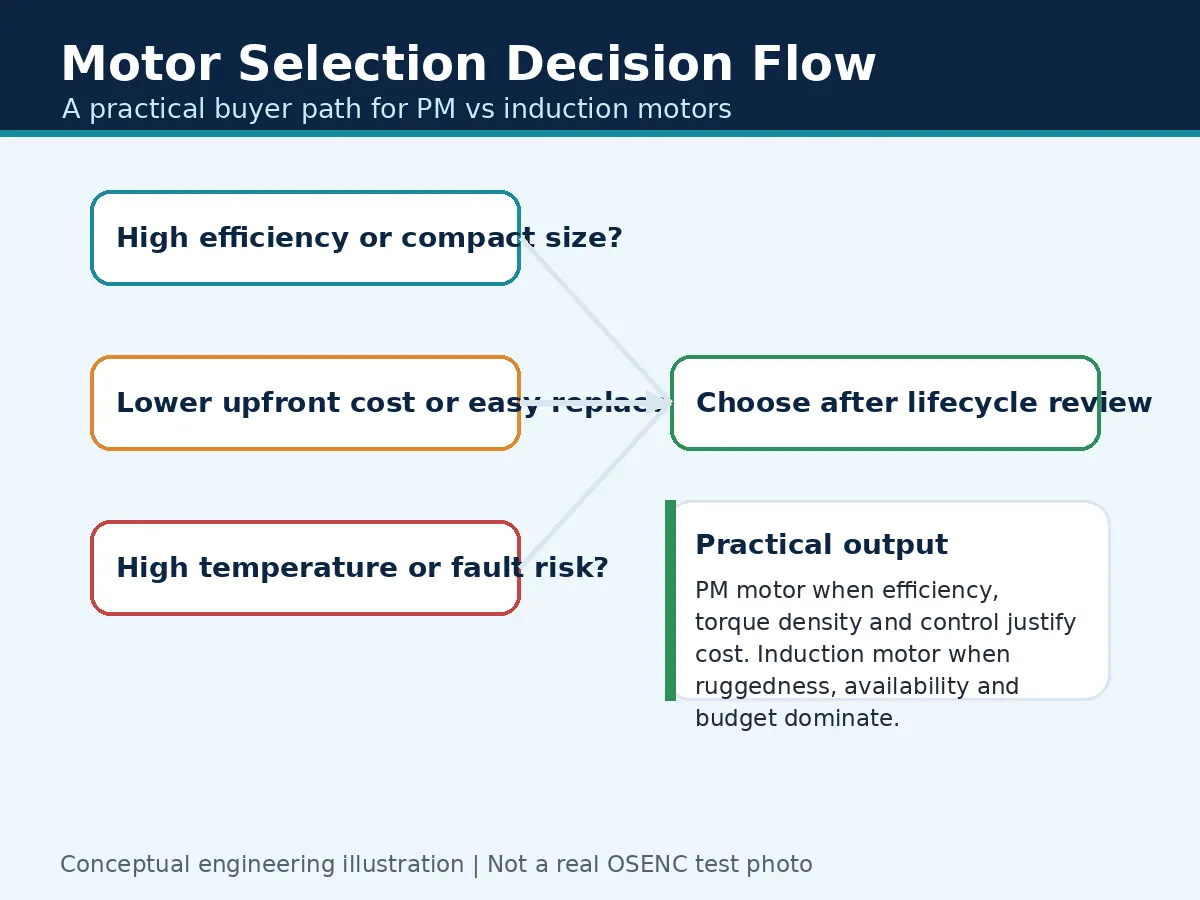
- Define torque, power, speed range and duty cycle.
- Compare efficiency at real load points, not only rated load.
- Include motor, controller, cooling, maintenance and downtime cost.
- Check working temperature, enclosure, dust, corrosion and vibration.
- For PM motors, review magnet grade, coating and demagnetization margin.
- For induction motors, review insulation, bearings, cooling and frame availability.
RFQ Checklist for Custom Motor Magnets
If your project uses permanent magnets in a rotor, prepare the information below before asking for a custom quotation. This helps reduce back-and-forth and makes the magnet design discussion more realistic.
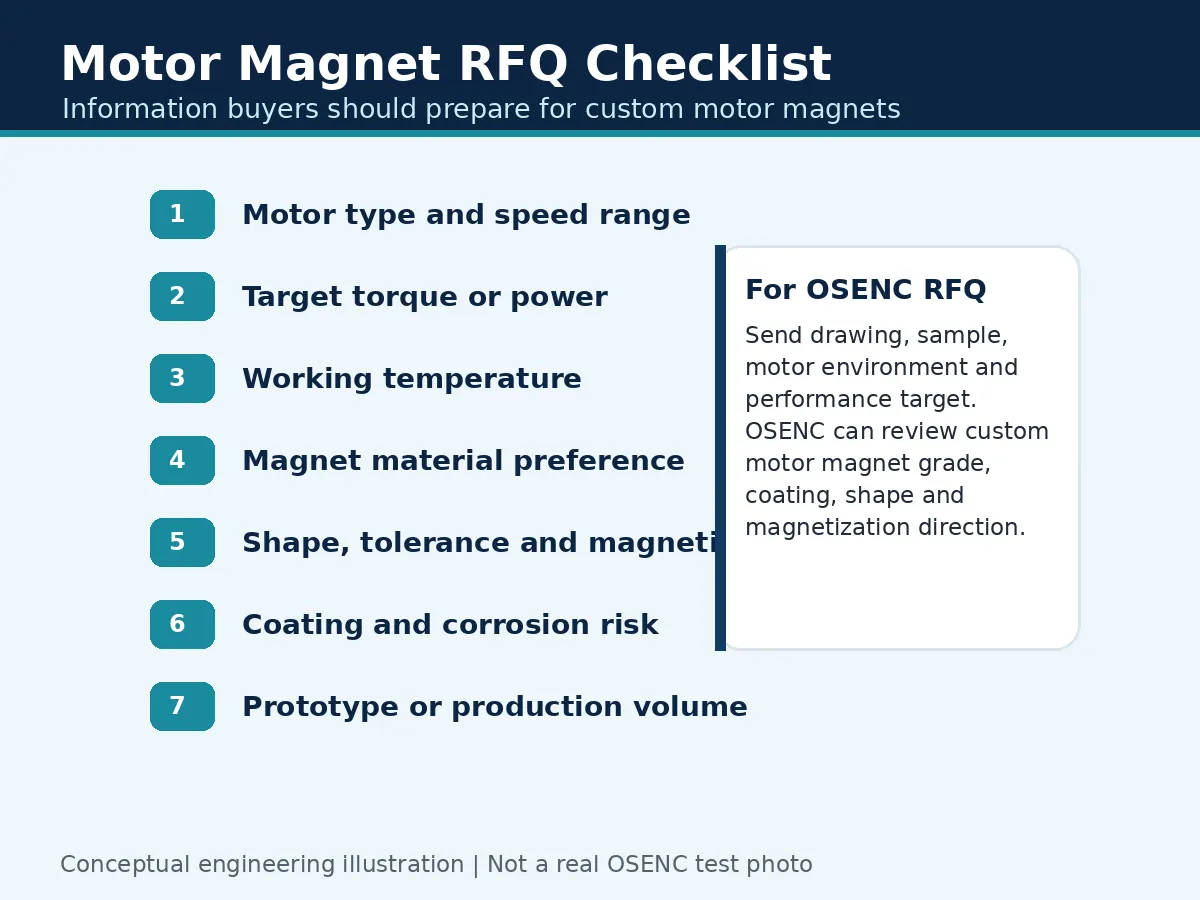
- Motor type: PMSM, BLDC, PM DC, generator or custom assembly.
- Target torque, power, speed range and duty cycle.
- Working temperature and peak temperature exposure.
- Magnet material preference: NdFeB, SmCo or ferrite.
- Drawing, sample, rotor slot geometry or target magnet shape.
- Magnetization direction, coating, tolerance and inspection needs.
- Prototype quantity, production quantity and delivery target.
- Any corrosion, washdown, vibration or safety constraints.
Need Custom Magnets for a Permanent Magnet Motor?
Osenc can provide similar custom magnet solutions based on your drawing, sample, application environment, performance target and test requirements. Share your motor type, rotor design, magnet shape, grade target, coating requirement and working temperature so the magnet design can be reviewed properly.
Contact Osenc for Motor Magnet SupportNajczęściej zadawane pytania
Jaka jest główna różnica między silnikiem z magnesami trwałymi a silnikiem indukcyjnym?
Silnik z magnesami trwałymi wykorzystuje magnesy w wirniku do wytwarzania pola magnetycznego wirnika. W silniku indukcyjnym pole to powstaje wskutek przepływu prądu indukowanego w wirniku, dlatego silnik ten zwykle pracuje z poślizgiem. Powoduje to różnice w sprawności, gęstości momentu obrotowego, kosztach, wymaganiach dotyczących sterowania i charakterystyce cieplnej.
Czy silnik z magnesami trwałymi ma wyższą sprawność niż silnik indukcyjny?
Często tak, szczególnie w kompaktowych zastosowaniach ze zmienną prędkością obrotową lub pracą przy częściowym obciążeniu. Ostateczny rezultat nadal zależy od konstrukcji silnika, sterownika, chłodzenia, profilu obciążenia i liczby godzin pracy.
Dlaczego silniki indukcyjne są zazwyczaj tańsze?
Standardowe silniki indukcyjne nie wymagają magnesów trwałych z metali ziem rzadkich i są dostępne w wielu znormalizowanych wielkościach mechanicznych stosowanych w przemyśle. Ich niższa cena zakupu może być atrakcyjna, gdy wymiary i sprawność przy obciążeniu częściowym nie są głównymi ograniczeniami.
Czy silniki indukcyjne mają magnesy trwałe?
Standardowe silniki indukcyjne nie wykorzystują magnesów trwałych. Pole magnetyczne wirnika powstaje w wyniku indukcji elektromagnetycznej wywołanej polem stojana.
Który typ silnika lepiej sprawdza się w pojazdach elektrycznych lub robotyce?
Silniki z magnesami trwałymi, czyli PMSM, są często preferowane w zastosowaniach wymagających dużej gęstości momentu obrotowego, kompaktowych wymiarów, wysokiego momentu obrotowego przy małej prędkości oraz precyzyjnego sterowania. W niektórych układach nadal stosuje się silniki indukcyjne, aby ograniczyć zależność od surowców ziem rzadkich lub uzyskać równowagę między kosztami a właściwościami eksploatacyjnymi.
Jakie informacje należy przesłać w sprawie niestandardowych magnesów do silników?
Prześlij typ silnika, docelowy moment obrotowy lub moc, zakres prędkości obrotowej, temperaturę pracy, rysunek wirnika, kształt magnesu, tolerancję, kierunek magnesowania, wymagania dotyczące powłoki, ryzyko korozji oraz ilość potrzebną do wykonania prototypu lub produkcji.
Evidence and Trust Notes
This refreshed article uses cautious engineering language. External public sources are used only to support general technical background, not as Osenc verified test data or Osenc customer cases. Useful references include the U.S. Department of Energy electric motor technical support document, DOE electric motor R&D notes, NREL-indexed permanent magnet AC machine research, and EU Regulation 2019/1781 on electric motor efficiency requirements.