






고효율, 소형화, 토크 밀도 및 정밀 제어가 가장 중요하다면 일반적으로 영구자석 모터가 더 적합합니다. 초기 비용 절감, 견고한 구조, 조달 용이성 및 표준 산업용 모터로의 교체 편의성이 더 중요하다면 일반적으로 유도 모터가 더 적합합니다.
적합한 선택은 듀티 사이클, 속도 범위, 부하 프로파일, 컨트롤러, 냉각, 작동 온도, 자석 소재, 유지보수 역량 및 수명주기 비용을 포함한 전체 시스템 조건에 따라 달라집니다.
| 질문 | 일반적으로 더 적합한 선택 | 중요한 이유 |
|---|---|---|
| 최고 효율 또는 토크 밀도 | 영구자석 모터 / PMSM | 로터 자속을 자석이 공급하므로 로터의 전기적 손실을 줄이고 패키지를 더 작게 설계할 수 있습니다. |
| 최저 초기 비용 | 유도 모터 | 희토류 자석이 필요하지 않으며 표준 프레임을 폭넓게 조달할 수 있습니다. |
| 가변 속도, 소형 자동화 또는 서보 제어 | 영구자석 모터 | 높은 토크 밀도와 정밀한 제어 성능은 컨트롤러와 자석 비용을 정당화할 수 있습니다. |
| 펌프, 팬, 압축기 및 컨베이어 | 흔히 유도 모터 | 표준 유도 모터는 운전 조건이 가혹하고, 조달이 용이하며, 비용이 중요한 경우에도 실용적입니다. |
| 고온 또는 고장 민감 운전 | 경우에 따라 다릅니다. | PM 모터는 자석 등급과 감자 검토가 필요하며, 유도 모터도 절연, 베어링 및 냉각 검토가 필요합니다. |
영구자석 모터와 유도 모터 비교: 빠른 비교
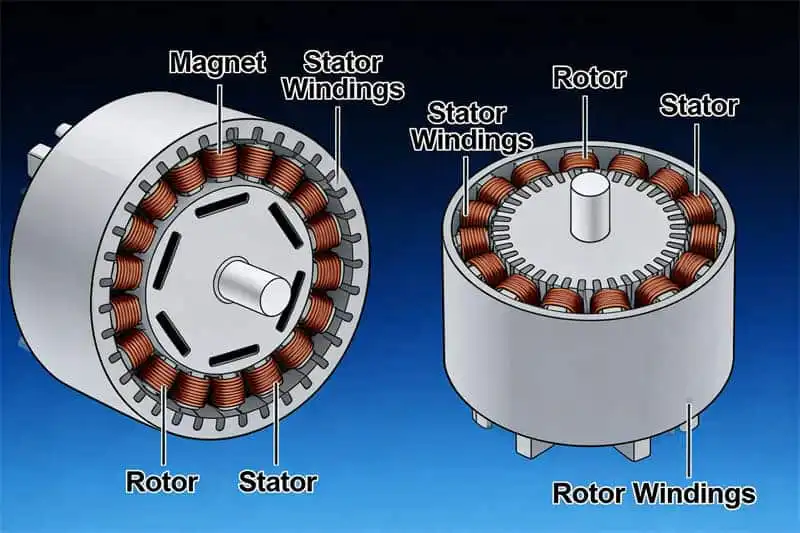
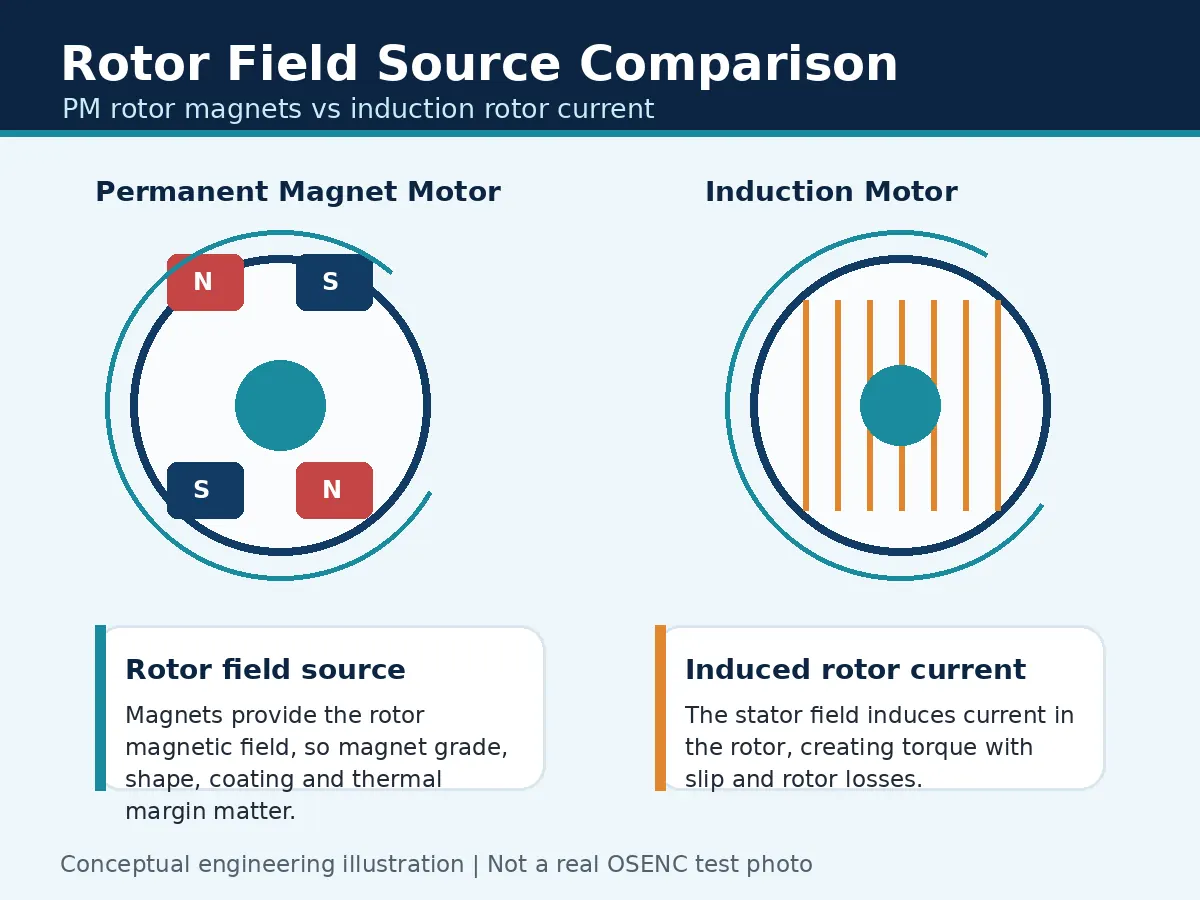
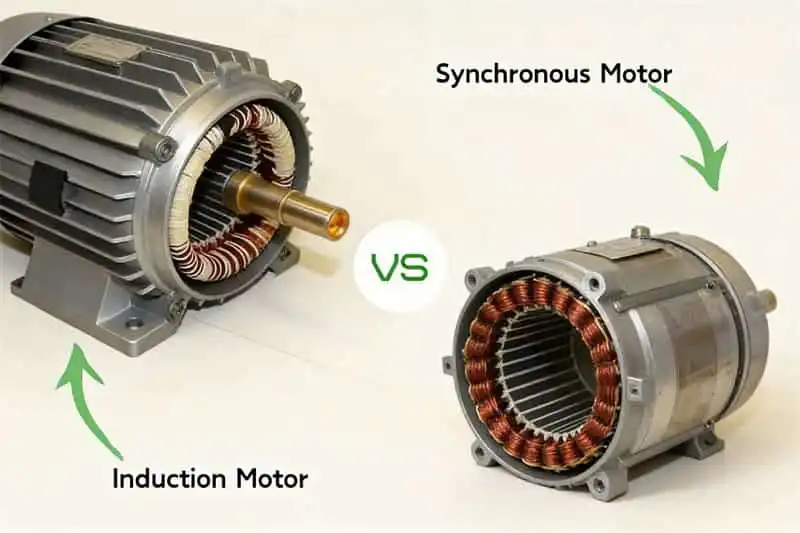
핵심적인 차이는 회전자 자기장의 발생원입니다. 영구자석 모터는 회전자에 영구자석을 사용합니다. 유도 모터는 전자기 유도를 이용합니다. 즉, 고정자 자기장이 회전자에 전류를 유도하고, 이 상호 작용으로 토크가 발생합니다.
| 요인 | 영구자석 모터 | 유도 모터 |
|---|---|---|
| 회전자 설계 | 설계 목표에 따라 보통 NdFeB, 페라이트 또는 SmCo 영구자석을 사용합니다. | 고정자 자기장에 의해 전류가 유도되는 도전성 회전자 바 또는 권선을 사용합니다. |
| 효율 특성 | 부분 부하에서 우수한 경우가 많으며, 소형 고성능 설계에 적합합니다. | 정격 부하 근처에서는 효율적일 수 있지만, 회전자 손실과 슬립을 고려해야 합니다. |
| 제어 | 일반적으로 정밀한 구동 제어와 회전자 위치 검출 또는 센서리스 제어 전략이 필요합니다. | 고정 속도 운전에서는 구성이 단순할 수 있으며, 속도 제어에는 VFD가 일반적으로 사용됩니다. |
| 소재 리스크 | 자석 비용, 공급 여건, 코팅 및 감자 여유를 검토해야 합니다. | 영구자석 비용은 발생하지 않지만, 적층 철심, 도체, 절연 및 냉각 품질에 여전히 좌우됩니다. |
| 적합한 적용 분야 | EV, 로봇, 서보 시스템, 소형 구동 장치, 고효율 기계. | 펌프, 팬, 컨베이어, HVAC, 압축기 및 일반 산업용 기계. |
효율, 회전자 손실 및 듀티 사이클
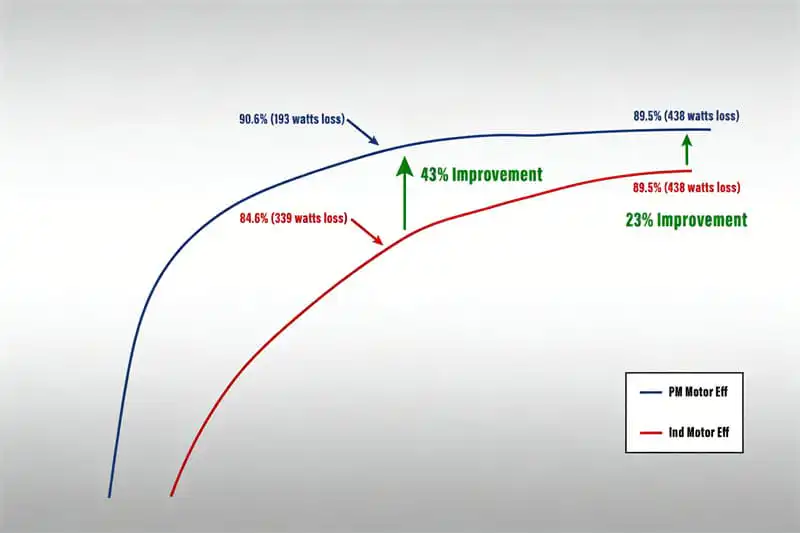
영구자석 모터는 자석이 회전자 자기장을 제공하므로 회전자의 전기적 손실을 줄일 수 있습니다. 미국 에너지부의 기술 지원 문서에서는 영구자석 모터가 자속을 생성하기 위해 회전자 전류를 필요로 하지 않으며, 이러한 특성이 높은 효율에 기여한다고 설명합니다. 유도전동기는 회전자 전류를 사용하므로 효율을 비교할 때 회전자 손실과 발열을 고려해야 합니다.
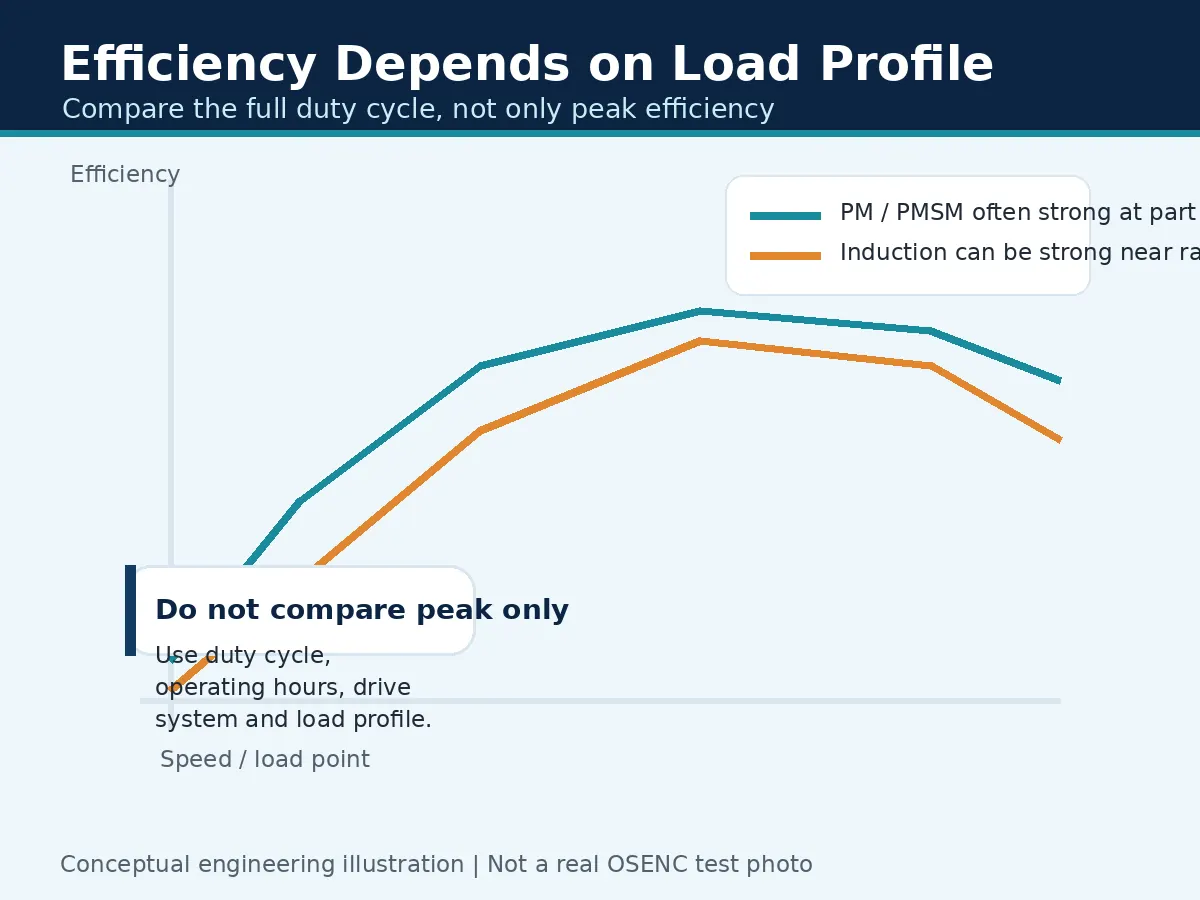
이는 모든 영구자석 모터의 운전 비용이 자동으로 더 저렴하다는 의미는 아닙니다. 효율은 기동, 정격 부하, 부분 부하, 저속, 유휴 기간, 냉각 조건 및 제어기 동작을 포함한 실제 운전점에서 평가해야 합니다.
PMSM, PM AC Motor and 3-Phase Permanent Magnet Motor
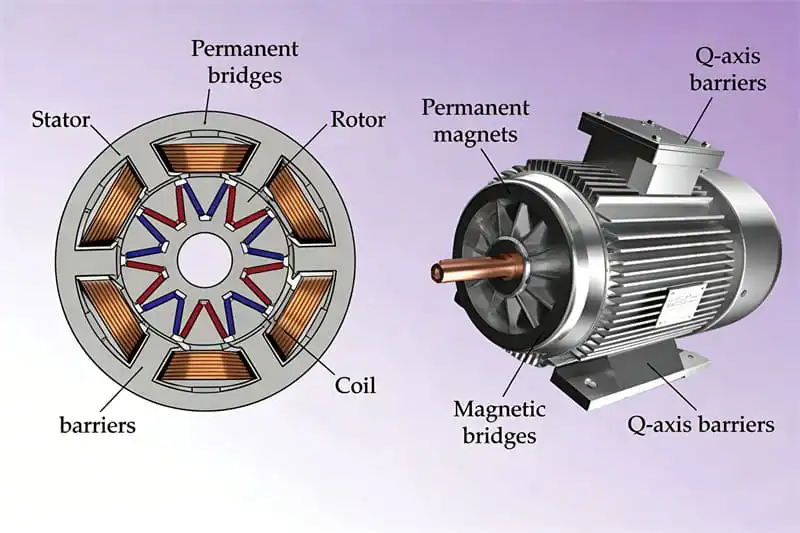
Many buyers searching this topic also compare PMSM, permanent magnet AC motor and 3-phase permanent magnet motor. In practice, these searches often refer to motor families where permanent magnets are used in the rotor and the stator is driven by AC power through a controller. A PMSM runs synchronously with the stator rotating magnetic field, while an induction motor normally runs slightly below synchronous speed because slip is needed to induce rotor current and torque.
Cost: Purchase Price vs Lifecycle Cost
Induction motors usually win on initial price because they do not need permanent magnets and are widely produced in standard industrial designs. Permanent magnet motors cost more when rare-earth magnets, precision rotor assembly and advanced control are required.
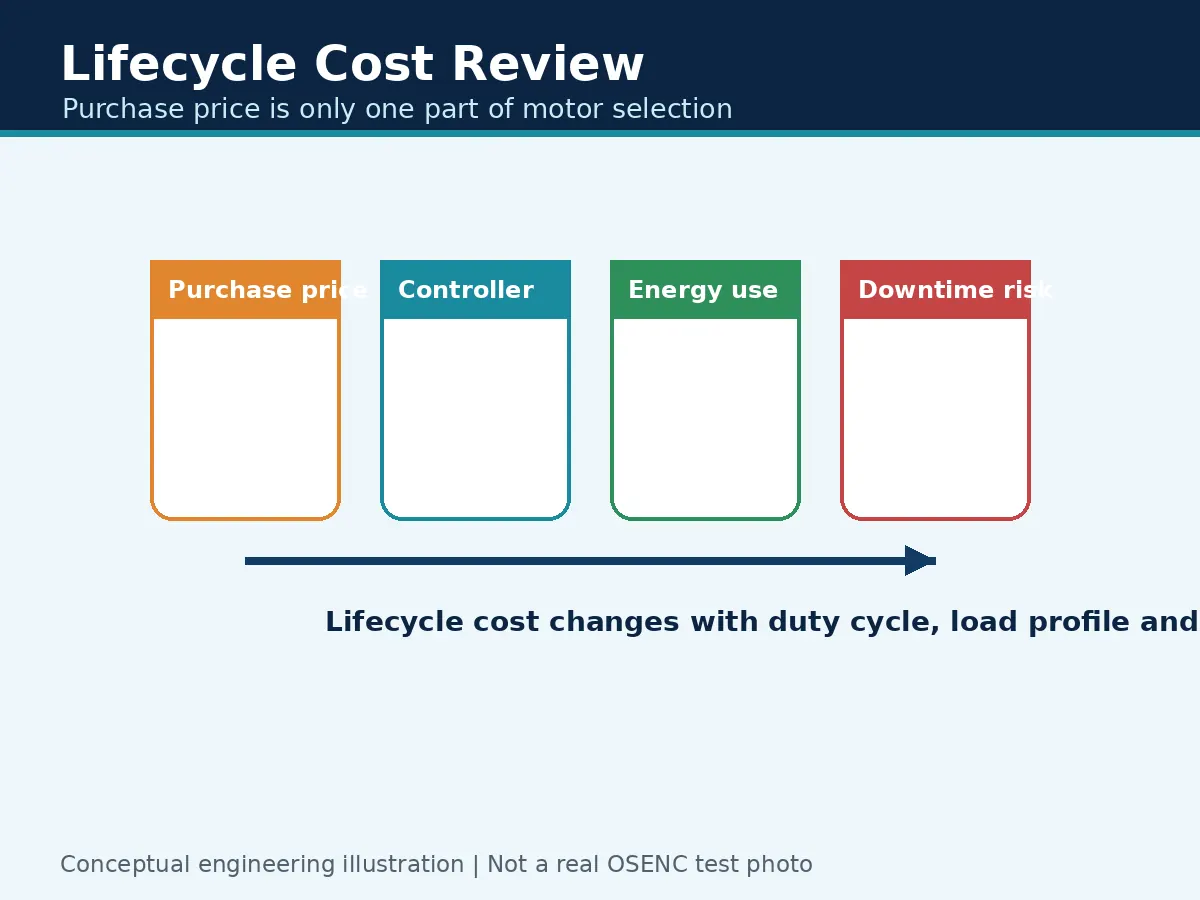
For continuous-duty or space-constrained equipment, the higher initial cost of a permanent magnet motor may be justified by energy savings, smaller package size, higher torque density or better motion control. For simple, rugged and cost-sensitive equipment, an induction motor may remain the more practical choice.
Thermal and Demagnetization Risk
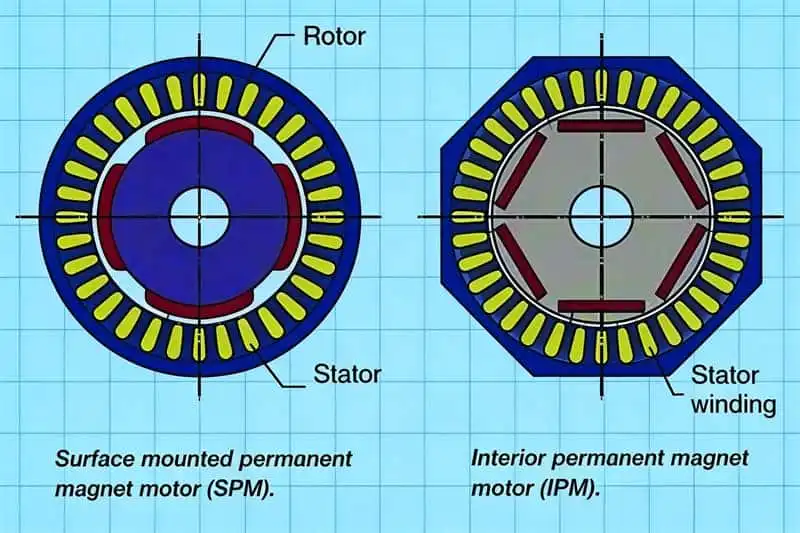
Permanent magnet motors need a thermal review because magnet performance can weaken if the wrong grade is used or if operating temperature, opposing fields, mechanical stress or fault conditions exceed the design margin. NREL-indexed research on permanent magnet AC machines identifies rotor demagnetization as an important fault type, and thermal modeling is a major part of high-power-density IPM motor development.
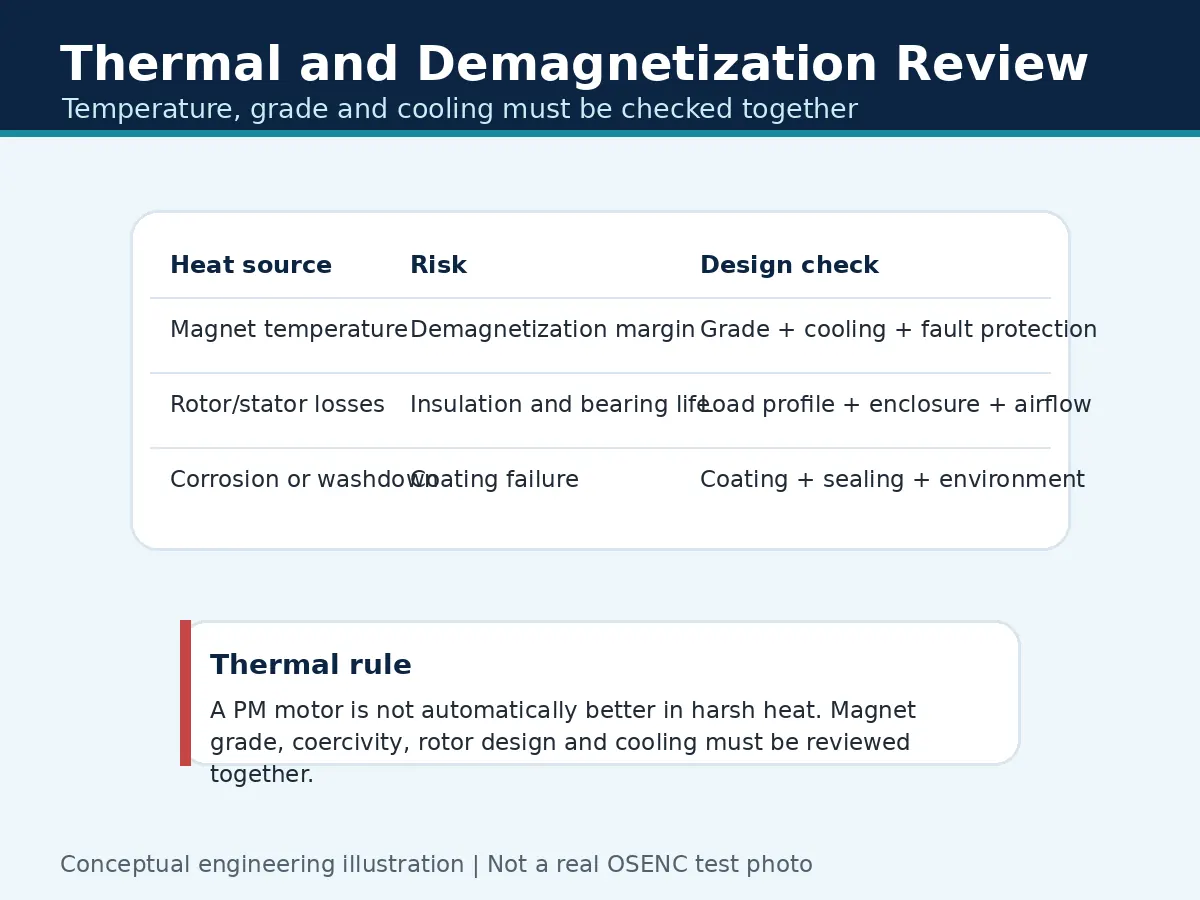
Induction motors also need thermal review. Their reliability depends on winding insulation, bearings, cooling paths, enclosure, dust, load stability and duty cycle. Heat is not only a permanent magnet motor issue; the difference is that PM motors add magnet-grade and demagnetization review to the normal motor reliability checklist.
용도별 권장 사항
| 적용 분야 | 일반적인 선택 | 선정 기준 |
|---|---|---|
| 전기차 및 소형 구동 장치 | 영구자석 모터 / PMSM | 높은 토크 밀도, 소형 크기 및 효율이 중요할 수 있습니다. |
| 로봇, 서보 시스템 및 자동화 | 영구자석 모터 | 정밀한 제어, 빠른 응답 및 컴팩트한 설계가 중요한 경우가 많습니다. |
| 펌프, 팬, 압축기 및 HVAC | 흔히 유도 모터 | 견고성, 표준 제품의 수급성 및 낮은 초기 비용이 우선시될 수 있습니다. |
| 컨베이어 및 일반 산업 기계 | 흔히 유도 모터 | 조달 용이성, 익숙한 유지보수 방식 및 표준 프레임이 유용합니다. |
| 고효율 맞춤형 장비 | 경우에 따라 다릅니다. | 수명 주기 에너지 비용, 모터 크기, 컨트롤러, 듀티 사이클 및 자석 관련 위험을 비교하십시오. |
모터 자석 설계가 PM 모터 성능에 미치는 영향
영구자석 모터에서 자석은 단순히 재료를 선택하는 문제가 아닙니다. 모터 설계자는 자석 등급, 잔류 자속 밀도, 보자력, 온도 등급, 코팅, 형상, 공차, 착자 방향, 에어 갭, 로터 고정 방식 및 조립 방법을 검토해야 합니다.
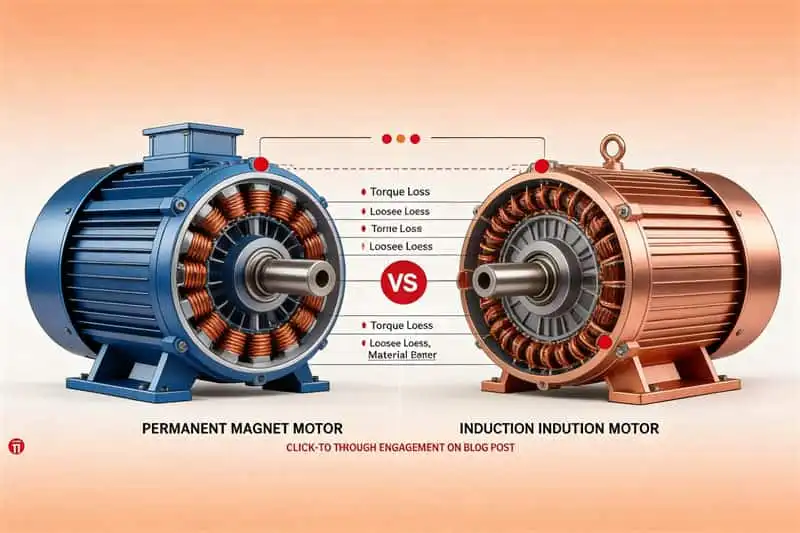
Magnet grade and coercivity
Higher magnetic strength can help torque density, but the grade must match the motor temperature and demagnetizing field risk. Higher coercivity may be needed when the motor faces high temperature, fault current, aggressive field weakening or demanding duty cycles.
Shape, tolerance and air gap
Arc magnet thickness, width, chamfer and length tolerance can influence flux distribution, air gap uniformity, cogging torque, vibration, assembly yield and coating damage risk.
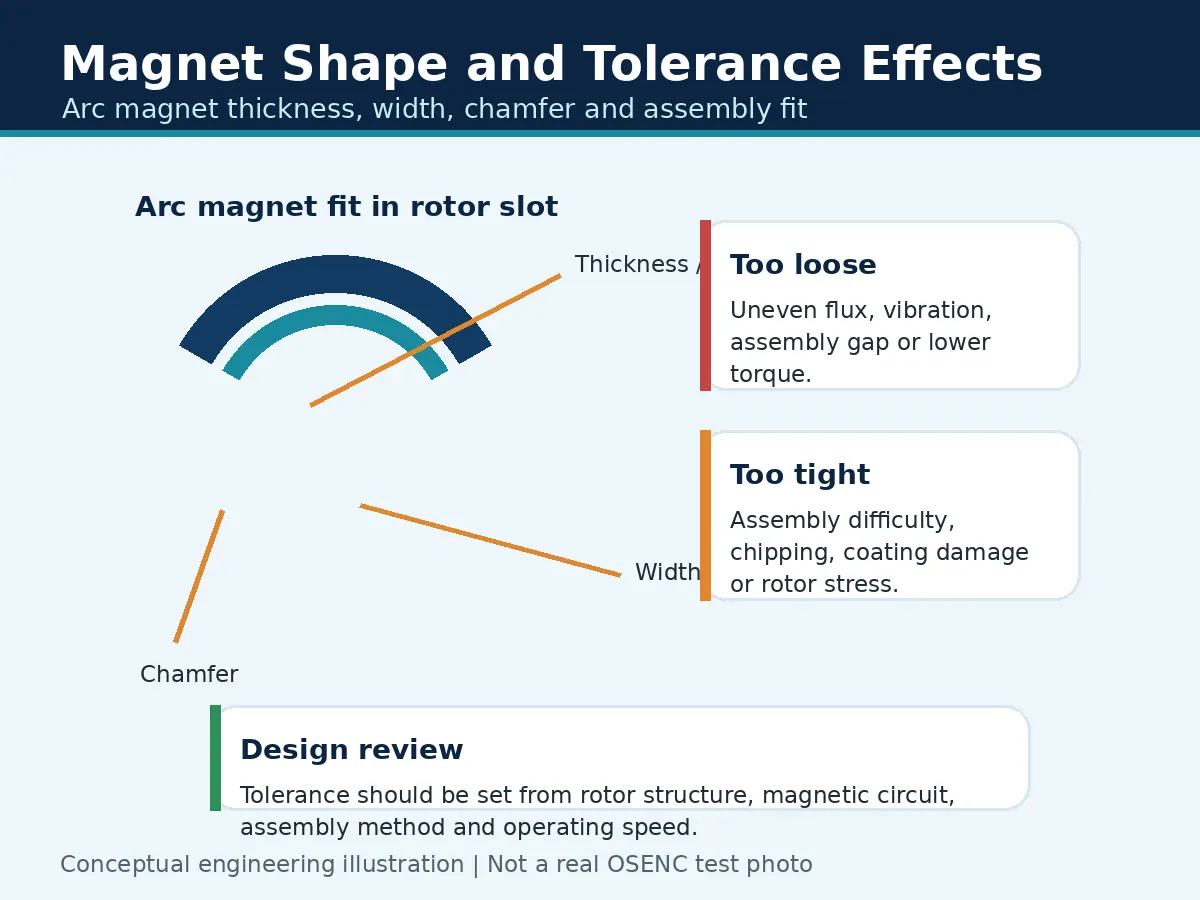
Osenc can support custom motor magnet requirements including NdFeB magnet grade selection, coating review, magnetization direction, arc magnet shape, rotor assembly tolerance and sample-to-production communication.
How to Choose: A Practical Decision Flow
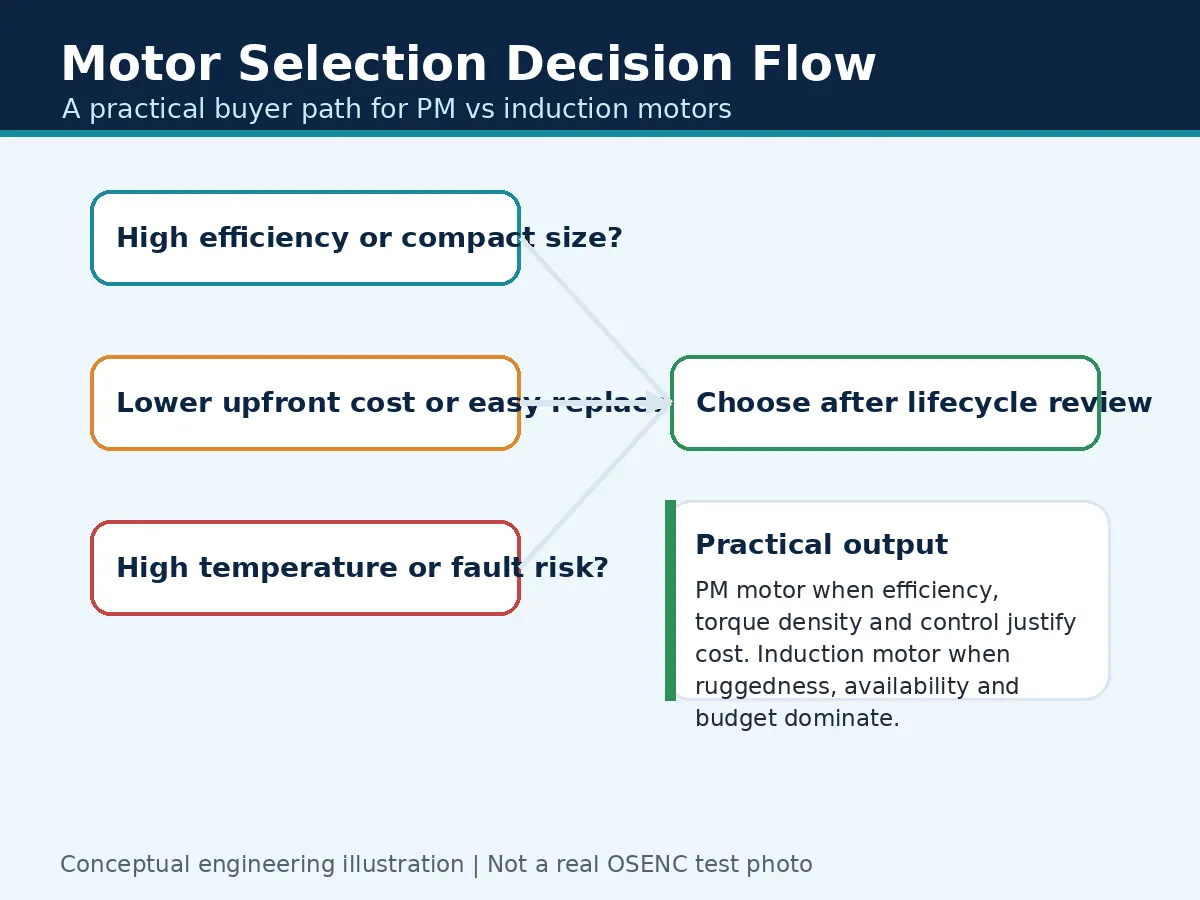
- Define torque, power, speed range and duty cycle.
- Compare efficiency at real load points, not only rated load.
- Include motor, controller, cooling, maintenance and downtime cost.
- Check working temperature, enclosure, dust, corrosion and vibration.
- For PM motors, review magnet grade, coating and demagnetization margin.
- For induction motors, review insulation, bearings, cooling and frame availability.
RFQ Checklist for Custom Motor Magnets
If your project uses permanent magnets in a rotor, prepare the information below before asking for a custom quotation. This helps reduce back-and-forth and makes the magnet design discussion more realistic.
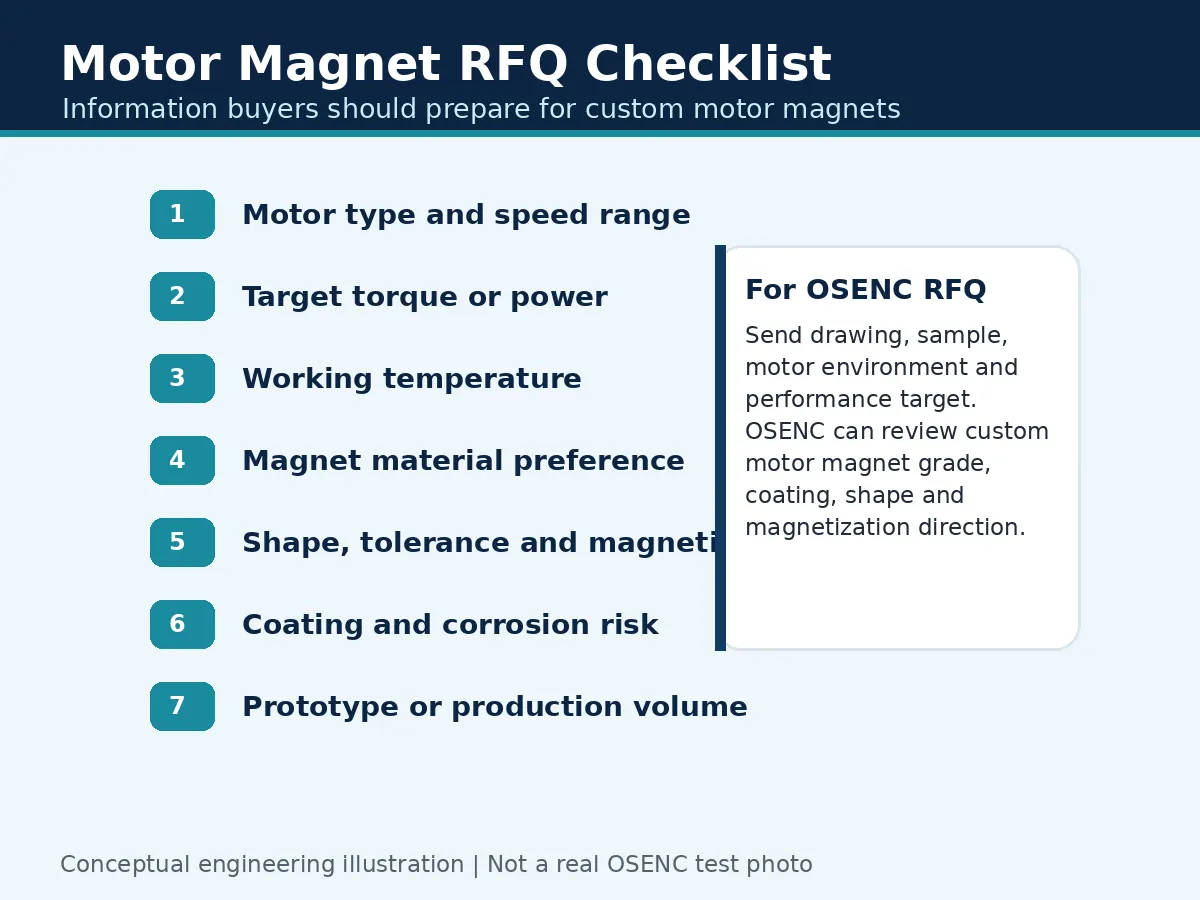
- Motor type: PMSM, BLDC, PM DC, generator or custom assembly.
- Target torque, power, speed range and duty cycle.
- Working temperature and peak temperature exposure.
- Magnet material preference: NdFeB, SmCo or ferrite.
- Drawing, sample, rotor slot geometry or target magnet shape.
- Magnetization direction, coating, tolerance and inspection needs.
- Prototype quantity, production quantity and delivery target.
- Any corrosion, washdown, vibration or safety constraints.
Need Custom Magnets for a Permanent Magnet Motor?
Osenc can provide similar custom magnet solutions based on your drawing, sample, application environment, performance target and test requirements. Share your motor type, rotor design, magnet shape, grade target, coating requirement and working temperature so the magnet design can be reviewed properly.
Contact Osenc for Motor Magnet Support자주 묻는 질문
영구자석 모터와 유도 모터의 주요 차이점은 무엇입니까?
영구자석 모터는 회전자에 장착된 자석으로 회전자 자기장을 형성합니다. 유도 모터는 회전자에 유도된 전류를 이용하므로 일반적으로 슬립이 발생하는 상태에서 작동합니다. 이러한 차이는 효율, 토크 밀도, 비용, 제어 요구사항 및 열적 거동에 영향을 미칩니다.
영구자석 모터가 유도 모터보다 효율이 더 높습니까?
대체로 그렇습니다. 특히 소형, 가변 속도 또는 부분 부하 적용 분야에서 그렇습니다. 다만 최종 결과는 모터 설계, 컨트롤러, 냉각 방식, 부하 프로파일 및 운전 시간에 따라 달라집니다.
유도 전동기는 일반적으로 왜 더 저렴합니까?
표준 유도 전동기는 희토류 영구자석이 필요하지 않으며, 다양한 표준 산업용 프레임으로 제공됩니다. 크기와 부분 부하 효율이 주요 제약 조건이 아니라면 낮은 구매 가격이 장점이 될 수 있습니다.
유도 전동기에는 영구자석이 사용됩니까?
표준 유도전동기에는 영구자석이 사용되지 않습니다. 회전자의 자기장은 고정자 자기장에 의한 전자기 유도로 생성됩니다.
전기차 또는 로봇에는 어떤 모터 유형이 더 적합합니까?
높은 토크 밀도, 소형화, 저속 토크 및 정밀 제어가 중요한 경우 영구자석 모터 또는 PMSM이 주로 채택됩니다. 다만 일부 시스템에서는 희토류 의존도를 낮추거나 비용과 운전 특성의 균형을 맞추기 위해 유도 모터를 사용하기도 합니다.
맞춤형 모터 자석 제작을 위해 어떤 정보를 보내야 합니까?
모터 유형, 목표 토크 또는 출력, 회전 속도 범위, 작동 온도, 로터 도면, 자석 형상, 공차, 착자 방향, 코팅 요구사항, 부식 위험, 프로토타입 또는 양산 수량을 보내주십시오.
Evidence and Trust Notes
This refreshed article uses cautious engineering language. External public sources are used only to support general technical background, not as Osenc verified test data or Osenc customer cases. Useful references include the U.S. Department of Energy electric motor technical support document, DOE electric motor R&D notes, NREL-indexed permanent magnet AC machine research, and EU Regulation 2019/1781 on electric motor efficiency requirements.